Have you noticed a persistent humming noise coming from your wheels that gets louder as you accelerate? Or perhaps your steering wheel feels unusually loose, making the car wander on the highway? These could be signs of a failing spindle hub. While often overlooked, the spindle hub is a critical component that connects your wheels to your vehicle, ensuring both safety and performance. We will explain exactly what a spindle hub is, how it works, how to recognize when it’s failing, and what to do about it.
What is a Spindle Hub?
A spindle hub, also known as a wheel hub assembly or hub unit, is a pre-assembled component that serves as the mounting point for your vehicle’s wheels. It is a compact, integrated unit typically consisting of a hub flange, a precision wheel bearing, and often a wheel speed sensor for the Anti-lock Braking System (ABS).
Physically, it is located at the center of each wheel, mounted to the steering knuckle. The steering knuckle connects to the suspension control arms and tie rod ends, making the spindle hub the central link between the wheel, suspension, and steering system. Its primary function is to provide a stable, low-friction rotating base for the wheel.
Core Functions of the Spindle Hub
The spindle hub performs several vital functions that are essential for safe vehicle operation:
- Supporting Vehicle Weight: It bears the full static weight of the vehicle and must withstand immense dynamic loads during driving, such as cornering forces, braking torque, and acceleration stress.
- Ensuring Precise Rotation: At its heart is a high-precision bearing, designed to allow the wheel to rotate with minimal friction. This is crucial for fuel efficiency and smooth operation.
- Maintaining Wheel Geometry: The spindle hub is a critical point in the suspension geometry. Its condition directly affects wheel alignment parameters like camber and toe. A properly functioning hub ensures optimal tire contact with the road, maximizing tire life and handling.
- Transmitting Forces and Torque: On drive wheels, it transfers engine power from the drive axle to the wheel. On all wheels, it transmits braking forces from the brake caliper to the vehicle structure, enabling safe deceleration.
Spindle vs. Hub: What’s the Difference?
The terms “spindle” and “hub” are often used interchangeably, but there is a subtle technical distinction. Historically, a spindle typically refers to the stationary shaft found on non-drive axles (like a front-wheel-drive car’s rear wheels) around which the wheel bearings rotate. A hub, on the other hand, is the rotating component on a drive axle that the wheel and brake rotor are bolted to, and which is driven by the axle shaft.
In modern automotive design, these two components are almost always integrated into a single, pre-assembled unit called a spindle hub or hub bearing assembly. This integrated design simplifies installation, improves precision, and enhances durability. Therefore, when a mechanic says the “spindle hub” needs replacement, they are referring to this complete unit.
How to Tell if Your Spindle Hub is Damaged
Recognizing the early signs of a failing spindle hub can prevent more severe and expensive damage. Here are the most common symptoms:
1.Unusual Noises: This is the most common indicator. Listen for a:
- Grinding or Growling: A consistent noise that changes with wheel speed often indicates worn internal bearings.
- Squeaking or Chirping: May signal a lack of lubrication or debris within the assembly.
2.Loose or Wandering Steering: You may feel excessive play in the steering wheel, or the vehicle may feel unstable, especially on uneven roads. If you lift the wheel off the ground, you might be able to rock it back and forth, indicating a worn hub.
3.Uneven Tire Wear: A failing spindle hub can alter the wheel’s alignment, leading to uneven or accelerated tire wear patterns. This is a costly consequence if ignored.
4.Reduced Braking Efficiency or ABS Light: Since many spindle hubs incorporate the ABS sensor, a failing unit can send incorrect signals or no signal, causing the ABS warning light to illuminate or impacting the anti-lock braking system’s performance.
What Happens If a Spindle Hub Fails?
Ignoring a damaged spindle hub is a serious safety risk. The consequences can escalate quickly:
- Degraded Driving Experience: Noise levels will increase dramatically, and handling will become unpredictable, especially at higher speeds or during cornering. Vehicle stability will be compromised.
- Accelerated Wear on Other Components: The added stress and vibration can quickly damage tires, suspension bushings, ball joints, and even the differential or transmission in driven axles.
- Loss of Safety Systems: A faulty ABS sensor can disable your vehicle’s traction control and stability control systems, leaving you without critical safety aids in emergency situations.
- Risk of Wheel Detachment: In severe cases, the bearing can completely fail, causing the hub assembly to separate from the steering knuckle. This can result in the wheel detaching from the vehicle while driving—an extremely dangerous scenario.
What to Do If Your Spindle Hub is Damaged
If you suspect a spindle hub failure, immediate action is required.
Why Repair is Not an Option
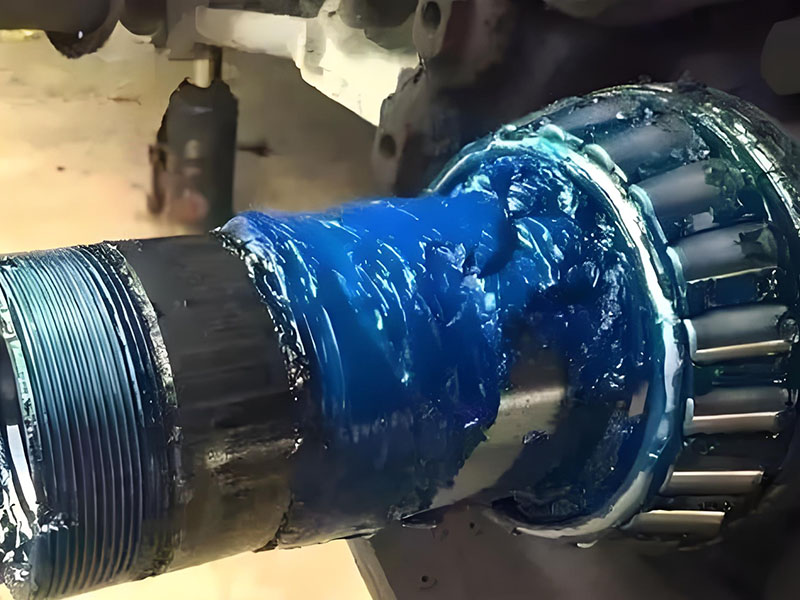
Modern spindle hubs are designed as sealed, maintenance-free units. Unlike older designs, you cannot simply repack them with grease. They are precision-engineered with specific internal clearances and are assembled under strict conditions. Once the internal bearings or other components wear out, the entire assembly must be replaced. Attempting to repair a sealed unit will almost always compromise its integrity, safety, and long-term reliability.
Professional Replacement Steps
While replacement is a job best left to experienced professionals, understanding the process can be helpful. A typical replacement involves:
- Preparation: Safely lifting the vehicle and removing the wheel.
- Brake Removal: Removing the brake caliper and rotor to access the hub.
- Axle Nut Removal: On drive wheels, removing the large axle nut and separating the drive axle from the hub.
- Suspension Separation: Disconnecting the hub assembly from the tie rod end and lower control arm.
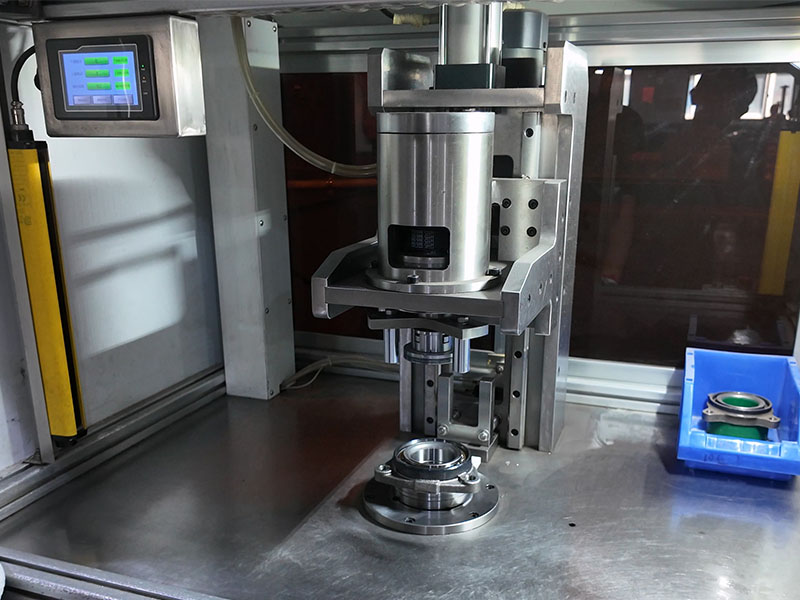
- Hub Removal: Depending on the design, either unbolting a bolt-on flange-type hub or using a hydraulic press to remove a press-in type assembly.
- Installation: Installing the new spindle hub in reverse order, ensuring all bolts, especially the axle nut, are torqued to the manufacturer’s exact specifications.
After replacement, a wheel alignment is highly recommended to ensure the suspension geometry is correct, preventing future tire wear issues.
Conclusion
The spindle hub is far more than just a component that makes your wheels spin. It is a vital safety and performance hub that connects the core systems of your vehicle. By understanding its role and recognizing the warning signs of failure, you can ensure your vehicle remains safe, reliable, and responsive.