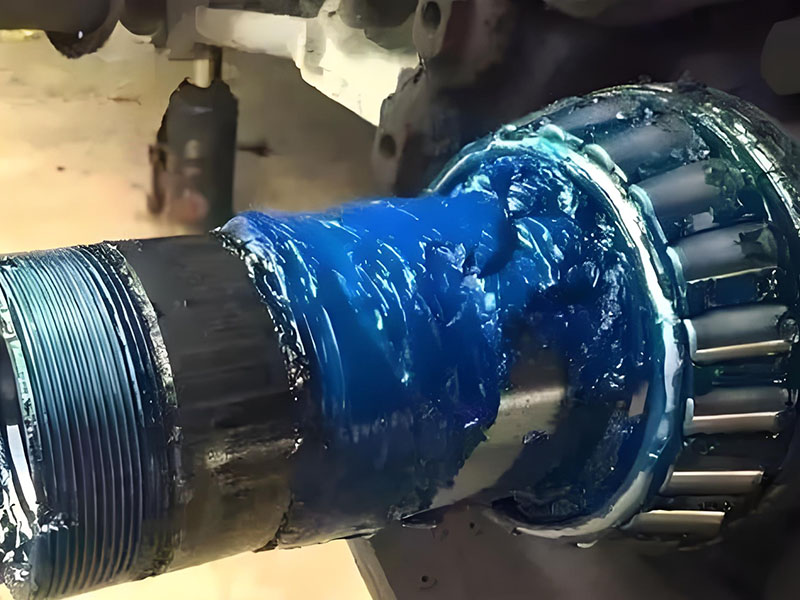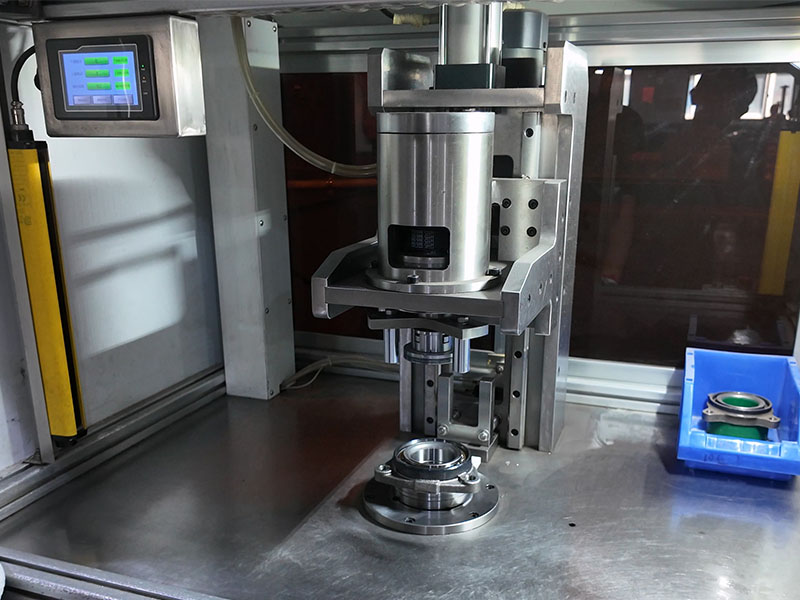
Universal joints (U‑joints) are the flexible links that enable your driveshaft to transmit power while accommodating angle changes between the transmission and differential. When they fail, the results range from annoying vibrations to complete breakdowns on the road. Based on decades of manufacturing experience at DUHUI Bearing, we’ve identified three primary reasons U‑joints fail prematurely: driveshaft misalignment, load imbalance, and over‑stress. Understanding these causes helps you diagnose problems early and take corrective action before major damage occurs.
Driveshaft Misalignment
Definition of Driveshaft Misalignment
Driveshaft misalignment occurs when the operating angles of the U‑joints at each end of the shaft are not equal or exceed the joint’s design specifications. In a properly functioning driveline, the angles at the transmission and differential should be within 1° of each other—often called “equal and opposite” angles. When this geometric relationship is disturbed, the U‑joints are forced to work beyond their intended range of motion.
Causes of Driveshaft Misalignment
Several real‑world conditions can throw a driveline out of alignment:
- Installation errors or improper repair – When a driveshaft is installed without checking the phasing, or when shims are incorrectly placed during transmission or differential work, the angles become uneven.
- Suspension system wear or deformation – Worn leaf springs, sagging coil springs, or deteriorated control arms alter the pinion angle relative to the transmission output.
- Vehicle collision damage – Even minor impacts can bend chassis mounting points or suspension components, permanently changing the driveline geometry.
Consequences of Driveshaft Misalignment
When a U‑joint operates at an incorrect angle, the needle rollers inside the bearing caps no longer roll smoothly. Instead, they slide and skid against the trunnion, leading to:
- Rapid, uneven wear of needle bearings and cross trunnions
- Brinelling (permanent indentation) of bearing races
- Low‑frequency vibration noticeable during acceleration or deceleration
- Premature failure, sometimes within a few thousand kilometres
Solutions and Preventive Measures of Driveshaft Misalignment
Correcting misalignment requires a systematic approach:
- Measure the angles – Use a digital inclinometer on both the transmission output yoke and the differential pinion yoke. Compare readings to manufacturer specifications.
- Adjust suspension height – Replace worn springs and use tapered shims to correct pinion angle on lifted vehicles.
- Verify driveshaft phasing – Ensure both yokes are in the same plane unless a double‑Cardan joint is used.
- Inspect mounting points – After any collision, have chassis alignment verified on a frame machine.
Regular driveline inspections catch misalignment early. At DUHUI Bearing, we recommend investigating any vibration immediately—ignoring misalignment accelerates wear on U‑joints and surrounding components.
Load Imbalance
Definition of Load Imbalance
Load imbalance refers to uneven mass distribution around a driveshaft’s axis of rotation. When a shaft spins, any “heavy spot” creates centrifugal force that tries to pull the shaft outward with each revolution. This force increases with the square of rotational speed, creating vibration that stresses every component in the driveline—especially the U‑joints.
Causes of Load Imbalance
Several factors can introduce imbalance into a previously smooth driveline:
- Loss of balance weights – Factory‑installed weights can break loose due to corrosion, impact, or debris contact. Even a small missing weight creates significant force at highway speeds.
- Mud, ice, or debris accumulation – Off‑road use or winter driving allows material to build up unevenly on the shaft, creating localized mass that throws off balance.
- Component deformation – Rock strikes that dent the tube, minor collisions that bend the shaft, or improper use of pry bars during maintenance can permanently alter mass distribution.
- Long‑term overloading – Consistent operation above rated capacity can cause the driveshaft tube to develop a slight permanent bend, introducing progressive imbalance.
Consequences of Load Imbalance
An imbalanced driveshaft creates a destructive cycle for U‑joints:
- Accelerated needle bearing wear – Cyclic vibration causes needle rollers to skid rather than roll, generating heat and microscopic wear particles.
- Brinelling of bearing races – The hammering effect creates permanent indentations in hardened races, leading to rough operation.
- Fatigue cracking – Alternating stresses from vibration can initiate cracks in the cross, potentially leading to catastrophic separation.
- Premature seal failure – Constant vibration fatigues seals, allowing grease leakage and contaminant entry.
Solutions and Preventive Measures
Restoring balance requires precise diagnosis and correction:
- Clean the shaft thoroughly – Remove all mud, undercoating, or debris before any balance inspection.
- Inspect for damage – Look for missing weights, dents, or bends. A bent shaft requires replacement, not rebalancing.
- Perform dynamic balancing – Have a specialist spin the shaft on a balancing machine and add correction weights as needed.
- Check U‑joint condition – Worn joints can themselves cause imbalance. Replace them before balancing the shaft.
For fleet operators and DIYers alike, remember that smooth operation depends on both the shaft and U‑joints being in top condition. Quality replacement parts from DUHUI Bearing help maintain proper balance from the start.
Over‑Stress
Definition of Over‑Stress
Over‑stress occurs when forces applied to a U‑joint exceed its engineering limits. These forces may be sudden shock loads from aggressive driving or sustained high torque from overloading. Every U‑joint has maximum ratings for static torque and operating angle—exceeding these values invites failure.
Causes of Over‑Stress
Several driving habits and conditions push U‑joints beyond their design envelope:
- Aggressive driving – Frequent full‑throttle starts, sudden braking, or “clutch‑dumping” create torque spikes that can fracture cross journals.
- Insufficient lubrication – U‑joints rely on grease to maintain a hydrodynamic film between needle rollers and trunnions. Neglected lubrication causes metal‑to‑metal contact, generating heat and rapid wear.
- Component aging and strength degradation – Over years, metal fatigue, corrosion, and microscopic cracks accumulate, reducing joint strength even under normal loads.
- Frequent off‑road use – Rock crawling or deep sand operation imposes high loads at extreme angles beyond design limits.
Consequences of Over‑Stress
The physical signs of over‑stress are often dramatic:
- Spider (cross) cracking – Fatigue cracks initiate at stress risers, eventually leading to complete fracture.
- Spalling – Needle bearings cause surface flaking on hardened races.
- Catastrophic failure – A broken U‑joint can allow the driveshaft to drop, damaging transmission, exhaust, fuel lines, or causing loss of vehicle control.
Solutions and Preventive Measures of Over‑Stress
Preventing over‑stress requires awareness and consistent maintenance:
- Adopt smooth driving habits – Avoid sudden high‑torque events, especially in heavy vehicles.
- Respect load limits – Never exceed vehicle GVWR or towing capacity.
- Lubricate regularly – Grease U‑joints at every oil change, or more often in severe service. Use high‑quality lithium‑complex or moly grease.
- Inspect for wear – Check for play during routine maintenance. Replace at first sign of roughness or looseness.
- Choose quality replacement parts – Inferior U‑joints use lower‑grade steel or poor heat treatment, making them more susceptible to over‑stress. DUHUI Bearing manufactures U‑joints that meet or exceed OEM specifications for durability.
Conclusion
The three common causes of universal joint failure—driveshaft misalignment, load imbalance, and over‑stress—account for the vast majority of premature U‑joint replacements. By understanding the mechanics behind each cause, you can take proactive steps: verify driveline angles, keep the shaft clean and balanced, respect operating limits, and maintain regular lubrication.
Regular inspection and timely maintenance are your best defenses. When replacement becomes necessary, selecting high‑quality components makes a measurable difference in service life. At DUHUI Bearing, we combine decades of manufacturing expertise with stringent quality control to produce U‑joints that deliver reliable performance under real‑world conditions. For more information about our products or to discuss your specific application, visit our website or contact our engineering team.