Do you need a 17 mm bore or a ½‑inch bore? The primary difference between the 6203-2RS bearing and the 6203-2RS-8 bearing is their inner bore size. While both bearings share the same outer dimensions and double‑sealed construction, choosing the wrong model can lead to shaft misalignment, vibration, and premature bearing failure. This article explains the key differences and guides you in selecting the correct one for your application.
Quick Answer: Use the 6203-2RS for 17 mm metric shafts. Use the 6203-2RS-8 for ½ inch (12.7 mm) imperial shafts. All other dimensions — outer diameter, width, load ratings, and speed limits — are identical between the two models.
What the Code 6203-2RS Really Means
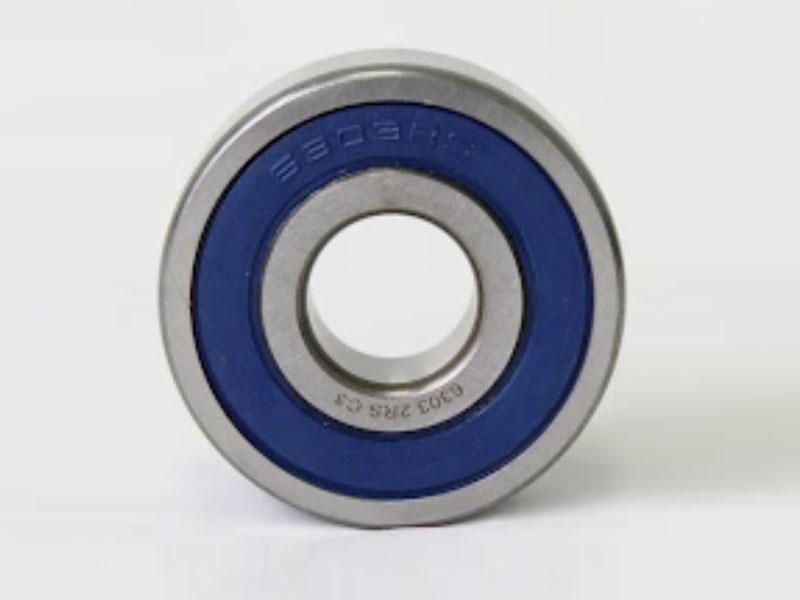
The 6203-2RS bearing is a single‑row deep groove ball bearing, one of the most common bearing types across industrial and automotive applications.
Breaking down the 6203-2RS code:
| Code Element | Meaning |
|---|---|
| 6 | Single‑row deep groove ball bearing |
| 2 | Dimensional series (light series) |
| 03 | Bore size code — corresponds to 17 mm inner diameter |
| 2RS | Two Rubber Seals (double contact rubber seals) |
Complete specifications of the 6203-2RS bearing:
- Inner diameter (bore): 17 mm
- Outer diameter: 40 mm
- Width: 12 mm
- Seal type: Double rubber sealed (contact type, NBR rubber with steel insert)
- Dynamic load rating (Cr): 9,550–9,950 N
- Static load rating (Cor): 4,750–4,800 N
- Limiting speed (grease lubrication): 12,000–17,000 rpm
- Operating temperature range: −30°C to 110°C (−22°F to 230°F)
The 2RS suffix indicates a contact seal that provides robust protection against dust, moisture, and contaminants while retaining lubricant.
Understanding the 6203-2RS-8 Bearing
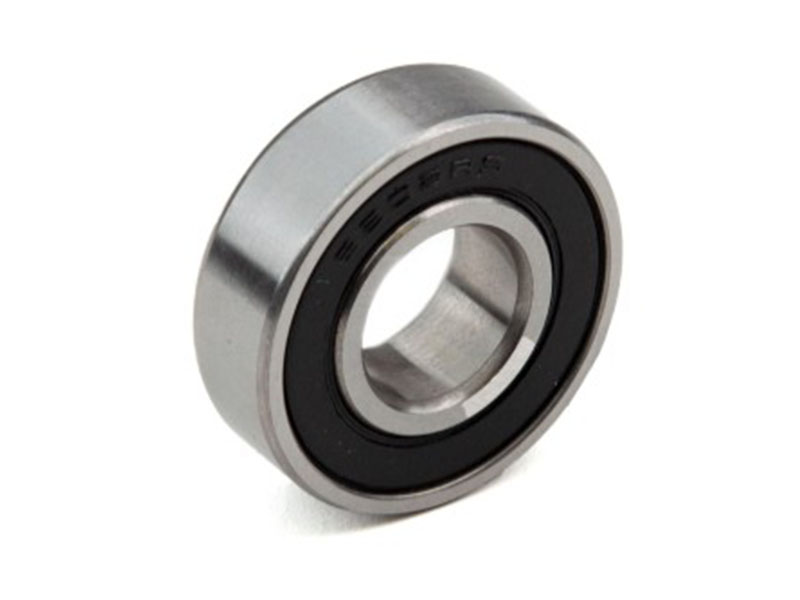
The 6203-2RS-8 bearing is nearly identical to the standard 6203-2RS, except for its bore size. The additional suffix “-8” (also written as /8, -08, or 2RS8) designates an imperial (inch‑based) bore machined into an otherwise metric bearing frame.
Complete specifications of the 6203-2RS-8 bearing:
- Inner diameter (bore): ½ inch (12.7 mm)
- Outer diameter: 40 mm (same as 6203-2RS)
- Width: 12 mm (same as 6203-2RS)
- Seal type: Double rubber sealed (2RS)
- Dynamic load rating (Cr): 9,550–9,950 N (identical to 6203-2RS)
- Static load rating (Cor): 4,750–4,800 N (identical)
- Limiting speed (grease): 12,000–17,000 rpm (identical)
In inch units: 0.50″ ID × 1.5748″ OD × 0.4724″ width.
The “-8” suffix refers to ½ inch expressed in eighths (4/8). This imperial‑bore metric bearing is designed for equipment with ½‑inch shafts, commonly found in North American machinery. This model is also referenced as 6203-08DDU, 6203-2RS8, 6203/8-2RS, or 6203LLB/12.7.
The Main Difference Between 6203-2RS and 6203-2RS-8 Bearings
The key distinction is the inner bore diameter. All other dimensions, load ratings, and speed capabilities are identical.
| Specification | 6203-2RS | 6203-2RS-8 |
|---|---|---|
| Inner diameter (bore) | 17 mm | ½ inch (12.7 mm) |
| Outer diameter | 40 mm | 40 mm |
| Width | 12 mm | 12 mm |
| Seal type | Double rubber seal (2RS) | Double rubber seal (2RS) |
| Dynamic load rating | 9,550–9,950 N | 9,550–9,950 N |
| Static load rating | 4,750–4,800 N | 4,750–4,800 N |
| Limiting speed (grease) | 12,000–17,000 rpm | 12,000–17,000 rpm |
Because the two bearings share identical raceways, ball sets, cages, and seals, their performance characteristics are indistinguishable. The only factor that determines compatibility is the shaft diameter.
Applications of Each Bearing
6203-2RS Bearing Applications (Metric Shafts)
- Electric motors — fractional to 15 kW motors, fans, blowers, compressors
- Conveyor systems — rollers and drive pulleys
- Industrial pumps — water pumps, vacuum pumps
- Power transmission — belt drives, gearboxes, light‑duty industrial machinery
- Automotive components — alternators, starters, HVAC blowers
6203-2RS-8 Bearing Applications (Imperial Shafts)
- Lawn mowers and garden tractors — spindle bearings on cutting decks
- Snow blowers and snow throwers — auger and impeller shafts
- American‑built industrial tools — table saws, drill presses, band saws
- Small engines and outdoor power equipment — engine shafts
- Agricultural machinery — older balers, mowers, and spreaders
Most European and Asian equipment uses the metric 6203-2RS. North American equipment manufactured before or during the metric transition often uses the imperial‑bore 6203-2RS-8.
How to Measure Shaft Diameter and Choose the Correct Bearing
Follow this step‑by‑step process to select the right bearing.
Step 1 — Measure the shaft diameter
Use a digital caliper or micrometer. Measure at three points around the shaft circumference and take the average.
- If the shaft measures 17.00 mm (tolerance −0 to −0.008 mm) → Select the 6203-2RS
- If the shaft measures ½ inch (12.7 mm) → Select the 6203-2RS-8
Example: A technician measured a lawn mower spindle shaft and obtained three readings: 12.68 mm, 12.71 mm, and 12.70 mm. The average (12.70 mm) confirms a ½‑inch nominal diameter, so the correct bearing is the 6203-2RS-8.
Step 2 — Verify the housing bore
Both bearings share the same 40 mm outer diameter, so no additional housing measurement is required. Confirm the housing is free of burrs or damage.
Step 3 — Check existing bearing markings
If replacing a worn bearing, examine the stamped markings. Look for “6203-2RS” or “6203-2RS-8” (also marked as 6203-08DDU, 6203/8-2RS, or 6203.2RS8).
Step 4 — Avoid using sleeves or adapters
Do not attempt to fit a 6203-2RS onto a ½‑inch shaft using a sleeve, or vice versa. Improvised adaptations introduce clearance issues, reduce load capacity, and typically cause early bearing failure. Always use the bearing with the correct bore size.
Frequently Asked Questions (FAQs)
Q1: Which bearing should I use for a 0.5‑inch shaft?
A1: If your shaft measures exactly 0.5 inch (12.7 mm), you need the 6203-2RS-8 bearing. The standard 6203-2RS has a 17 mm bore and will not fit.
Q2: Can I use a 6203-2RS bearing on a ½‑inch shaft with a sleeve?
A2: No. Even with a precision sleeve, the additional tolerance stackup reduces radial clearance control and introduces two potential failure points. Use the correct bore size bearing.
Q3: Are 6203-2RS and 6203-2RS-8 bearings interchangeable across different brands?
A3: Yes. Both dimensions and performance ratings are standardized under ISO 15. A 6203-2RS from SKF, NSK, FAG, or DUHUI Bearing is dimensionally interchangeable with any other brand’s 6203-2RS. The bore difference between metric and imperial versions is consistent across manufacturers.
Q4: What does the “-8” or “/8” designation mean on other bearing sizes?
A4: The “-8” suffix generally indicates an imperial bore conversion applied to a standard metric bearing series. For example, a 6204-2RS-8 has an imperial bore while retaining the 47 mm outer diameter of a metric 6204 bearing.
Q5: Why would a manufacturer choose an inch‑bore metric bearing instead of a fully imperial bearing series?
A5: This allows OEMs to use standardized metric housings and external dimensions while accommodating inch‑based shafts. It reduces inventory complexity compared to stocking a complete imperial bearing series.
Q6: How do I identify which bearing I have if the markings are worn?
A6: Measure the inner diameter with a digital caliper. A reading of 17.0 mm (± tolerance) indicates a 6203-2RS. A reading of approximately 12.7 mm indicates a 6203-2RS-8.
Summary
The 6203-2RS and 6203-2RS-8 bearings are identical in every way except for their bore diameter. The 6203-2RS fits metric 17 mm shafts, while the 6203-2RS-8 fits imperial ½‑inch (12.7 mm) shafts. Both bearings offer the same load ratings, speed capabilities, sealing protection, and external dimensions. Always measure your shaft before ordering a replacement bearing to ensure proper fit, smooth operation, and maximum service life. For equipment that uses both metric and imperial shafts, stocking both variants is recommended to minimize maintenance downtime.