That humming noise on the highway that gets louder as you accelerate—it’s more than just an annoyance; it’s a warning. A faulty wheel bearing compromises your vehicle’s safety and handling. This comprehensive step-by-step guide is designed to help you understand, diagnose, and fix wheel bearing issues effectively to ensure vehicle safety and reliability.
What is Wheel Bearing?
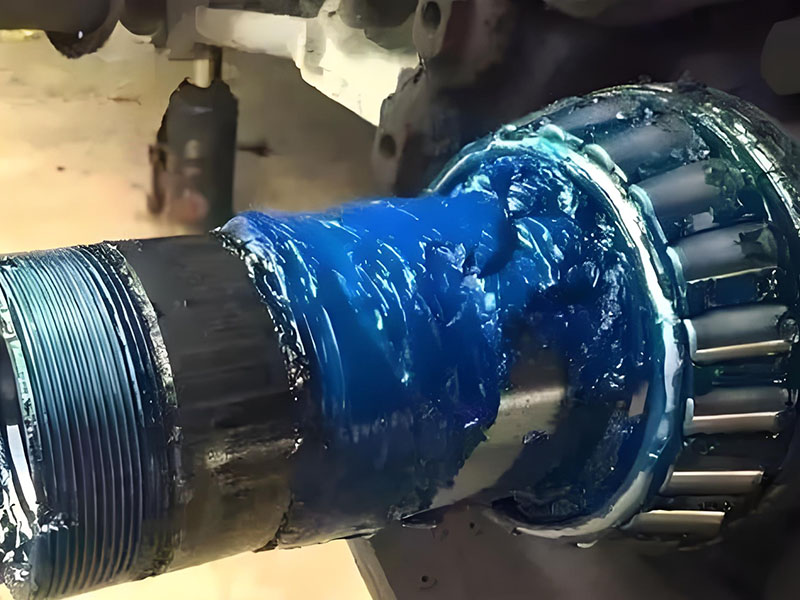
A wheel bearing is a set of steel balls (or tapered rollers) held together by a metal ring, or race. It fits snugly inside the wheel hub, riding on a metal axle shaft. Its primary job is to allow your wheels to spin with minimal friction while simultaneously supporting the entire weight of your vehicle . When a wheel bearing fails, it doesn’t just make noise; it introduces dangerous play into your wheel assembly, which can lead to loss of control, damage to your axle, and even the wheel separating from the vehicle. Recognizing the symptoms of a bad wheel bearing early is paramount.
Common Causes of Wheel Bearing Failure
Understanding why bearings fail can help you prevent premature wear on your replacements. Common culprits include:
- Impact Damage: Striking potholes, curbs, or debris sends a shockwave through the bearing, potentially denting the bearing races.
- Tire Imbalance or Worn Suspension: Excessive vibration from unbalanced tires or worn ball joints puts unnatural stress on the bearing, accelerating wear .
- Contamination: If the bearing’s seal is damaged, water, dirt, and salt can enter, washing away lubricant and causing corrosion and rapid deterioration .
- Improper Installation: This is a leading cause of premature failure. Using a hammer to install a bearing, or applying pressure to the wrong part of the bearing during installation, will damage it instantly.
The Symptoms of Wheel Bearing Failure
Before you start wrenching, you need to be sure the issue is a wheel bearing. Look for these telltale signs :
- Noise: A cyclic humming, growling, or grinding noise that changes with vehicle speed. It may get louder when turning in one direction.
- Steering Vibration: A loose or vibrating steering wheel, especially at higher speeds.
- Wheel Wobble: A feeling that the wheel is loose.
- Uneven Tire Wear: Cupping or scalloping on the tire tread.
- ABS Light: Excessive play in the bearing can disrupt the signal from the wheel speed sensor, triggering the ABS warning light on your dashboard.
How to Diagnose a Failing Wheel Bearing: Step-by-Step Guide
The Cornering Load Test (Road Test)
This dynamic test exploits how vehicle weight transfers during turns, loading and unloading each bearing.
- Find a safe, empty road with minimal traffic. Never perform diagnostic maneuvers in traffic.
- Accelerate to the speed where the noise is most noticeable (typically 50-80 km/h or 30-50 mph).
- Gently swerve left: As you turn left, vehicle weight shifts to the right side wheels. If the noise gets louder, the right wheel bearing is likely failing.
- Gently swerve right: As you turn right, weight shifts to the left side wheels. If the noise gets louder, the left wheel bearing is the suspect.
- Return to straight-line driving. If the noise diminishes, you’ve confirmed the diagnosis.
Why this works: A worn bearing has internal damage—pitted races or spalled rollers. When additional vehicle weight loads the damaged components, they generate more noise. Unloaded bearings become quieter temporarily.
Important distinction: If the noise changes with steering but remains constant regardless of turning direction, suspect tire noise or driveline issues rather than bearings.
The Chassis Ear/Stethoscope Test
For precision confirmation, professional technicians use acoustic tools to isolate bearing noise.
Procedure:
1.Safely lift the vehicle and support it on jack stands. All four wheels should be off the ground.
2.Start the engine and run the vehicle at moderate speed (approximately 50-60 km/h) in drive for automatic transmissions, or carefully simulate speed with a driveline spinner in workshops.
3.Use a mechanic’s stethoscope with the probe removed (using just the hose) to listen at specific points:
- Touch the probe to the steering knuckle near each wheel hub.
- Compare the sound between left and right sides.
- Move to the control arms and struts to rule out suspension noise.
4.The faulty bearing will produce a distinct rough, grinding sound transmitted through the metal components.
Safety warning: Never place yourself under a vehicle supported only by a jack. Always use properly rated jack stands on level ground.
Physical Play Inspection (Static Check)
This method reveals excessive clearance caused by internal wear.
Procedure:
- Lift the vehicle and secure it on jack stands. Ensure the wheel is off the ground and free to move.
- Grasp the tire at the 3 o’clock and 9 o’clock positions (horizontal). Push and pull firmly. Any noticeable clunking or movement indicates wear in the steering linkage or wheel bearing.
- Grasp the tire at the 12 o’clock and 6 o’clock positions (vertical). Push and pull firmly. Movement here often indicates wheel bearing wear, though ball joint wear can also cause vertical play.
- Differentiate the source: While grasping at 12 and 6, have an assistant watch the ball joint and control arm bushings. If you see movement at the ball joint before feeling play at the bearing, the issue may be suspension-related.
- Spin the wheel: Rotate the wheel rapidly by hand. Listen for roughness, grinding, or irregular resistance. A smooth-spinning bearing indicates good condition.
Pro tip: For vehicles with integrated wheel speed sensors, excessive play can damage the sensor or tone ring. If you detect significant movement, inspect the ABS sensor wiring and tone ring condition before proceeding.
Temperature Comparison Test
Internal friction from a damaged bearing generates excess heat.
Procedure:
1.Drive the vehicle sufficiently to warm all components (approximately 15-20 minutes of normal driving).
2.Stop in a safe location and immediately use an infrared thermometer or carefully (with caution) feel the center of each wheel hub through the wheel openings.
3.Compare temperatures across all four wheels. A significantly hotter wheel hub—typically 10-15°C (20-30°F) higher—indicates excessive friction from bearing damage.
4.Document temperatures for comparison. For example:
| Wheel Position | Temperature | Status |
| Front Left | 42°C | Baseline |
| Front Right | 58°C | Suspect |
| Rear Left | 40°C | Normal |
| Rear Right | 41°C | Normal |
Caution: Brake components naturally generate heat. Ensure you’re measuring the hub center, not the brake rotor. Allow cooling time if brakes were recently applied heavily.
ABS Sensor Signal Analysis
For advanced diagnostics using professional scan tools, wheel speed sensor data reveals bearing condition.
Procedure:
- Connect a professional-grade scan tool capable of reading live wheel speed sensor data.
- Lift the vehicle and support it safely.
- Spin each wheel manually at a consistent speed while monitoring the sensor output.
- Compare the waveform or data consistency between wheels. A damaged bearing with excessive play or internal damage will produce erratic sensor readings due to tone ring misalignment.
- Fluctuating or dropout signals often indicate bearing wear even before audible noise develops.
This method is particularly valuable for diagnosing intermittent ABS activation or warning lights without obvious mechanical symptoms.
How to Replace a Wheel Bearing: Step-by-Step Guide
Once you’ve diagnosed a bad bearing, it’s time for the repair. This process can vary by vehicle, but the core principles remain the same.
Safety Tips & Preparation
- Safety Tips: Always wear safety glasses and mechanic’s gloves.
- Tools & Parts: You’ll need a socket set, torque wrench, breaker bar, jack and jack stands, a bearing press or suitable driver set, cleaning solvent, high-temperature grease, and your new high-quality wheel bearing .
How to Remove: Step-by-Step
- Loosen the lug nuts while the vehicle is on the ground.
- Lift the vehicle and securely support it on jack stands. Remove the wheel.
- Remove the brake caliper and support it with a wire—do not let it hang by the hose. Remove the brake rotor .
- Remove the axle nut and any bolts securing the hub assembly to the steering knuckle.
- Remove the hub assembly. You may need a puller.
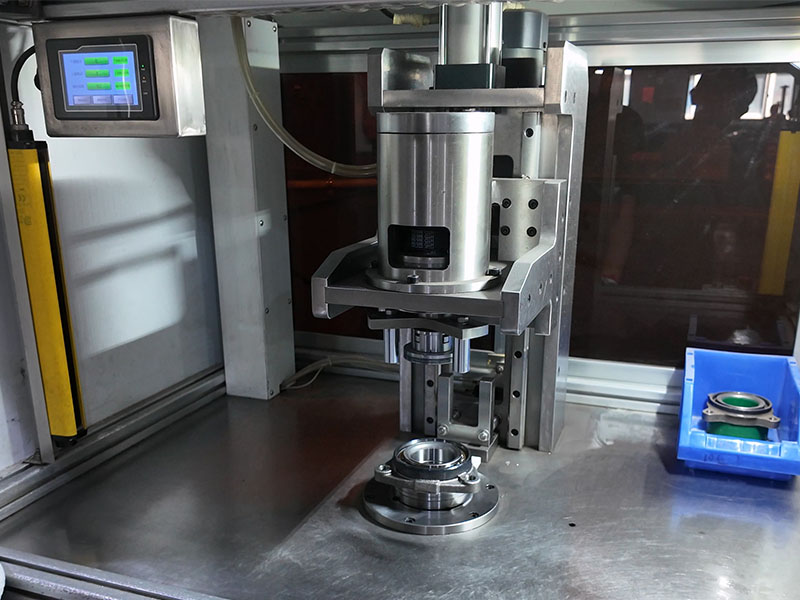
- Using a hydraulic press and the correct adapters, press the old bearing out of the hub or knuckle .
How to Install: Step-by-Step
This is where precision and quality meet. As a manufacturer, we cannot stress enough the importance of this phase.
- Cleanliness is Godliness: Thoroughly clean the bearing bore in the knuckle. Remove any rust, debris, or old metal shavings. A dirty bore will prevent the new bearing from seating properly and can cause it to fail prematurely .
- Use the Correct Tools: Never, ever hammer a new bearing into place. You must use a hydraulic press or a precision bearing driver set.
- Apply Pressure Correctly: This is the most crucial rule. When pressing the new bearing into the knuckle, you must only apply pressure to the outer race of the bearing. If you press on the inner race, you will transfer the force through the balls and brinell (dent) the races, destroying the bearing before it even spins. Use a driver tool that fits perfectly against the bearing’s outer edge .
- Press Until Seated: Apply steady, even pressure until the bearing is fully seated against its shoulder or retaining ring groove.
- Torque to Spec: When reassembling, all nuts and bolts, especially the axle nut and caliper bolts, must be tightened to the vehicle manufacturer’s exact torque specifications using a torque wrench .
Post-installation Check and Road Test
- Spin the wheel by hand. It should rotate smoothly and quietly with no binding or grinding.
- Re-install the wheel, lower the vehicle, and torque the lug nuts in a star pattern.
- Take the car for a slow, careful test drive. Listen for the return of any noise and ensure the steering feels tight and responsive.
Prevention: Extending Your Wheel Bearing Life
To protect your investment, maintain your vehicle’s health:
- Avoid Impact: Slow down for potholes and avoid hitting curbs.
- Regular Maintenance: Keep your tires balanced and suspension components in good repair.
- Listen: Be alert to any new or unusual noises. Catching a problem early can save you from a more extensive and expensive repair down the road.
Conclusion
Replacing a wheel bearing is a critical maintenance task that directly impacts your safety on the road. By following this step-by-step guide, you can accurately diagnose issues and perform a reliable repair. Remember, the longevity of your repair depends on two things: following the correct installation procedures and, most importantly, the quality of the parts you use.
DUHUI is committed to manufacturing precision automotive bearings that meet the highest standards of durability and performance, offering a range of wheel bearing kits and wheel assemblies for over 4,000 vehicle models.