Selecting the wrong pillow block bearing is a common and costly mistake. You might have the perfect bearing in mind, but if it doesn’t fit your mounting holes or align with your shaft, your entire project can grind to a halt. The key to getting it right lies in one critical document: the pillow block bearing size chart. DUHUI will walk you through the key features, common types, and step-by-step process for reading these charts, ensuring you select the correct housing for your application every time.
Key Features That Impact Size and Performance
Before diving into size charts, it’s essential to understand the core features that define a pillow block bearing’s capabilities and dimensional characteristics.
Housing Material: Cast Iron vs. Cast Steel
- Cast Iron is the standard choice for general industrial applications. It offers excellent rigidity, natural vibration damping, and good cost-effectiveness. Most size charts default to cast iron specifications.
- Cast Steel provides superior strength and impact resistance, making it the preferred choice for heavy-duty applications or environments with high shock loads. While the external dimensions may be identical to cast iron counterparts, cast steel housings can withstand significantly higher stress without cracking.
Seal Types: Contact vs. Non-Contact
The seal type directly affects both protection level and speed capability:
- Contact Seals (rubber lip seals) provide excellent protection against dust, moisture, and contaminants. However, they generate friction, which limits the bearing’s maximum speed.
- Non-Contact Seals (metal shields) allow for higher operating speeds but offer less protection against fine particles. When reading a size chart, note that the same housing may have different speed ratings depending on the seal type specified.
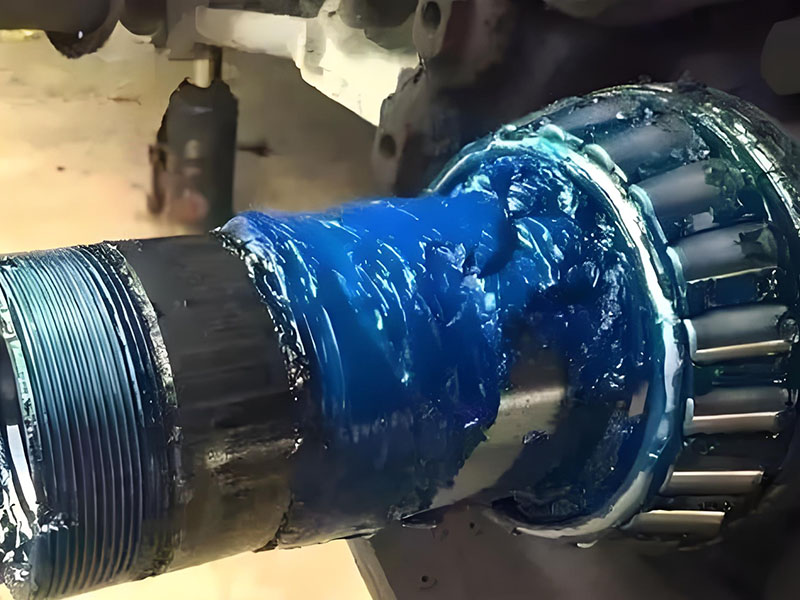
Lubrication: Pre-lubricated vs. Relubricatable
- Pre-lubricated and sealed for life bearings require no maintenance but cannot be relubricated in the field.
- Re-lubricatable housings feature a grease fitting (zerk) and require space for maintenance access. If your application demands relubrication, ensure your mounting layout accommodates this feature.
Common Types of Pillow Block Bearings and Their Size Implications
Pillow block bearings come in various configurations. Understanding the type you need will guide you to the correct section of a size chart and help you interpret the dimensions correctly.
By Housing Structure
| Type | Description | Size Implications |
| Standard Pillow Block | Two-bolt or four-bolt base design for general mounting | Dimensions focus on base length, width, and center height |
| Flanged Housing | Mounts on the side of equipment rather than a base | Key dimensions are flange size and bolt circle diameter |
By Insert Bearing Type
The internal bearing type significantly influences the overall housing dimensions for a given shaft diameter:
- Ball Bearings: The most common type. Housings are relatively compact and suitable for moderate loads and high-speed applications.
- Spherical Roller Bearings: Designed for heavy loads and capable of accommodating significant shaft misalignment. For a given bore diameter, these housings are substantially larger and heavier.
- Cylindrical Roller Bearings: Offer high radial load capacity. Their housings are typically more robust in design, with thicker walls and larger mounting bases to handle the increased loads.
Step 1: How to Determine the Correct Housing Dimensions for Your Application
Now that you understand the basic types and features, it’s time to measure your application requirements. Start by identifying these four critical parameters:
- Shaft Diameter: This is your primary reference point. The bearing’s bore must match your shaft size precisely.
- Shaft Center Height: The distance from the base of the housing to the center of the shaft. An incorrect measurement here will cause misalignment.
- Mounting Hole Size and Pattern: The bolt hole size and spacing must align with your machine’s mounting plate.
- Base Length and Width: Ensure the housing’s footprint fits within your allocated space.
Analyzing Your Installation Space
Beyond basic dimensions, consider the surrounding environment. Is the mounting area confined? Will there be high vibration? Account for bolt installation clearance and ensure there is enough space for future maintenance tasks such as relubrication.
Step 2: Decoding a Sample Bearing Housing Size Calculation
Size charts often list dimensions directly, but understanding how they combine to form the overall housing size is crucial for verifying fit. Let’s break down a typical calculation for a standard pillow block housing using a deep groove ball bearing insert.
| Parameter | Description | Value |
| Bearing Type | Deep groove ball bearing | — |
| Bearing Outer Diameter | The outer diameter of the bearing insert | 47 mm |
| Bearing Width | The width of the bearing insert | 14 mm |
| Fixture Space | Space needed on each side for bolt installation | 3 mm per side |
| Sealing Space | Space required for dust cover installation | 2 mm |
| Total Housing Width | Bearing outer diameter + (2 × fixture space) + sealing space | 47 + 6 + 2 = 55 mm |
| Total Housing Height | Bearing width + sealing height + fixture height | 14 + 2 + 3 = 19 mm |
Why This Matters
This example shows that final housing dimensions are not arbitrary. They are a calculated sum of the bearing’s physical size plus necessary operational clearances. Skipping this mental verification can lead to purchasing a housing that is too large for your space or too small to allow for proper bolt fastening.
Step 3: How to Read a Pillow Block Bearing Size Chart (Metric vs. Imperial)
Now let’s put everything together. A typical size chart will include columns like these:
| Column Header | Description |
| Bore Diameter | The diameter of the hole that fits over your shaft |
| Housing No. | A unique identifier for the housing assembly (e.g., P205) — your shortcut to finding complete specifications |
| Dimensions | Includes critical mounting measurements such as base length (A), base width (B), center height (H), and bolt size |
A Step-by-Step Guide to Finding Your Size
- Start with your shaft diameter.
- Locate the corresponding row in the “Bore Diameter” column.
- Note the “Housing No.” for that row. This serves as your reference code for reordering.
- Read across the row to find the mounting dimensions (A, B, H). Verify that these fit your machine’s mounting plate and provide the correct shaft center height.
Critical Warning: The Metric/Imperial Mismatch Trap
This is a common and costly pitfall. Never assume that a 1-inch shaft (25.4 mm) can use a bearing with a 25 mm bore. While numerically close, metric and imperial bearings are manufactured to different tolerance standards (e.g., a 25 mm bore uses a j6 or k6 shaft tolerance, while a 1-inch bore follows a different standard).
Mixing systems will result in either:
- A loose fit that damages the shaft and causes premature wear, or
- An interference fit so tight it can damage the bearing during installation
Always ensure your shaft and bearing bore are from the same measurement system.
Critical Performance Limits: Why Load and Speed Are Redlines You Cannot Cross
Once you have confirmed the physical fit, you must verify that the bearing can handle the operational demands. These parameters are usually found in a chart’s footnotes or a linked specification sheet.
Load Capacity
Look for the Basic Dynamic Load Rating (C) . This is the constant load a bearing can theoretically endure for one million revolutions.
Risks of Overloading:
- Fatigue spalling: Flaking of the bearing raceways due to stress cycles
- Housing cracking: Excessive stress can cause the housing itself to fracture
Speed Limits
The limiting speed is determined by the bearing’s internal design, seal type, and lubricant. This value is not just a suggestion—it is a safety boundary.
Risks of Over-Speeding:
- Lubricant degradation: Loss of film strength leads to metal-to-metal contact
- Seal burn-out: Contact seals can harden and fail, allowing contaminant ingress
- Cage fracture: Excessive centrifugal force can cause the bearing cage to break
Locating These Values
On a comprehensive size chart or product specification sheet, look for:
- C or Cr: Basic dynamic load rating (radial)
- Limiting Speed: Often listed separately for grease and oil lubrication
- Reference Speed: A thermal speed rating for comparison purposes
Conclusion
Choosing the correct pillow block bearing doesn’t have to be complex. Follow this checklist to ensure you make the right decision:
| Step | Action |
| 1 | [ ] Define the operating environment: Load, speed, temperature, and contamination levels |
| 2 | [ ] Understand key features: Material, seal type, and lubrication requirements |
| 3 | [ ] Identify the bearing type: Ball, spherical roller, or cylindrical roller based on load and misalignment needs |
| 4 | [ ] Measure your shaft: This is your starting point for bore diameter |
| 5 | [ ] Determine mounting space: Check center height, base dimensions, and bolt hole locations |
| 6 | [ ] Consult the size chart: Use shaft diameter to find housing number and mounting dimensions |
| 7 | [ ] Verify measurement systems: Ensure you are not mixing metric and imperial components |
| 8 | [ ] Check performance limits: Confirm that load and speed ratings exceed your application’s requirements |
By following this structured approach—understanding features and types first, then working through the measurement and size chart steps, and finally verifying performance limits—you can confidently select a pillow block bearing that will deliver reliable, long-lasting performance.