
Structure and Components
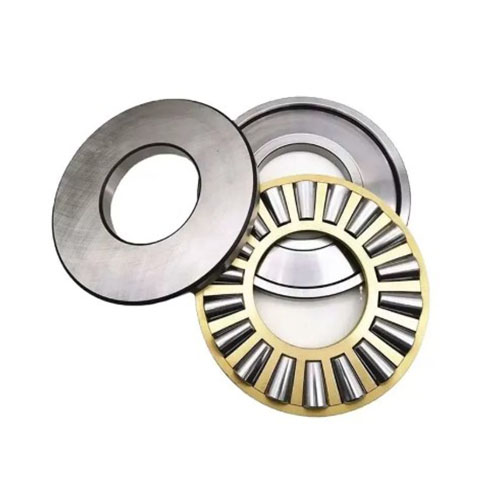
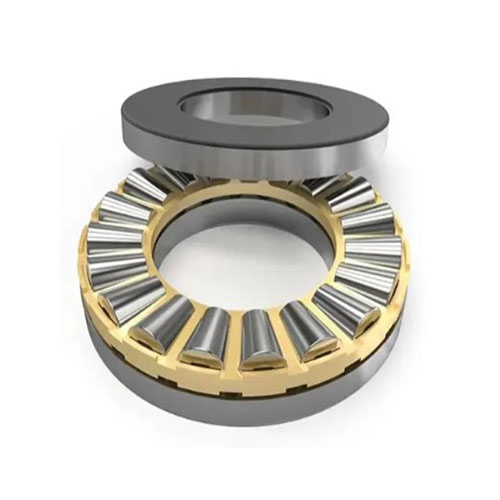
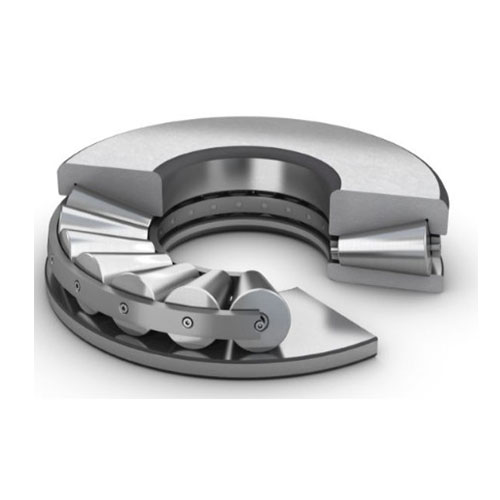
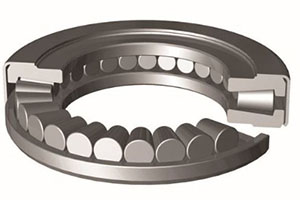
A thrust tapered roller bearing consists of three separable parts: a shaft washer with a tapered raceway, a housing washer, and a roller‑and‑cage assembly where tapered rollers are guided by a cage. Because the bearing is separable, each component can be installed independently – a practical advantage when working in confined machinery spaces.
In single‑direction designs, the bearing accepts axial force from one side only. The tapered geometry of both raceways ensures that the extension lines of the raceways and the rollers meet at a common point on the bearing axis. This is known as true rolling motion: every point on the roller surface moves without differential sliding, which reduces internal friction and heat generation.
Key Performance Features
- High axial load capacity – Line contact between tapered rollers and raceways distributes thrust loads over a larger area than point contact in ball bearings, delivering significantly higher load ratings in the same envelope.
- True rolling motion design – Converging raceway and roller apex lines eliminate sliding friction, lowering operating temperatures and permitting higher speeds than thrust cylindrical roller bearings.
- Separable components – Shaft washer, housing washer, and cage‑roller unit can be mounted individually, simplifying assembly and maintenance in gearboxes, pumps, and industrial drives.
- Compact axial arrangement – The bearing height is small relative to its load capacity, making it suitable for applications with limited axial space such as steering pivots and automatic transmissions.
- Case‑carburized steel construction – High‑cleanliness case‑carburized bearing steel provides a hard, wear‑resistant surface and a tough, crack‑resistant core – ideal for shock loads and peak thrust conditions.
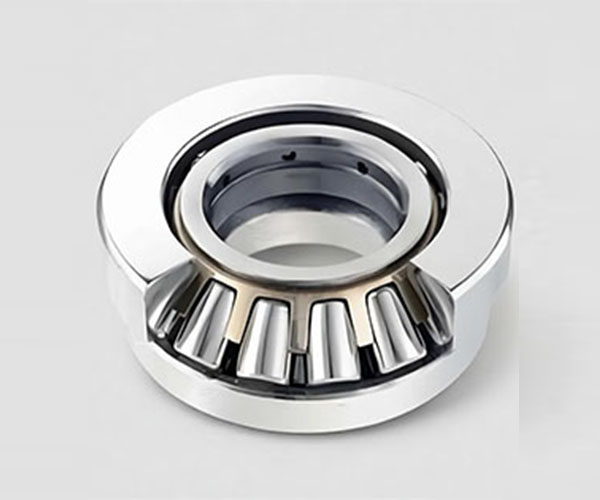
Technical Deep Dive: Design, Materials, and Selection Criteria
Thrust tapered roller bearings are a specialized class of rolling bearings designed to support pure axial loads in one direction. Unlike radial bearings that mount parallel to the shaft, thrust bearings are installed perpendicular to the shaft axis. The load is transferred from the rotating shaft to the stationary housing through two washers (shaft washer and housing washer) with rolling elements between them. Among all thrust bearing types, the tapered roller variant stands out because of its unique raceway geometry, which offers superior rigidity, higher load capacity, and better speed capability than cylindrical roller thrust bearings, while also delivering much higher axial load limits than thrust ball bearings.
The defining geometric feature of a thrust tapered roller bearing is its tapered raceway on both washers and its tapered rollers. When extended, the tapered surfaces of the raceways and the rollers meet at a single point on the bearing axis. This condition, called true rolling motion, ensures that each point on the roller surface moves at a speed proportional to its distance from the apex. As a result, no differential sliding occurs between the large end and the small end of the roller. In conventional cylindrical roller thrust bearings, some sliding is unavoidable, which increases friction and limits speed. The true rolling motion in tapered designs allows bearings to operate at higher speeds with lower torque and less heat.
Manufacturing capabilities – DUHUI operates a modern facility in China under ISO 9001 and IATF 16949 quality systems. Production processes include vacuum degassed steel, precision forging, and CNC grinding lines capable of holding tolerances within IT5 grade. All bearings are 100% inspected for dimensional accuracy, running noise, and torque consistency before shipment. This makes DUHUI a trusted supplier to OEM and aftermarket customers worldwide.
Cage selection significantly influences bearing performance. Several cage options are available: machined brass cages for general industrial applications where moderate speeds and good wear resistance are needed; stamped steel cages for cost‑sensitive applications; and pin‑type cages where hardened pins pass through axial holes in each roller. Pin‑type cages allow more rollers to be packed into the same pitch circle, increasing load capacity by 15–25% compared to pocket‑type cages. For oscillating or low‑speed applications (e.g., crane hooks or pivot joints), full complement thrust tapered roller bearings without a cage are supplied. Removing the cage allows even more rollers, maximizing static load capacity at the expense of speed.
When selecting a thrust tapered roller bearing for a specific application, engineers must evaluate several parameters: the magnitude and direction of the axial load (unidirectional or bidirectional), the required operating speed, the available axial space, lubrication method, and the presence of shock or vibration. For unidirectional loads, a single‑direction bearing is sufficient. For bidirectional loads, two single‑direction bearings mounted face‑to‑face or a double‑direction integral bearing should be used. If the application involves combined axial and radial loads, a spherical roller thrust bearing may be more appropriate – but for pure or predominantly axial thrust, tapered roller designs offer the best combination of capacity and speed.
Standard product ranges cover bore diameters from 20 mm to over 600 mm, with custom sizes available for large‑scale OEM projects. Every bearing is subjected to 100% dimensional inspection, running noise testing, and torque verification before shipment, in compliance with ISO 199 (thrust bearings) and ISO 104 (general bearing standards). For aftermarket customers, dimension and load rating data that matches common industry standards is provided, ensuring straightforward replacement.
A complete range of thrust tapered roller bearings for automotive, industrial, and oscillating applications is manufactured. Available in single‑direction, double‑direction, and full complement configurations, these bearings are produced in China under ISO 9001 and IATF 16949 quality systems. For sizing, load rating data, or aftermarket interchange information, contact DUHUI technical support.
Product types and series
The product offering is organized by three design configurations. Based on these types, corresponding aftermarket series are available for each configuration. Below are the three fundamental design configurations of thrust tapered roller bearings. Each configuration is defined by its load direction capacity and component arrangement.
- Product types by design
- Single-Direction series
- Double-Direction series
- Full Complement series
Product types by design
Introduction to design configurations – Thrust tapered roller bearings are manufactured in three distinct design configurations, each optimized for specific load direction and application requirements. The following summaries define each type.
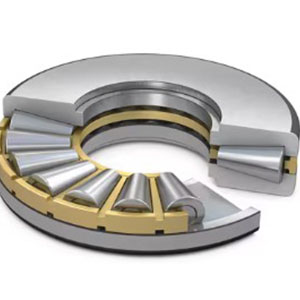
Designed for axial loads from one direction only. Assembly includes one shaft washer with tapered raceway, one housing washer, and a cage‑guided roller set. Separable components allow independent mounting. Common in gearbox shafts, vertical pumps, and steering pivots.
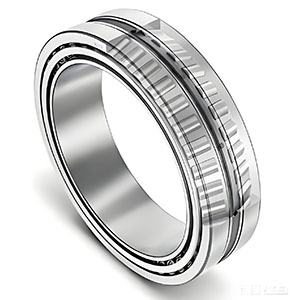
Incorporate two housing washers (each with tapered raceway and guide flange) plus a common flat shaft washer. Support axial loads in both directions. Used in rolling mill screwdown systems, heavy machine tool spindles, and reversing gearboxes.
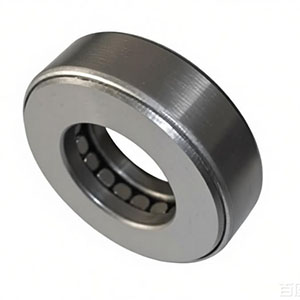
No cage – maximum roller count within the envelope. Highest static load capacity, but limited to oscillating or very low‑speed applications. Ideal for crane slewing rings, pivot joints, and industrial actuators with reciprocating motion.
Single-Direction series
Aftermarket series for single‑direction applications – The following series are available for single‑direction thrust tapered roller bearings, covering heavy‑duty industrial, automotive light‑duty, and standard interchange requirements. Each series is stocked and ready for immediate shipment.
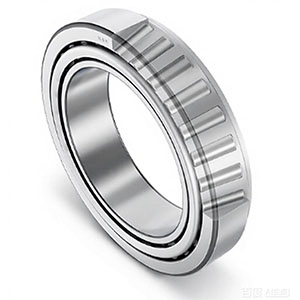
Heavy‑duty single‑direction bearings with cage, delivering up to 40% higher axial load capacity than cylindrical thrust bearings of the same envelope. True rolling motion geometry permits higher speeds with minimal roller skewing. Available in bore sizes from 35 mm to over 1300 mm. Applications: oil well swivels, pulp refiners, extruders, and piercing mill thrust blocks. Case‑carburized steel for shock resistance.
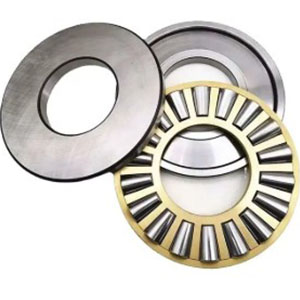
Light‑duty single‑direction bearings with outside retainer for handling ease. Off‑apex roller arrangement fits tight steering pivot envelopes. Available bore sizes from 35 mm to 1550 mm. Applications: automotive steering pivot positions, light agricultural steering mechanisms, and small industrial gearboxes. Compatible with common inch and metric dimension standards.
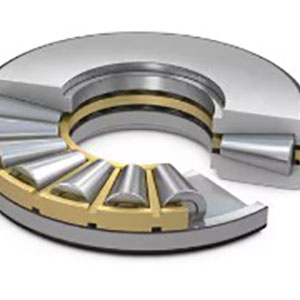
Single‑direction series covering metric dimensions (ISO 355 and JIS B 1512) and inch dimensions (ABMA standard). Direct cross‑reference with industry standard bearing numbers for automotive transmissions, pump thrust positions, and industrial gearbox replacements. All bearings meet ISO dimensional and load rating requirements.
Double-Direction series
Aftermarket series for double‑direction applications – The following series are specifically designed for bidirectional axial loads, commonly used in rolling mill screwdown systems and heavy industrial equipment where reversing thrust occurs.
Double‑direction bearing with one tapered race, one flat race, rollers and cage. Most sizes use pin‑type cages for maximum roller density. Originally developed for screwdown applications in metal rolling mills where extremely high axial loads are bidirectional. Static load ratings exceed 28,300 kN for the largest sizes.
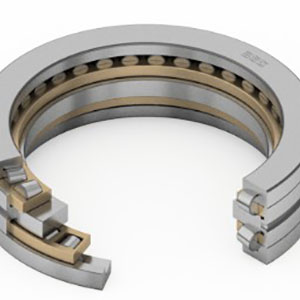
Self-Aligning Series
Same basic roller and raceway design as TTHDFL, except the lower race consists of two pieces with spherically ground faces to permit self‑alignment under initial misalignment. Accommodates slight shaft deflection or housing misalignment. Should not be used where dynamic misalignment occurs. Static load ratings exceed 28,300 kN for the largest sizes.
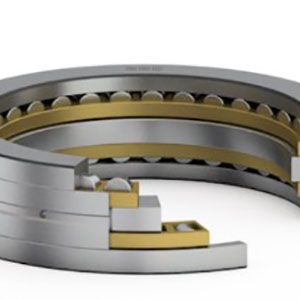
Heavy Industrial Double-Direction Bearings
Double‑acting thrust bearings for strip mills and cross rolling systems that generate large bidirectional axial forces. Special raceway profile geometries minimize edge stress concentrations caused by high thrust loads. Applications: steel mill service centers, aluminum rolling facilities, heavy machinery rebuilds. Bore diameters from 100 mm to over 600 mm.
Full Complement series
Aftermarket series for oscillating and low‑speed applications – The following series feature cageless full complement designs, delivering maximum static load capacity for applications involving reciprocating motion, swing movements, or very low rotational speeds.
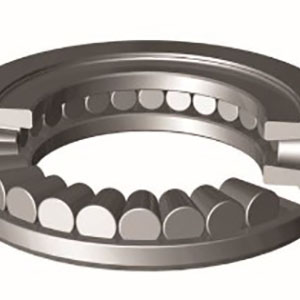
Full Complement Oscillating Bearings
Cageless full complement design with two tapered thrust races, rollers, and an outside retainer for shipping and installation. Maximum static load capacity for oscillating applications where rotational speed is not the primary constraint. Used in crane slewing rings, pivot joints, and industrial actuators. TTC, TTCS, and TTCL variants differ only in outside retainer construction.
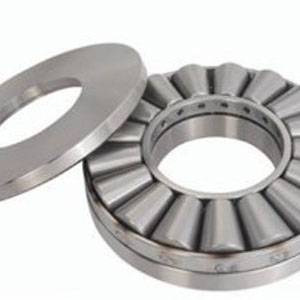
Heavy-Duty Cageless Bearings
Variant of TTC series with different outside retainer construction for specific installation requirements. Same cageless design as TTC, used extensively in heavy equipment pivot points, crane hooks, and mill screwdown mechanisms with oscillating motion.
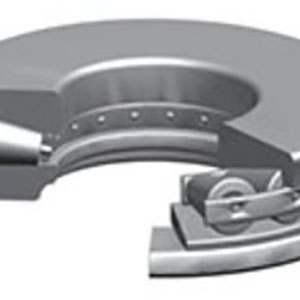
Large-Diameter Cageless Bearings
Third variant in the TTC family, featuring retainer construction tailored to large‑diameter applications. Maintains full complement cageless configuration. Aftermarket applications include large crane slewing rings, heavy industrial pivot joints, and mill screwdown mechanisms.
Other related thrust bearing types
In addition to thrust tapered roller bearings, several other thrust bearing types are manufactured. The brief descriptions below help engineers compare options.
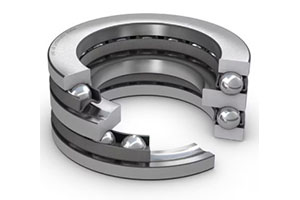
Use balls between two grooved washers. Suitable for light axial loads and relatively high speeds. Point contact limits load capacity, best for valves, small gearboxes, and rotary indexing tables where speed is prioritized over load.
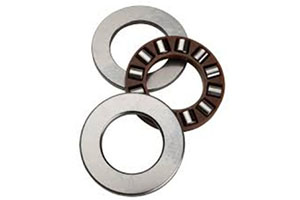
Use cylindrical rollers between flat washers. Offer high axial load capacity at low speeds and are separable for easy installation. Compared to tapered designs, they have lower speed limits and more internal sliding. Typical uses: crane hooks, vertical pumps, and rolling mill screwdowns with low rotational speeds.
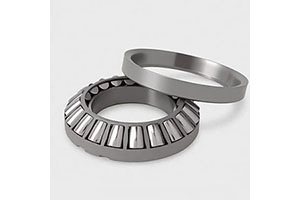
Features asymmetrical spherical rollers and a spherical raceway on the housing washer, allowing self‑alignment under shaft deflection or housing misalignment. Can handle combined axial and radial loads (radial load up to 55% of axial load). Applications: mining equipment, marine thrust blocks, and heavy gearboxes with alignment challenges.
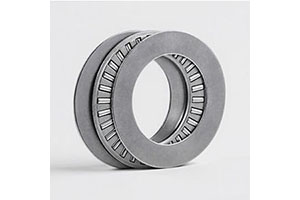
Employ long, thin needle rollers to achieve high load capacity in an extremely small axial height. Ideal for automotive automatic transmissions, torque converters, and compact gearboxes where axial space is critically limited. Speed capability is lower than that of ball thrust bearings.
Industry Applications
Thrust tapered roller bearings are specified across multiple industrial sectors where unidirectional axial loads must be supported with high rigidity and shock resistance. As a Chinese manufacturer with global export experience, DUHUI supplies these bearings to customers in over 40 countries. The following sections describe typical use cases.

In manual and automated truck gearboxes, these bearings support axial loads from helical gears and clutch release mechanisms. They also appear in heavy‑truck steer axles, trailer landing gears, and steering pivots, where they maintain accurate shaft positioning under variable load conditions.
Steel rolling mills use thrust tapered roller bearings in screwdown systems to control roll gap under extreme axial forces. Other applications include plastic extruders, pulp and paper refiners, boring mill tables, and hydraulic presses requiring rigid axial positioning under sustained heavy loads.
Top drives and oil well swivels in drilling rigs rely on thrust tapered roller bearings to support the entire weight of the drill string while allowing rotational motion. The bearings provide high shock load resistance and perform reliably in contaminated environments with proper sealing.
Cone crushers, excavator pivot joints, and crane hooks use thrust tapered roller bearings for axial load support during oscillating and rotating movements. Rigidity and impact resistance are critical due to the presence of shock loads from material crushing and heavy lifting.
Vertical turbine pumps and screw compressors generate significant axial thrust from impeller or screw rotation. Thrust tapered roller bearings are selected for these applications when axial space is limited and high stiffness is required to maintain rotor position.
Bearing Selection Articles and Technical Comparisons
The following internal articles compare bearing series and provide guidance for choosing between thrust tapered and other thrust bearing types.
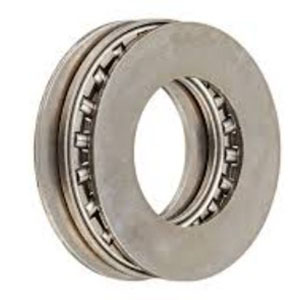
This case‑study article examines the axial load profile, shock conditions, contamination risks, and lubrication requirements specific to heavy truck steer axles. It explains why thrust tapered roller bearings are preferred over ball thrust bearings in commercial vehicle steering.
For more details, please read“Thrust Cylindrical Roller Bearing vs. Thrust Ball Bearing”
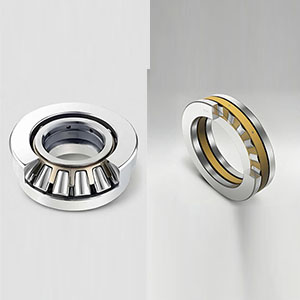
Analysis of axial-only vs. combined axial-radial load support. Thrust cylindrical bearings require separate radial bearings, while tapered designs integrate both functions. Includes calculation examples for hydraulic press applications and a decision flowchart based on available radial space and shaft stiffness.
For more details, please read“Thrust Cylindrical vs. Thrust Tapered Roller Bearing”
Related Products
The following models represent the most frequently ordered thrust tapered roller bearings for industrial, automotive, and oscillating applications. Each is a stocked standard item with published dimensional data and load ratings. Models are organized by configuration type for easy reference.
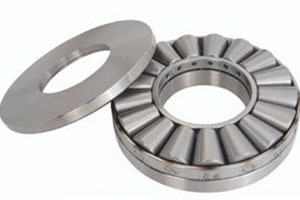
TTHD-1008 – in‑type cage design maximizing roller count and load capacity. Dimensions: 180 mm bore, 300 mm outside diameter, 60 mm height. Delivers high axial rigidity for extruders, pulp refiners, and rolling mill screwdowns. Case‑carburized steel for shock tolerance. Static load rating: 1,080 kN.
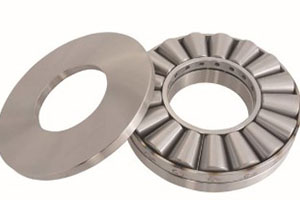
TTHD-1012 –Large-bore design with machined brass cage for applications requiring sustained axial loads at moderate speeds. Dimensions: 304.8 mm (12 in) bore, 508 mm (20 in) OD, 101.6 mm (4 in) height. Static load rating: 3,230 kN. Suitable for piercing mill thrust blocks and oil well swivel assemblies.
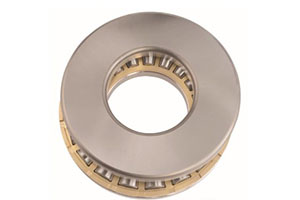
TTHD-1025 –Maximum-capacity configuration with full roller complement and pin cage. Dimensions: 635 mm (25 in) bore, 1,016 mm (40 in) OD, 190.5 mm (7.5 in) height. Static load rating: 10,680 kN. Suitable for the largest rolling mill screwdown mechanisms and marine propulsion thrust blocks.
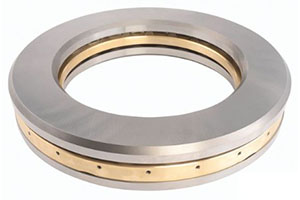
TTHD-1030 –Designed for the most demanding industrial applications where peak axial loads exceed normal operating conditions. Dimensions: 762 mm (30 in) bore, 1,219.2 mm (48 in) OD, 228.6 mm (9 in) height. Static load rating: 14,510 kN. Case‑carburized steel with enhanced surface hardness for wear resistance under shock loading.
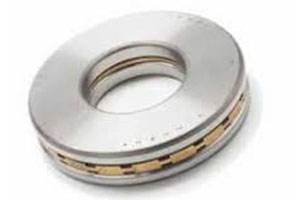
TTHD-1050 –Largest standard offering in the TTHD family, featuring the same true rolling motion geometry as smaller sizes for reduced friction and heat generation. Dimensions: 1,270 mm (50 in) bore, 1,905 mm (75 in) OD, 381 mm (15 in) height. Static load rating: 31,750 kN. Applications include mega rolling mills, offshore drilling equipment, and heavy marine thrusters.
TTHDFL-2005 –Combines one thrust tapered race and one flat race with pin-type cage for maximum load capacity. Dimensions: 127 mm (5 in) bore, 254 mm (10 in) OD, 63.5 mm (2.5 in) height. Static load rating: 2,300 kN. Developed for screwdown applications in metal rolling mills where bidirectional axial loads are present.
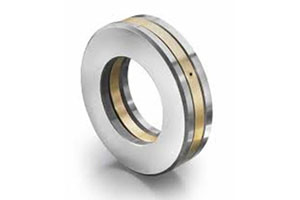
TTHDFL-2010 –Features brass cage for moderate-speed bidirectional applications. Dimensions: 254 mm (10 in) bore, 508 mm (20 in) OD, 127 mm (5 in) height. Static load rating: 6,050 kN. Suitable for heavy machine tool spindles and reversing gearboxes with bidirectional axial thrust requirements.
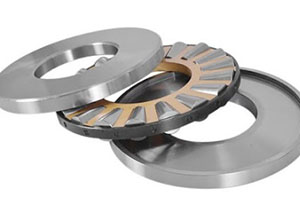
TTHDFL-2015 –Pin‑type cage construction for maximum roller spacing and capacity. Dimensions: 381 mm (15 in) bore, 762 mm (30 in) OD, 190.5 mm (7.5 in) height. Static load rating: 11,200 kN. Applications include cross rolling systems and strip mill screwdown mechanisms.
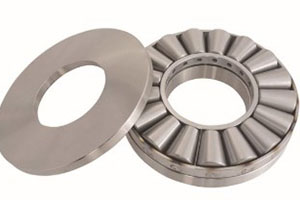
TTHDFLSA-2506 –Two-piece lower race with spherically ground faces for self‑alignment under initial misalignment. Dimensions: 152.4 mm (6 in) bore, 304.8 mm (12 in) OD, 76.2 mm (3 in) height. Static load rating: 3,100 kN. Suitable for applications where slight shaft deflection or housing misalignment exists. Not recommended where dynamic misalignment occurs.
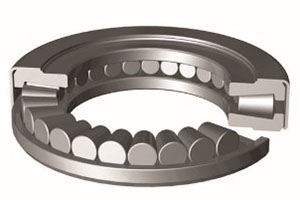
TTC-3005 –Cageless full complement design with two tapered thrust races and outside retainer. Dimensions: 35 mm (1.38 in) bore, 66.68 mm (2.625 in) OD, 19.05 mm (0.75 in) height. Static load rating: 42 kN. Ideal for light-duty crane hooks, small pivot joints, and industrial actuators with reciprocating motion.
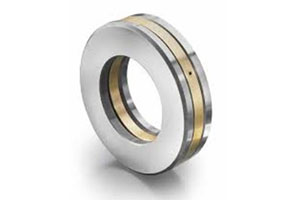
TTC-3015 –Engineered for shock loads and reciprocating motion in construction and mining equipment. Dimensions: 101.6 mm (4 in) bore, 177.8 mm (7 in) OD, 38.1 mm (1.5 in) height. Static load rating: 185 kN. Applications include large crane slewing rings and heavy industrial pivot joints.
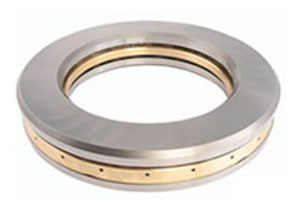
Engineering Guidelines for Installation and Lubrication
Proper installation and lubrication are as critical as correct bearing selection. Even the highest‑quality thrust tapered roller bearing will fail prematurely if mounted incorrectly or lubricated with the wrong oil or grease. This section provides practical engineering guidelines.
Mounting and alignment requirements – Because thrust tapered roller bearings do not self‑align, the shaft washer and housing washer must be mounted with near‑perfect perpendicularity to the shaft axis. Angular misalignment of even 0.5° can cause edge loading: the roller ends dig into the raceway, producing local stress concentrations that quickly lead to spalling and fatigue failure. Before final assembly, use a dial gauge to check the housing washer seat for flatness and the shaft shoulder for squareness. A maximum misalignment of 0.02 mm per 100 mm of bearing bore diameter is recommended. For applications where some misalignment is unavoidable, consider thrust spherical roller bearings instead.
Preload and axial clearance – Unlike radial bearings, thrust bearings generally operate with a small axial clearance or a defined preload depending on the application. For high‑precision spindles or machine tool tables, a light preload removes axial play and increases system rigidity. For heavy‑duty gearboxes, a small positive clearance (0.02–0.05 mm) is often specified to accommodate thermal expansion. Axial clearance tables for each bearing series are available, expressed as the allowable axial movement of the shaft washer relative to the housing washer under a given measuring load.
Lubricant selection – Grease lubrication suffices for most general industrial applications at speeds below 60% of the bearing‘s limiting speed. Choose a lithium‑complex or polyurea grease with an NLGI grade 2 consistency and a base oil viscosity of at least 100 cSt at 40°C. For higher speeds or ambient temperatures above 80°C, synthetic greases with a higher viscosity index are recommended. Oil lubrication is mandatory for continuous high‑speed operation (above 70% of limiting speed) or when heat must be removed. Use ISO VG 68 to ISO VG 220 circulating oil, depending on load and speed. In oil bath systems, ensure the oil level reaches the lowest roller position; in forced‑oil systems, provide at least 1 litre per minute per 100 mm bearing bore diameter.
Relubrication intervals – For grease‑lubricated thrust tapered roller bearings operating at moderate temperatures (below 70°C) and clean conditions, relubricate every 2,000 to 4,000 operating hours. In hot environments (above 80°C) or dusty surroundings, reduce the interval to 500–1,000 hours. When relubricating, pump fresh grease slowly while the bearing rotates until old grease is expelled from the seals or gaps. Never over‑grease, as excessive grease increases churning torque and temperature. For oil‑lubricated systems, monitor oil condition through scheduled analysis – change the oil when oxidation or contamination exceeds ISO 4406 cleanliness class 18/15/12.
Common failure modes and prevention – The most frequent failure in thrust tapered roller bearings is spalling due to edge loading (misalignment), followed by abrasive wear from contamination and then overheating from inadequate lubrication. Installing lip seals or labyrinth seals on both sides of the bearing is recommended whenever the operating environment contains dust, water, or process debris. For vertical shafts where oil may drain away, use a flinger or an oil‑level sight glass to ensure continuous lubrication. If bearing temperatures exceed 100°C regularly, upgrade to a high‑temperature grease or oil and check for over‑greasing or excessive preload.
By following these installation and lubrication guidelines, engineers can achieve the full calculated service life of thrust tapered roller bearings. For custom applications or non‑standard operating conditions, technical support provides detailed bearing calculations and lubrication recommendations.
A standard tapered roller bearing (e.g., 302xx series) supports combined radial and axial loads and is mounted with its axis horizontal. A thrust tapered roller bearing is mounted perpendicular to the shaft axis and supports pure axial loads; it has very limited radial load capacity.
No. Thrust tapered roller bearings are designed for axial (thrust) loads only. Any significant radial load will cause edge loading and rapid failure. If radial loads are present, use a radial bearing or a spherical roller thrust bearing that can handle combined loads.
Yes. Single‑direction thrust tapered roller bearings are completely separable: the shaft washer, housing washer, and roller‑cage assembly can be mounted one by one. This helps when access to the bearing location is restricted.
Choose thrust tapered roller bearings when you need higher speed capability and less sliding friction. Choose thrust cylindrical roller bearings for extremely low‑speed, high‑static‑load applications where speed is not a factor and cost is critical. An online selection tool can compare load ratings side by side.
True rolling motion is the geometric condition explained in Section 2. The raceway and roller tapers are designed so their imaginary extension lines meet at a common point on the bearing axis, eliminating differential sliding and reducing friction, heat, and wear. For a detailed explanation, refer to the bearing structure section above.
No. Standard designs do not tolerate misalignment. The shaft and housing seats must be square and coaxial. If misalignment is unavoidable, special self‑aligning thrust tapered designs (e.g., TTHDFLSA) are available, or thrust spherical roller bearings are recommended.
For speeds below 60% of the limiting speed, NLGI 2 grease is sufficient. For continuous high speeds or high ambient temperatures, use forced oil circulation (ISO VG 68–220). Consult lubrication tables for specific recommendations by bearing size and load.
Standard case‑carburized steel bearings operate reliably up to 150°C. For temperatures up to 200°C, bearings with special heat stabilization and high‑temperature lubricants can be supplied.
Full complement bearings (no cage) have higher static load capacity because they contain more rollers. However, they cannot operate at high speeds due to roller‑to‑roller contact. Use full complement for oscillating or slow rotation; use caged bearings for continuous rotation at moderate to high speeds.
Complete technical datasheets, including bore/OD/height dimensions, dynamic load ratings (Cr), static load ratings (Cor), and limiting speed charts, are available in the product catalog. Contact sales for custom designs or cross‑reference assistance.