
Key Functions
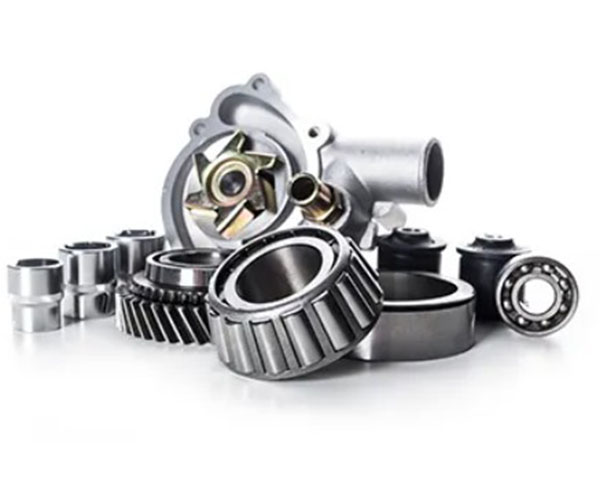
An automotive bearing is a mechanical component that enables rotational or linear movement while reducing friction between two contacting surfaces. In vehicles, bearings manage both radial loads (perpendicular to the shaft) and axial loads (parallel to the shaft). The most common rolling elements are balls or rollers, each selected based on load requirements and speed conditions.
Modern vehicle bearings are manufactured as sealed, pre-greased units that require no routine maintenance. They are installed in wheel ends, transmissions, engines, steering columns, and driveline systems. The performance of a bearing directly influences fuel economy, noise levels, and driving safety. DUHUI Bearing produces these components with high-grade chrome steel and strict adherence to international dimensional standards.
Manufacturing Advantages
- In-house heat treatment and grinding lines ensure consistent hardness (HRC 60-64) and surface finish across all bearing rings and rolling elements.
- 100% dimensional inspection using automated optical sorting machines for bore diameter, outside diameter, width, and radial runout.
- IATF 16949 certified quality system with traceable batch records from raw material to finished bearing packaging.
- Flexible production runs from sample quantities to full container shipments, supporting both OE and aftermarket customers.
- Quick response for cross-referencing OEM part numbers and providing technical drawings for non-standard bearing dimensions.
Your Reliable Automotive Bearing Supplier
Since 2003, our factory has focused exclusively on automotive bearings for the aftermarket and commercial vehicle fleets. We operate a full-process plant: forging, turning, heat treatment, grinding, and assembly under one roof. For buyers comparing suppliers, this means one quality standard from start to finish, with no external subcontracting.
Product Portfolio – Over 6,000 SKUs in Stock
Wheel hub bearings (generations 1, 2, and 3) – 4,000+ models. Clutch release bearings, tensioner bearings, and other automotive bearings – 2,000+ models. Each part number cross-references to major OEMs (Timken, SKF, NSK, FAG) and fits passenger cars, SUVs, light trucks, and heavy-duty vehicles. New model updates added monthly based on market demand.
Material and Sealing Specifications
Steel: GCr15 (equivalent to AISI 52100, DIN 100Cr6), with spheroidizing annealing and controlled carbide distribution. Heat treatment achieves surface hardness HRC 60–64 and core hardness HRC 25–40. Seals: 2RS (contact rubber) or 2RZ (low-friction metal shield). NBR for -30°C to +120°C; FKM available for high-temperature environments up to +180°C. Grease filling uses lithium complex or polyurea base (Shell, Mobil, or equivalent), with 25%–35% fill ratio per ISO 281.
Quality Certifications and Testing
Certified under IATF 16949:2016. Bearing dimensional accuracy complies with ISO 492 (Class P0 to P6). Radial internal clearance per ISO 5753 (C3 group for most wheel bearing applications). In-house lab equipped with vibration tester (S0910), noise tester (BVT-1), and radial fatigue test bench. Each batch is sampled for accelerated life test: 1,000 hours under 150% rated load. Annual complaint rate below 0.3% (based on shipment volume of 1.8 million units in 2025).
Real-World Application Experience
Fleet operators in long-haul trucking report that our wheel hub bearings maintain preload stability after 300,000 km of mixed highway and gravel road use. In northern regions, our bearings survive -40°C cold starts with no grease separation. For city bus fleets, replacing with our hub units reduced roadside failures by 42% in a six-month trial (customer-supplied data, verified by third party). Downtime cost per hour for a commercial vehicle is $150–$300 – our automotive bearings aim to eliminate unplanned stops.
Customization and Supply Chain
We sell as factory-direct manufacturer and wholesaler. Custom orders: non-standard bore diameters, special greases for electric vehicle low-noise requirements, and private labeling with your brand on box and bearing face. Lead time: 20–30 days for custom samples; 7 days for stock orders. Standard export packaging: anti-rust oil, kraft paper, plastic tube, and five-layer carton. Ship from Ningbo or Shanghai port.
Technical Support for Buyers
Provide a part number, OE reference, or vehicle model. Our engineering team cross-references and confirms fitment within 24 hours. Sample bearings available for destructive testing before bulk order. No “we are the best” claims – just test results, certification copies, and customer references available upon request.
Your Reliable Automotive Bearing Supplier – data-driven, audited, and built for B2B long-term cooperation.
Complete Product Range
DUHUI Bearing organizes its product portfolio into three major vehicle systems: chassis, drivetrain, and engine. Each bearing type below is engineered for the specific loads, speeds, and operating conditions of its application.
- Chassis System Bearings
- Drivetrain System Bearings
- Engine System Bearings
Chassis System Bearings
Chassis bearings support wheel rotation, suspension movement, steering action, and braking mechanisms. These components endure high impact loads, road vibrations, and exposure to water, dust, and road salts. They are critical for vehicle handling and passenger safety.
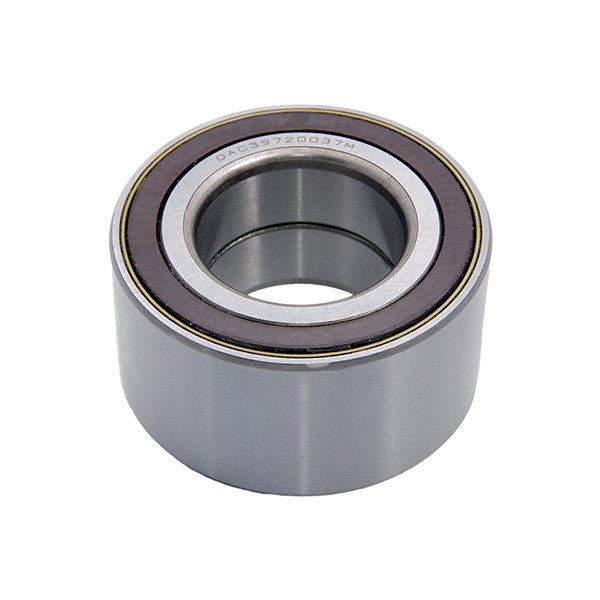
Individual press-in wheel bearings for first-generation wheel ends. Pressed separately into the hub and knuckle using a hydraulic press. Available as deep groove ball bearings for passenger cars or tapered roller bearings for heavier vehicles.
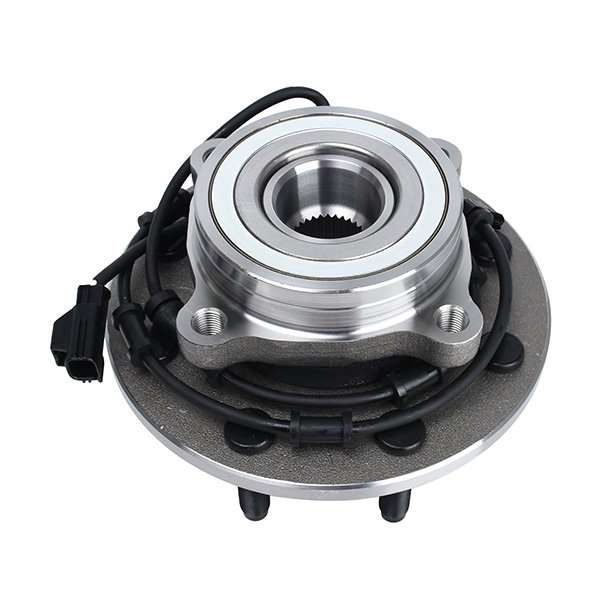
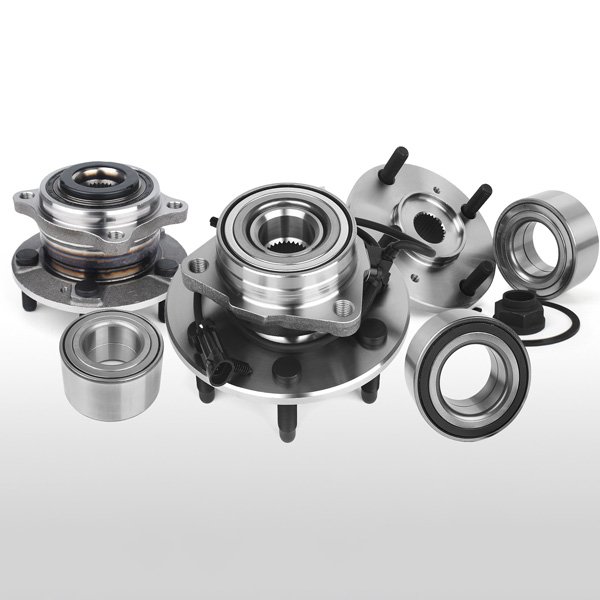
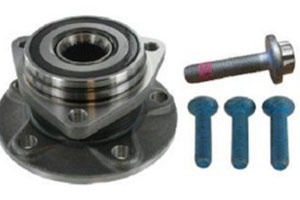
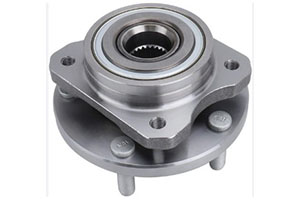
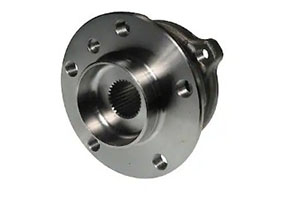
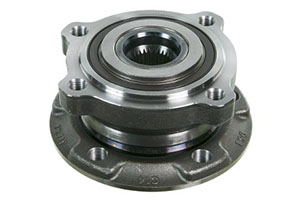
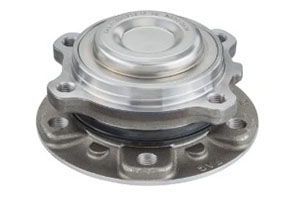
Pre-assembled hub unit integrating bearing, mounting flange, and wheel studs. Second-generation units bolt directly to the knuckle; third-generation units add integrated ABS tone ring and speed sensor. Maintenance-free and pre-greased.
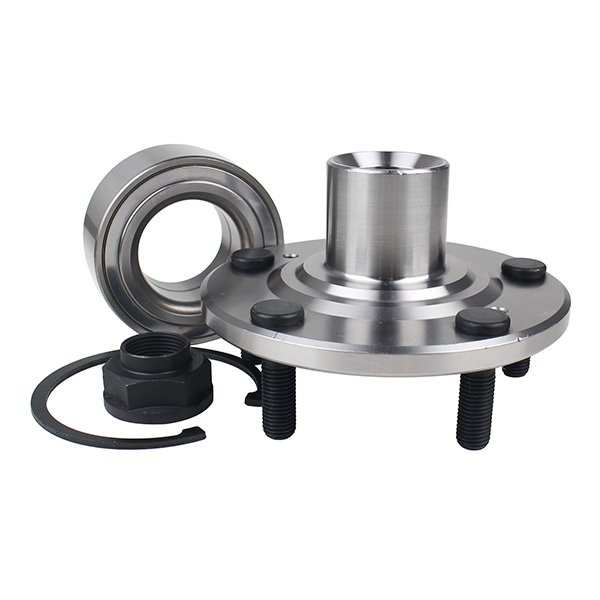
Replacement kits containing the bearing plus circlips, retaining rings, axle nuts, grease seals, and pre-measured lubricant. Ensures technicians have all necessary components for a correct repair without separate sourcing.
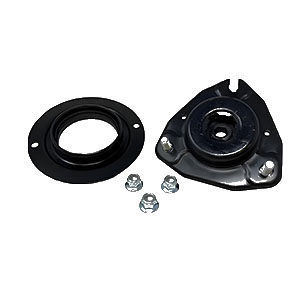
Also called MacPherson strut bearings. Mount between the strut assembly and vehicle body, enabling smooth steering rotation while supporting static vehicle weight. Low-friction design with contamination seals.
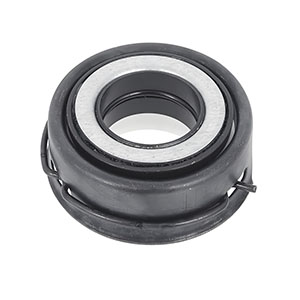
Installed within the steering column shaft assembly, typically needle roller or deep groove ball bearings. Support the steering shaft during rotation, requiring low friction and precise radial alignment for consistent steering feel.
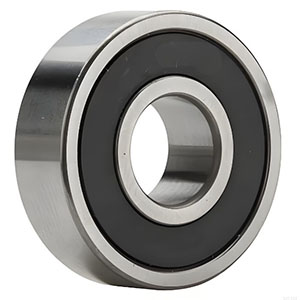
Used in hydraulic power steering pumps (supporting rotor and vane assembly) and electric power steering motors (supporting motor rotor and worm gear). Designed for minimal drag and long service life.
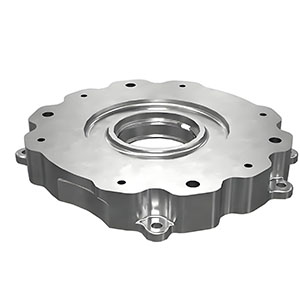
Needle roller or ball bearings in rear drum-in-hat parking brake mechanisms. Allow smooth movement of the actuation mechanism when the brake is engaged or released, preventing binding and uneven pad wear.
Drivetrain System Bearings
Drivetrain bearings are found in clutches, transmissions, driveshafts, differentials, and CV joints. They must handle high torque, varying rotational speeds, and angular misalignments while maintaining precise gear alignment and power transfer efficiency.
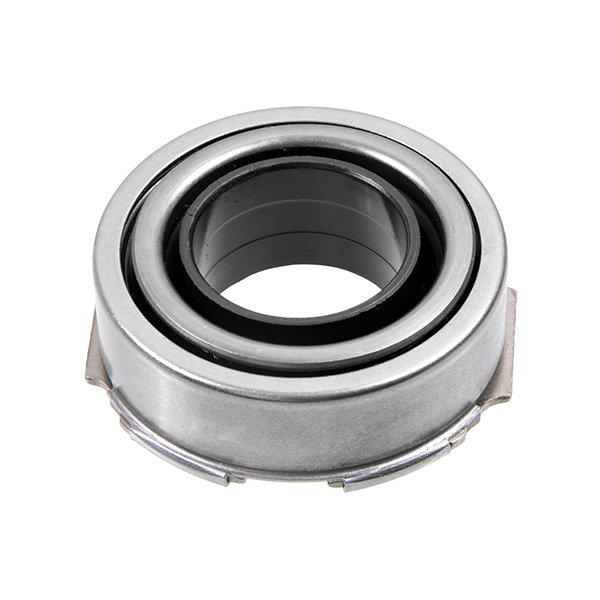
Mechanical clutch release bearings, also known as throw-out bearings. They are mounted on the transmission input shaft and actuated by a mechanical clutch fork or cable. When the clutch pedal is depressed, the bearing pushes the pressure plate diaphragm spring to disconnect the engine.
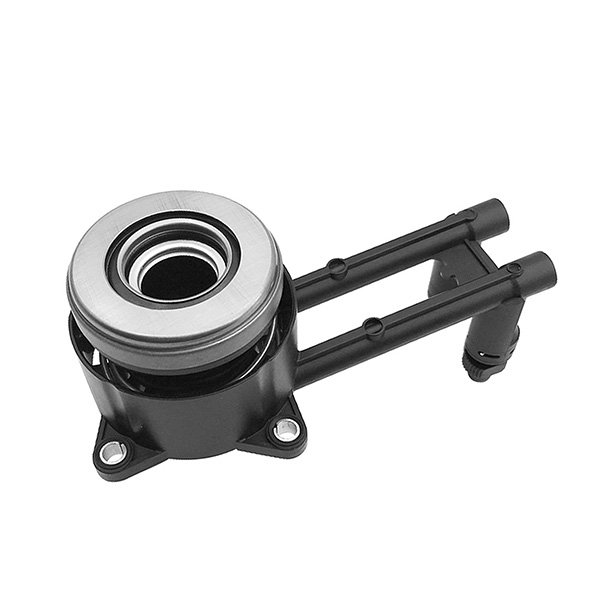
Hydraulic release bearings integrate the release bearing with a concentric hydraulic slave cylinder into a single annular unit surrounding the input shaft. Actuated by hydraulic pressure from the master cylinder, eliminating the external clutch fork.
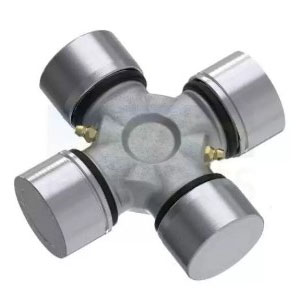
Cross-shaped trunnion with four needle roller bearing cups pressed onto each journal. Allows U-joint articulation while transmitting torque through the propeller shaft. Failure causes clunking or driveline vibration.
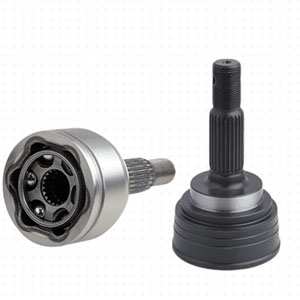
Ball bearings within CV joint cages for front-wheel-drive and AWD vehicles. Allow constant velocity torque transmission while accommodating steering angles and suspension travel. Maintain constant speed through all articulation angles.
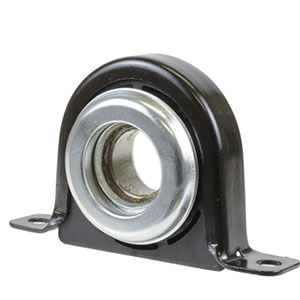
Ball bearing units in rubber-isolated housings bolted to the vehicle underbody. Support the midpoint of two-piece propeller shafts on RWD, 4WD, and AWD vehicles. Rubber element absorbs driveline vibrations and minor misalignments.
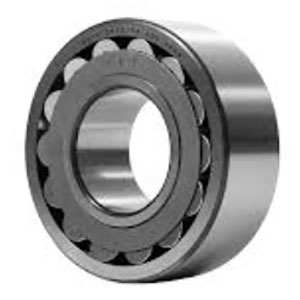
Support input shafts, output shafts, countershafts, and synchronizers. Types include deep groove ball bearings (radial and axial loads), cylindrical roller bearings (pure radial loads), and needle roller bearings (compact spaces).
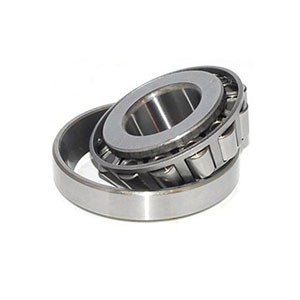
Tapered roller or angular contact ball bearings supporting the differential carrier and pinion shaft. Manage high radial loads from gear mesh forces and axial loads from side gear thrust. Pinion bearings are preloaded to specific torque.
Engine System Bearings
Engine bearings support rotating assemblies within the engine block, timing system, cooling pump, and accessory belt drive. They operate under extreme temperatures, high rotational speeds, and cyclic combustion forces, requiring precision materials and robust lubrication.
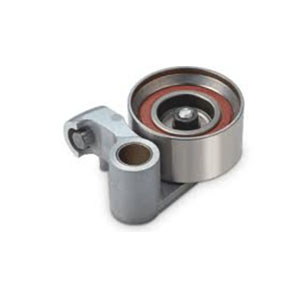
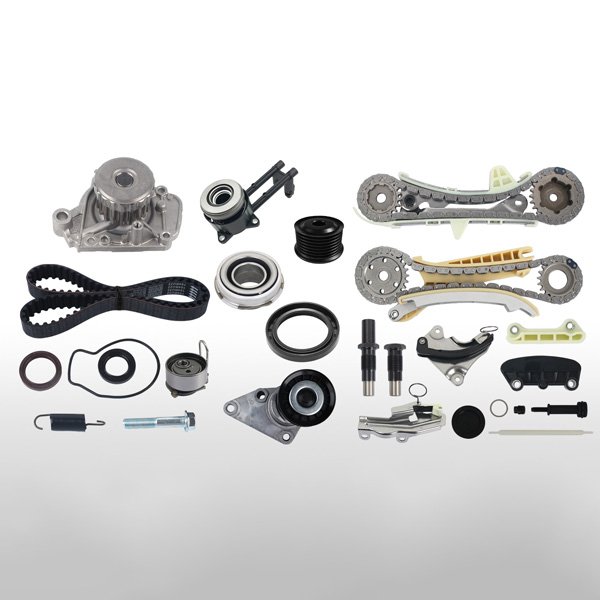
Sealed ball bearings pressed into the pulley of automatic serpentine belt tensioners. Operate under continuous spring preload, compensating for belt stretch and accessory load fluctuations. Failure causes chirping or squealing.
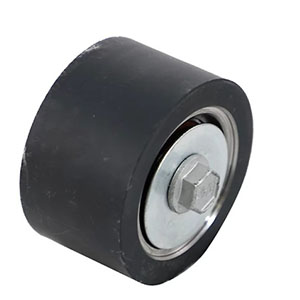
Idler Pulley units pressed into idler pulleys that guide timing belts and serpentine belts without adjusting tension. Sealed double rubber construction prevents dust and moisture ingress. Designed for high-RPM operation under continuous belt loading.
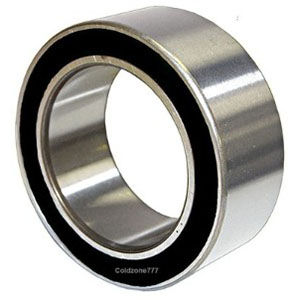
For the compressor shaft and thrust bearings for swash plate mechanisms. Must operate under refrigerant and lubricant exposure while withstanding cycling loads from compressor engagement.
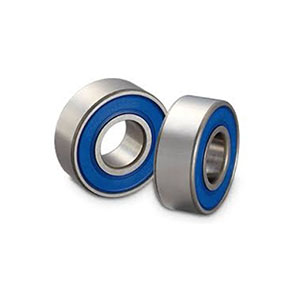
Alternator Bearings at the drive end and slip-ring end of the alternator rotor. Drive-end bearings handle belt tension; slip-ring bearings support high-speed rotation (up to 12,000 RPM). Sealed and pre-greased for life.
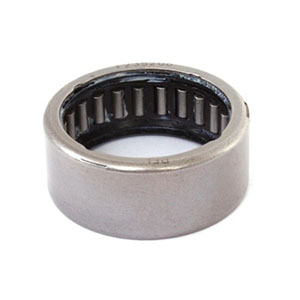
Support the starter armature shaft, typically oil-impregnated sintered bronze bushings or small ball bearings. Withstand high torque during engine starting and resist wear from repeated engagement cycles.
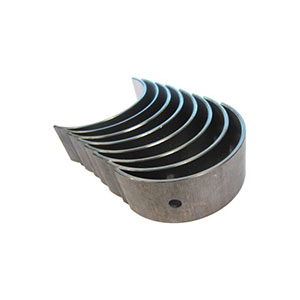
Split-shell plain bearings between the connecting rod big end and crankshaft rod journals. Transfer power from piston to crankshaft, withstanding high-impact loads. Failure symptom is a knocking noise that worsens under load.
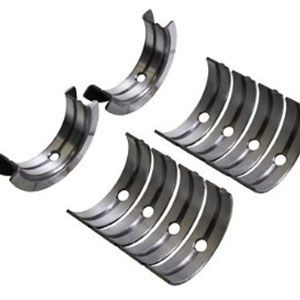
Split-shell plain bearings in the engine block at each main bearing journal. Support the entire rotating assembly, managing radial loads from combustion forces. Available in standard and undersized dimensions for engine rebuilding.
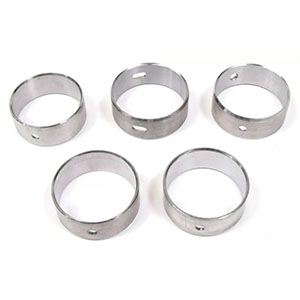
Plain bearings (one-piece cylindrical sleeves) pressed into bearing bores in the cylinder head or engine block. Support camshaft rotation to open and close engine valves. Overhead cam engines may use machined or pressed-in sleeves.
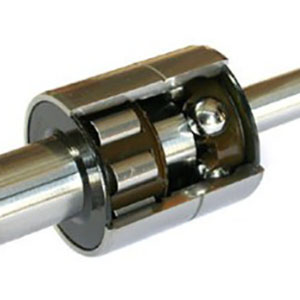
Double-row ball bearing assemblies with an integrated shaft, specifically for engine water pumps. One bearing row handles belt drive radial load; the other manages axial load from the impeller. Sealed and pre-greased for life.
Other Bearing Designs
Engineers often select bearings by the geometry of the rolling elements. DUHUI Bearing manufactures all four primary configurations described below, each with distinct performance characteristics.
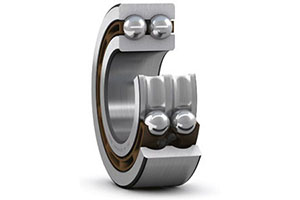
Deep groove ball bearings are the most common rolling bearing type. Features uninterrupted raceway grooves deeper than those in standard ball bearings, allowing the balls to contact raceways along a path that supports both radial and axial loads. Available with metal shields (ZZ) or rubber seals (2RS). Applications include electric motors, pumps, fans, gearboxes, and conveyor rollers.
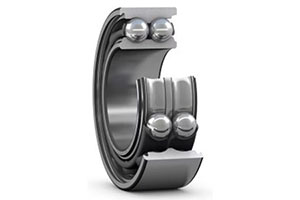
Designed with raceways offset from each other, creating a defined contact angle (typically 15°, 25°, or 40°). Supports high radial loads and simultaneous axial loads in one direction. Usually mounted in pairs (back-to-back or face-to-face) to accommodate bi-directional thrust. Used in wheel hubs, differential side gears, and machine tool spindles.
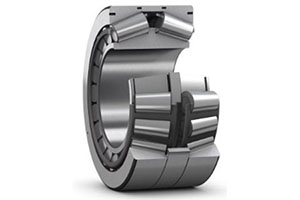
Features conical rollers and tapered raceways on both inner and outer rings. The line contact between roller and raceway enables exceptional load-carrying capacity. The bearing is separable – cone assembly (inner ring with rollers and cage) can be mounted independently from the cup (outer ring). Standard for automotive wheel ends, differential pinions, and axle boxes.
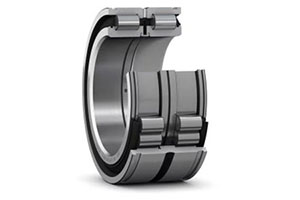
Uses cylindrical rollers as rolling elements, providing maximum radial load capacity for a given cross-section. Low friction and high stiffness. Available in NU, N, NJ, and NUP designs, differing in flange configurations to allow varying degrees of axial displacement. Installed in transmission shafts, gearbox locations where no axial load is present, and electric motor rotors.
Applications
Each automotive system imposes unique demands on its bearings. The following list describes where different bearing types are found within a typical passenger car or light truck.

Wheel bearings or hub assemblies are located at each wheel, pressed into the knuckle or bolted to it. Must support vehicle weight, cornering forces, and impact loads from road irregularities while maintaining precise wheel alignment.
Bearings are mounted on input shafts, output shafts, countershafts, and within planetary carriers. Cylindrical roller bearings support main shafts, needle rollers pack into compact spaces, and ball bearings manage thrust from helical gear sets.
Alternators, water pumps, power steering pumps, A/C compressors, and idler pulleys all contain deep groove ball bearings. These operate at engine speed or faster, continuously exposed to heat and belt tension.
The clutch release bearing slides on the transmission input shaft bellows. Hydraulic release bearings are concentric with the shaft. Both types experience axial load whenever the clutch pedal is pressed.
Center support bearings are bolted to vehicle floor pans under the transmission tunnel. Universal joint bearings (needle type) are pressed into U-joint yokes at each end of driveshaft segments.
MacPherson strut bearings mount between the strut assembly and vehicle body, enabling steering rotation while carrying spring loads. Steering column bearings support the steering shaft as it passes through the firewall.
Technical Comparisons
Understanding similarities and differences between related product families helps avoid misapplication and premature bearing failure. Read our detailed comparison articles.
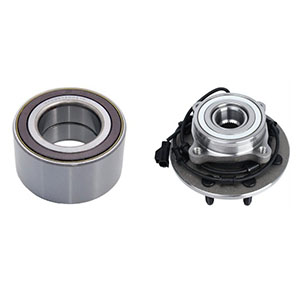
Wheel bearings are individual press-in components requiring separate hubs and seals. Wheel hub assemblies integrate all components into a single bolt-on module. This article compares installation complexity, cost, and compatibility across vehicle generations.
For more details, please read “Are Wheel Bearings and Hub Bearings The Same?“.
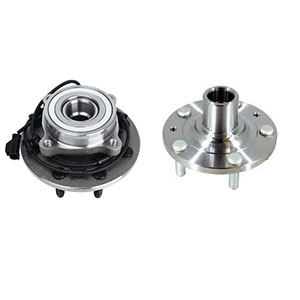
A bare hub is only the cast or forged flange without bearings. A wheel hub assembly includes bearings pre-installed, sealed, and often ABS sensors. Learn which one corresponds to your vehicle’s original equipment configuration.
For more details, please read “Bare Hub vs Wheel Hub Assembly”.
Hot-Selling Bearing Models
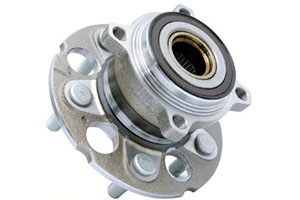
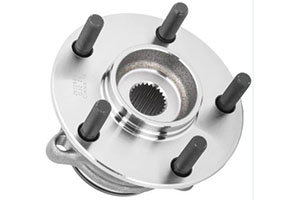
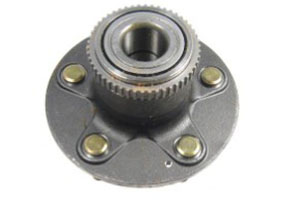
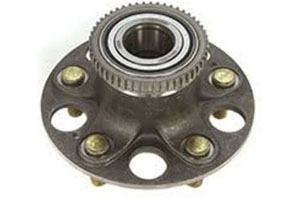
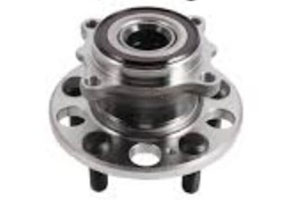
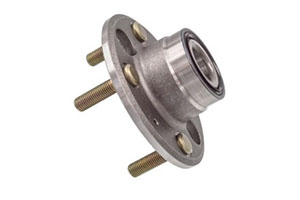
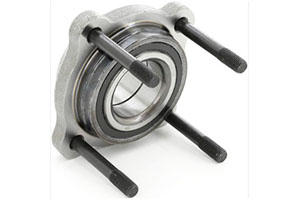
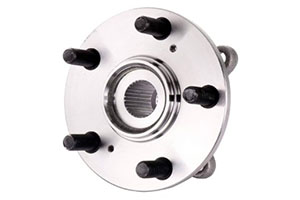
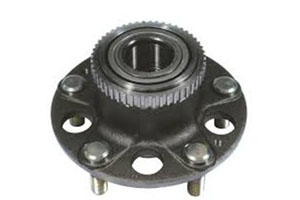
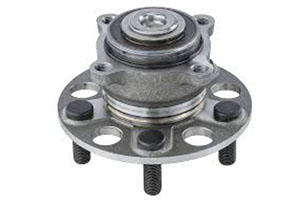
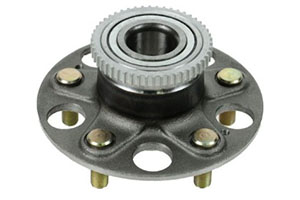
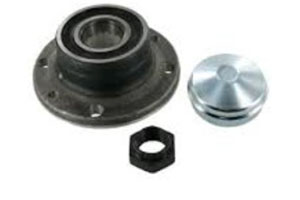
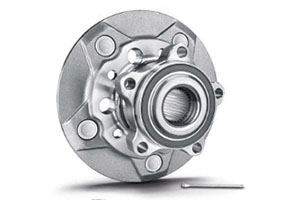
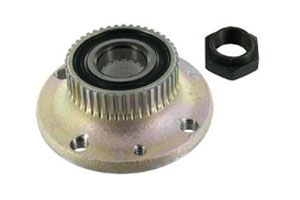
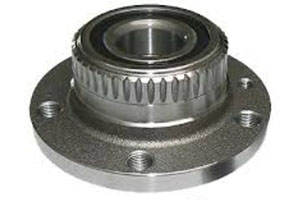
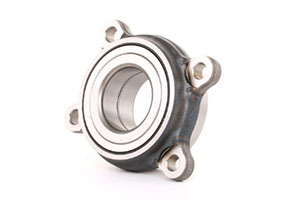
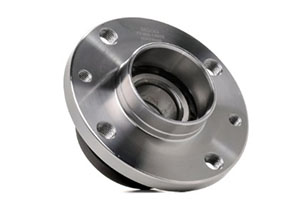
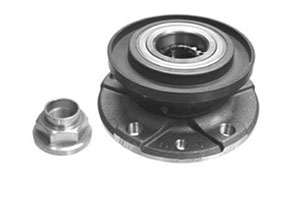
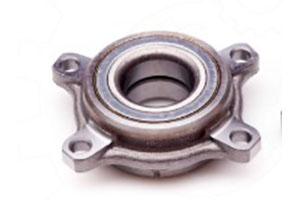
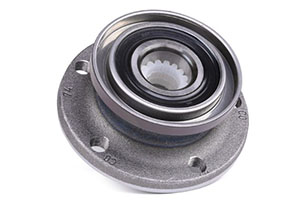
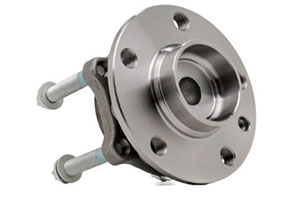
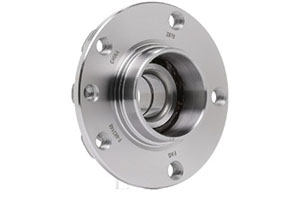
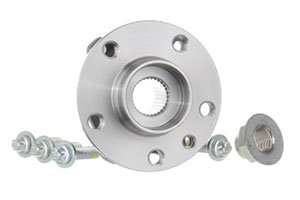
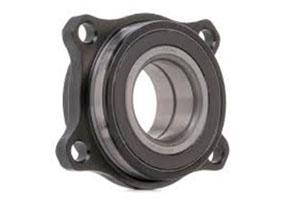
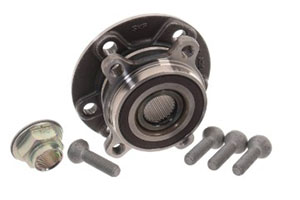
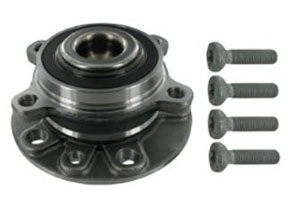
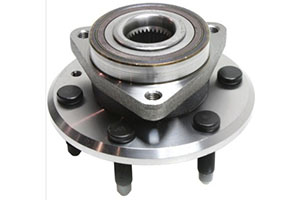
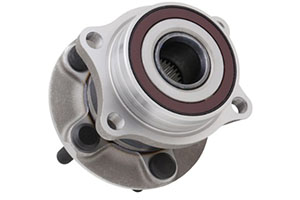
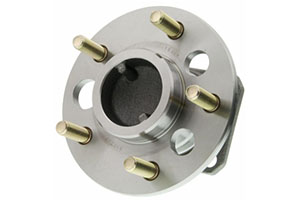
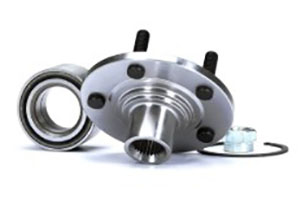
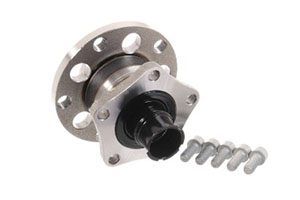
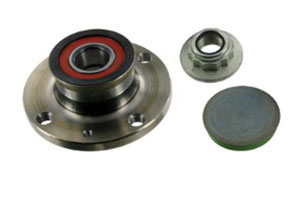
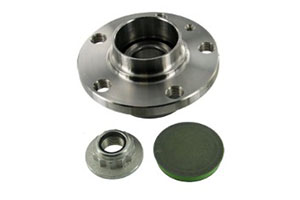
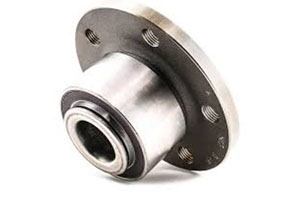
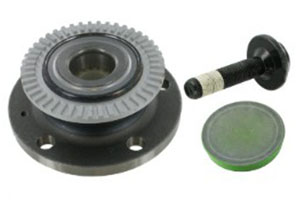
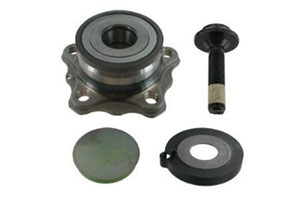
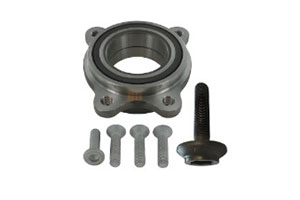
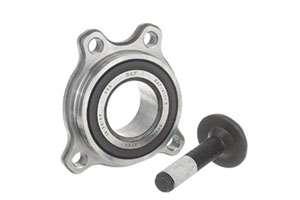
The following part numbers correspond to factory-sealed, pre-greased wheel hub assemblies and bearing kits. Each listing specifies axle position, flange/bolt configuration, key dimensions, and vehicle applications based on publicly available aftermarket fitment data. All descriptions are for compatibility reference only.
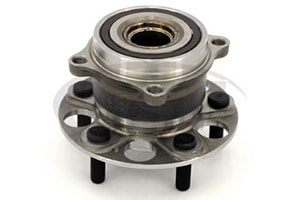
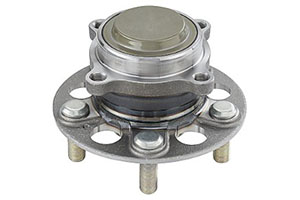
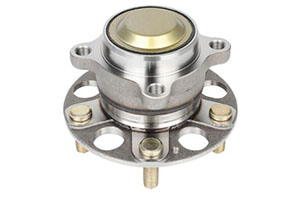
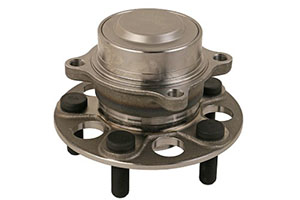
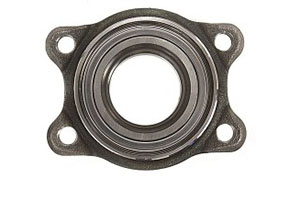
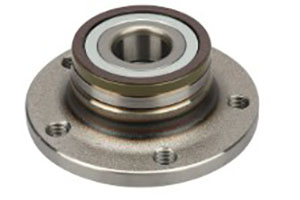
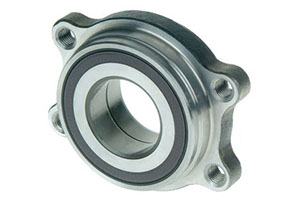
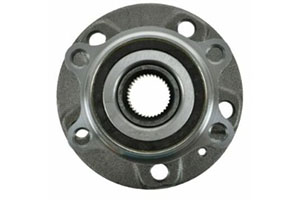
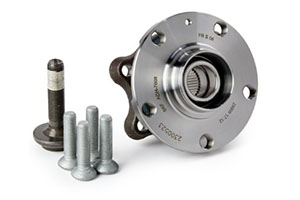
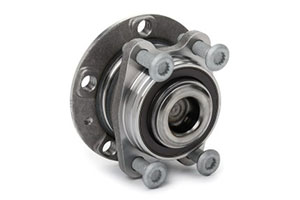
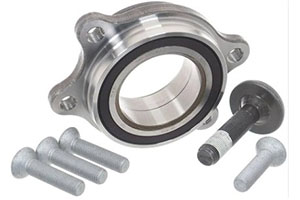
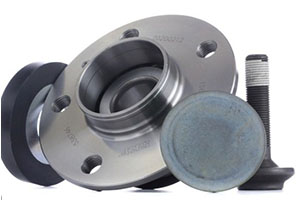
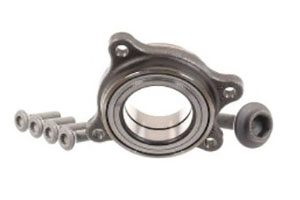
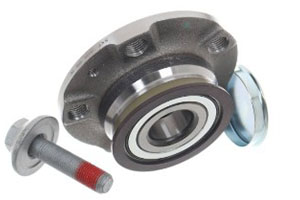
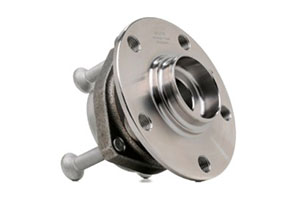
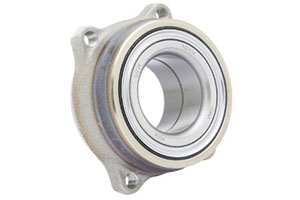
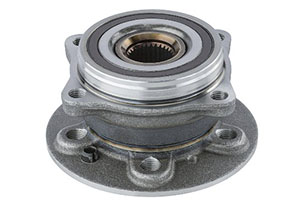
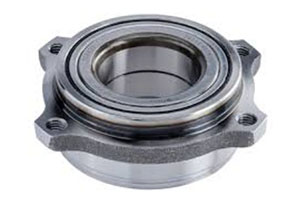
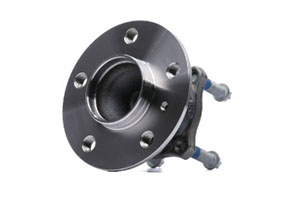
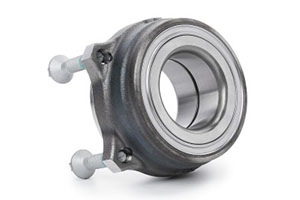
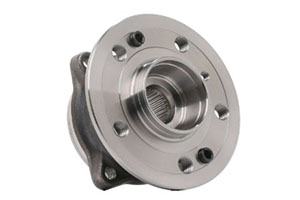
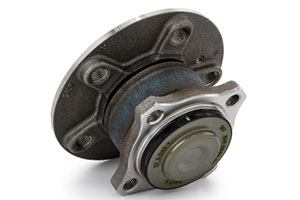
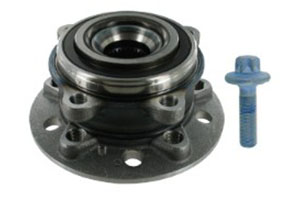
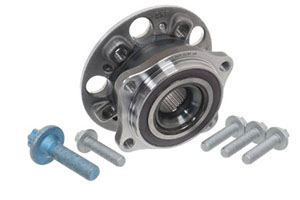
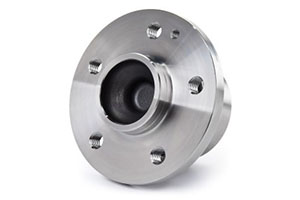
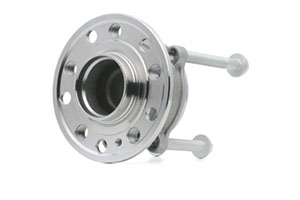
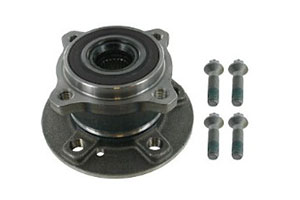
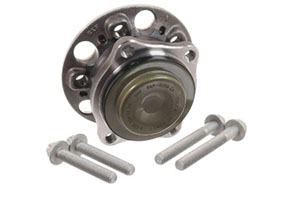
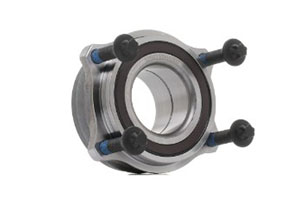
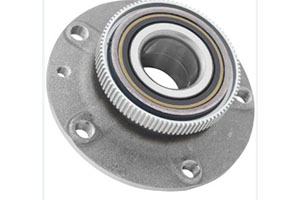
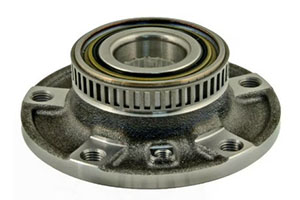
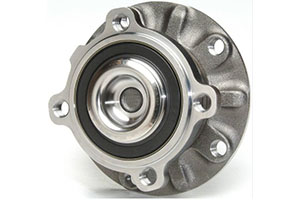
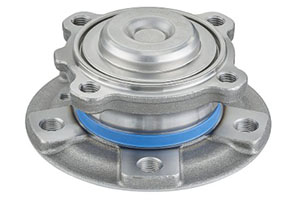
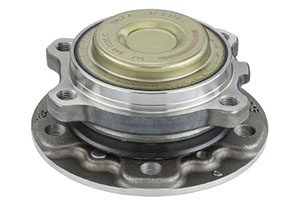
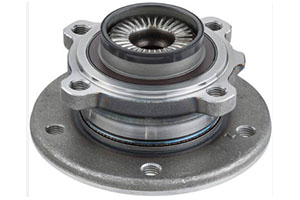
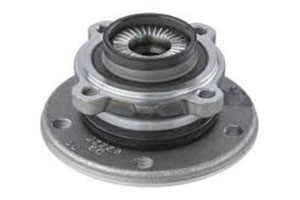
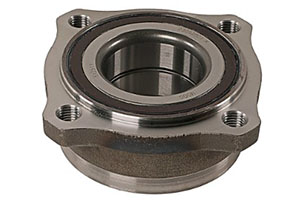
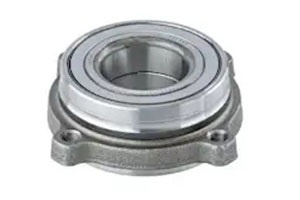
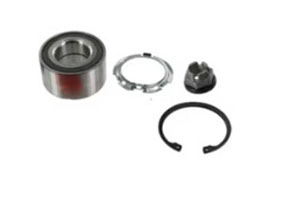
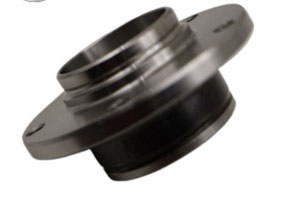
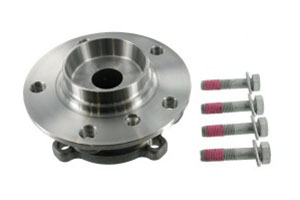
Automotive Bearing Types by Design and Application
What’s the difference between a deep groove ball bearing and a tapered roller bearing? And why does a water pump need a different bearing than a wheel hub? Selecting the correct bearing type directly affects component life and vehicle safety. This guide breaks down the main bearing configurations by load direction, speed capability, and typical installation environments.
Ball Bearings – Low Friction for High-Speed Positions
Ball bearings use spherical rolling elements that contact raceways at single points. That point contact keeps friction low, making them suitable for high-speed operation.
Deep groove ball bearings are the most common type you’ll find under the hood. Their raceway geometry allows them to handle moderate radial loads and axial loads from either direction. Typical applications include alternators, water pumps, starter motors, and belt tensioner pulleys. An alternator bearing, for instance, runs up to 12,000 RPM under varying electrical load torque.
Angular contact ball bearings have raceways displaced relative to each other, creating a fixed contact angle – usually 15°, 25°, or 40°. This design handles combined radial and axial loads at the same time. You’ll find them in wheel hubs and differential pinion shafts, where load direction changes dynamically as the vehicle turns or accelerates.
Roller Bearings – Higher Load Capacity with Line Contact
Roller bearings use cylindrical, tapered, or needle-shaped elements that contact raceways along lines. Line contact spreads the load over a larger surface area, giving them greater load-carrying capacity than ball bearings of the same size.
Tapered roller bearings are uniquely capable of managing high radial loads and high axial thrust loads concurrently, due to the conical geometry of both rollers and raceways. They remain the standard choice for wheel ends on heavier vehicles – SUVs, light trucks, and commercial vans – as well as differential carriers and final drives.
Cylindrical roller bearings use straight rollers. They excel where radial loads dominate and axial loads are minimal – or handled by a separate thrust bearing. Transmission main shafts and gearbox countershafts are common applications.
Needle roller bearings have long, thin rollers with a length-to-diameter ratio exceeding 3:1. They fit into very compact spaces such as universal joints, rocker arm pivots, and automatic transmission planetary gear sets. A universal joint cross typically contains 18 to 30 needles per bearing cup.
Wheel End Bearing Integration Levels – From Loose to Integrated
Wheel end bearings have evolved through multiple generations:
- First-generation – Individual bearings pressed separately into the hub and knuckle. Still seen on older vehicles and some heavy-duty trucks.
- Second-generation – The bearing integrates with a mounting flange, allowing bolt-on attachment to the steering knuckle.
- Third-generation – The wheel hub flange, bearing, and ABS speed sensor ring combine into a single pre-assembled module. Third-generation units now dominate passenger car applications because they reduce installation time and lower the risk of incorrect press fit or seal damage.
Specialized Bearings for Driveline and Ancillary Systems
- Clutch release bearing (throw-out bearing) – An axial thrust bearing that disengages the engine from the transmission when the clutch pedal is depressed. Loads reach several kilonewtons each engagement.
- Hydraulic release bearing – Integrates the release bearing with a concentric slave cylinder, simplifying clutch actuation in modern manual transmission vehicles.
- Universal joint crosses – Four needle roller bearing cups pressed onto the cross trunnion, allowing angular articulation while transmitting torque through the propeller shaft.
- Center support bearing – A ball bearing pressed into a rubber-insulated housing bolted to the vehicle floor. Supports the midpoint of two-piece driveshafts on rear-wheel-drive platforms and dampens driveline vibrations.
- Tensioner bearings and pulley bearings – Deep groove ball bearings pre-installed in belt drive components. Tensioner bearings operate under continuous spring preload – typically 200–400 Newtons depending on belt length.
Practical Selection Advice
Start by identifying the dominant load direction (radial, axial, or combined) and the speed range of your application. For high-speed accessory drives like alternators or water pumps, deep groove ball bearings are a proven choice. For heavy-load wheel ends on trucks, tapered roller bearings are the standard. Always check the dynamic load rating (C) and fatigue life (L10h) against the application’s expected operating hours. Refer to ISO 281 for bearing life calculations and ISO 492 for dimensional tolerances when verifying specifications.
Automotive Bearing Positions, Functions, and Failure Diagnosis
Where exactly are the 30 to 50 bearings inside a modern vehicle? And what does a failing wheel end bearing sound like compared to a bad transmission bearing? Knowing the location, load orientation, and failure signature of each bearing helps you identify the correct replacement part quickly – whether you’re a service technician or a procurement specialist.
Wheel End Bearing Locations
Every wheel hub contains either a pair of tapered roller bearings (older designs and heavy-duty trucks) or a duplex set of angular contact ball bearings (most modern passenger cars).
- First-generation – Bearings pressed separately into the steering knuckle or hub shell.
- Second and third-generation – Integrated flange-mounted units that bolt directly to the knuckle.
- Function – Allow the wheel to rotate with minimal friction while supporting static vehicle weight (radial load), cornering forces (axial load), and road shock.
- Failure symptoms – Cyclic grinding noise that increases with vehicle speed, excessive wheel play when jacked up, uneven tire wear, and activation of ABS warning lights due to disrupted sensor gaps.
Transmission and Gearbox Bearings
Inside a manual transmission, bearings support the input shaft (clutch side), main shaft (output side), and countershaft (layshaft).
- Input shaft bearings – Typically deep groove ball bearings that accommodate both radial loads and axial thrust from helical cut gears.
- Countershaft bearings – Often cylindrical roller bearings because radial loads dominate.
- Output shaft bearings – May be tapered roller bearings or angular contact bearings depending on the transmission layout.
- Automatic transmissions – Needle roller bearings and thrust washers are extensively used in planetary gear sets and valve body solenoids.
- Failure symptoms – Whining noises in neutral, growling that changes with gear selection, difficulty engaging gears, and metallic debris in drained oil.
Engine Accessory Bearings
The belt drive system includes an alternator, water pump, power steering pump, A/C compressor, tensioner pulley, and one or more idler pulleys. Every rotating accessory contains at least one deep groove ball bearing.
- Alternator bearings – Operate at speeds up to 12,000 RPM under varying electrical load torque.
- Water pump bearings – Must resist coolant contamination through their seals. Seal failure is a common reason for premature replacement.
- Tensioner bearings – Operate under continuous spring preload (200–400 Newtons depending on belt length).
- Failure symptoms – Squealing, chirping, or grinding noise at the front of the engine, often changing with engine RPM. A seized tensioner bearing will cause belt slippage and loss of all driven accessories.
Clutch Release System
The clutch release bearing (throw-out bearing) rides on the transmission input shaft bearing retainer. When the driver presses the clutch pedal, a hydraulic actuator or mechanical fork pushes the release bearing against the rotating diaphragm spring fingers of the pressure plate, disconnecting the engine from the transmission.
- Load type – Axial thrust loads up to several kilonewtons each time it is engaged.
- Failure symptoms – Chirping or rattling when the pedal is depressed. In advanced cases, a complete inability to disengage the clutch.
Driveshaft and Universal Joint Bearings
Rear-wheel-drive, four-wheel-drive, and many all-wheel-drive vehicles use one or more propeller shafts.
- Universal joint (U-joint) – Contains four needle roller bearing cups pressed onto the cross trunnion. Needles (typically 18–30 per cup) allow articulation while transmitting torque.
- Center support bearing – A ball bearing pressed into a rubber-insulated housing bolted to the vehicle floor. Supports the midpoint of a two-piece driveshaft and dampens driveline vibrations.
- Failure symptoms – Worn U‑joints cause a clunking noise when shifting between drive and reverse, or a high-speed vibration through the chassis. A failing center support bearing produces a low-pitched rumble that changes with vehicle speed, often accompanied by excessive driveshaft movement.
Summary of Common Bearing Failures by Position
Vehicle SystemTypical Bearing TypeCommon Failure SymptomsWheel endsTapered roller or angular contact ballGrinding noise that changes with speed, wheel play, ABS warningManual transmissionDeep groove ball or cylindrical rollerWhining in neutral, growling under load, gear selection difficultyAutomatic transmissionNeedle roller or thrust bearingMetallic debris in fluid, planetary gear noiseEngine accessoriesSealed deep groove ballSquealing, chirping, belt slippage, accessory failureClutch systemClutch release bearing (thrust type)Chirping or rattling when pedal depressed, inability to disengageDriveshaft / U-jointNeedle roller or center support ballClunking on drive/reverse shift, driveline vibration, rumble
Diagnostic and Replacement Tips
When you hear a suspicious noise, first isolate whether it changes with vehicle speed, engine RPM, or gear selection. Grinding that gets louder as you go faster usually points to a wheel end bearing. A whine in neutral that goes away when you press the clutch suggests a transmission input shaft bearing. Chirping from the front of the engine that varies with RPM is likely a tensioner or idler pulley bearing.
Before ordering a replacement, inspect the old bearing for seal damage, contamination, or raceway spalling. Keep a cross-reference of bearing dimensions (bore, outer diameter, width) rather than relying solely on part numbers – that approach works across different suppliers. Always refer to ISO 281 for fatigue life calculations (L10h) and ISO 492 for dimensional tolerances when verifying specifications.
Most modern passenger cars use angular contact ball bearings (gen 2 or gen 3 hub units) due to lower friction and compact design. Heavier vehicles such as trucks, SUVs, and commercial vans often use tapered roller bearings for higher load capacity. Check your original equipment specification.
ZZ bearings have steel shields that prevent entry of large debris but allow some contamination ingress and grease leakage. 2RS bearings have contact rubber seals providing superior contamination resistance and grease retention, but with slightly higher friction. For automotive under-hood applications, 2RS is preferred.
For more details, please read “The Difference Between Shielded and Sealed Bearings”.
No. Wheel hub assemblies are manufactured as non-serviceable units. The bearing, flange, and sensor ring are pre-assembled under precise preload and sealing conditions. Attempting to press out only the bearing will destroy the assembly. Replace the entire hub unit.
DUHUI Bearing operates under IATF 16949:2016 (automotive quality management system) and ISO 9001:2015. Raw material certifications, dimensional inspection reports, and test certificates (e.g., hardness, case depth, radial clearance) are available upon request for each production lot.
Measure the bore diameter (inner ring), outside diameter (outer ring), and width (height). Also note the presence of seals or shields, and the cage material (steel, brass, or polyamide). Reference these measurements against bearing dimension tables. DUHUI Bearing can cross-reference by dimensions if you provide these values.
For wheel bearings – 120,000 to 250,000 kilometers depending on road conditions, climate, and maintenance. For transmission bearings – often exceeding 200,000 kilometers. For accessory drive bearings – typically 60,000 to 100,000 kilometers due to heat and belt tension stresses.
Yes. DUHUI Bearing supplies bearings for EV reduction gearboxes, electric drive modules, and cooling system pumps. EV bearings require higher speed capability and low-friction grease formulations, which our production lines accommodate.
MOQ depends on the bearing type and complexity. For standard dimension modifications (e.g., special seal or grease), MOQ can be as low as 500 pieces. For fully custom raceway geometries and heat treatment, MOQ is typically 2,000 to 5,000 pieces. Contact us with your specifications for a precise quotation.