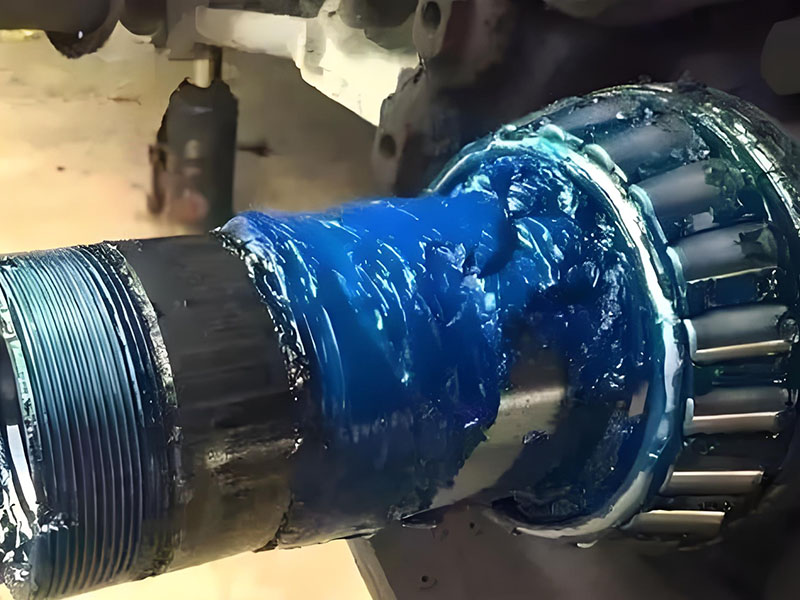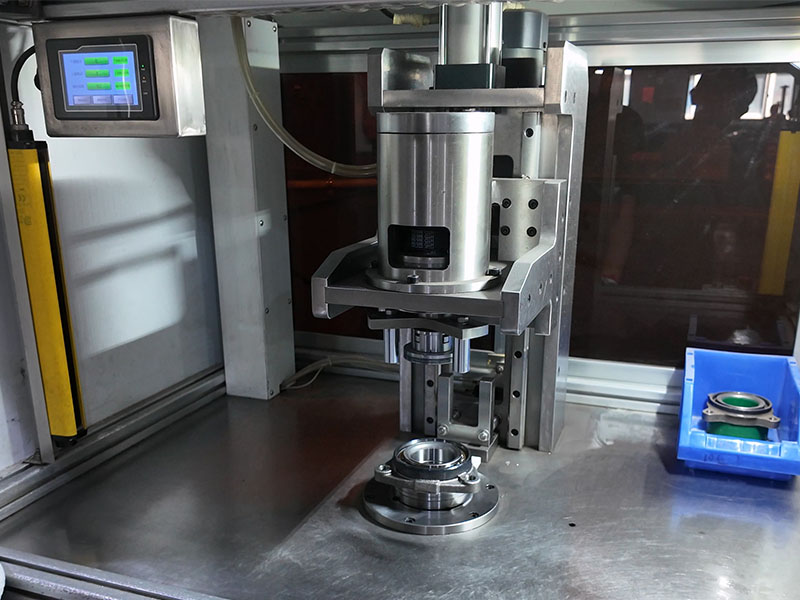
Selecting the correct cylindrical roller bearing configuration—single-row or double-row—directly affects equipment reliability, service life, and operating costs. Design engineers and maintenance professionals frequently need to decide between these two configurations for applications such as electric motors, gearboxes, and industrial machinery. This article provides a technical comparison to support an informed selection based on specific operational requirements.
What Are the Differences Between Single-row and Double-row Cylindrical Roller Bearings?
Structural Design Differences
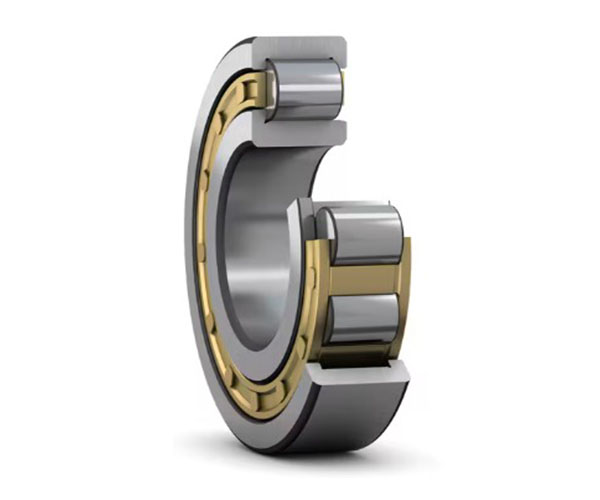
Single-row cylindrical roller bearings consist of one row of cylindrical rollers arranged between an inner ring and an outer ring. Their flange configuration determines axial load capability and displacement accommodation. Available design types include:
- NU – Flanges on the outer ring, no flanges on the inner ring. Cannot support axial loads; used for non-locating positions.
- N – Flanges on the inner ring, no flanges on the outer ring. Similar to NU.
- NJ – Flanges on the outer ring, one fixed flange on the inner ring. Supports limited unidirectional axial load.
- NF – Flanges on the inner ring, one fixed flange on the outer ring. Supports limited unidirectional axial load.
- NUP – Outer ring with double flanges, inner ring with one fixed flange and a loose flange ring. Supports bidirectional axial load for locating positions.
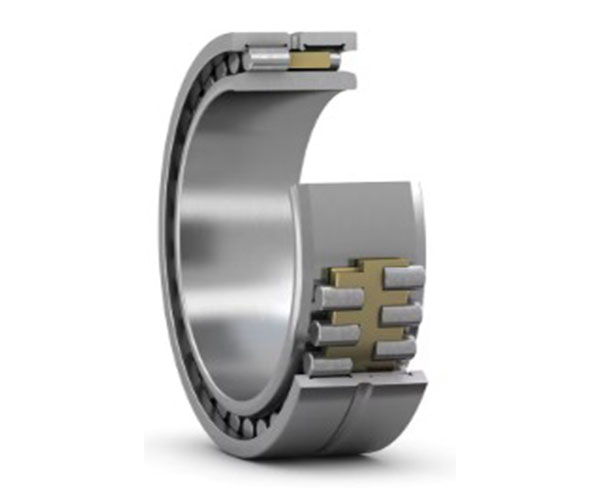
Double-row cylindrical roller bearings feature two parallel rows of rollers, providing higher radial stiffness and load distribution. They are designated as NN (three flanges on the inner ring, smooth outer ring) or NNU (three flanges on the outer ring, smooth inner ring). Most double-row designs serve as non-locating bearings, though special variants (NNCF, NNF) with center flanges can support bidirectional axial loads.
Both configurations are separable, simplifying mounting and dismounting—especially when interference fits are required on both rings.
Load and Speed Differences
The table below summarizes key performance differences. Values are relative comparisons typical for standard industrial grades (P0 tolerance, grease lubrication, moderate operating conditions).
| Feature | Single-row | Double-row |
|---|---|---|
| Radial load capacity | Moderate (baseline) | High (typically 1.5–2.5× single-row of similar envelope) |
| Axial load handling | Design-dependent: NU/N virtually none; NJ/NF limited unidirectional; NUP bidirectional | Generally minimal; NNCF/NNF designs support bidirectional axial loads |
| Speed rating | Higher (typically 1.5–2× limiting speed of double-row designs) | Medium (lower due to additional roller row and increased friction) |
| Rigidity | Moderate | High (superior for precision spindles and heavy cuts) |
| Installation | Easier (separable rings) | More complex (clearance may require adjustment during mounting) |
| Typical design codes | NU, N, NJ, NF, NUP | NN, NNU |
Note: Actual load and speed limits depend on bearing size, cage material (steel, brass, PA66), lubrication method (grease, oil-air, oil-mist), and operating temperature. Always consult manufacturer datasheets for specific values.
Where Are Single-row Cylindrical Roller Bearings Used?
Core Advantages of Single-row Bearings
- Efficient radial load handling – Line contact between rollers and raceways provides significantly higher radial capacity than ball bearings of comparable size.
- Excellent high-speed performance – Low-friction designs with roller-guided or ring-guided cages (pressed steel, machined brass, or PA66) enable high rotational speeds.
- Axial displacement compensation – NU and N types accommodate thermal expansion between shaft and housing without inducing internal axial forces.
- Convenient maintenance and installation – Separable rings allow independent mounting, simplifying assembly in confined spaces.
Typical Applications for Single-row Bearings
- Electric motors and generators
- Textile machinery
- Light-duty gearboxes and reducers
- Water pump systems
- Air compressors and industrial compression equipment
- Traction motors and railway axle box bearings (non-locating positions)
Where Are Double-row Cylindrical Roller Bearings Used?
Core Advantages of Double-row Bearings
- High radial load capacity – The additional roller row increases load-carrying capacity without requiring a larger housing envelope compared to increasing single-row width.
- High rigidity and low deformation – Minimizes shaft deflection under fluctuating or shock loads, essential for precision equipment.
- Suitable for continuous, high-load operation – Robust construction ensures consistent performance in 24/7 industrial environments.
Typical Applications for Double-row Bearings
- CNC machine tool spindles (NN and NNU series, often P5 or SP tolerance)
- Large electric motors (>200 kW)
- Wind turbine gearboxes and main shafts
- Heavy-duty gear reducers (industrial speed reducers)
- Railway wheelset bearings
- Rolling mills and crushers (when combined with grease lubrication and seals)
How to Choose Between Single-row and Double-row Cylindrical Roller Bearings
There is no universal “better” choice—selection depends on application priorities. Use the following table as a quick reference.
| Requirement | Recommended Type |
|---|---|
| High rotational speed, moderate radial load | Single-row |
| Heavy radial load, moderate speed | Double-row |
| Space constraints or lower cost priority | Single-row |
| High rigidity required (e.g., machine spindles) | Double-row |
| Continuous heavy-load operation | Double-row |
| Axial displacement accommodation needed | Single-row (NU or N) |
| Locating position with bidirectional axial load | Single-row (NUP) or double-row (NNCF/NNF) |
Is There a Price Difference Between Single-row and Double-row Bearings?
Yes, double-row cylindrical roller bearings are generally more expensive than single-row bearings. The price difference is not arbitrary—it reflects fundamental differences in material consumption, manufacturing complexity, and performance capabilities.
Primary cost drivers:
- Material volume – Double-row bearings contain approximately twice the number of rollers, plus a wider inner and outer ring. For a given bore diameter and outer diameter, a double-row design uses 60–80% more bearing steel than its single-row counterpart.
- Manufacturing precision – Double-row bearings are frequently produced to higher accuracy grades (P5, P4, SP) for machine tool and precision equipment applications. Achieving these grades requires additional grinding operations, tighter process controls, and longer inspection cycles—all of which increase production costs.
- Heat treatment consistency – The larger cross-section of double-row bearings demands more precise heat treatment to maintain uniform hardness and dimensional stability across the entire ring. This translates to tighter process specifications and higher reject rates during production.
Illustrative price comparison (for reference only – actual prices vary by supplier, quantity, and specifications):
| Bearing type | Typical precision | Relative price factor (single-row P0 = 1.0x) |
|---|---|---|
| Single-row, P0 (CN) | General industrial | 1.0x (baseline) |
| Single-row, P5 | High precision | 1.8–2.5x |
| Double-row, P0 | General industrial | 1.6–2.2x |
| Double-row, P5 | Precision spindle grade | 3.0–4.5x |
Beyond initial purchase price, buyers should consider total cost of ownership. A double-row bearing in a heavy-load continuous operation may last two to three times longer than a single-row bearing under the same conditions, reducing downtime and replacement labor. Conversely, for moderate loads and high speeds, a single-row bearing’s lower initial cost and higher speed capability may deliver better long-term value.
When requesting quotes from bearing manufacturers, specify not only the row configuration but also the required precision grade, internal clearance (C3, C4, etc.), cage material, and any special coatings. These parameters significantly affect both price and performance.
How Do Size and Design Affect Bearing Selection?
Several factors beyond row count influence final selection.
Size – Available mounting space and shaft diameter determine the bearing series. Larger bearings offer higher load ratings but increase weight and housing dimensions.
Design structure (flange configuration) – As described in the structural differences section, the flange arrangement determines whether the bearing can accommodate axial loads, serve as a locating or non-locating position, or allow axial shaft displacement.
Shaft/housing fit tolerances – Recommended fits follow ISO 286 standards. Interference fits are typical for rotating rings under load. Cylindrical roller bearings’ separable design facilitates mounting even when both rings require interference fits. Tolerance classes range from P0 (normal) to P5, P4, SP, and P2 (super-precision) for high-accuracy applications.
Internal radial clearance – Clearance groups include CN (normal), C3, C4 (increased), and C2 (reduced). C3 or C4 is recommended when significant temperature differences exist between inner and outer rings, or when interference fits are used. Precision spindles often use reduced clearance (C2) for minimal radial play.
Installation method – Double-row bearings with tapered bores (designated with a K suffix) allow precise internal clearance adjustment by pressing the inner ring onto a tapered shaft seat or adapter sleeve. This feature is valuable for achieving controlled preload in spindle applications.
Installation and Maintenance Considerations
Proper installation and regular maintenance are critical to achieving the rated service life of both single-row and double-row cylindrical roller bearings. While the separable design offers advantages, incorrect mounting remains a leading cause of premature bearing failure.
Installation Steps and Best Practices
For single-row cylindrical roller bearings (NU, NJ, NUP types):
- Inspect the shaft and housing – Ensure surfaces are clean, burr-free, and within specified tolerances (typically ISO h6 or js6 for rotating shafts).
- Mount the ring with interference fit first – If the inner ring requires an interference fit (rotating shaft), heat the bearing to 80–100°C in a clean oil bath or induction heater. Never use an open flame. Slide the heated bearing onto the shaft until it seats against the shoulder.
- Mount the opposite ring – The separable outer ring (for NU/NJ) can be pressed into the housing using a mechanical or hydraulic press. Apply force only to the ring being mounted—never through the rollers.
- Insert the roller-and-cage assembly – After both rings are in position, carefully insert the cage with rollers. Ensure no debris enters the raceway.
- Verify axial clearance – For NJ and NUP types, confirm that the flange contacts the roller ends with minimal clearance per the manufacturer’s specification.
For double-row cylindrical roller bearings (NN, NNU, tapered bore types):
- Prepare the tapered shaft seat or adapter sleeve – Clean and lightly oil the tapered surface. Measure the initial radial internal clearance with feeler gauges.
- Mount the bearing onto the taper – Slide the bearing onto the shaft or adapter sleeve. Use a locknut to gradually press the bearing up the taper.
- Monitor clearance reduction – As the bearing is pressed, the radial internal clearance decreases. Stop when the clearance reaches the recommended value (typically 10–30 µm for spindle bearings). Over-tightening can cause excessive preload and overheating.
- Secure the locknut – After achieving correct clearance, tighten the locknut to the specified torque and secure it with a locking washer or set screw.
- Lubricate immediately – Double-row bearings often require initial grease packing before installation. Follow the manufacturer’s grease volume recommendations (typically 30–50% of internal free space for grease lubrication).
Lubrication Guidelines for Cylindrical Roller Bearings
Lubrication directly affects speed capability, operating temperature, and service life.
| Operating condition | Recommended lubrication | Relubrication interval (typical) |
|---|---|---|
| Low speed (<500 r/min), light load | NLGI 2 lithium or polyurea grease | 6–12 months |
| Moderate speed (500–3,000 r/min) | NLGI 2 or 3 grease with EP additives | 3–6 months |
| High speed (>3,000 r/min) | Oil-air or oil-mist | Continuous (oil replaced periodically) |
| High temperature (>100°C) | Synthetic oil or high-temperature grease (NLGI 2, base oil viscosity >100 cSt at 40°C) | As required by temperature |
For oil-lubricated cylindrical roller bearings, the oil level should reach the center of the lowest roller when stationary. For grease lubrication, fill the bearing and housing cavities to 30–50% of free volume—over-greasing causes churning, temperature rise, and energy loss.
Common Installation Errors to Avoid
- Hammering directly on bearing rings – This causes brinelling (surface indentations) on raceways. Always use mounting tools that apply force evenly to the ring being mounted.
- Mixing up separable components – Rings, cages, and rollers from one bearing should not be interchanged with another. Mark components during disassembly.
- Ignoring cleanliness – Dust or metal chips entering a cylindrical roller bearing can cause rapid wear. Work in a clean area and keep bearings covered until installation.
- Misaligning the housing and shaft – Angular misalignment exceeding the bearing’s tolerance (typically <0.06°) reduces service life significantly. Use dial indicators to check alignment after mounting.
Maintenance Inspection Checklist
During routine maintenance (every 3–12 months depending on duty cycle), check the following:
- Operating temperature – A sudden rise of 15–20°C above baseline indicates lubrication breakdown or internal damage.
- Vibration levels – Increased high-frequency vibration suggests raceway spalling or roller damage. Use portable vibration analyzers for trend monitoring.
- Grease condition – Dark, oxidized, or metal-flecked grease requires immediate replacement and bearing inspection.
- Axial play (for locating bearings) – Excessive axial movement indicates wear on flanges or roller ends.
If any abnormality is detected, disassemble the bearing, clean it thoroughly, and inspect raceways and rollers for pitting, cracking, or discoloration. Replace bearings that show visible surface damage.
Conclusion
The choice between single-row and double-row cylindrical roller bearings ultimately depends on your specific speed, load, and rigidity requirements. Use the technical comparison, application examples, and selection tables above as a starting point for your bearing specification process. Proper installation, correct lubrication, and regular maintenance will maximize service life regardless of which configuration you select.
This guide provides general technical information for bearing selection. For specific application requirements or custom solutions, including precision grades, internal clearances, and special coatings, consult a qualified bearing engineer or manufacturer.
Frequently Asked Questions (FAQs)
Q1: Can single-row cylindrical roller bearings handle axial loads?
A: It depends on the design type. NU and N have no axial load capacity and are designed for non-locating positions. NJ and NF have limited axial load capacity in one direction, suitable for semi-locating positions. NUP has bidirectional axial load capacity and is suitable for locating positions.
Q2: What do bearing designations like NU, NJ, and NN mean?
A: These designations follow ISO 15 or national standards (e.g., DIN 5412). NU means outer ring with double flanges, inner ring without flanges. NJ means outer ring with double flanges, inner ring with one integral flange. NUP means outer ring with double flanges, inner ring with one fixed flange plus a loose flange ring. NN means double-row bearing with flanges on the inner ring. NNU means double-row bearing with flanges on the outer ring.
Q3: How do I select the right radial internal clearance (C3, C4, etc.)?
A: Select clearance based on operating temperature, fit interference, and speed. CN (normal) is for general applications with moderate temperature differences (<30°C between rings). C3 or C4 is for larger temperature differences, interference fits on both rings, or high-speed operation. C2 (reduced) is for precision spindles requiring minimal radial play, but not for heavy interference fits.
Q4: What is the difference between caged and full complement cylindrical roller bearings?
A: Caged bearings use a cage to separate rollers, offering lower friction and higher speed capability (up to 2× limiting speed of full complement). They are suitable for most general applications. Full complement bearings have no cage and maximize the number of rollers, providing higher radial load capacity (approximately 20–30% higher than caged versions) but lower speed limits. They are used in slow-speed, heavy-load applications like rolling mills.
Q5: Can double-row cylindrical roller bearings be used as locating bearings?
A: Most standard double-row bearings (NN, NNU) are non-locating—they allow axial displacement. However, special designs such as NNCF (with center flange on inner ring) and NNF (with contact seals and center flange) support bidirectional axial loads and can serve as locating bearings. Check manufacturer specifications for axial load ratings.
Q6: What lubrication methods work best for cylindrical roller bearings?
A: For low to moderate speed, use grease (NLGI 2) with regular relubrication intervals. For high speed, oil-air or oil-mist lubrication provides better cooling and film stability. For very high speed (precision spindles), oil-air lubrication with controlled oil quantity per cycle is recommended. Double-row bearings often include pre-drilled lubrication holes and annular grooves in the outer ring—ensure they align with housing lubrication ports during installation.
Q7: Are cylindrical roller bearings suitable for misalignment?
A: Standard cylindrical roller bearings do not tolerate angular misalignment (typically <0.06° to 0.12°). For applications with misalignment, consider spherical roller bearings or self-aligning ball bearings. Some manufacturers offer crowned roller profiles or modified raceways to provide very limited misalignment accommodation (<0.03°).
Q8: What is the typical service life of cylindrical roller bearings?
A: Service life depends on load, lubrication, cleanliness, and operating temperature. Basic rating life (L₁₀) can be calculated per ISO 281 using basic dynamic load ratings (C) and actual equivalent dynamic load (P). Under clean, well-lubricated conditions, L₁₀ of 50,000–100,000 hours is common for continuous operation. Actual life may be shorter in contaminated or poorly lubricated environments. Use adjustment factors (a₁, a₂, a₃) for reliability, material, and lubrication conditions.