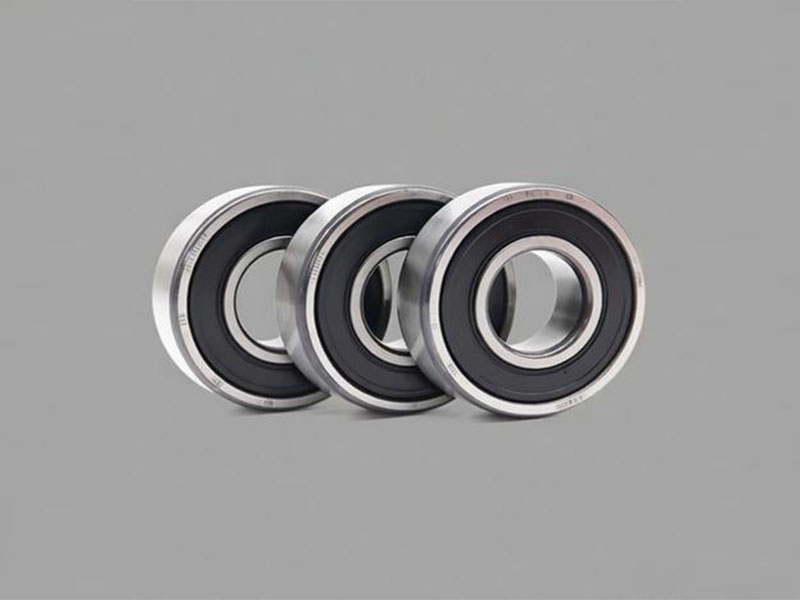
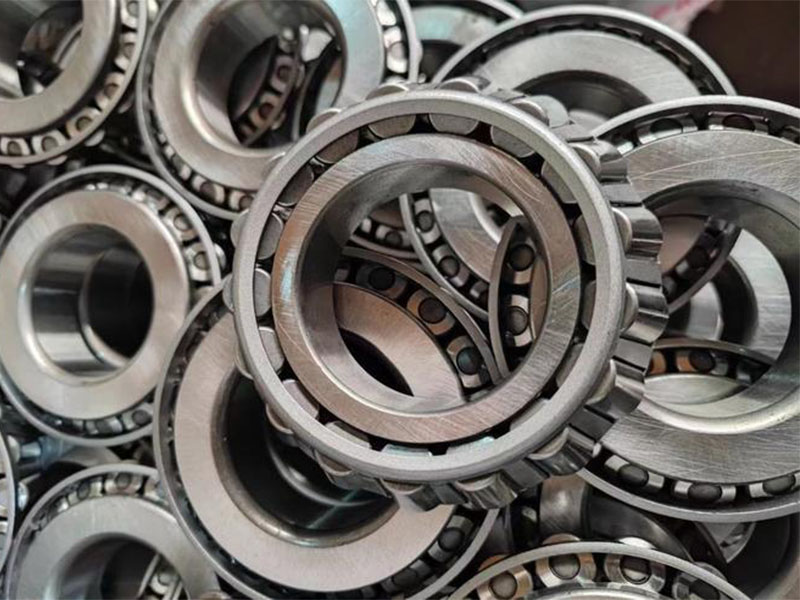
Selecting the correct lubricant for ball bearings is a common question for maintenance engineers and equipment operators. Using the wrong lubricant increases friction, causes overheating, and leads to premature bearing failure. This article explains why lubrication is essential, the specific benefits it provides, and how to choose among mineral oils, synthetic oils, greases, and dry lubricants for your ball bearing applications.
Why Is Ball Bearing Lubrication Important?
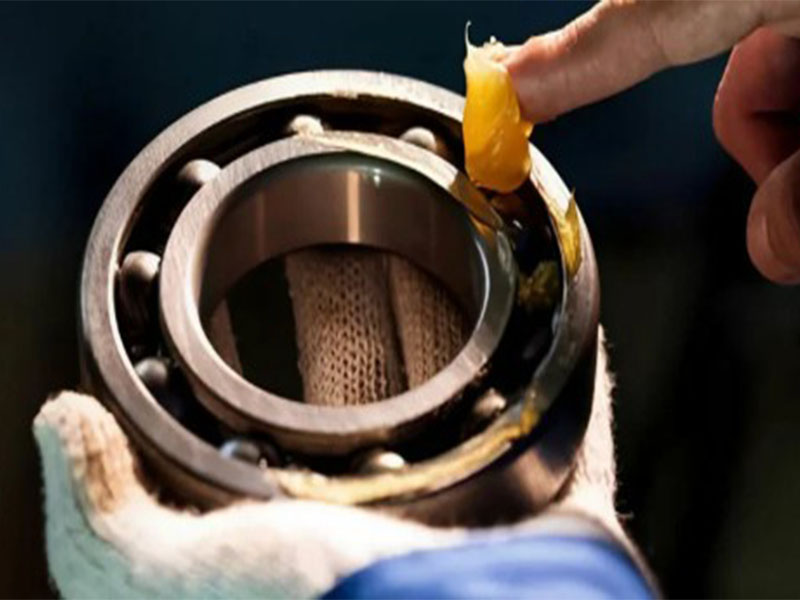
To understand the importance of lubrication, one must first consider the structure of a ball bearing. A typical ball bearing consists of an inner ring, an outer ring, a set of spherical rolling elements (balls), and a cage that separates the balls. During operation, the balls roll along the raceways of the inner and outer rings. Under load, the contact area between each ball and its raceway is very small, resulting in high contact stress.
Without lubrication, direct metal-to-metal contact occurs at these contact points. This creates high friction, generates heat, and causes rapid wear. The role of a lubricant is to form a thin, load-bearing film—known as an elastohydrodynamic (EHD) film—between the rolling elements and the raceways. This film separates the surfaces and converts sliding friction into lower fluid friction.
Additionally, a lubricant protects ball bearings from environmental damage. It seals out dust, dirt, and process contaminants. It also displaces moisture and prevents corrosion on exposed steel surfaces. For grease lubricants, the thickener acts as a physical barrier, keeping the base oil in place and excluding foreign particles.
Benefits of Ball Bearing Lubrication
Reducing Friction and Wear
The most direct benefit of proper lubrication is friction reduction. A sufficient lubricant film lowers the coefficient of friction between balls and raceways, reducing energy loss and heat generation. This minimizes abrasive and adhesive wear, thereby extending the operational life of the bearing. Applications such as electric motors, conveyor rollers, and automotive wheel hubs rely on this benefit to maintain efficiency.
Protecting Against Corrosion
Ball bearings are often made of chrome steel or carbon steel, both susceptible to rust when exposed to humidity or water. A lubricant with anti-corrosion additives coats all internal surfaces, forming a protective barrier. Grease, in particular, provides a thicker film that resists washout in wet conditions. In outdoor or marine environments, selecting a lubricant with rust inhibitors is critical.
Reducing Noise and Vibration
In precision equipment and household appliances, operational noise and vibration are performance indicators. A properly selected lubricant dampens vibrations caused by rolling element movement and cage interactions. It also reduces high-frequency acoustic emissions. For miniature ball bearings used in computer fans or medical devices, low-noise lubricants are often specified.
What Is the Best Lubricant for Ball Bearings?
There is no single “best” lubricant for all ball bearings. The optimal choice depends on operating speed, temperature, load, and environmental conditions. Below are the four main lubricant types used for ball bearings.
Mineral Oil Lubricants
Mineral oils are petroleum-based fluids. They are the most common and cost-effective option for general-purpose ball bearing applications. Mineral oils can be formulated with additives to improve oxidation resistance, anti-wear properties, and corrosion protection.
- Advantages: Low cost, widely available, adequate performance under moderate conditions (temperatures from -10°C to +100°C, moderate speeds).
- Limitations: Poor viscosity stability at extreme temperatures; short service life at high temperatures.
- Typical applications: Industrial fans, pumps, conveyors, and other general machinery.
Synthetic Oil Lubricants
Synthetic oils are chemically engineered fluids. Common types include polyalphaolefins (PAO), polyalkylene glycols (PAG), esters, silicones, and perfluoropolyethers (PFPE). Synthetic oils offer superior viscosity–temperature behavior and high resistance to oxidation.
- Advantages: Wide operating temperature range (e.g., -50°C to +200°C), stable viscosity at high speeds, longer lubricant life.
- Limitations: Higher cost; compatibility issues with certain seals or paints (especially esters and PAGs).
- Typical applications: High-speed spindles, turbine bearings, electric vehicle drive units, extreme-temperature environments (ovens or refrigeration).
Grease Lubricants
Grease is a semi-solid lubricant consisting of approximately 70–95% base oil (mineral or synthetic) plus a thickener (lithium, calcium, polyurea, etc.) and additives. Approximately 80–90% of all ball bearings are grease-lubricated due to convenience and sealing capability.
- Key parameter: NLGI consistency grade. NLGI 2 (peanut butter consistency) is the most common for ball bearings. NLGI 3 is firmer; NLGI 1 is softer.
- Advantages: Remains in place, does not leak easily, seals out contaminants, longer relubrication intervals.
- Limitations: Poor heat dissipation compared to oil; not suitable for extremely high speeds without special formulation.
- Typical applications: Automotive wheel bearings, electric motors, agricultural equipment, sealed-for-life bearings.
Dry Lubricants
Dry lubricants are solid coatings applied to bearing surfaces. Common materials include molybdenum disulfide (MoS₂), graphite, and polytetrafluoroethylene (PTFE). They are used when conventional oils or greases cannot survive due to extreme temperatures, vacuum, or radiation.
- Advantages: Operate from cryogenic temperatures (-185°C) up to +650°C; no outgassing in vacuum; clean and dry operation.
- Limitations: Lower load-carrying capacity; require precise surface preparation; cannot be replenished easily.
- Typical applications: Aerospace mechanisms, vacuum chambers, semiconductor equipment, high-temperature furnace conveyors.
Lubricant Selection Quick Reference Table
| Lubricant Type | Best For | Limitation |
|---|---|---|
| Mineral oil | Low cost, moderate conditions | Poor at extreme temperatures |
| Synthetic oil | High speed, wide temperature range | Higher cost |
| Grease (NLGI 2) | Most ball bearings (80-90% of applications) | Poor heat dissipation |
| Dry lubricant | Vacuum, extreme temperature, cleanroom | Lower load capacity |
Conclusion
Proper lubrication is essential for ball bearings to function efficiently and reliably. Understanding bearing structure and friction explains why a lubricant film is necessary. The benefits—reduced friction, corrosion protection, and noise reduction—are achieved only when the correct lubricant is selected and applied correctly.
For most standard ball bearing applications, an NLGI grade 2 lithium complex grease with ISO VG 68–100 base oil is a reliable choice. High-speed or extreme-temperature operations require synthetic oils or specialty greases. Dry lubricants serve niche applications where conventional fluids fail. Always consult your bearing manufacturer’s specifications and match the lubricant to your actual operating conditions.
Frequently Asked Questions (FAQs)
Q1: Can I mix different types of ball bearing lubricants?
A1: No. Mixing incompatible greases (e.g., lithium-based with calcium-based) can change consistency, cause oil separation, or form hard deposits. Always clean the bearing thoroughly before switching lubricant types.
Q2: How much grease should I apply to a ball bearing?
A2: For normal-speed bearings, fill approximately one-third of the free internal space. Overfilling causes churning, overheating, and grease leakage. For high-speed applications (DN > 400,000), fill only one-quarter of the free space.
Q3: What is the difference between NLGI grade 2 and grade 3 grease?
A3: NLGI 2 has medium consistency (peanut butter) and is suitable for most ball bearings. NLGI 3 is firmer (vegetable shortening), used for vertical shafts or high-temperature conditions where better retention is required.
Q4: How often should ball bearing grease be replaced?
A4: For sealed bearings, no regreasing is needed. For re-lubricatable bearings, intervals vary: general industrial machinery (annually), heavy-duty or dusty environments (every six months), and high-temperature applications (more frequently). Replace if grease is discolored, hardened, or contains debris.
Q5: What lubricant is best for high-temperature ball bearings (up to 250°C)?
A5: PFPE-based synthetic grease with PTFE thickener is recommended. Standard mineral oil or lithium grease will oxidize and carbonize above 150°C.
Q6: Can I use WD-40 as a ball bearing lubricant?
A6: No. WD-40 is a solvent and water displacer, not a dedicated lubricant. It evaporates within days, leaving the bearing dry and prone to wear and corrosion.
Q7: What lubricant is recommended for sealed ball bearings?
A7: Sealed bearings are pre-lubricated at the factory with grease and should not be opened or relubricated during their service life. Opening the seal damages its integrity and allows contaminants to enter.
Q8: What is the best ball bearing lubricant for electric motors?
A8: An NLGI grade 2 or 3 grease with polyurea thickener and a base oil viscosity of ISO VG 100–150 at 40°C. Polyurea provides oxidation stability, low oil bleed, and long relubrication intervals.