Have you ever wondered how heavy industrial machinery supports high radial loads while maintaining operational efficiency? Understanding cylindrical roller bearings is essential for engineers and maintenance professionals seeking reliable bearing solutions for demanding applications.
How Cylindrical Roller Bearings Work
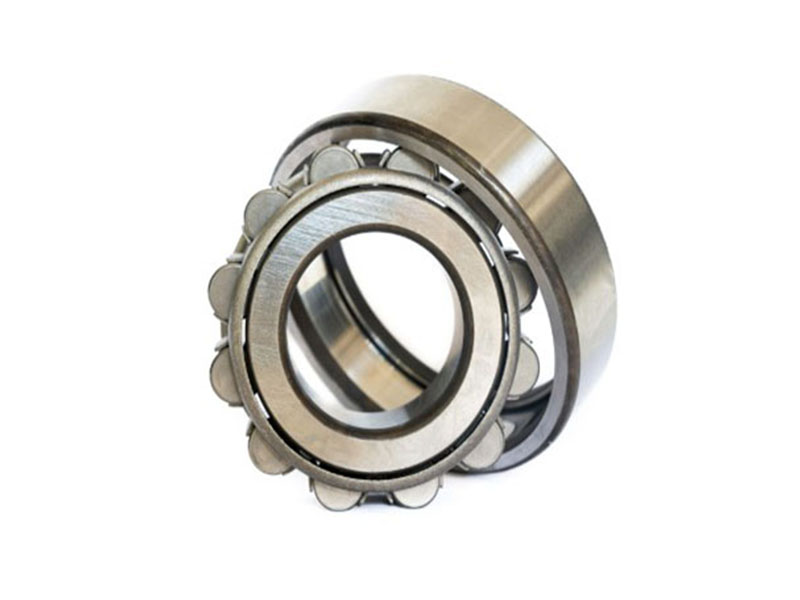
A cylindrical roller bearing is a rolling element bearing that uses cylindrical rollers as the rolling elements between the inner and outer rings. Unlike ball bearings, which use spherical balls and achieve point contact with raceways, cylindrical roller bearings establish line contact between rollers and raceways. This line contact creates a larger contact area, enabling cylindrical roller bearings to transmit higher forces and achieve greater rigidity compared to ball bearings of similar dimensions.
The cylindrical shape of the rollers allows the bearing to primarily support radial loads, though certain designs with integral flanges (ribs) can also accommodate moderate axial loads. Depending on rib configuration, axial displacement of the shaft relative to the housing can be either constrained or allowed — a feature that determines whether the bearing serves as a locating bearing or a non-locating (free end) bearing.
When the shaft rotates, the cylindrical rollers roll between the inner ring (mounted on the shaft) and the outer ring (housed in the equipment frame). Because the rollers make line contact with both raceways, the applied radial load is distributed across a broader surface area compared to ball bearings.
To reduce stress concentrations at the roller ends, cylindrical rollers are typically crowned or end-relieved rather than being perfect cylinders. This modification homogenizes stress distribution and mitigates the effects of minor misalignment.
Key Components of a Cylindrical Roller Bearing
Inner and Outer Rings
The inner and outer rings provide the raceways on which the rollers travel. The presence and arrangement of ribs (integral flanges) on these rings determine the bearing’s axial load capacity and its ability to accommodate shaft expansion. Based on rib configuration, single row cylindrical roller bearings are classified into standard designations:
- NU type: Outer ring has two ribs; inner ring has no ribs. Allows axial displacement in both directions (non-locating).
- N type: Inner ring has two ribs; outer ring has no ribs. Also allows axial displacement (non-locating).
- NJ type: Outer ring has two ribs; inner ring has one rib. Supports axial loads in one direction (semi-locating).
- NUP type: Outer ring has two ribs; inner ring has one fixed rib and one loose rib ring. Supports axial loads in both directions (locating).
Double row cylindrical roller bearings are designated NN or NNU, providing enhanced radial rigidity for applications such as machine tool spindles.
Cylindrical Rollers and Their Profile
The cylindrical rollers are the load-carrying components of the bearing. Their length-to-diameter ratio typically ranges from 1:1 to 3:1, distinguishing cylindrical roller bearings from needle roller bearings, which have significantly longer rollers relative to diameter. The rollers are manufactured from bearing steel — typically through-hardened chromium carbon steel — ensuring uniform hardness and fatigue resistance.
Cage Designs and Materials
The cage (also called retainer) separates the rollers, prevents them from contacting each other during operation, and maintains consistent roller spacing. Three cage materials are commonly used:
- Steel cages (pressed steel): Suitable for high-temperature environments and applications requiring high strength. Pressed steel cages can operate continuously at temperatures up to 120°C and are recommended for harsh operating conditions.
- Brass cages (machined brass): Provide excellent strength and wear resistance. Brass cages are particularly effective in high-load applications due to their ability to withstand deformation under pressure.
- Polyamide (nylon) cages: Lighter than metal cages, which reduces overall friction and centrifugal forces. They offer good chemical resistance but are not suitable for continuous operation above approximately 120°C.
Types of Cylindrical Roller Bearings
Single Row Cylindrical Roller Bearings
Single row cylindrical roller bearings are the most common type. They consist of one row of rollers between the inner and outer rings. These bearings offer high radial load capacity in a compact design, making them suitable for general industrial machinery and electric motors.
Double Row Cylindrical Roller Bearings
Double row bearings incorporate two rows of rollers, providing significantly higher radial rigidity compared to single row designs. They are often used in the main spindles of machine tools where precision and stiffness are critical. The additional roller row also enhances stability and resistance to deformation under heavy loads.
Full Complement Cylindrical Roller Bearings
Full complement designs eliminate the cage entirely, allowing the maximum possible number of rollers to be packed into the bearing. This configuration achieves the highest radial load capacity for a given size. However, because the rollers contact each other, full complement bearings have lower speed capabilities than caged designs. They are typically reserved for heavy-load, moderate-speed applications such as rolling mills and certain industrial gearboxes.
Multi Row Cylindrical Roller Bearings
Multi row bearings — typically four-row designs — are used in extremely heavy-duty applications. The most common application is in rolling mills, where backup rolls require bearings capable of withstanding immense radial forces. Multi row cylindrical roller bearings distribute loads across four rows of rollers, providing the highest load-bearing capacity available among radial roller bearings.
Cylindrical Roller Thrust Bearings
Cylindrical roller thrust bearings are specifically designed to support axial loads. They consist of a shaft locating washer, a housing locating washer, and a roller-and-cage assembly. These bearings offer high axial load capacity with very low axial section height, making them suitable for applications with limited axial space, such as gearboxes and rotating machinery.
Key Benefits of Cylindrical Roller Bearings
- High radial load capacity: The line contact between cylindrical rollers and raceways enables cylindrical roller bearings to support substantially higher radial loads than ball bearings of comparable dimensions.
- Low friction and high-speed capability: Properly lubricated cylindrical roller bearings with cages can operate at high speeds while maintaining low frictional torque. The separable design of many cylindrical roller bearings also simplifies lubrication introduction and heat dissipation.
- Durability and long service life: When properly selected, installed, and maintained, cylindrical roller bearings provide extended service life even under demanding operating conditions.
- Separable design for ease of mounting: Many cylindrical roller bearing designs allow the inner ring, outer ring, and roller assembly to be mounted separately. This simplifies installation and maintenance, particularly in applications where interference fits are required for both rings.
- Versatility: Cylindrical roller bearings are available in a wide range of sizes, configurations, and precision grades, enabling use across diverse industries.
Applications of Cylindrical Roller Bearings
Automotive Industry
In automotive applications, cylindrical roller bearings are used in wheel hubs, gearboxes, axles, and transmission systems. Their ability to withstand high radial loads while maintaining efficiency makes them suitable for these demanding environments.
Industrial Machinery
Cylindrical roller bearings are widely found in machine tools, conveyor systems, pumps, electric motors, compressors, and industrial fans. In machine tools, double row and super-precision cylindrical roller bearings support high-speed spindles requiring both rigidity and accuracy.
Wind Turbines and Power Generation
Wind turbine gearboxes and generators utilize cylindrical roller bearings for their high radial load capacity and long service life. Cylindrical roller bearings in these applications are often designed for enhanced reliability under variable load conditions.
Mining and Heavy Equipment
Mining operations, cement processing, aggregate crushing, and metal recycling facilities use cylindrical roller bearings — often full complement or multi row designs — to handle extreme radial loads. Heavy equipment such as excavators, crushers, and conveyor systems also rely on these bearings for durability under harsh conditions.
How to Select the Right Cylindrical Roller Bearing
Locating vs Non-Locating Bearing Arrangements
In shaft applications where thermal expansion occurs during operation, proper bearing arrangement is essential. The industry standard practice is to use one locating (fixed) bearing at one end of the shaft and one non-locating (free end) bearing at the opposite end.
- Non-locating bearings (N or NU types): Allow axial shaft displacement in both directions, accommodating thermal growth without inducing internal stress.
- Locating bearings (NJ or NUP types): Axially locate the shaft and can support moderate axial loads in one or both directions.
Selecting the correct locating scheme prevents thermal binding, which can cause rising temperatures, increased torque, and premature bearing failure.
Assessing Load Requirements
Determine whether radial loads, axial loads, or combined loads are present. For pure radial loads, cylindrical roller bearings are ideal. If axial loads are significant in both directions, consider NUP types or use a separate thrust bearing.
Speed and Rigidity Requirements
For high-speed applications, caged designs are preferred because they reduce friction and heat generation. For maximum radial load capacity at lower speeds, full complement bearings may be the better choice. Double row bearings provide higher rigidity and are recommended for applications where shaft stiffness is critical.
Environmental and Maintenance Considerations
Evaluate operating temperature range, contamination risks, and lubrication accessibility. For high-temperature environments, steel or brass cages are recommended over polyamide. Sealed or shielded designs may be necessary in dusty or wet conditions.
Maintenance and Failure Prevention
Proper Lubrication
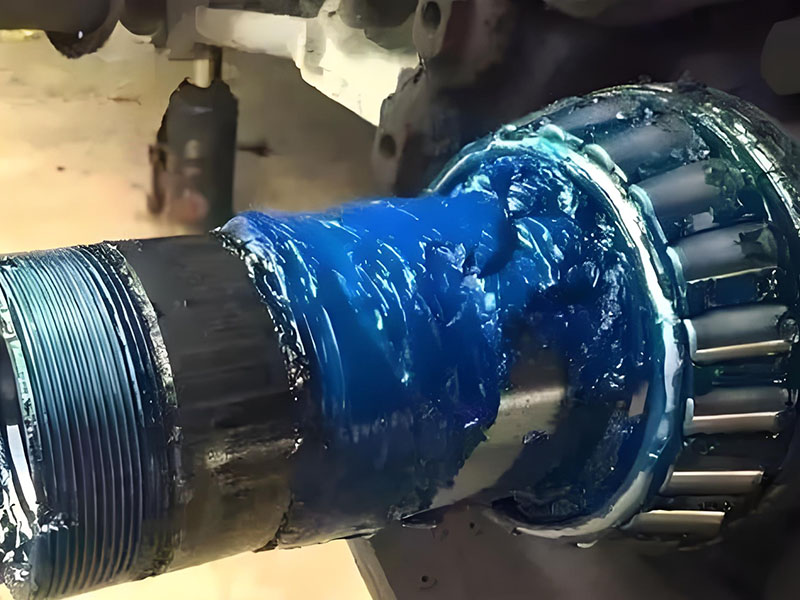
Lubrication is the most critical factor in extending cylindrical roller bearing life. A significant portion of premature bearing failures — commonly cited as approximately 40% in industry literature — are caused by lubrication problems.
The primary functions of lubricating cylindrical roller bearings include minimizing friction, reducing wear, dissipating heat, and preventing contamination. Grease is the most common lubricant for rolling bearings, used in approximately 90% of applications. Oil lubrication — typically oil bath or circulating oil systems — is more suitable for high-speed or high-temperature operations.
For single row cylindrical roller bearings, a general guideline is to fill approximately 30–40% of the bearing’s free space with grease, though this varies by application. Both over-lubrication and under-lubrication can lead to problems. Excessive grease generates additional frictional heat and increases operating temperature.
Lubrication intervals depend on bearing size, speed, operating temperature, and environment. In dusty or moisture-laden settings, more frequent lubrication is necessary to purge contaminants from the bearing.
Regular Inspections and Condition Monitoring
Early detection of bearing deterioration prevents catastrophic failures and reduces downtime. Common indicators include:
- Unusual noise patterns: Grinding sounds may indicate contamination or surface damage; high-pitched squeals suggest inadequate lubrication.
- Progressive vibration changes: Vibration analysis can detect roller defects, raceway flaws, or cage damage before they become audible.
- Temperature monitoring: Abnormal heat generation frequently precedes bearing failure.
- Visual inspection: Lubricant discoloration, seal damage, or misalignment issues are visible warning signs.
Common Failure Modes
The primary failure modes of cylindrical roller bearings include fatigue spalling, wear, plastic deformation, and cage damage. Fatigue spalling and wear together account for over 60% of bearing failures in industrial applications.
- Fatigue spalling: Results from cyclic stress exceeding material fatigue limits, typically caused by excessive loads, inadequate lubrication, or contamination.
- Wear: Accelerated by insufficient lubricant film thickness, high temperature and low rotational speed conditions, or contamination ingress.
- Rib scoring/smearing: Occurs when lubricant film strength at rib-roller guidance surfaces is insufficient, often due to low viscosity at high speeds.
- Cage fracture: Typically caused by excessive vibration, improper mounting, or lubrication starvation.
In cylindrical roller bearings, when radial clearance increases due to wear, the bearing loaded zone and the number of loaded rollers decrease. The contact load on the maximum loaded roller increases while the load shared by other rollers decreases, accelerating localized failure.
Bearing Replacement
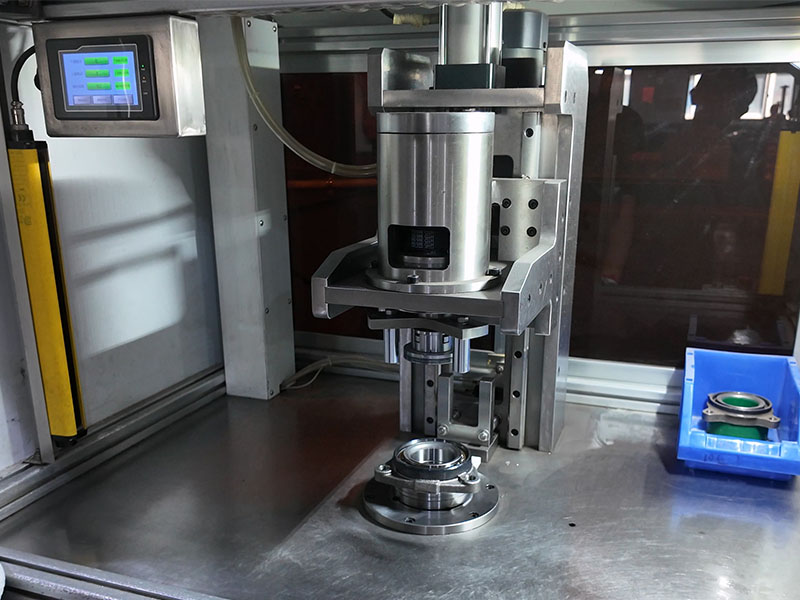
Replace cylindrical roller bearings when periodic inspections reveal signs of fatigue spalling, excessive wear, cage deformation, or when vibration analysis indicates declining condition. Always refer to the original equipment manufacturer’s specifications when selecting replacement bearings. Proper installation procedures — including verifying shaft and housing tolerances and using appropriate mounting tools — are critical because successful load bearing and optimal life are established or diminished at installation.
Frequently Asked Questions
Q1: What is the difference between cylindrical roller bearings and ball bearings?
A1: Ball bearings have point contact between balls and raceways, resulting in lower friction and suitability for high speeds but lower radial load capacity. Cylindrical roller bearings have line contact, providing higher radial load capacity and rigidity at the expense of slightly higher friction. Cylindrical roller bearings typically handle higher loads and offer greater stiffness, while ball bearings excel in low-torque, high-speed applications requiring axial load accommodation.
Q2: What do NU, NJ, and NUP mean?
A2: These are standard designations for single row cylindrical roller bearings based on rib configuration: NU (outer ring has two ribs; inner ring has no ribs — non-locating), NJ (outer ring has two ribs; inner ring has one rib — supports axial loads in one direction), NUP (outer ring has two ribs; inner ring has one fixed rib and one loose rib ring — supports axial loads in both directions).
Q3: Can cylindrical roller bearings handle axial loads?
A3: Standard cylindrical roller bearings with ribs can handle moderate axial loads. N and NU types permit axial shaft displacement but cannot support significant axial loads. NJ and NUP types are designed to support axial loads in one or both directions while also carrying radial loads. For applications requiring high axial loads, thrust cylindrical roller bearings or tapered roller bearings may be more suitable.
Q4: How do I choose between single-row and double-row cylindrical roller bearings?
A4: Single row bearings offer high radial load capacity in a compact design, suitable for most general applications. Double row bearings provide greater radial rigidity and stability, making them the preferred choice for precision machine tools and applications where shaft stiffness is critical.
Q5: When should I use full complement instead of caged cylindrical roller bearings?
A5: Full complement bearings (cage-less) provide maximum radial load capacity for a given size because they contain the largest possible number of rollers. However, they have lower speed capabilities due to roller-to-roller contact. Use full complement bearings for heavy-load, moderate-speed applications. Use caged bearings for high-speed applications where friction must be minimized.
Q6: What are the most common causes of cylindrical roller bearing failure?
A6: The most frequent causes are lubrication problems (incorrect lubricant type or quantity, contamination, or inadequate relubrication intervals), improper mounting (excessive interference fit, misalignment, or damage during installation), and overloading beyond the bearing’s dynamic load rating.
Conclusion
Cylindrical roller bearings are fundamental components in countless industrial and automotive applications, valued for their high radial load capacity, rigidity, and versatility. Understanding their design variations — from single row to multi row, from caged to full complement, and from standard precision to super-precision — enables engineers to select the optimal bearing for each application.
Proper selection begins with assessing load requirements, speed conditions, and environmental factors, including the correct locating/non-locating arrangement for thermal expansion. Once selected, correct installation and routine maintenance — particularly proper lubrication — are essential for maximizing service life. Regular inspections, condition monitoring, and awareness of common failure modes help prevent unplanned downtime and extend equipment reliability.
By understanding what a cylindrical roller bearing is, how it works, and how to maintain it, engineers and maintenance professionals can make informed decisions that improve equipment performance and reduce total ownership costs.