Overview of Cylindrical and Tapered Roller Bearings
Cylindrical roller bearings and tapered roller bearings are two widely used types of rolling element bearings in industrial and automotive applications. Both are designed to support heavy loads, but they differ fundamentally in geometry, load handling characteristics, and typical use cases.
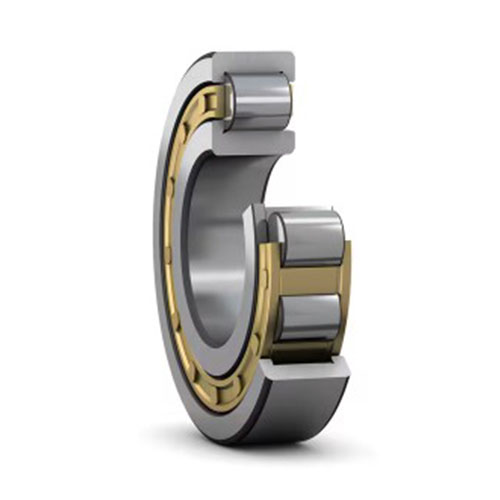
Cylindrical roller bearings feature cylindrical-shaped rollers that maintain line contact with parallel raceways. They are primarily intended for high radial loads and high-speed operation, with limited axial load.
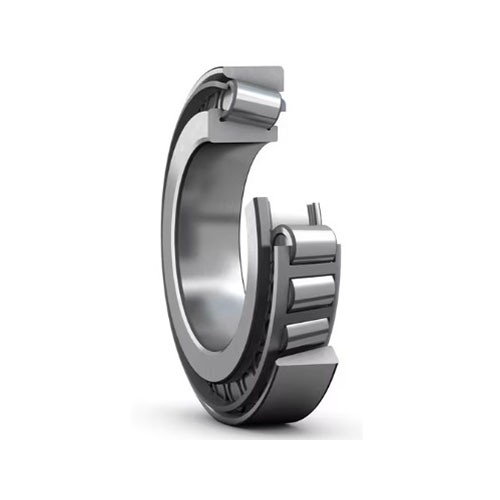
Tapered roller bearings use conical rollers and tapered raceways, creating an angled contact geometry. This design enables them to support combined radial and axial loads simultaneously, making them suitable for applications such as wheel hubs, transmissions, and heavy machinery.
The core difference between cylindrical and tapered roller bearings lies in how each manages load direction: cylindrical roller bearings excel under pure radial loads, while tapered roller bearings are optimized for combined loads.
Key Differences Between Cylindrical and Tapered Roller Bearings
Structural Differences
Roller Geometry: Cylindrical roller bearings have straight, cylindrical rollers. Tapered roller bearings have conical rollers that taper toward a common apex on the bearing axis.
Raceway Design: In cylindrical roller bearings, the inner and outer ring raceways are parallel to the bearing axis. In tapered roller bearings, both raceways are tapered, creating a contact angle.
Assembly: Cylindrical roller bearings often have separable rings, simplifying mounting and dismounting. Tapered roller bearings also have separable cones and cups, but require precise axial adjustment during installation.
Load Capacity Differences
Radial Load Handling: Cylindrical roller bearings are optimized for pure radial loads. The line contact between rollers and raceways provides high radial stiffness and capacity. Tapered roller bearings can also handle radial loads, but their geometry is less efficient than cylindrical designs for pure radial applications.
Axial Load Handling: Cylindrical roller bearings have very limited axial load capacity. Only variants with flanges (ribs) on both inner and outer rings can accommodate small axial loads. Tapered roller bearings are designed to handle high axial loads. The contact angle—the angle between the roller axis and the bearing axis—determines the ratio of radial to axial load capacity. A larger contact angle increases axial thrust capacity but reduces radial load capability.
Combined Load Handling: For applications requiring simultaneous radial and axial loads, tapered roller bearings are the appropriate choice. Cylindrical roller bearings are not suitable for significant combined loads.
Performance Differences
Speed and Friction: Cylindrical roller bearings generate lower friction due to pure rolling motion without thrust components. They support higher rotational speeds. Tapered roller bearings have slightly higher friction but remain suitable for most industrial speed ranges.
Rigidity and Precision: Tapered roller bearings offer high rigidity and can be preloaded to eliminate internal clearance, improving shaft positioning accuracy. Cylindrical roller bearings provide excellent radial rigidity, especially in double-row configurations.
Noise and Vibration: Cylindrical roller bearings typically operate with lower noise and vibration levels, making them preferable for electric motors and noise-sensitive equipment.
Application Differences
Cylindrical roller bearings are commonly used in:
- Electric motors and generators
- Industrial gearboxes (as non-locating bearings)
- Compressors and pumps
- High-speed machine tool spindles
- Rolling mills
Tapered roller bearings are commonly used in:
- Automotive wheel hubs and axles
- Transmissions and differentials
- Construction and mining equipment
- Agricultural machinery
- Heavy-duty gearboxes where combined loads exist
Comparison Table: Cylindrical vs. Tapered Roller Bearings
| Feature | Cylindrical Roller Bearing | Tapered Roller Bearing |
|---|---|---|
| Roller shape | Straight cylindrical | Conical (tapered) |
| Raceway orientation | Parallel to axis | Angled (tapered) |
| Primary load direction | Radial | Combined radial + axial |
| Axial load capacity | Very low (unless special design) | High |
| Maximum speed capability | High | Moderate |
| Friction level | Low | Slightly higher |
| Radial rigidity | High | Good |
| Axial rigidity | Low | High (when preloaded) |
| Noise level | Low | Moderate |
| Installation complexity | Easy (separable rings) | Requires precise preload adjustment |
| Cost | Generally lower | Generally higher |
| Typical applications | Motors, pumps, compressors, gearboxes | Wheel hubs, axles, transmissions, heavy machinery |
How to Choose the Right Bearing
Selecting between cylindrical and tapered roller bearings requires evaluating several application-specific factors.
Key Selection Factors
Load Type and Direction
- Is the load purely radial or primarily radial with minimal axial component? Cylindrical roller bearings are suitable.
- Does the application involve significant axial loads combined with radial loads? Tapered roller bearings are required.
Operating Speed
- High-speed applications (e.g., electric motor rotors, high-speed spindles) favor cylindrical roller bearings due to lower friction and heat generation.
- Moderate-speed applications with combined loads can use tapered roller bearings; always check manufacturer speed ratings.
Installation and Maintenance
- If simple mounting and dismounting are priorities, cylindrical roller bearings offer easier handling.
- If precise shaft positioning and preload control are needed, tapered roller bearings provide adjustability.
Environmental Conditions
- Both types are available with seals, shields, and various cage materials. For shock loads and vibration, tapered roller bearings with brass cages are robust.
- For clean, low-noise environments, cylindrical roller bearings are often preferred.
Cost Considerations
- Cylindrical roller bearings are typically less expensive. However, if an application requires combined load capacity that cylindrical designs cannot provide, the higher cost of tapered roller bearings is justified.
Selection Decision Guide
Choose cylindrical roller bearings when:
- The primary load is radial, and axial loads are negligible.
- High rotational speed is required.
- Simple installation without complex preload adjustment is desired.
- Noise and vibration must be minimized.
- Budget is a constraint, and the application does not demand combined load handling.
Choose tapered roller bearings when:
- The bearing must support both radial and axial loads simultaneously.
- Axial positioning accuracy and rigidity are critical.
- The application involves shock loads or vibrations.
- Preload capability is required to eliminate internal clearance.
- The equipment operates in demanding conditions such as automotive drivetrains, heavy machinery, or mining equipment.
Quick Decision Flow:
- Pure radial load + high speed → Cylindrical roller bearing
- Combined load + moderate speed + need for preload → Tapered roller bearing
- Uncertain about axial load magnitude → Calculate or measure the axial-to-radial load ratio. If axial load exceeds 10–15% of radial load, tapered roller bearings are generally recommended.
Conclusion
When selecting between these two bearing types, no single factor determines the choice. Understanding the differences between cylindrical and tapered roller bearings is essential for proper bearing selection. Cylindrical roller bearings offer superior radial load capacity and high-speed capability with simpler installation. Tapered roller bearings excel in combined load conditions where both radial and axial forces must be supported simultaneously. By evaluating load type, speed requirements, installation constraints, and operating environment, engineers can make informed choices that optimize equipment reliability and performance. When comparing cylindrical vs tapered roller bearings, the deciding factor is always the presence and magnitude of axial loads relative to radial loads.
FAQs
Q1: Can cylindrical roller bearings handle any axial load?
A1: Certain designs with flanges (ribs) on both inner and outer rings can accommodate small axial loads. However, their axial capacity is very limited compared to tapered roller bearings.
Q2: Do tapered roller bearings always need to be used in pairs?
A2: Single-row tapered roller bearings can handle axial loads in one direction only. For bidirectional axial loads, they must be used in opposing pairs (back-to-back or face-to-face).
Q3: Which bearing type is better for high-temperature environments?
A3: Both types can be manufactured with heat-stabilized components. Cylindrical roller bearings may have an advantage in heat dissipation due to lower friction, but proper cage material (brass or steel) is more critical than bearing type.
Q4: How do I determine the correct preload for a tapered roller bearing?
A4: Preload is determined by application requirements—typically by measuring starting torque or axial end play. Follow the equipment manufacturer’s specifications.
Q5: Is there a cost difference between cylindrical and tapered roller bearings?
A5: Yes. Tapered roller bearings are generally more expensive due to more complex manufacturing and tighter tolerances. Cylindrical roller bearings are more cost-effective for pure radial load applications.
Q6: Can I replace a tapered roller bearing with a cylindrical roller bearing?
A6: No, unless the entire bearing arrangement is redesigned. The load direction and housing geometry differ significantly between the two types.