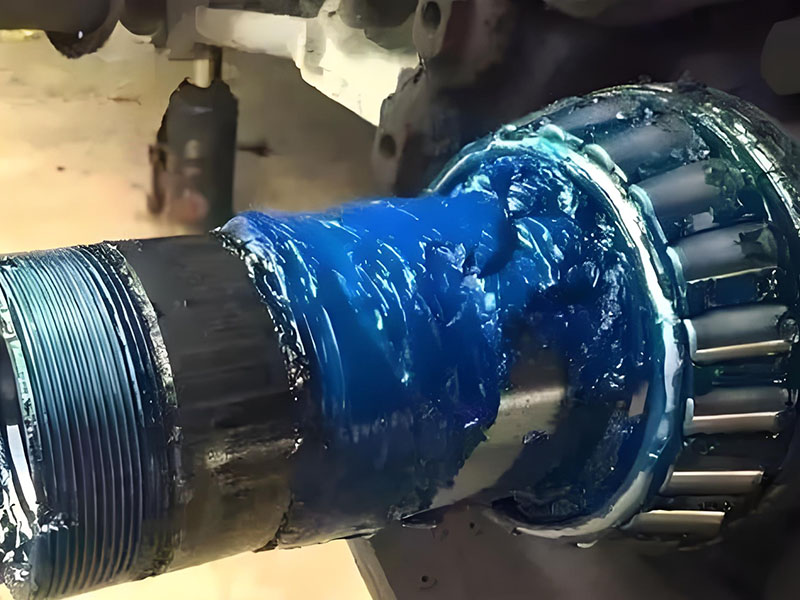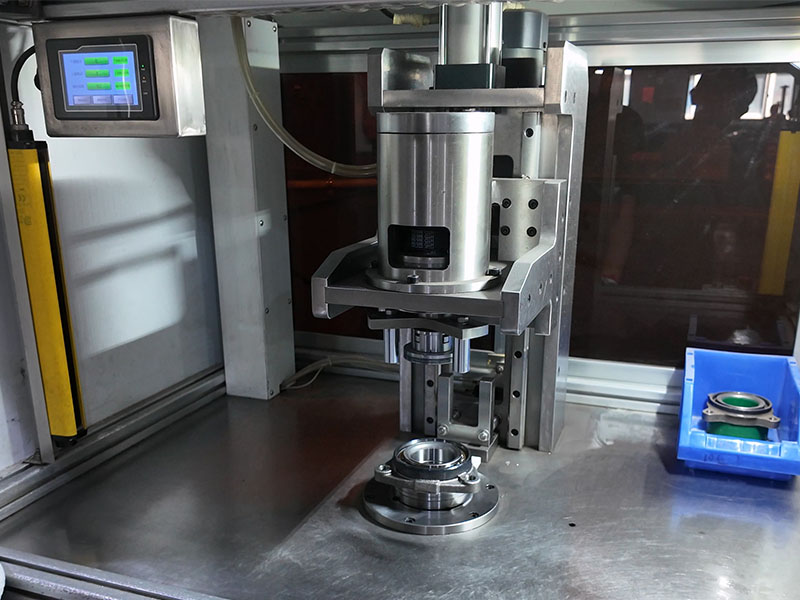
When a pulley rotates under load, the component that enables smooth, low-friction motion is the pulley bearing. Without it, belts would drag, energy would be wasted, and mechanical systems would fail prematurely. DUHUI will answer common questions such as how pulley bearings work, what types exist, how to select the correct size, and how to diagnose damage.
What Is a Pulley Bearing?
A pulley bearing is a mechanical component mounted inside or attached to a pulley to allow it to rotate freely around a shaft. It reduces friction between the rotating pulley and the stationary axle, supporting radial loads (perpendicular to the shaft) and, in many designs, axial loads (parallel to the shaft). Pulley bearings are found in belt-driven systems across automotive engines, industrial conveyors, HVAC fans, and agricultural machinery.
How Do Pulley Bearings Work?
Pulley bearings operate on the principle of rolling contact. Rolling elements—balls or rollers—are positioned between an inner ring (mounted on the shaft) and an outer ring (fixed to the pulley hub). When the pulley rotates, the rolling elements move along raceways, creating significantly less friction compared to sliding contact. Lubrication forms a thin film between the rolling elements and raceways, further reducing wear and dissipating heat.
Why Pulley Bearings Are Critical for Mechanical Systems
A properly functioning pulley bearing directly impacts system efficiency and longevity. First, it minimizes energy loss due to friction, which improves fuel economy in vehicles and reduces electricity consumption in industrial drives. Second, it prevents premature belt wear by maintaining consistent alignment and tension. Third, it reduces noise and vibration, contributing to smoother operation. Finally, a failed pulley bearing can lead to shaft damage, belt breakage, or even complete system shutdown—making regular inspection essential.
Main Types of Pulley Bearings and Their Characteristics
Selecting the right pulley bearing requires understanding the distinct characteristics of each design.
| Type | Key Characteristics | Typical Applications |
|---|---|---|
| Deep Groove Ball Bearings | Moderate radial & axial loads, low friction, high-speed capability | Alternator pulleys, small conveyor rollers, HVAC fan pulleys |
| Angular Contact Ball Bearings | Designed for combined radial and axial loads (higher axial capacity than deep groove), available in single-row or double-row | Automotive tensioner pulleys (subject to belt thrust), high-speed idler pulleys, water pump pulleys with combined loads |
| Cylindrical Roller Bearings | Higher radial load capacity, less suited for high axial loads | Large industrial fan pulleys, mining conveyor head pulleys, heavy-duty belt-driven systems |
| Tapered Roller Bearings | Support combined radial and axial loads | Vehicle wheel hubs that also act as pulleys for auxiliary drives, heavy industrial pulley systems with significant thrust |
| Spherical Roller Bearings | Accommodate misalignment, robust under shock loads | Pulleys in vibrating screens, crusher belt drives, agricultural equipment (e.g., combine harvesters) |
| V‑Groove Bearings | V-shaped outer groove for wire/rope, not typical for belt drives | Cable pulley systems, garage door mechanisms, linear motion guides (wire rope pulleys) |
How to Determine Pulley Bearing Specifications and Sizes
To replace or select a pulley bearing, you need accurate dimensions and load ratings. Two reliable methods exist.
Understanding Bearing Codes
Most pulley bearings carry an alphanumeric code stamped on the shield or ring. For example, a 6204 bearing indicates a deep groove ball bearing with a 20 mm bore (04 × 5 = 20 mm), 47 mm outer diameter, and 14 mm width. Prefixes like “6” denote single-row deep groove, while “63” or “64” indicate heavier series. Codes also reveal seal types: “ZZ” for metal shields, “2RS” for rubber seals.
Manual Measurement
If the bearing code is illegible, use a digital caliper to measure:
- Bore diameter (d) – inner ring hole
- Outer diameter (D) – widest part of outer ring
- Width (B) – thickness of the bearing
Record these three values in millimeters. Cross-reference them with standard bearing dimension tables to identify the correct replacement.
Common Applications of Pulley Bearings Across Industries
- Automotive: Idler pulleys, tensioner pulleys, alternator decoupler pulleys, and water pump pulleys all rely on precision bearings.
- Manufacturing: Assembly line conveyor pulleys, CNC machine belt drives, and packaging equipment.
- Agriculture: Combine harvesters, balers, tractors (belt-driven fans and alternators), and grain elevator head pulleys.
- HVAC: Air handler fan pulleys, condenser fan pulleys, and large industrial blower drives.
- Material Handling: Belt conveyors, bucket elevators, and sorting system pulleys.
- Heavy Industry: Mining crusher drive pulleys, steel mill roller tables, and cement plant bucket elevators.
How to Choose the Right Pulley Bearing for Your Application
Making the correct choice requires evaluating three primary factors plus secondary environmental conditions.
Load Requirements
Calculate the radial load (force perpendicular to the shaft) and any axial load. For pure radial loads, deep groove ball bearings or cylindrical roller bearings are sufficient. For combined loads, consider tapered roller bearings or angular contact ball bearings.
Rotational Speed
Higher speeds generate more heat and require better lubrication. Ball bearings generally handle higher speeds than roller bearings. Check the manufacturer’s speed rating (often given as limiting speed or reference speed) and ensure your operating RPM stays within limits.
Environmental Factors
- Temperature: Standard bearings operate from -30°C to +120°C. For high-temperature applications (e.g., near ovens or engines), use heat-stabilized bearings with special grease.
- Moisture and Contaminants: In wet or dusty environments, choose sealed (2RS) or shielded (ZZ) bearings. For washdown conditions (food processing), stainless steel bearings are recommended.
- Corrosive Agents: Chemical exposure demands ceramic hybrid bearings or full stainless steel construction.
Signs of Pulley Bearing Damage and Diagnostic Techniques
Early detection prevents costly breakdowns. Watch for these indicators.
Squealing or Whining Noise
A high-pitched squeal often signals insufficient lubrication or surface wear on the raceway. A grinding or rumbling sound indicates spalling (metal flaking) or debris contamination.
Vibration and Rough Rotation
Excessive vibration felt through the pulley housing or belt suggests bearing raceway damage or excessive clearance. Rotate the pulley by hand; if it feels notchy or stops unevenly, the bearing is failing.
Irregular Belt Wear
If the drive belt shows frayed edges, glazed surfaces, or uneven rib wear, a misaligned or seized pulley bearing may be the root cause. Check bearing free rotation before replacing the belt.
Overheating
A bearing that runs too hot (above 180°F / 82°C for most greases) indicates over-greasing, insufficient lubrication, or excessive preload. Use an infrared thermometer during operation to monitor temperature.
Pulley Bearing Installation and Maintenance Best Practices
Proper installation doubles bearing life. Follow these steps:
- Prepare a clean workspace – Dust and debris are the leading causes of premature bearing failure. Clean the shaft, housing, and surrounding area.
- Apply appropriate force – Never strike the outer ring when pressing a bearing onto a shaft (that damages raceways). Use a press or bearing installation tool. Apply force only to the ring that is being interference-fitted.
- Check alignment – Misaligned pulleys impose bending loads on the bearing. Use a laser alignment tool or straightedge to verify pulley parallelism.
- Lubricate correctly – For open bearings, fill the housing 30–50% with recommended grease. Do not overpack, which causes churning and overheating. Sealed bearings are pre-lubricated for life.
- Tighten to specification – Use a torque wrench on the retaining bolt or nut. Under-tightening allows movement; over-tightening distorts the bearing rings.
- Perform post-installation check – Rotate the pulley by hand. It should spin freely with no resistance or grinding sound. Run the system at low speed first, then gradually increase to full operation while monitoring noise and temperature.
Regular maintenance includes periodic re-greasing (for relubricatable bearings), checking belt tension, and listening for changes in operating sound.
Conclusion
From a simple idler pulley in a car engine to a heavy-duty conveyor head pulley in a mine, pulley bearings are fundamental to reducing friction, supporting loads, and enabling continuous rotation. Understanding their types, specifications, failure signs, and proper installation techniques helps maintenance professionals and equipment designers avoid unplanned downtime. Matching the bearing to your application’s load, speed, and environment ensures long service life. Regular inspection and correct lubrication remain the most cost-effective strategies for preserving pulley bearing performance.