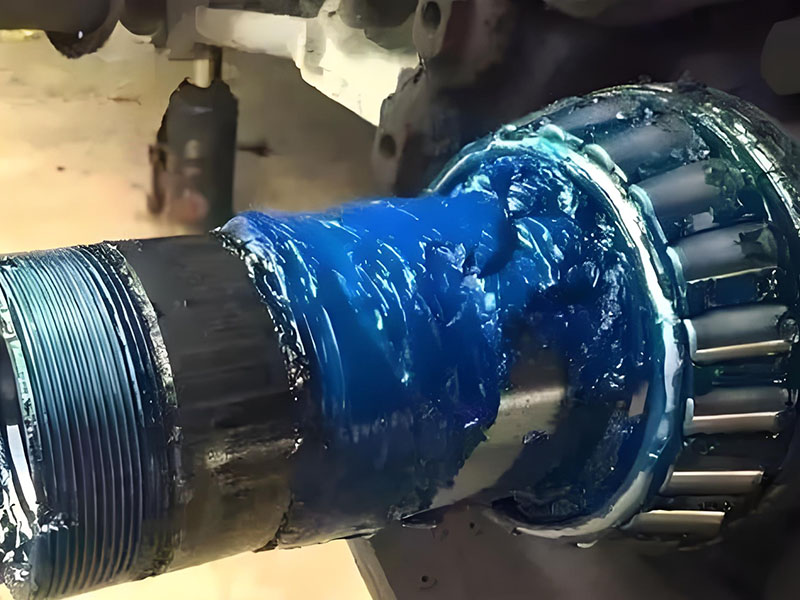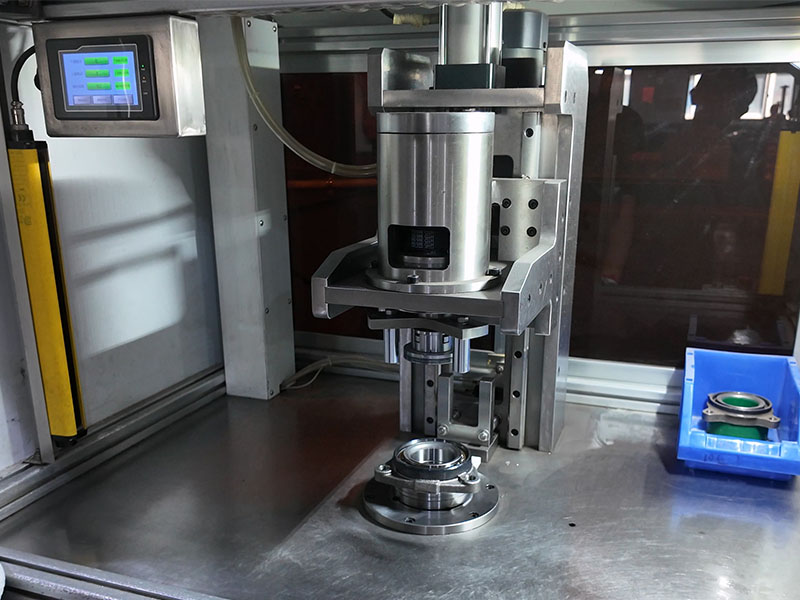
Ball bearings are fundamental mechanical components used to reduce rotational friction and support radial and axial loads. From automotive drivetrains to household appliances, ball bearings enable smooth motion across countless applications. Understanding the specific uses of ball bearings helps engineers, maintenance professionals, and procurement specialists select the right type for each scenario. DUHUI will provide a systematic overview of ball bearing applications across industrial, automotive, and everyday settings.
Understanding Ball Bearings: Design and Purpose
What is the purpose of a ball bearing?
The primary purpose of a ball bearing is to allow free rotation of a shaft or axle while minimizing friction between moving parts. Additionally, ball bearings locate rotating components precisely within a machine, preventing axial and radial movement beyond design limits. They also distribute loads evenly across rolling elements, reducing wear and extending equipment service life.
How do ball bearings work?
A ball bearing operates by interposing small hardened steel or ceramic balls between two concentric rings, called the inner and outer races. As the inner race rotates, the balls roll along the raceways rather than sliding. This rolling motion, based on point contact, dramatically reduces friction compared to plain sliding bearings. Lubrication further reduces friction and dissipates heat.
Common Types of Ball Bearings and Their General Uses
Different design configurations suit specific load directions and operating conditions.
Deep groove ball bearings: The most widely used type. Suitable for high speeds and moderate radial and axial loads. Typical uses include electric motors, pumps, gearboxes, and conveyor rollers.
Angular contact ball bearings: Designed to accommodate combined radial and thrust loads. Common in machine tool spindles, precision pumps, and automotive front wheels.
Thrust bearings: Specialized for pure axial loads at low to moderate speeds. Found in automotive steering columns, crane hooks, and turntables.
Self-aligning ball bearings: Feature two rows of balls with a spherical outer raceway, allowing angular misalignment. Used in agricultural machinery, textile equipment, and fans with long shaft spans.
Flanged bearings: Include an integrated flange on the outer ring for easy axial location. Applied in conveyor wheels, office automation equipment, and packaging machinery.
Thin section bearings: Have a small cross-section relative to bore diameter. Used where space and weight are critical, such as robotics, medical scanners, and aerospace actuators.
Miniature bearings: Very small bore sizes (typically under 10 mm). Found in dental handpieces, small electric motors, and model aircraft.
Stainless steel ball bearings: Corrosion-resistant. Used in food processing equipment, marine applications, and chemical pumps.
Ceramic bearings: Hybrid or full ceramic construction. Offer higher speed capability, electrical insulation, and corrosion resistance. Applied in vacuum pumps, high-speed spindles, and electric vehicle motors.
Major Industrial and Mechanical Applications of Ball Bearings
Industrial machinery
In general industry, ball bearings support rotating shafts in conveyors, industrial fans, blowers, and compressors. Gearboxes rely on ball bearings for input and output shafts. Packaging machinery, printing presses, and textile looms all contain multiple ball bearings operating under varying speeds and loads.
Engineering and precision equipment
Precision ball bearings are essential for robotics (joint actuators and wheel drives), measuring instruments (coordinate measuring machines and encoders), and high-speed spindles for CNC machining. Semiconductor manufacturing equipment, such as wafer handling robots, uses ultra-clean ball bearings with special lubricants.
What are the uses of ball bearings in automobiles?
Automotive applications represent a major category for ball bearings, covering drivetrain, chassis, and auxiliary systems.
Wheel hub bearings
Wheel hub support the entire vehicle weight and allow the wheels to rotate with minimal friction. Modern designs often integrate ball bearings in a double-row angular contact configuration, preloaded to eliminate play. Hub bearings must withstand radial loads from vehicle weight, axial loads during cornering, and impact loads from road irregularities.
Transmission systems
In manual and automatic transmissions, ball bearings support and guide rotating gears on shafts. Deep groove ball bearings are common for countershafts, while angular contact ball bearings manage combined loads in differential assemblies. Ball bearings maintain precise gear alignment, reducing noise and wear.
Clutch release bearings
Also known as throw-out bearings, these are a specialized form of ball bearing. They press against the clutch diaphragm spring to disengage the engine from the transmission. The bearing allows stationary clutch components to contact rotating pressure plate parts smoothly.
Other automotive applications
Alternators: Small deep groove ball bearings support the rotor shaft at high rotational speeds.
Water pumps: Sealed ball bearings handle coolant exposure and belt tension loads.
Air conditioning compressors: Ball bearings support the compressor shaft under varying load conditions.
Steering columns: Thrust ball bearings accommodate axial loads in tilt/telescoping mechanisms.
Everyday uses of ball bearings in household appliances and personal equipment
Beyond industrial and automotive sectors, ball bearings are present in many common items.
- Refrigerators: Fan motors circulating cold air contain miniature ball bearings. Compressor units may also use ball bearings.
- Washing machines: The drum rotates on ball bearings, often a large deep groove bearing at the rear. Drain pump motors also contain small bearings.
- Dishwashers: Wash arm rotation and circulation pump motors rely on corrosion-resistant stainless steel ball bearings.
- Vacuum cleaners: High-speed universal motors use ball bearings for the fan and armature shafts, enabling sustained high RPM operation.
- Ovens and dryers: Convection fan motors and drum support bearings (in dryers) are typical applications.
- Bicycles and skateboards: Wheel hubs, steering heads (headsets), and pedal bearings all use ball bearings. Skateboard wheels typically contain two pressed-in ball bearings.
- Computer cooling fans: Small sleeve bearings or ball bearings – ball bearing fans have longer service life, especially in server environments.
- Hard disk drives: Fluid dynamic bearings are common, but some designs still use miniature ball bearings for spindle support.
Frequently Asked Questions (FAQ) about Ball Bearing Applications
Why are ball bearings often preferred over roller bearings in high-speed applications?
Ball bearings have point contact between the ball and raceway, resulting in lower rolling friction and heat generation compared to the line contact of roller bearings. This makes ball bearings suitable for higher rotational speeds, even though their load capacity per unit size is lower.
What are the important applications of ball bearings in medical devices?
Medical equipment requires reliability, cleanliness, and often corrosion resistance. Ball bearings are used in dental handpieces (miniature bearings at 300,000+ RPM), surgical drills, CT scanner rotating gantries, X-ray tube assemblies, and infusion pump motors. Stainless steel or ceramic bearings are common in sterile environments.
Can ball bearings be used in extreme environments?
Yes, but standard chrome steel bearings may fail. For high temperatures (over 150°C), special heat-stabilized steel or silicon nitride ceramic bearings with high-temperature grease are required. For vacuum environments (space or vacuum chambers), bearings with solid lubricants (MoS₂ or silver plating) are used. For corrosive environments, 440C stainless steel or full ceramic (ZrO₂ or Si₃N₄) bearings are specified.
What materials are used for ball bearings?
The most common material is chrome steel (AISI 52100 / GCr15), offering high hardness and fatigue resistance. Stainless steel (AISI 440C, SUS440C, or 316 for cages) provides corrosion resistance. Ceramic materials (silicon nitride Si₃N₄ or zirconia ZrO₂) are used for hybrid bearings (ceramic balls, steel races) or full ceramic bearings. Plastic cages (nylon, PEEK) are common for lightweight or chemical resistance.
Which type of ball bearing is most commonly used in general machinery?
Deep groove ball bearings are the most common type due to their simple design, low cost, ability to handle both radial and moderate axial loads, and suitability for high speeds. They represent the default choice for many applications including electric motors, pumps, and fans.
Why do bicycles and skateboards also use ball bearings?
Bicycle wheels, bottom brackets, and headsets all experience rotational motion with load. Ball bearings reduce pedaling resistance, allow free coasting, and provide smooth steering. Similarly, skateboard wheels use ball bearings to maintain momentum and reduce friction between the wheel and axle.
Conclusion
The uses of ball bearings span nearly every machine with rotating parts. From heavy industrial gearboxes to precision medical devices, from automotive wheel hubs to household washing machines, ball bearings fulfill the essential function of reducing friction while supporting loads. The wide variety of ball bearing types – deep groove, angular contact, thrust, self-aligning, and specialized materials – allows engineers to match bearing properties to specific operating conditions. Understanding these applications helps in selecting the correct bearing for reliability, efficiency, and service life. Whether for high-speed spindles or slow-rotating conveyor rollers, the ball bearing remains a fundamental component of modern mechanical design.