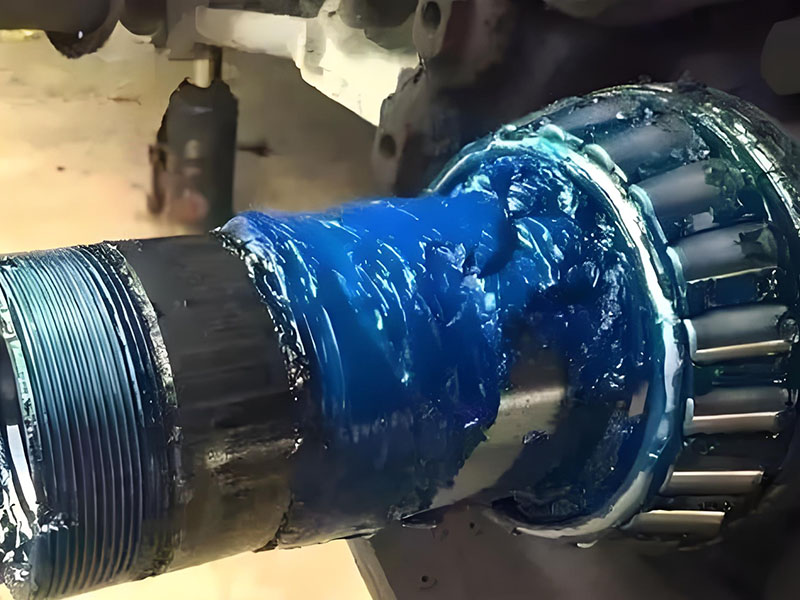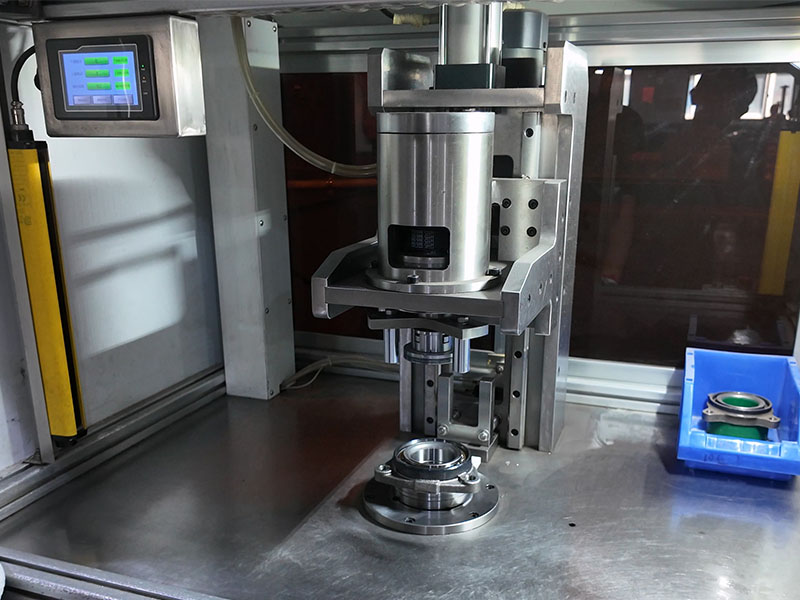
An excavator swing bearing is a critical component that connects the upper structure (cab, boom, engine) to the undercarriage (tracks). It enables the excavator to rotate 360 degrees while supporting heavy axial, radial, and tilting moment loads. Without a properly functioning swing bearing, an excavator cannot swing or position its attachment accurately. Common questions from operators include: How often should it be greased? Why does the machine stop swinging? When is replacement necessary? DUHUI will provide objective, technical answers.
Definition and Function of Excavator Swing Bearing
The swing bearing is a large-diameter rolling-element bearing installed between the turntable and the track frame. Its inner or outer ring is bolted to the upper structure, while the opposite ring is bolted to the undercarriage. Rolling elements (balls or rollers) inside the raceways allow smooth rotation.
Primary functions:
- Support the full weight of the upper structure and operating loads.
- Absorb radial forces (e.g., digging resistance) and overturning moments.
- Transmit rotational torque from the swing motor via an integral gear (internal or external teeth).
Key Characteristics and Advantages of Excavator Swing Bearing
Modern excavator swing bearings are engineered for durability and efficiency. Their main characteristics include:
- Low friction and high rotational efficiency – Precision-ground raceways and hardened rolling elements minimize energy loss.
- Compact structure with low profile – The bearing’s height is kept small to save space between the upper and lower frames, allowing a lower center of gravity.
- Simplified maintenance – Standard grease fittings enable periodic lubrication without disassembly.
- Central space availability – The hollow center of the bearing accommodates hydraulic hoses, electrical cables, and the swing motor.
- Customizable design – Manufacturers can modify bolt hole patterns, gear teeth (module, number of teeth), and seal materials for specific excavator models.
Common Structural Types of Swing Bearings
Depending on load capacity and application, excavator swing bearings typically fall into these categories:
| Type | Configuration | Typical Use |
| Single-row four-point contact ball | One raceway with balls contacting at four points | Most common for mid-sized excavators |
| Double-row ball | Two parallel raceways | Heavy-duty excavators (larger than 30 tons) |
| Crossed roller | Cylindrical rollers arranged crosswise | High precision and rigidity, e.g., tower cranes |
Additionally, swing bearings are classified as internal gear, external gear, or gearless. Excavators almost always use an internal gear (teeth on the inner ring) driven by a pinion from the swing motor.
Applications Beyond Excavators
While this article focuses on excavators, the same type of swing bearing is used in many other rotating machinery, including:
- Crawler cranes and tower cranes
- Concrete pump trucks and aerial work platforms
- Wind turbines (yaw and pitch bearings)
- Port handling equipment (ship unloaders, stacker reclaimers)
- Tunnel boring machines
The design principles and maintenance practices discussed below apply broadly to these applications as well.
How Often to Grease an Excavator Swing Bearing
Lubrication is the single most effective measure to extend swing bearing life. Industry standard recommendation:Every 250 to 500 operating hours under normal conditions.
For severe environments — high dust, water immersion, extreme temperatures, or heavy shock loads — shorten the interval to 150–250 hours. Use lithium-based or EP (extreme pressure) grease conforming to NLGI Grade 1 or 2. Apply grease through the provided fittings until fresh grease exits the seal lip.
Causes of an Excavator Not Swinging
When an excavator fails to swing (or swings with difficulty), the swing bearing itself may be the cause, but other components can also be responsible. Common causes include:
- Insufficient or degraded lubrication – Old, contaminated grease increases friction and leads to raceway scoring.
- Bearing wear or failure – Spalling, pitting, or ball/roller flattening causes mechanical binding.
- Pinion damage – Broken teeth or debris between gear meshes blocks rotation.
- Debris accumulation – Sand, mud, or stones wedged between the bearing seals and mating surfaces.
- Hydraulic system issues – A failed swing motor, brake valve, or relief valve (external to the bearing) can also stop movement. Always check hydraulic pressure first.
Signs That the Swing Bearing Needs Replacement
Continuing to operate a worn swing bearing risks secondary damage to the turntable, track frame, or swing motor. Replace the bearing if any of the following signs appear:
- Abnormal noise – Grinding, clicking, or rattling during rotation, especially under load.
- Rough or jerky movement – Intermittent resistance or vibration when swinging.
- Excessive play – Measurable axial (vertical) or radial (horizontal) clearance. For most excavators, axial play above 1–2 mm indicates wear.
- Visible defects – Cracked raceway, broken gear teeth, extruded seal, or rust bleeding from the joint.
How to Replace an Excavator Swing Bearing (Overview)
Replacement is a complex, high-risk procedure requiring lifting equipment and precise torque control. The following is a conceptual outline — actual work should be performed by qualified technicians.
Step 1 – Preparation
Secure the excavator on level ground. Remove the bucket and work attachment. Support the undercarriage with cribbing. Relieve hydraulic pressure and disconnect hoses passing through the bearing.
Step 2 – Remove the upper structure
Attach lifting cables to the designated lifting points on the cab frame. Lift slightly to take weight off the bearing. Remove all bolts connecting the upper structure to the bearing’s outer ring.
Step 3 – Remove the old bearing
Lift the upper structure clear and set it on stands. Unbolt the bearing from the undercarriage. Clean the mounting surfaces on both frames.
Step 4 – Install the new bearing
Position the new bearing (checking gear alignment if applicable). Apply thread locker to new bolts and torque them in a star pattern to the manufacturer’s specification. Replace seals and install new grease fittings.
Step 5 – Reassemble and test
Lower the upper structure onto the new bearing and secure with bolts. Reconnect hoses, fill with grease, and perform a swing test with no load, then under light load.
Important: Incorrect installation (e.g., uneven bolt torque, damaged raceway seating) can destroy a new bearing within hours. Always follow the excavator manufacturer’s repair manual.
Conclusion
The excavator swing bearing is a precision component that enables 360° rotation while supporting extreme loads. Understanding its function, lubrication schedule (every 250–500 hours), failure signs (noise, play, rough movement), and replacement basics helps operators minimize downtime. Regular inspection and proper grease selection are the most cost-effective ways to maximize bearing life. For replacement, always source bearings that meet OEM specifications regarding material hardness, gear accuracy, and seal design. High-quality swing bearings from specialized manufacturers ensure reliable performance in demanding job site conditions.