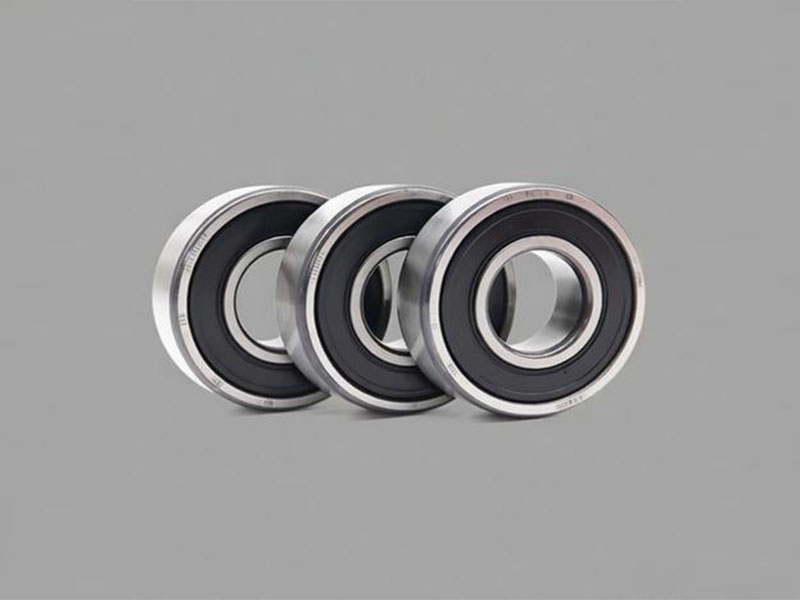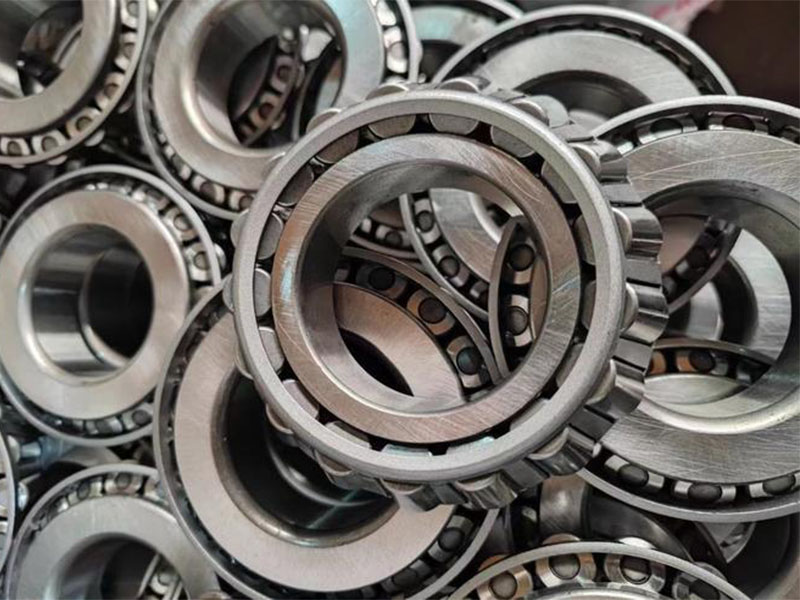
Have you ever wondered what keeps the tapered rollers inside a bearing perfectly aligned, preventing them from touching each other and ensuring smooth rotation under load? The answer lies in a critical component: the cage, also known as the retainer. The manufacturing process of a tapered roller bearing cage is a precise engineering operation, and the method chosen—stamped or machined—directly impacts the bearing’s performance, lifespan, and application suitability. Let’s explore how these essential components are produced.
The Critical Role of the Cage in Tapered Roller Bearings
Before examining the manufacturing process, it is important to understand the cage’s function. In a tapered roller bearing, the cage serves several distinct purposes. Its primary roles are to maintain precise spacing between rollers, guide the rollers correctly into the raceway, reduce internal friction, and ensure uniform load distribution. The cage’s design and manufacturing quality are therefore fundamental to the bearing’s reliability and operational efficiency.
Tapered Roller Bearing Cage Manufacturing Processes
The manufacturing process for a tapered roller bearing cage varies significantly based on the application and required specifications. The two primary methods are stamping and machining.
Stamped Steel Cage Manufacturing Process
This method is used for high-volume production of small to medium-sized bearings where cost-effectiveness and adequate strength are key requirements.
- Material Selection: High-quality, low-carbon steel sheets are selected for their formability and favorable strength-to-weight ratio.
- Blanking: A press cuts the basic shape of the cage from the steel sheet.
- Forming: The blank is then formed into a preliminary shape using a series of dies.
- Rolling into a Ring: The formed piece is rolled and welded into a precise ring shape.
- Deburring & Surface Finishing: Sharp edges and burrs are removed to ensure a smooth surface.
- Heat Treatment: The cage undergoes heat treatment to enhance its structural strength and durability.
- Roller Assembly: The rollers are assembled into the finished stamped cage.
Machined Cage Manufacturing Process
For large bearings or applications requiring high precision, high speeds, or high reliability, a machined cage is the preferred choice.
- Material Preparation: Solid stock of materials such as high-strength brass, alloy steel, or engineering polymers is prepared.
- CNC Machining: Computer Numerical Control (CNC) machines carve the cage from the solid material, achieving tight tolerances and complex geometries.
- Inspection: Critical dimensions are inspected during the machining process to verify accuracy.
- Surface Treatment: The cage may receive surface treatments to improve wear resistance and reduce friction.
- Heat Treatment: Depending on the material, a final heat treatment may be applied to optimize mechanical properties.
- Assembly: The precision-machined cage is assembled with the rollers and races.
Stamped vs. Machined Cages: A Comparative Analysis
| Feature | Stamped Cage | Machined Cage |
| Production Volume | High | Low to Medium |
| Cost | Low | High |
| Strength | Moderate | High |
| Tolerance | Moderate | Tight |
| Application | Standard Load | High Load / High Precision |
| Customization | Limited | Extensive |
Choosing the Right Cage: The selection between a stamped and machined cage depends on the specific demands of the application. A stamped steel cage provides a cost-effective solution for standard applications, while a machined brass or steel cage offers the strength and precision required for heavy machinery, high-speed spindles, and mission-critical equipment.
Material Selection: The Foundation of Cage Durability
The performance of a tapered roller bearing cage is heavily influenced by its material. Each material offers distinct properties.
- Low-Carbon Steel: Provides a balance of strength, formability, and cost-effectiveness for stamped cages.
- Alloy Steel: Delivers enhanced strength, toughness, and wear resistance for heavy-duty machined cages.
- Nylon (Polyamide): A lightweight, corrosion-resistant polymer that operates quietly and is suitable for high-speed, low-load applications such as in automotive auxiliary systems.
- Stainless Steel: Selected for its corrosion resistance, making it suitable for applications in food processing, marine, or chemical environments.
Material Selection Criteria: The final material choice is determined by analyzing the operating load, rotational speed, temperature range, environmental corrosion risks, and cost targets of the bearing assembly.
Ensuring Excellence: Quality Control in Cage Manufacturing
To ensure reliability, each manufacturing step is followed by quality control procedures. These checks verify that the tapered roller bearing cage meets all design and performance specifications.
- Dimensional & Geometric Accuracy Checks: Using Coordinate Measuring Machines (CMM) to verify that all dimensions and pocket geometries are within specified tolerances.
- Material & Hardness Certification: Testing to confirm material composition and that heat treatment has achieved the required hardness and strength.
- Surface Finish & Coating Adhesion Testing: Ensuring the surface is smooth to minimize friction and that any applied coatings are properly bonded.
- Visual & Appearance Inspection: A final manual or automated inspection to identify surface imperfections, burrs, or defects.
Customization: Tailoring the Cage to Specific Needs
Standard cages may not always meet unique application requirements. In such cases, customization is necessary. A specialized manufacturer can tailor a tapered roller bearing cage to exact specifications.
Customizable Features:
- Structural Form: Modifying pocket shapes or the overall ring structure for optimized lubrication or roller guidance.
- Material Type: Selecting a specific steel, brass, or polymer to match environmental and performance demands.
- Dimensions & Tolerances: Adjusting the cage to accommodate non-standard bearing geometries.
- Surface Treatment: Applying specialized coatings to reduce friction or enhance corrosion protection.
Conclusion
The manufacturing process for a tapered roller bearing cage involves multiple engineering decisions, precise fabrication methods, and systematic quality control. Whether a stamped steel cage for a passenger vehicle or a machined cage for an industrial gearbox, the chosen process and material directly determine bearing performance. When standard solutions are insufficient, collaborating with an experienced manufacturer to develop a custom cage can provide the required level of efficiency and durability for specific applications. Understanding these manufacturing considerations enables informed decisions that support the longevity and reliability of mechanical systems.