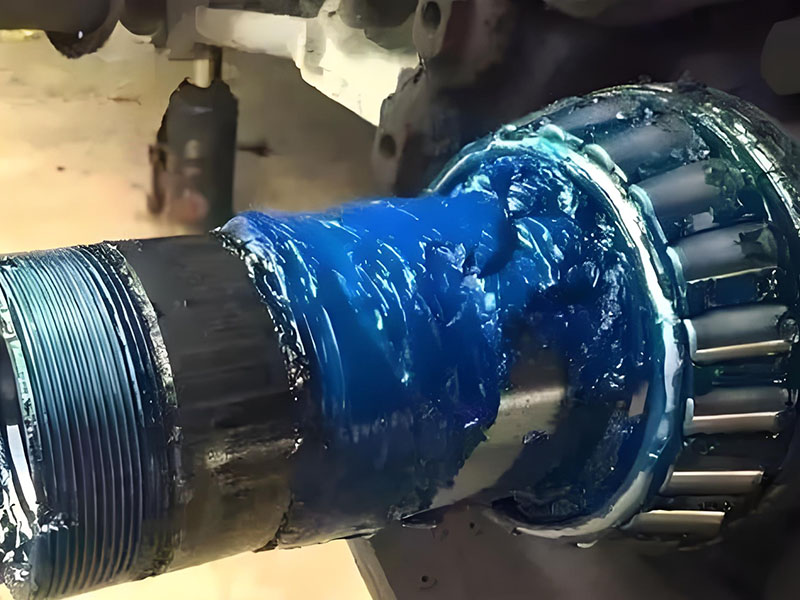
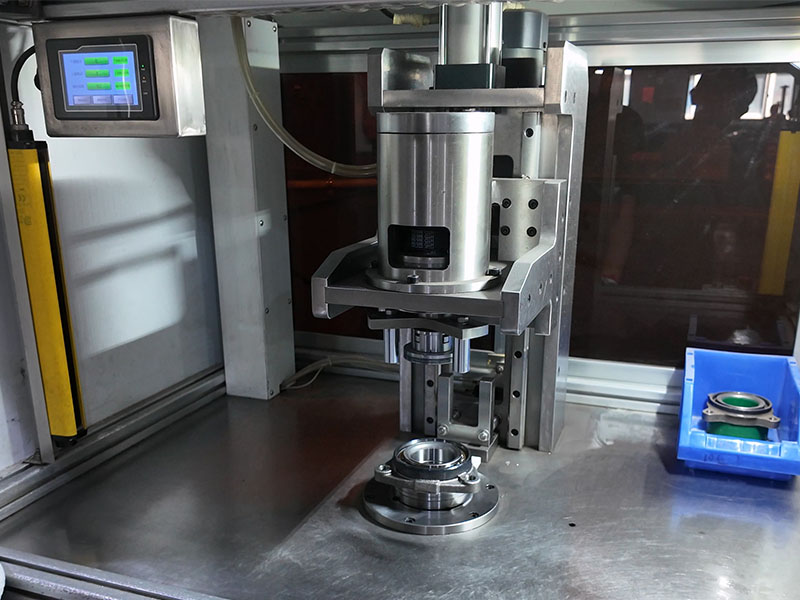
Have you ever wondered what ensures the smooth rotation of a heavy flywheel in your car’s engine or an industrial generator? The answer lies in a small but critical component: the flywheel bearing. DUHUI will walk you through everything you need to know about flywheel bearings, from their core function and working principle to how to identify failure and choose the right one for your needs.
What Are Flywheel Bearings?
At its core, a flywheel bearing is a specialized mechanical component designed to support the flywheel’s rotational motion. The flywheel itself is a heavy, rotating disc used to store kinetic energy. The bearing acts as the interface between the rotating flywheel and its stationary housing or support structure.
These bearings are precision-engineered to manage significant radial and axial loads while ensuring minimal friction. While commonly associated with automotive manual transmissions, flywheel bearings are also critical in various industrial applications, including generator sets and flywheel energy storage systems (FESS).
How Do Flywheel Bearings Work?
The working principle of a flywheel bearing is rooted in the physics of rotational motion. When a flywheel spins, it generates substantial centrifugal forces and inertial loads. The bearing facilitates this by providing a low-friction surface that allows the flywheel to rotate freely.
Essentially, the bearing’s inner ring rotates with the flywheel or shaft, while the outer ring remains stationary, housed within the engine block or supporting structure. Rolling elements (balls or rollers) between these rings carry the load and enable smooth rotation. This design effectively converts sliding friction into rolling friction, which is significantly lower, ensuring the flywheel can store and release energy efficiently with minimal energy loss.
Key Functions of a Flywheel Bearing
The flywheel bearing plays several crucial roles in a mechanical system:
- Supports Rotational Motion: Its primary function is to provide a stable, frictionless support for the flywheel, ensuring it can rotate at high speeds without wobbling.
- Reduces Friction and Heat: By facilitating rolling contact instead of sliding contact, it drastically reduces friction. This minimizes heat generation, preventing premature wear and damage to surrounding components.
- Enhances Longevity: A high-quality bearing protects the flywheel and the shaft from direct metal-to-metal contact, significantly extending the lifespan of the entire assembly.
- Improves Stability and Efficiency: By maintaining precise alignment, it ensures rotational stability. This stability is critical for maximizing energy storage efficiency in applications like flywheel energy storage systems.
Common Signs of Flywheel Bearing Failure
Recognizing the symptoms of a failing flywheel bearing early can save you from costly repairs and potential system failure. Look out for these tell-tale signs:
- Burns or Cracks on the Flywheel Surface: Visible damage on the flywheel itself often indicates that the bearing has failed, causing misalignment or excessive friction.
- Abnormal Noise or Looseness: A grinding, growling, or chirping noise from the bell housing area, especially when the clutch is engaged or disengaged, is a classic symptom of a worn bearing.
- Severe or Irregular Vibrations: If the bearing is worn, it will fail to dampen vibrations. You may feel a noticeable shudder or vibration from the engine or drivetrain.
Pilot Bearing vs. Flywheel Bearing: What’s the Difference?
A common point of confusion is the difference between a flywheel bearing and a pilot bearing. While they are related and often located in the same area, they serve distinct purposes. The pilot bearing (or bushing) is actually a type of bearing that supports the transmission input shaft.
Here’s a quick comparison to clarify the distinction:
| Item | Pilot Bearing | Flywheel Bearing |
| Installation Location | Center of the flywheel or end of crankshaft | Outer edge of flywheel, between housing or main shaft |
| Main Function | Supports transmission input shaft, maintains alignment | Supports overall flywheel rotation, absorbs inertia and loads |
| Common Types | Small ball bearings or bronze bushings | Ball bearings, roller bearings, magnetic bearings |
| Application Scenarios | Manual transmission systems in vehicles | Engines, generator sets, flywheel energy storage systems |
| Replacement Type | Can be replaced separately | May be replaced as part of a larger assembly |
In essence, the pilot bearing is specifically for the transmission shaft’s alignment, while the flywheel bearing is for supporting the flywheel itself. Some assemblies combine these functions, but understanding the difference is key to correct diagnosis and repair.
How to Replace Flywheel Bearings
Replacing a flywheel bearing requires mechanical expertise and careful attention to detail. Here is a general overview of the process:
- Preparation: Ensure safety by disconnecting the power source (for equipment) or battery (for vehicles). Safely lift the vehicle or equipment, then remove the transmission or any related connected components to access the flywheel.
- Remove the Old Bearing: The old bearing is carefully extracted using a specialized puller tool to avoid damaging the flywheel or housing. Never use excessive force or improvised tools that could deform the mounting surface.
- Cleaning and Inspection: Thoroughly clean the mounting area. This is the ideal time to inspect the flywheel surface for damage, cracks, or heat marks, and to check the shaft for any signs of wear.
- Install the New Bearing: The new bearing is pressed or tapped into place using a bearing installation tool. It’s critical to apply force only to the outer race to prevent internal damage to the rolling elements.
- Reassembly: Reassemble all components in reverse order, ensuring all bolts are torqued to the manufacturer’s specifications.
How to Choose the Right Flywheel Bearing for Your Application
Selecting the correct flywheel bearing is a technical decision that directly impacts system performance and lifespan. When choosing, consider these critical factors:
Load and Speed Ratings: Ensure the bearing’s dynamic and static load ratings meet or exceed the requirements of your application. Also, verify the maximum rotational speed the bearing can handle.
Sealing and Lubrication: Depending on the operating environment, choose between open, shielded, or sealed bearings. Sealed bearings offer better protection against contaminants, while open bearings may be preferred for high-speed applications where frequent lubrication is possible.
Temperature Resistance: High-performance engines or industrial machinery generate significant heat. Verify the bearing’s operating temperature range to ensure reliable performance under thermal stress.
Precision Dimensions: Precise fit is non-negotiable. Always verify the inner diameter (ID), outer diameter (OD), and width against your equipment’s specifications. Even a minor dimensional deviation can lead to premature failure.
Brand and Quality: Opting for a reputable manufacturer ensures consistency in metallurgy, heat treatment, and dimensional accuracy—all critical for reliability.
Conclusion
Understanding flywheel bearings is key to maintaining the performance and reliability of engines, generators, and energy storage systems. From their fundamental role in reducing friction to the critical differences between a pilot bearing and a flywheel bearing, this knowledge empowers you to diagnose issues and make informed maintenance decisions. Selecting a high-quality flywheel bearing ensures not only optimal performance but also extends the service life of your entire system.