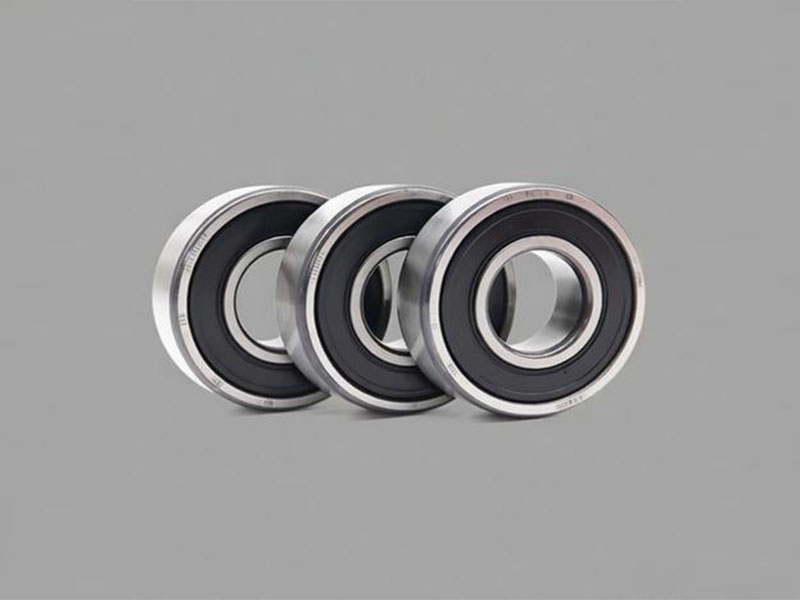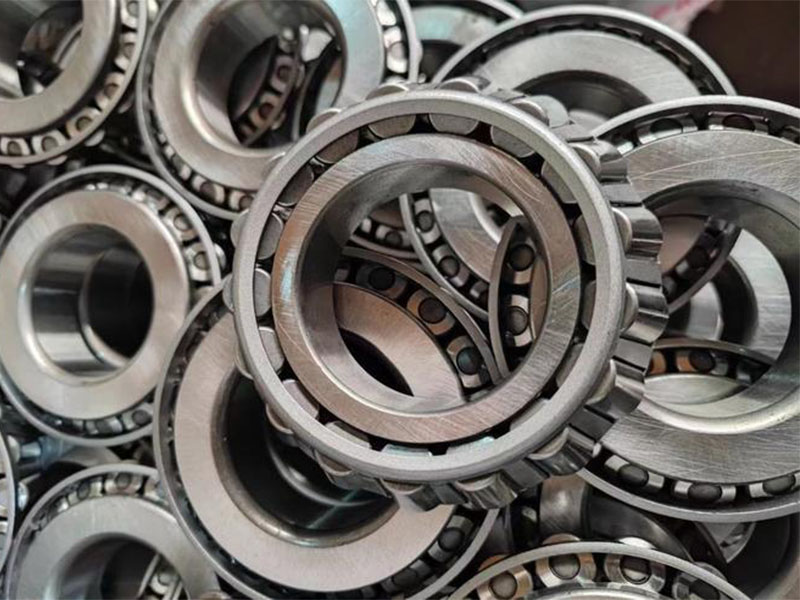
Whether you’re a maintenance engineer, a quality control specialist, or simply selecting a replacement part, knowing how to measure a bearing correctly is crucial. A bearing is the heart of any rotating machinery, and even a micron-level deviation in its dimensions can lead to vibration, overheating, premature failure, or costly downtime. DUHUI will provide a comprehensive overview of bearing measurement, covering everything from the essential tools and key dimensions to a standardized operating procedure (SOP) and common pitfalls to avoid.
Why Precision Bearing Measurement Matters
Bearings are engineered with exacting tolerances. The inner diameter (ID) must fit perfectly onto the shaft, and the outer diameter (OD) must seat precisely within the housing. A bearing that is too tight can cause excessive friction and overheating, while one that is too loose leads to vibration and rapid wear. Accurate measurement is the first and most critical step in ensuring optimal equipment performance, reliability, and a long service life.
Key Dimensions of a Bearing
Before you begin, it’s essential to understand the three fundamental dimensions of a bearing:
- Inner Diameter (ID – d): This is the diameter of the hole in the bearing’s inner ring. It is the dimension that interfaces with the shaft.
- Outer Diameter (OD – D): This is the diameter of the bearing’s outer ring, which fits into the housing or machine casing.
- Width (B): This is the total thickness of the bearing (for single-row bearings), which determines the space it occupies within the assembly.
These three dimensions form the basis of most bearing identification codes. For example, a bearing with the code “6204” has a standard ID of 20mm, an OD of 47mm, and a width of 14mm.
Methods and Tools for Measuring Bearings
The tool you choose depends on the required precision and the type of bearing. Here’s a breakdown of the most common methods:
Basic Tools: Vernier Calipers
A digital or dial caliper is the most common tool for quick, general measurements. For an accurate reading:
- For the inner diameter, use the upper jaws of the caliper.
- For the outer diameter, use the lower jaws.
- Crucial tip: Always measure in at least two or three different orientations (e.g., 0°, 90°, 120°) and average the results to account for any out-of-roundness.
Precision Tools: Inside and Outside Micrometers
For high-precision bearings or when tolerances are critical, micrometers are the standard. An inside micrometer is used for the ID, and an outside micrometer for the OD and width. These tools offer a much higher degree of accuracy (often to 0.001mm) than calipers and are essential for quality control in manufacturing or precision maintenance.
Specialized Tools
For complex bearing types, specialized tools are necessary. For instance, measuring a tapered roller bearing requires a gauge to check its assembly height (the overall width when mounted). Bore gauges and dial indicators are also used to measure internal geometries like raceway diameters, which are critical for a bearing’s internal clearance.
Standard Measurement Procedure & Recording
Consistency is key to reliable measurement. Following a standardized operating procedure (SOP) ensures repeatable and accurate results.
Step-by-Step SOP
- Step 1: Cleaning: Before any measurement, ensure the bearing is meticulously cleaned. Remove all grease, dust, and debris. Even a small particle can throw off a measurement.
- Step 2: Temperature Stabilization: Bearings and measuring tools must be at the same temperature. Metal expands and contracts with temperature changes. Allow both to sit in the measurement environment (typically 20°C / 68°F) for at least an hour to stabilize.
- Step 3: Multi-Point Measurement: As mentioned, take measurements at multiple points around the circumference and at different cross-sections. The difference between the maximum and minimum readings indicates the bearing’s roundness.
- Step 4: Data Recording: Record the data immediately. Do not rely on memory.
How to Record Measurements
- Unified Format: Use a standardized data sheet or digital form. Record the date, the operator’s name, the tool used, and the actual measured values.
- Identification Management: Each bearing should have a unique identifier (e.g., a serial number). Link your measurement records directly to this identifier to create a traceable history. This is a key practice in quality management systems like ISO 9001.
Reference: Common Bearing Types and Their Measurement Considerations
While the basic dimensions are universal, different bearing types have specific measurement requirements. The table below highlights key considerations for some common types.
| Bearing Type | Type Code | Key Measurement Consideration |
| Deep Groove Ball Bearing | 6 | Standard ID, OD, B measurement. Focus on multi-point averaging. |
| Tapered Roller Bearing | 3 | Critical: Measure the assembly height. ID, OD, and individual components (cup and cone) are also measured separately. |
| Cylindrical Roller Bearing | N, NU, NJ, NUP | Pay attention to the roller complement. The bearing’s radial internal clearance is often measured after assembly. |
| Spherical Roller Bearing | 22, 23 | Check the symmetrical design. Measure the width and the center point of the outer ring’s spherical raceway. |
| Angular Contact Ball Bearing | 7 | Measure the contact angle indirectly through the assembly width, which is critical for preload and axial load capacity. |
| Needle Roller Bearing | NK, NKS, RNA | For drawn cup types, the wall thickness is as important as the ID and OD. |
Common Measurement Errors and How to Avoid Them
Even with the best tools, errors can occur. Being aware of these common pitfalls is the first step to avoiding them.
Error: Using Incorrect or Uncalibrated Tools
Solution: Always use tools that are suitable for the required tolerance. Establish a regular calibration schedule for all precision measurement equipment and keep a record of it.
Error: Improper Positioning
Solution: Ensure the bearing and measuring tool are perfectly perpendicular to each other. For ID measurements, find the largest diameter; for OD, find the smallest.
Error: Ignoring Thermal Expansion
Solution: As mentioned in the SOP, never measure a bearing that has just been in operation or a hot environment. Always allow it to cool to room temperature.
Error: Inconsistent Measuring Force
Solution: Using a caliper, it’s easy to apply too much or too little force. For precise results, use tools like micrometers that have a ratchet or friction thimble to ensure a consistent measuring force.
Error: Contamination
Solution: This is non-negotiable. A clean bearing is the foundation of a good measurement. Always clean the bearing and the anvils of your measuring tools before you begin.
Conclusion
Measuring a bearing accurately is a fundamental skill that combines the right tools, a meticulous process, and a deep understanding of the component’s function. By following the steps outlined in this guide—from understanding key dimensions and using proper tools to adhering to a strict SOP and avoiding common errors—you can ensure that your bearings fit correctly and perform reliably. Remember, precision in measurement is an investment in the longevity and efficiency of your entire machinery system.