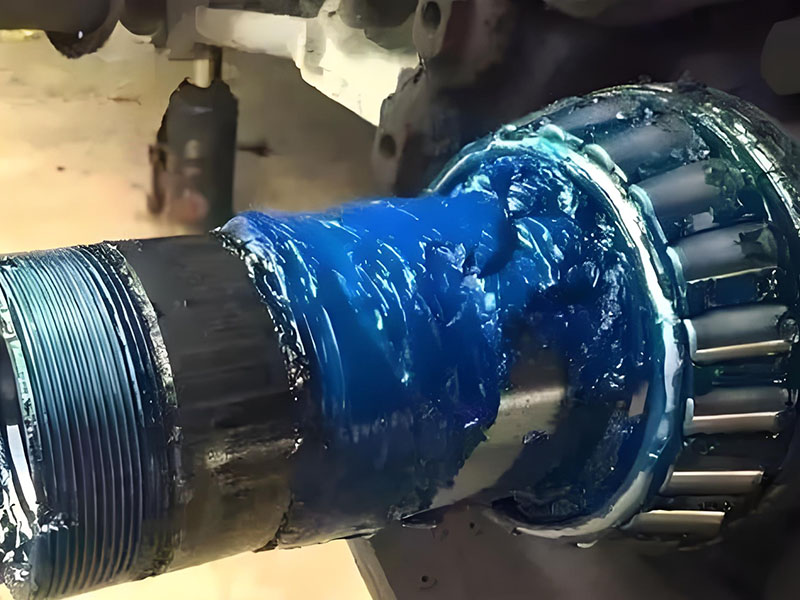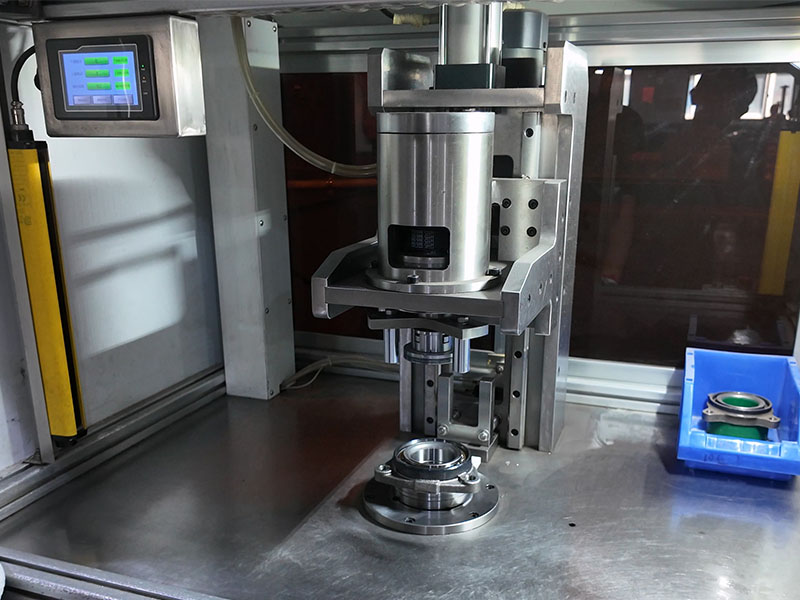
Drive bearings are the unsung heroes of countless machines, from the car you drive to the industrial equipment that powers modern manufacturing. They are precision components designed for one critical job: to enable smooth, efficient rotational motion. Without them, friction would quickly destroy moving parts, and machinery would grind to a halt.
As a professional manufacturer, DUHUI Bearing understands the vital role these components play. In this comprehensive guide, DUHUI will explore everything you need to know about drive bearings, from their basic function to how to identify and prevent common failures.
What is a Drive Bearing and What Does It Do?
A drive bearing is a mechanical component that supports a rotating shaft (like a motor shaft or an axle) while allowing it to spin freely with minimal friction. It acts as the interface between the stationary and moving parts of a machine.
Its core functions are multifaceted:
- Transmitting Rotary Motion: It facilitates the transfer of power from a driving component (like a motor) to a driven component.
- Supporting Load Weight: It bears the weight of the rotating shaft and any external forces applied to it, such as radial loads (perpendicular to the shaft) or axial loads (parallel to the shaft).
- Reducing Friction Loss: By using rolling elements (balls or rollers), it minimizes the friction that would otherwise occur between rotating and stationary surfaces, saving energy and reducing heat.
- Maintaining Transmission Stability: It ensures the shaft remains precisely aligned, preventing vibrations and wobble that can lead to premature wear and failure.
Why Drive Bearings Are Critical to Your Equipment
Choosing the right drive bearing isn’t just a minor detail; it’s a decision that directly impacts the performance, reliability, and profitability of your operations.
- Guarantees Power Transmission Efficiency: A high-quality bearing minimizes energy loss due to friction. This means more of the input power is converted into useful work, lowering energy costs, especially in continuous-operation applications like conveyors or wind turbines.
- Protects Key Components: A failing bearing can cause a cascade of failures. Shafts can be scored, gearboxes can be damaged by debris, and motors can burn out due to increased load. A reliable drive bearing acts as a sacrificial component, protecting far more expensive parts.
- Determines Operational Stability: Unstable shafts lead to vibrations, noise, and inaccurate positioning. In precision applications like CNC machines or automotive drivelines, a stable bearing is non-negotiable for product quality and safety.
- Influences Overall Equipment Effectiveness (OEE): Unplanned downtime is costly. By using durable, well-maintained drive bearings, you can significantly increase the Mean Time Between Failures (MTBF) of your equipment, boosting overall productivity and profitability.
Common Types of Drive Bearings
Different applications demand different bearing designs. Here are the most common types used in drive systems:
- Ball Bearings: The most common type, ideal for high-speed applications with relatively light to moderate loads. They are versatile and excel at handling both radial and axial loads.
- Tapered Roller Bearings: Designed to handle heavy combined loads (both radial and axial) simultaneously. Their conical design makes them the standard choice for automotive wheel hubs and gearboxes where high load capacity and rigidity are required.
- Cylindrical Roller Bearings: These have a high radial load capacity and are suitable for high-speed operation. They are often found in electric motors and industrial machinery where radial loads are dominant.
- Spherical Roller Bearings: These are self-aligning, meaning they can tolerate minor shaft misalignments or deflections. They have a very high load-carrying capacity and are commonly used in heavy-duty applications like conveyors, fans, and wind turbines.
- Custom Drive Bearings: Many applications require a non-standard solution. As a specialized manufacturer, DUHUI Bearing provides custom-engineered drive bearings tailored to specific dimensional, load, and environmental requirements, ensuring an optimal fit for unique or demanding applications.
Key Applications of Drive Bearings
Drive bearings are fundamental components across virtually every industry that relies on rotating machinery. Key applications include:
- Electric Motors and Gearboxes: The heart of industrial motion, where bearings support the rotor and ensure efficient power transmission.
- Automotive Drivetrains: From transmission shafts to wheel hubs, bearings are critical for vehicle performance, safety, and fuel efficiency.
- Industrial Conveyor Systems: Bearings support the long drive shafts and rollers that move materials in mining, logistics, and manufacturing.
- Agricultural Machinery: Tractors, harvesters, and other farm equipment operate in harsh, dirty environments and rely on robust, sealed drive bearings for reliability.
- Wind Turbines: Massive spherical roller bearings support the main shaft, enduring enormous variable loads to convert wind energy into electricity.
- Railway Axles: High-capacity bearings are essential for the safe and reliable operation of trains and other rolling stock.
The Difference: Drive Bearings vs. Carrier Bearings
A common point of confusion is the difference between a drive bearing and a carrier bearing. While both are involved in rotating shafts, their functions and applications are distinct. The table below clarifies their differences.
| Comparison Item | Carrier Bearing | Drive Bearing |
| Main Function | Supports the middle section of a segmented drive shaft and keeps it stable | Supports rotating shafts, reduces friction, transmits loads |
| Typical Applications | Driveshaft systems in cars, trucks, and rear-wheel-drive vehicles | Industrial equipment, motors, reducers, wind turbines, conveyors, etc. |
| Installation Position | Midsection of the drive shaft, between front and rear segments | At the ends of rotating shafts or in bearing housings |
| Load Type | Mainly bears the weight of the shaft and impact forces during movement | Can bear radial load, axial load, or both |
| Structural Features | Usually composed of bearing body and rubber or rubber-metal bushings, with mounting brackets | Various structures (ball bearings, roller bearings, etc.), emphasizing precision and high-speed performance |
| Vibration Absorption | Strong, typically with damping structures (like rubber layers) to reduce vehicle vibration | Relatively weak, mainly relies on lubrication to reduce friction and heat |
| Typical Materials | Metal housing + rubber bushing + rolling components | High-carbon steel, stainless steel, ceramics, and other high-precision materials |
| Maintenance Requirements | Usually replaced or serviced together with the entire drive shaft assembly | Requires regular lubrication and wear inspection, suitable for long-term continuous operation |
| Standard Bearing Type | Non-standard, mainly for vehicle-specific structures | Standardized, widely used in various industrial applications |
How to Identify Failing Drive Bearings and Keep Them Running
Early detection of bearing issues is the key to avoiding catastrophic failure and costly downtime. Here’s what to watch for and how to prevent it.
Signs of Failure:
- Abnormal Noise: Grinding, squealing, or rumbling sounds are classic indicators of internal damage or contamination.
- Increased Vibration: Excessive vibration, often detectable by touch or with monitoring equipment, signals imbalance or a worn raceway.
- Overheating: A bearing that is significantly hotter than the surrounding housing is a clear sign of insufficient lubrication, excessive preload, or impending failure.
- Shaft Misalignment: While a symptom, misalignment places uneven stress on a bearing, drastically shortening its lifespan.
- Lubricant Leakage: Finding grease or oil around the bearing seal indicates the seal has failed, allowing contaminants in and lubricant out.
Preventive Maintenance:
- Regular Lubrication: Use the correct type and amount of lubricant. Over-lubrication can be just as harmful as under-lubrication, generating heat and damaging seals.
- Correct Installation: Improper installation is a leading cause of bearing failure. Use the correct tools (e.g., induction heaters, not hammers) and follow precise mounting procedures to avoid damaging the bearing’s internal geometry.
- Operational Monitoring: Implement a routine of checking for noise, vibration, and temperature. For critical machinery, consider using condition monitoring technologies like vibration analysis.
- Scheduled Inspection and Replacement: Even with perfect maintenance, bearings have a finite life. Replace them based on calculated lifespan (L10 life) or during scheduled overhauls, rather than waiting for failure.
Frequently Asked Questions (FAQs) about Drive Bearings
1. What is the average lifespan of a drive bearing?
The lifespan varies greatly based on load, speed, lubrication, and operating environment. It’s often calculated using the bearing’s L10 life, which is the number of revolutions (or hours) that 90% of a group of identical bearings will survive before showing signs of fatigue.
2. How do I choose the right drive bearing for my application?
Key factors include: the type and magnitude of loads (radial, axial, or combined), the required speed, operating temperature, environmental conditions (dust, moisture, chemicals), and shaft size. Consulting with a manufacturer like DUHUI Bearing can ensure you get the optimal solution.
3. Can I use a standard bearing in a high-temperature environment?
Standard bearings have grease and seals rated for a limited temperature range. For high-temperature applications, you’ll need a bearing with special heat-stabilized steel, high-temperature grease, and specific seals designed to withstand the conditions.
4. What is the difference between a shielded and a sealed bearing?
Shielded bearings (with a metal shield) offer basic protection against large contaminants but allow some lubricant flow. Sealed bearings (with a rubber seal) provide a much better barrier against dirt and moisture and are better at retaining lubricant, making them ideal for dirty environments.
5. Why is my bearing making noise even after lubrication?
If a bearing is already damaged (e.g., pitting on the raceway, cracked rolling elements), lubricating it will only provide temporary relief. The noise will likely return quickly. The bearing should be inspected and replaced if damage is confirmed.
Conclusion
Drive bearings may be small components, but their impact on equipment performance, energy efficiency, and operational reliability is anything but. From the high-speed demands of electric vehicle drivetrains to the heavy loads and harsh environments of wind turbines and agricultural machinery, the right bearing—properly selected and maintained—makes the difference between smooth, long-term operation and costly, unplanned downtime.
Understanding the types of drive bearings available, recognizing the early warning signs of failure, and following sound maintenance practices are essential skills for any engineer, maintenance professional, or equipment operator. These fundamentals apply whether you’re specifying components for a new production line, troubleshooting a vibration issue in a gearbox, or planning a preventive maintenance schedule for a fleet of vehicles.