If you have ever tried to replace a worn wheel hub assembly on a modern vehicle, you have likely encountered the same frustrating question: why is the wheel hub assembly stuck? Even after removing all visible bolts, the assembly remains fused to the steering knuckle or axle, resisting hammers, pry bars, and patience.
A wheel hub assembly is a precision component that supports the vehicle’s weight and allows the wheels to rotate smoothly. However, its mounting interface is also highly susceptible to corrosion, mechanical interference, and improper installation. Understanding why it gets stuck is the first step toward removing it efficiently—without damaging surrounding components.
In this guide, DUHUI will break down the common causes of a seized wheel hub assembly, the tools required for removal, and a step-by-step approach to safely free it. Whether you are a workshop technician or an experienced DIYer, these insights will help you work smarter and avoid repeat issues.
Why Does a Wheel Hub Assembly Get Stuck?
Several factors can cause a wheel hub assembly to seize to the steering knuckle or axle. In most cases, the root cause falls into one of the following categories:
Electrochemical (Galvanic) Corrosion
The wheel hub assembly is typically made of steel or cast iron, while the steering knuckle is often aluminum or cast iron. When these dissimilar metals come into contact with moisture and road salt, galvanic corrosion occurs. The corrosion products take up more volume than the original metal, creating immense pressure between the mating surfaces. This is the most common reason a hub assembly becomes locked in place.
Mechanical Deformation and Interference Fit
Wheel hub assemblies are designed with a precision interference fit to ensure structural rigidity. Over time, repeated stress from cornering, braking, and potholes can cause slight deformation of the knuckle bore or the hub’s mounting flange. Additionally, burrs or rust buildup on the mating surfaces can turn a tight fit into an immovable one.
Improper Installation
If the hub assembly was not seated squarely during installation, or if the mounting bolts were overtightened unevenly, the assembly can become wedged against the knuckle. In some cases, using the wrong bolts or failing to clean the mounting surface beforehand creates uneven pressure that promotes seizing.
Rust and Contamination Build-Up
Even without galvanic corrosion, simple rust formation on the mating surfaces—especially in regions with harsh winters—can act as an adhesive. When combined with road grime and brake dust, the result is a tenacious bond that requires significant force to break.
Tools and Consumables Needed for Removal
Attempting to remove a stuck wheel hub assembly without the right tools often leads to damaged components or personal injury. Below are the essential tools and consumables, categorized by their role.
Core Tools
| Tool | Purpose |
| Hydraulic press | Ideal for bench removal when the knuckle is removed from the vehicle; provides controlled, even force. |
| Wheel hub bearing removal tool set | A screw-type puller or hydraulic press-style tool designed to press the hub out of the knuckle without damaging the housing. |
| Slide hammer with hub puller adapter | Useful for pulling the hub flange outward while the knuckle remains on the vehicle. |
| Impact wrench and breaker bar | For loosening the large axle nut and corroded mounting bolts. |
| Torch (oxy-acetylene or induction heater) | Used for controlled heating to break corrosion bonds. |
Consumables and Chemicals
| Product | Application |
| Penetrating lubricant | Applied to the interface between the hub and knuckle, as well as to bolt threads, to wick into microscopic gaps and reduce friction. |
| Anti-seize compound | Used during reassembly; critical for preventing future seizing. |
| Replacement fasteners | Corroded or stretched bolts should always be replaced to ensure proper clamping force. |
How to Remove a Stuck Wheel Hub Assembly
Removal should follow a progressive approach: start with non-destructive methods, then escalate only as needed.
Stage 1: Non-Destructive Preparation
- Deep lubrication: Spray penetrating oil around the interface between the hub flange and the knuckle, and into the bolt holes. Allow it to soak for at least 30 minutes, reapplying if necessary.
- Stress release: If the axle shaft is involved, slightly loosen the axle nut (but do not remove it) to relieve tension on the hub splines.
Stage 2: Standard Removal Process
- Remove the axle nut and mounting bolts: Use an impact wrench to avoid rounding fasteners. If a bolt breaks, plan for extraction.
- Apply a hub puller: Position the puller arms behind the hub flange and use the center screw against the axle stub. Apply steady pressure—avoid jerky impacts.
- Use a slide hammer: If the puller alone does not work, attach a hub adapter to a slide hammer and work around the flange perimeter.
Stage 3: Aggressive Methods for Severe Seizure
When standard methods fail, more aggressive techniques are required. Use these with caution to avoid damaging the knuckle or axle.
- Heat method: Apply heat to the knuckle bore (not the hub) using an induction heater or torch. Aluminum knuckles expand faster than steel hubs, breaking the corrosion bond. Avoid overheating cast iron knuckles to prevent warping.
- Shock method: With tension applied via a puller, strike the knuckle near the hub interface with a heavy hammer. The combination of steady tension and sudden shock often frees the assembly.
- Cutting method: As a last resort, carefully cut the hub flange or split the outer race using an angle grinder. This should only be performed when the knuckle is removed from the vehicle and a replacement hub is ready.
Installing the New Assembly: Preventing Future Seizure
A successful repair does not end with removal. Proper installation is what separates a repeat failure from a long-lasting fix.
Cleaning and Inspection
Remove all rust and corrosion from the knuckle bore and mounting surfaces using a wire brush or fine sandpaper. The surface must be clean and free of old gasket material or debris.
Inspect the knuckle for damage: Cracks, scoring, or out-of-round conditions can compromise the new hub’s fit and longevity.
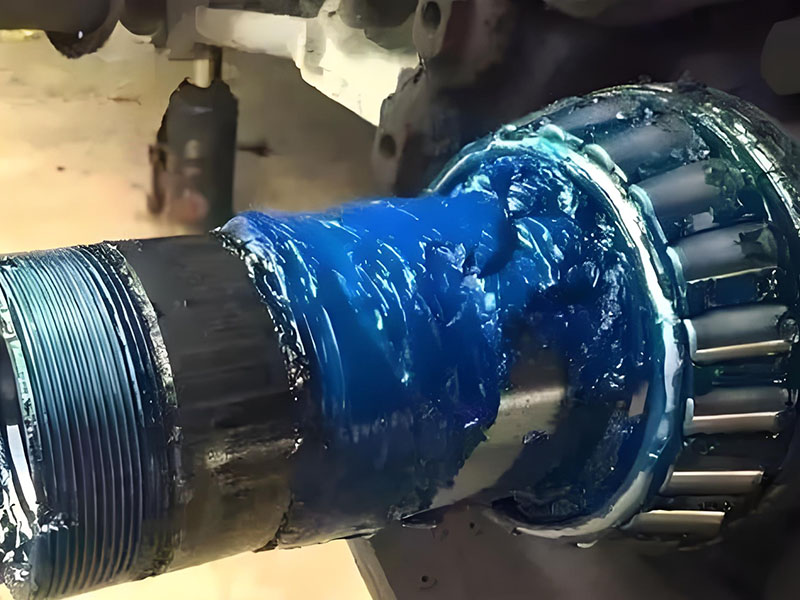
Apply Anti-Seize Compound
This is arguably the most critical step. Apply a thin, even layer of high-quality anti-seize compound to:
- The knuckle bore
- The mounting flange contact surface
- The bolt threads
Anti-seize prevents galvanic corrosion and ensures that future disassembly will be significantly easier.
Follow Torque Specifications
Always use a torque wrench to tighten the hub mounting bolts and axle nut according to the vehicle manufacturer’s specifications. Overtightening can distort the hub housing, while undertightening leads to premature wear. Use new fasteners if the original bolts showed signs of corrosion or stretching.
Conclusion
A stuck wheel hub assembly is not a sign of poor component quality—it is typically the result of galvanic corrosion, mechanical interference, or installation practices that overlook long-term serviceability. By understanding the underlying causes, using the right tools in a progressive sequence, and applying anti-seize during reassembly, you can not only remove a seized hub efficiently but also ensure the next replacement goes smoothly.
For automotive professionals and skilled DIYers, this approach reflects the kind of hands-on expertise that turns a frustrating repair into a predictable, repeatable process. Whether you are servicing a passenger car or an SUV, the principles remain the same: clean surfaces, correct torque, and proper corrosion protection make all the difference.
If you are sourcing high-quality wheel hub assemblies or need technical support for application-specific requirements, feel free to contact us.