The humble universal joint, or U-joint, is a vital component in your vehicle’s drivetrain, responsible for transmitting engine power to the wheels while accommodating constant suspension movement and angle changes. Even the highest-quality U-joint, however, is only as good as its installation. Have you ever replaced a U-joint only to experience a new vibration, a mysterious clunk, or premature failure just weeks later? You’re not alone. Most U-joint problems aren’t due to manufacturing defects, but are rooted in common installation errors. DUHUI will walk you through the five most critical mistakes to avoid, ensuring your new U-joint delivers the long, reliable service life it was designed for.
Mistake #1: Neglecting Proper Lubrication
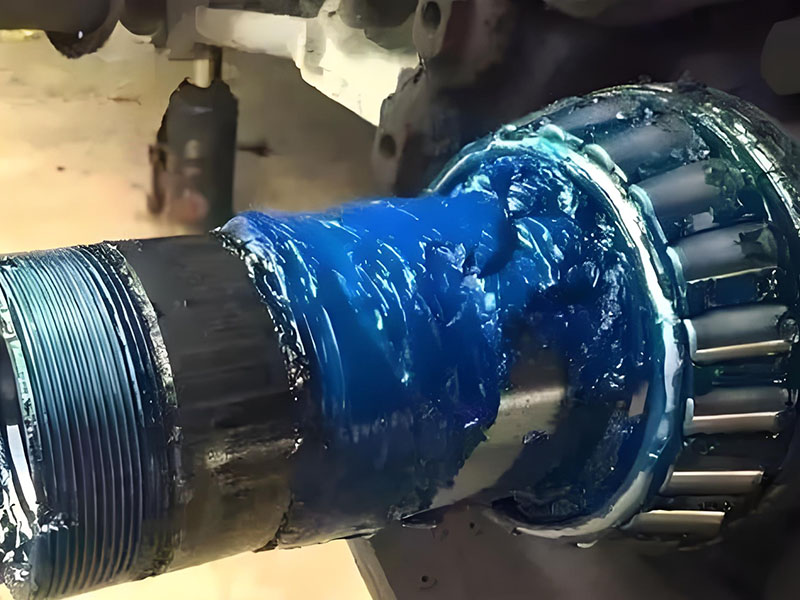
One of the most frequent errors is installing a new U-joint without ensuring it’s properly lubricated. This mistake can take two forms: failing to add grease altogether, or using the wrong type of lubricant.
The Consequences:
A U-joint’s needle bearings rely on a continuous film of grease to operate without metal-to-metal contact. When lubrication is insufficient, these bearings run dry. The immediate result is accelerated wear, followed by telltale signs like squeaking, clicking, or clunking noises. In severe cases, the lack of lubrication causes friction and heat to build up to the point where the bearings seize, the cross melts, or the U-joint physically breaks apart.
The Correct Approach:
Always pre-fill the new U-joint caps with grease before installation. After the joint is installed, use a grease gun to pump fresh, high-quality grease into the fitting until you see it purging from all four bearing caps. Crucially, use a grease that meets the manufacturer’s specifications, typically a high-quality lithium-based or molybdenum disulfide (moly) grease with excellent extreme pressure (EP) properties.
Mistake #2: Misalignment Between Driveshaft and Yoke
Alignment is key to a smooth-running drivetrain. This mistake occurs when the driveshaft flange or tube yoke is not properly centered and aligned with the mating yoke on the transmission or differential during installation.
The Consequences:
Any misalignment subjects the U-joint to significant bending stresses it was not designed to handle. This forces the joint to operate in a bind, leading to a host of issues: vibrations that can be felt throughout the vehicle, accelerated wear on the cross and bearings, and undue stress on surrounding components like the transmission output shaft and differential pinion bearings. Over time, this can lead to catastrophic failure.
The Correct Approach:
Before installation, meticulously clean the mating surfaces of the driveshaft flange and the vehicle’s yoke. Remove any rust, paint, or burrs that could prevent a flush fit. If available, use a centering tool to ensure perfect alignment. Always consult the vehicle’s service manual for specific alignment procedures, and ensure the driveshaft is seated squarely and fully onto the mating yoke.
Mistake #3: Improper Torque Application
In the era of powerful impact wrenches, using “feel” instead of a calibrated tool to tighten U-joint retaining bolts is a recipe for disaster.
The Consequences:
This mistake has two sides:
- Over-tightening: Applying excessive torque can stretch or even crack the bolts or the threaded flange holes. A stretched bolt is a weak link that can snap under load, leading to a potentially dangerous driveshaft detachment.
- Under-tightening: Insufficient torque allows the bolts to loosen over time due to normal driveline vibrations. This results in relative movement between the mating parts, causing rapid wear, fretting corrosion, and ultimately, a catastrophic failure.
The Correct Approach:
The rule is simple: use a torque wrench. Always follow the manufacturer’s specified torque value, which is measured in foot-pounds (ft-lbs) or Newton-meters (Nm). Tighten the bolts in a progressive, star pattern to distribute the clamping force evenly, ensuring a secure and safe connection.
Mistake #4: Incorrect U-Joint Phasing
Phasing is a concept crucial for driveshafts with two or more U-joints. It refers to the angular relationship between the yokes at each end of the driveshaft.
The Consequences:
A driveshaft is designed with a specific phasing to cancel out the velocity fluctuations created by a single U-joint. When the yokes are not in the same plane (i.e., the phasing is incorrect), this cancellation effect is lost. The result is a cyclical speed fluctuation of the driveshaft with every rotation, which manifests as a pronounced, often speed-dependent vibration and noise. This vibration places enormous strain on the U-joints, differential, and transmission, dramatically shortening their lifespan.
The Correct Approach:
Before disassembling the driveshaft, mark the relationship between the slip yoke, the driveshaft tube, and the companion flange. Reassemble with these marks perfectly aligned. If there are no marks, the universal rule is to ensure that the yoke ears at both ends of the driveshaft are in the same plane.
Mistake #5: Ignoring the U-Joint Operating Angle
Even with a perfectly installed joint, the geometry of your vehicle plays a critical role. This mistake involves neglecting to check the U-joint’s operating angle—the angle at which it must flex to accommodate the difference in height between the transmission and the differential.
The Consequences:
Excessive operating angles place uneven loads on the needle bearings. Instead of rolling smoothly, the needles can skid, leading to rapid wear, brinelling (surface indentation), and excessive heat generation. This condition is a primary cause of premature U-joint failure, often resulting in vibrations that can be felt particularly during acceleration or deceleration.
The Correct Approach:
After installation, use a digital angle gauge to measure the working angle at the transmission, driveshaft, and differential. The ideal setup minimizes these angles, keeping them within the manufacturer’s recommended limits (generally under 3 degrees) and, for a single-piece driveshaft, ensuring the angles at both ends are equal and opposite to ensure proper cancellation of vibrations.
Conclusion
Installing a universal joint may seem straightforward, but as we’ve seen, it’s the attention to detail that separates a successful, long-lasting repair from a costly and frustrating repeat failure. By diligently avoiding these five mistakes—skimping on lubrication, ignoring alignment, misapplying torque, messing up phasing, and overlooking operating angles—you can ensure your driveline operates smoothly, quietly, and safely.