One of the most frequent questions we encounter in our 20 years of bearing manufacturing is: “How much grease should I put in this bearing?” While it seems simple, getting the answer wrong is one of the leading causes of premature bearing failure. Applying too little grease leads to metal-to-metal contact and rapid wear, while too much grease causes churning, overheating, and energy loss.
Drawing on industry standards and our two decades of experience in manufacturing and exporting bearings, DUHUI will walk you through the factors that determine the optimal grease volume, provide actionable benchmarks, and explain how to apply grease correctly to maximize the life and performance of your equipment.

The Importance of Grease in Bearing Performance
Grease is not just a filler; it is a critical engineering component of any bearing system. Its two primary functions are:
Shielding Against Contaminants
Grease acts as a physical barrier, sealing the internal components of the bearing from harmful contaminants like dust, water, and dirt. A proper grease fill helps purge these particles away from the rolling elements and raceways, preventing them from acting as abrasives.
Creating a Micro-Scale Film to Minimize Friction and Wear
The primary job of the grease’s base oil is to form a microscopic film between the rolling elements, races, and cage. This film prevents direct metal-to-metal contact, drastically reducing friction, wear, and heat generation. Without this film, your bearing would fail in a matter of minutes.
Key Factors That Determine the Optimal Grease Volume
There is no single “correct” amount for all bearings. The ideal grease volume is a balance, dependent on a variety of factors:
Operational Conditions:
- Speed (RPM): Higher speeds generate more heat and require less grease to prevent churning.
- Temperature: High temperatures can cause the oil to separate from the thickener (bleeding), affecting lubrication needs.
- Load: Heavier loads require a robust lubricant film, which can be influenced by the grease’s viscosity and volume.
- Vibration: High vibration can cause the grease to “work” out of the bearing path, sometimes necessitating a different grease or fill strategy.
Physical Characteristics:
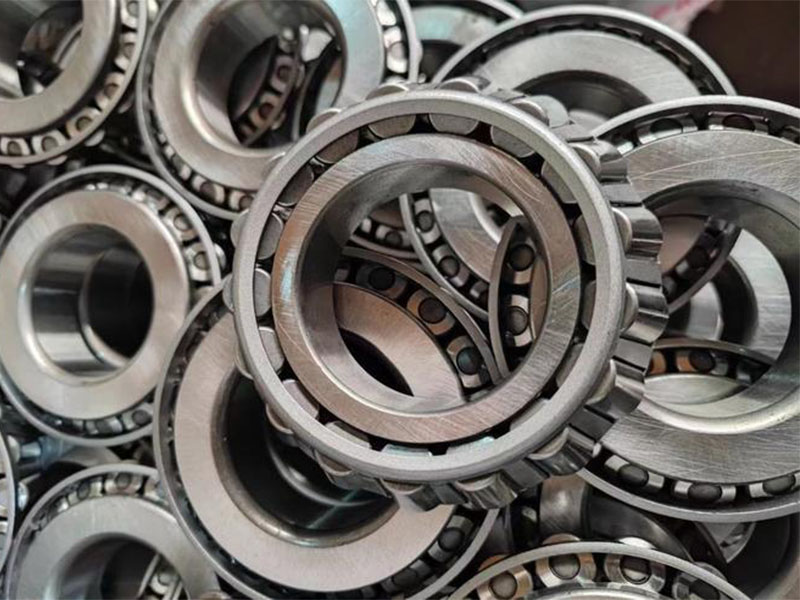
- Bearing Type & Size: A large spherical roller bearing has a much larger internal free space than a small deep groove ball bearing, requiring significantly more grease.
- Installation Position: Bearings mounted vertically may have different grease retention characteristics compared to those mounted horizontally.
Environmental Factors: A bearing operating in a clean, indoor environment will have different lubrication requirements than one in a dusty, outdoor mining application.
Recommended Grease Quantities by Bearing Type
Based on industry standards and our manufacturing experience, here are general guidelines for two common bearing types.
Deep Groove Ball Bearings: The Standard Fill (25% – 35%)
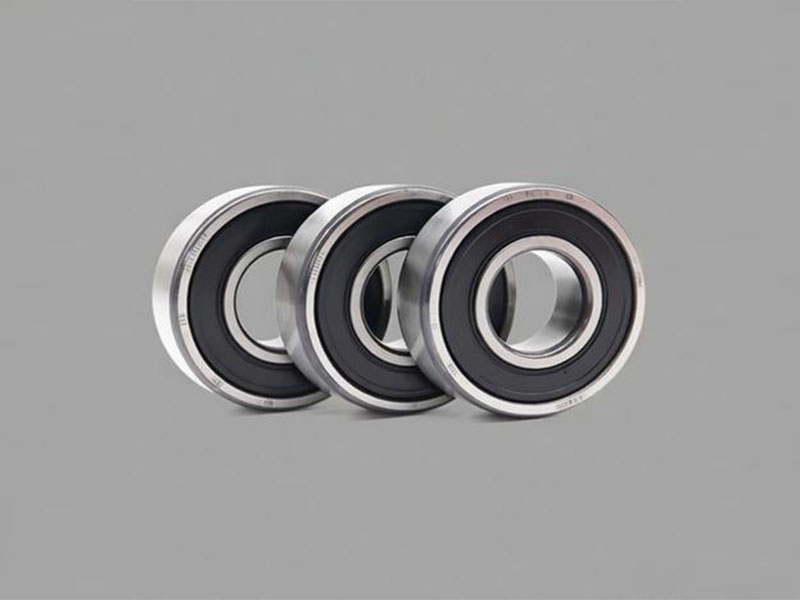
For standard deep groove ball bearings operating at moderate speeds, the optimal initial grease fill is typically 25% to 35% of the bearing’s internal free space. This amount is sufficient to provide a long-lasting lubricant film and create a protective seal without taking up so much space that it leads to churning and overheating during operation. The internal free space is the volume inside the bearing that is not occupied by the steel rings, balls, and cage.
Angular Contact Ball Bearings: Why Less Is Often More (15% – 25%)
For angular contact ball bearings, especially those used in higher-speed applications like spindles, the recommended fill is often lower, typically 15% to 25%. The design of these bearings is optimized for combined loads and higher speeds. A lower fill volume minimizes the risk of the grease being churned by the ball motion at high speeds, which would generate significant heat and lead to premature grease degradation and bearing failure.
How to Determine and Apply the Correct Grease Amount
The Industry-Standard SKF Calculation Method
Major bearing manufacturers like SKF provide detailed formulas for calculating the precise grease volume for regreasing intervals. A simplified version for initial fill is often based on the bearing’s external dimensions: G = (0.005) x D x B, where G is the grease volume in grams, D is the bearing outside diameter in mm, and B is the bearing width in mm. This provides a very good starting point.
The Quick Reference ‘Rule of Thumb
For many applications, a simple rule applies:
- Slow to Moderate Speed: Fill 1/3 to 1/2 of the internal free space.
- High Speed: Fill 1/4 to 1/3 of the internal free space.
Step-by-Step: Best Practices for Grease Application
1.The Importance of Thorough Cleaning:
Before handling a bearing, ensure your hands, tools, and work area are impeccably clean. If repacking a bearing, it must be thoroughly cleaned of old, contaminated grease using an appropriate solvent and allowed to dry completely.
2.Proper Packing Techniques:
- For small to medium bearings: The “hand packing” method is best. Force grease from the wide side of the cage pocket between the balls and cage, ensuring every pocket is filled.
- For grease guns: Use a bearing packer tool or apply grease slowly, rotating the bearing to distribute it evenly. Do not simply shoot grease in one spot, as this can damage the cage.
When to Adjust the Standard Grease Usage Amount
High-Speed Applications: The Case for Reduced Fill
In high-speed applications, excessive friction from churning grease is the enemy. The fill should be significantly reduced—often to just 30-50% of the standard volume (e.g., 10-20% of internal space). In some ultra-high-speed spindles, only a tiny, precisely measured amount is used. This small amount quickly distributes into a thin film without creating excessive drag.
Harsh or Contaminated Environments: Slightly Increased Fill for Protection
When a bearing is exposed to constant moisture, dust, or debris, and speeds are low to moderate, you can slightly increase the initial grease fill (up to 40-50%). This “over-filling” serves a purpose: the excess grease will be pushed out past the seals, carrying contaminants with it and creating a fresh grease barrier at the sealing interface.
The Consequences of Getting It Wrong: Over-Lubrication vs. Under-Lubrication
The Dangers of Too Much Grease (Over-Lubrication): Heat, Drag, and Failure
Over-lubrication is a very common mistake.
The rolling elements must constantly churn through excess grease. This “churning” action creates significant internal friction, which translates directly into higher operating temperatures. For every 10°C rise in temperature, the life of the grease is approximately halved. This leads to rapid grease breakdown, oxidation, and eventual bearing failure.
The Risks of Too Little Grease (Under-Lubrication): Metal-to-Metal Contact and Premature Wear.
Under-lubrication means there is an insufficient supply of oil to form the critical protective film. This leads to direct metal-to-metal contact between the rolling elements and raceways. The result is increased friction, micro-welding, spalling, and ultimately, catastrophic bearing failure in a very short period.
Conclusion
Mastering the correct grease amount is a fundamental skill for ensuring maximum bearing service life and machine reliability. By understanding the influencing factors, following industry benchmarks, and adapting to your specific application, you can avoid the costly pitfalls of both over- and under-lubrication.
If you have a specific application challenge or need expert advice on selecting the right bearing and lubrication strategy, our team is here to help.