This guide will teach you the best ways to grease your skateboard bearings to ensure a smooth, fast, and long-lasting ride.
By following this guide, you can ensure your skateboard performs at its best for years to come. And remember, whether you’re maintaining your skate gear or engineering heavy machinery, the quality of the bearing itself is the foundation of all performance.
Understanding Your Skateboard Bearings
Before you start, it helps to understand what you’re working with. A skateboard bearing is a precision piece of engineering designed to handle high radial and axial loads.
Anatomy of a Skate Bearing
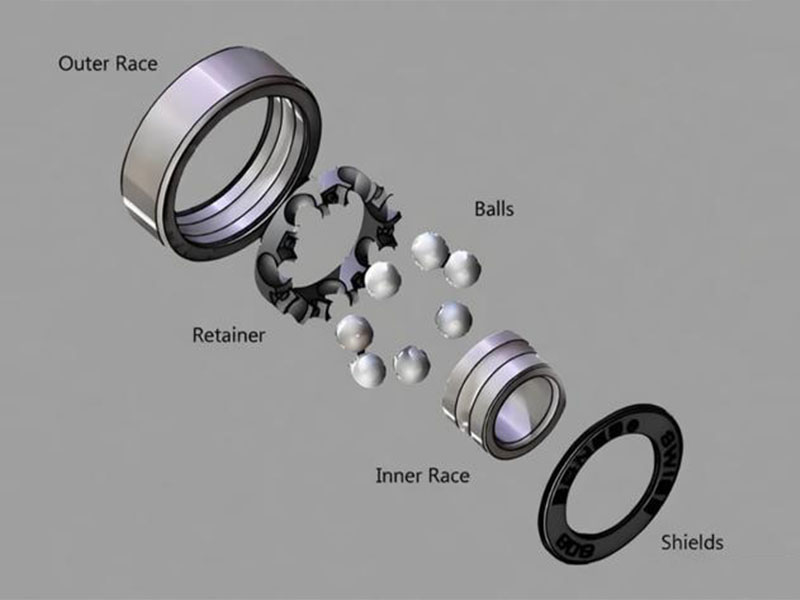
A standard skate bearing (like the ubiquitous 608 size) consists of several key parts:
- Outer Race: The large ring that fits snugly into your wheel.
- Inner Race: The small ring that the axle passes through.
- Balls (Rolling Elements): Precision steel or ceramic balls that facilitate rotation.
- Cage: A retainer that keeps the balls evenly spaced.
- Shields/Seals: These metal or rubber covers protect the internal components from dirt and moisture.
Why Lubrication is Non-Negotiable
Lubrication isn’t just about making things slick; it’s about protection.
- Friction Reduction: It creates a film between the balls and the races, minimizing resistance for a faster roll.
- Preventing Corrosion: Bearings are made of metal. A quality grease acts as a barrier against moisture that causes rust.
- Extending Lifespan: By reducing friction and preventing corrosion, proper lubrication dramatically extends the functional life of your bearings.
A Note on Bearing Quality
The effectiveness of your maintenance depends on the quality of the bearing you start with. At DUHUI, our two decades of manufacturing experience have taught us that precision grinding and high-grade materials create a foundation of reliability. A well-made bearing, maintained properly, will outperform a low-quality bearing every time. This guide will help you protect that quality.
Prepare Your Tools & Select the Right Lubricant
Having the right tools on hand makes the job easier and prevents damage to your bearings.
Essential Toolkit
- Skate Tool or Socket Wrench: To remove the axle nuts and wheels.
- Bearing Puller/Remover: A small tool that hooks behind the bearing to safely pry it out of the wheel. Avoid using the axle to force it out, as this can damage the inner race.
- Pin or Razor Blade: For carefully removing the rubber or metal shields.
- Cleaning Solvent: Isopropyl alcohol (90% or higher) or acetone works well to dissolve old, gritty grease.
- Clean, Lint-Free Cloth: For drying and wiping components.
- Quality Grease: The most important ingredient.
- Small Container: A jar or bowl for soaking bearings in solvent.
Choosing the Right Grease for Skateboarding
This is critical. Using the wrong grease will slow you down or even damage your bearings.
- Lightweight Lithium Grease: An excellent, all-purpose choice for skateboarding. It’s thin enough not to create drag but durable enough to stay in place and protect the bearings.
- Specialty Skate Bearing Grease: Formulated specifically for the low-speed, high-load environment of skateboarding. These often offer a great balance between speed and protection.
- High-Speed Grease: If you are a speedboarder or longboarder focused purely on maximum roll, a very light, low-viscosity grease or even a specialized oil might be preferable.
- What to Avoid: Thick, heavy automotive greases (like chassis grease) are too viscous. They will act as a brake, preventing your wheels from spinning freely.
Step-by-Step Guide: How to Properly Grease Your Bearings
Follow these steps carefully for optimal results.
Step 1: Remove Wheels from the Truck. Use your skate tool to remove the axle nut and carefully slide the wheel off the axle.
Step 2: Extract Bearings from Wheels. Insert the bearing tool into the bearing and gently pry it out from the center of the wheel. Do this for both bearings in each wheel.
Step 3: Remove Bearing Shields. Using your pin or razor blade, gently pry the shield off one side of each bearing. Be careful not to bend or warp the shield, especially if it’s metal. Work the tip around the edge to pop it off.
Step 4: The Deep Clean. Place your bearings (with shields removed) in your container and cover them with your cleaning solvent. Swish them around and let them soak for 10-15 minutes. This dissolves the old, contaminated grease.
Step 5: Thorough Drying. Remove the bearings and place them on a clean cloth. Allow them to air dry completely. This is crucial; any solvent left behind will break down your new grease.
Step 6: Applying Fresh Grease. Once dry, add your chosen lubricant. For grease, a “pea-sized” amount inside the bearing is plenty. Spin the bearing gently with your finger to work the grease in and distribute it evenly around the balls and races.
Step 7: Reinstalling Shields. Carefully press the shields back onto the bearings. They should snap or press into place securely.
Step 8: Reassembly and Final Spin Test. Press the bearings back into your wheels. Place the wheels back on the trucks and tighten the axle nut just enough to remove axle play—do not overtighten. Give the wheel a spin. It should spin smoothly and freely for a reasonable amount of time.
Common Mistakes That Destroy Bearings
Avoid these pitfalls to keep your bearings in top shape.
- Over-Lubrication: More grease is not better. Too much grease creates internal fluid friction (churning), which actually slows you down.
- The Wrong Lubricant (The WD-40 Myth): WD-40 is a solvent and water displacer, not a lubricant. It’s excellent for cleaning old, gunked-up grease, but if you use it as a lubricant, it will evaporate, leaving your bearings dry and vulnerable to rust. If you use it to clean, you must apply proper grease afterward.
- Skipping the Clean: Adding fresh grease over old, dirty grease just seals in the abrasive grit, which will continue to grind down your races and balls.
- Forcing Shields Off: Prying too aggressively can warp the shield or damage the bearing’s outer race. Go slowly and gently.
How Often Should You Grease?
There’s no one-size-fits-all answer. It depends on how and where you skate. Use the following table as a guideline.
| Condition | Greasing Timeline | Notes |
| Clean, dry conditions (regular use) | Every 5 to 10 skating sessions | This routine maintenance helps maintain smooth rotation and prevents premature wear. |
| Wet or dirty conditions | Immediately after use | Clean and grease promptly to prevent rust and debris from causing permanent damage. |
| Infrequent skating | Every 2-3 months | Even if you don’t skate often, inspect the bearings and apply grease if they feel dry or sound rough. |
| Signs of poor performance | As soon as sluggish or noisy bearings are noticed | Don’t wait for a scheduled time. If you hear grinding or feel resistance, it’s time for service. |
The Long-Term Benefits of Regular Bearing Maintenance
Taking 20 minutes to care for your bearings is one of the best investments you can make in your skateboard.
- Maximized Speed and Performance: Clean, well-lubricated bearings have minimal friction, allowing you to roll faster and farther with less effort.
- Extended Bearing Life: Bearings are not cheap. Proper maintenance can multiply their lifespan several times over, protecting your investment.
- Reliable Protection: A consistent film of high-quality grease forms an impenetrable barrier against the rust and corrosion that can ruin a bearing overnight.
Frequently Asked Questions (FAQ)
What type of grease is best for skateboard bearings?
A lightweight lithium grease or a specialty skateboard bearing grease is generally the best choice. They provide excellent protection without creating excessive drag. Avoid thick automotive greases.
Can I use WD-40 to grease my skateboard bearings?
No. WD-40 is a solvent and cleaner, not a grease. It can be used to help clean out old, hardened grease, but you must apply a proper bearing grease afterward for lubrication and protection.
How often should I really grease my skate bearings?
As a general rule, every 5-10 sessions in good conditions. However, you should always regress immediately after skating in wet or dirty environments, or as soon as you notice a decrease in performance, like grinding noises or slower rolling.
Is it necessary to clean bearings before adding new grease?
Yes, absolutely. Cleaning removes the old grease and the embedded dirt and grit that act as an abrasive paste. Applying new grease over old, dirty grease will not restore performance and will continue to damage the internal components.
By following this guide, you can ensure your skateboard performs at its best for years to come. But remember, whether you’re maintaining your skate gear or engineering heavy machinery, the quality of the bearing itself is the foundation of all performance