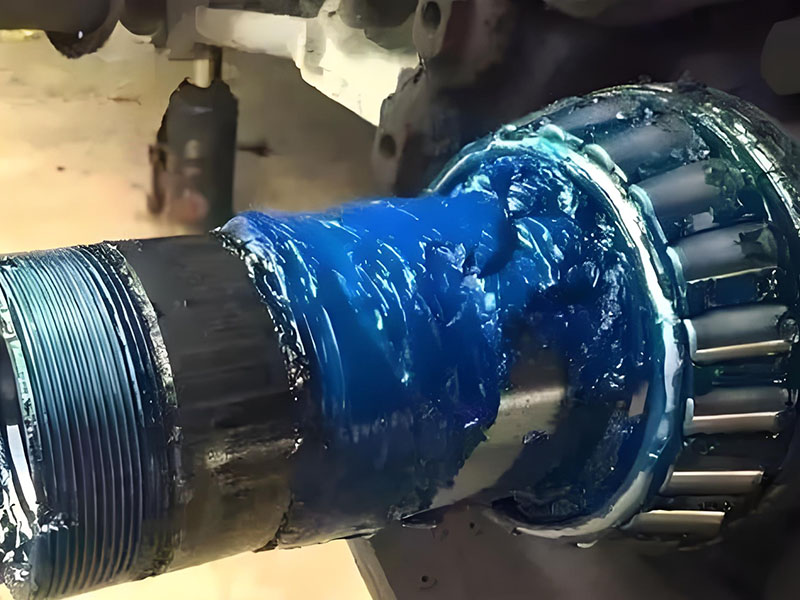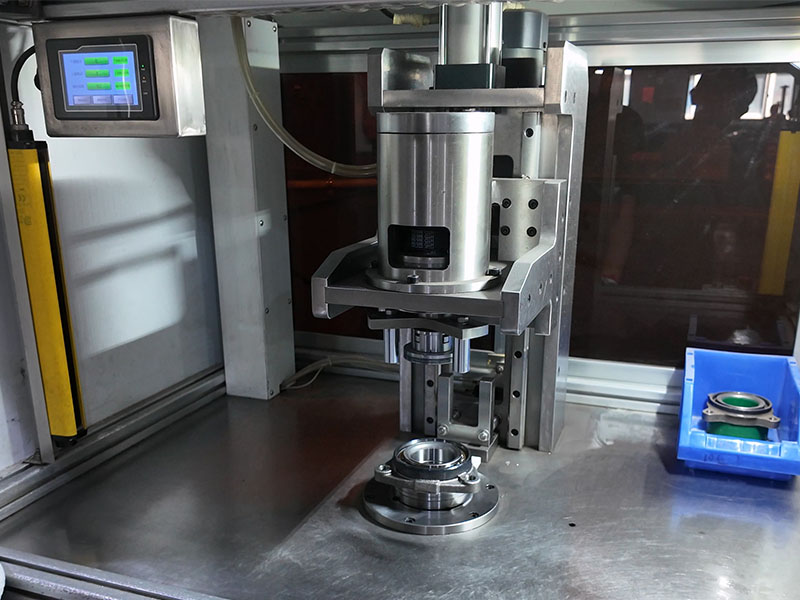
When bearings operate in high-temperature environments, they face a formidable enemy: heat. It relentlessly attacks the most critical component for their smooth operation—the lubricant. Choosing the wrong grease can lead to premature bearing failure, costly downtime, and even catastrophic equipment damage. For engineers and maintenance professionals, selecting the best bearing grease for high temperatures is not just a routine task; it’s a critical decision that impacts the entire operation’s reliability and bottom line.
This comprehensive guide is designed to navigate you through the complexities of high-temperature lubrication. We will explore the science behind grease failure, the key factors in selecting the right lubricant, and the best practices to ensure your bearings achieve their maximum service life.
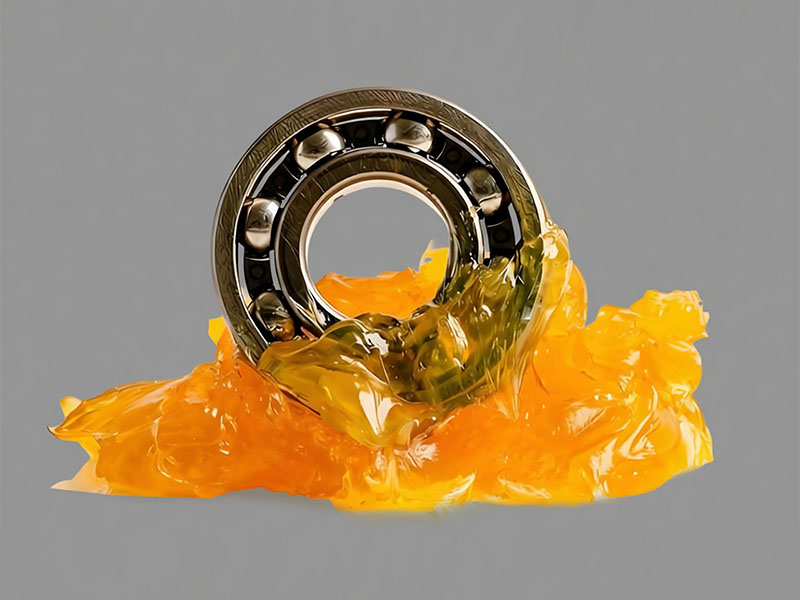
Why Standard Greases Fail at High-Temperature?
Standard greases are simply not equipped to handle extreme heat.
The Destructive Power of Heat: At elevated temperatures, the base oil—the lubricating component—begins to oxidize rapidly and evaporate. This leaves behind a thick, pasty residue or hard, crusty deposits that inhibit lubrication and increase friction. Simultaneously, the thickener (the “sponge” holding the oil) softens and bleeds oil excessively, or hardens and cracks, losing its structure entirely.
Compounding Factors: High-temperature applications rarely involve heat alone. They often present additional challenges:
- Thermal Expansion: Bearings expand, altering internal clearances. Without proper clearance (e.g., C3, C4), the bearing can preload and seize.
- Contaminant Ingress: Environments like steel mills or kilns are rife with dust, water, and corrosive chemicals that can infiltrate and degrade the grease.
- Moisture: Applications like paper dryers or pumps involve steam or water, which can wash away grease or cause rust.
High-Temperature Bearing Design & Thermal Management
Before selecting a grease, it’s crucial to acknowledge that the bearing itself is the first line of defense against heat.
The Right Bearing for the Job: A superior grease cannot fix a bearing that is thermally mismanaged.
Key Design Considerations:
- Internal Clearance: High temperatures cause the inner ring to expand more than the outer ring. Bearings must be selected with increased clearance (C3 or C4) to accommodate this expansion and prevent internal preloading and seizure.
- Material & Stabilization: For extremely high temperatures, bearings may require special heat-stabilized steel or even high-temperature tool steels to maintain hardness and dimensional stability. As a manufacturer with 20 years of experience, DUHUI Bearing ensures our high-temperature series bearings undergo specialized heat treatment to withstand these demanding conditions.
- Sealing Systems: The seal material is as important as the grease. Standard rubber seals (NBR) degrade quickly. High-temperature applications often require FKM (Viton) seals or metal shields, which influence the grease’s retention and protection against contaminants.
A Step-by-Step Guide to Selecting High-Temperature Grease
Selecting the right grease is a systematic process. Here’s a framework to ensure you make the best choice.
Step 1: Define the Operating Temperature Range. Don’t just consider the peak temperature. Know the continuous operating temperature, the minimum start-up temperature, and any temperature fluctuations.
Step 2: Choose the Base Oil Type (The “Lifeblood”). This is the most critical factor.
Mineral Oils: Cost-effective but suitable only for moderate high temperatures (up to ~120°C). They oxidize quickly above this.
Synthetic Oils: The standard for high temperatures.
- PAO (Polyalphaolefins): Good high-temperature performance, wide operating range.
- Esters: Excellent high-temperature stability and biodegradability.
- Silicones: Very wide temperature range, chemically inert, but can be prone to creeping.
- PFPE (Perfluoropolyether): The ultimate high-temperature choice. Chemically inert, non-flammable, and stable up to 250°C+.
Step 3: Analyze the Thickener System (The “Skeleton”). The thickener’s melting point (drop point) determines the grease’s upper-temperature limit.
- Lithium Complex: Very common, good all-rounder, drop point >260°C.
- Polyurea: Excellent high-temperature stability, oxidation resistance, and long life, common in electric motors.
- Calcium Sulfonate Complex: Exceptional extreme pressure (EP) properties, high drop point, and excellent rust and water resistance.
- PTFE / Clay: Used with high-performance synthetics like PFPE for extreme temperatures.
Step 4: Check the Additive Package (The “Organs”).
- Antioxidants: Slow down oil oxidation.
- Rust & Corrosion Inhibitors: Protect bearing surfaces from moisture and chemical attack.
- EP/AW Additives: Chemically react with metal surfaces to prevent wear under heavy loads.
- Note: Some additives can degrade rapidly at high temperatures, so their selection is crucial.
Step 5: Evaluate Application Compatibility. Consider the speed (slow vs. fast), load (EP required?), and environment (presence of water, chemicals, dust).
Comparison of Common High-Temperature Bearing Greases
| Grease Type | Typical Base Oil | Typical Thickener | Max. Temp (°C) | Key Advantages | Common Applications |
| Lithium Complex | Mineral / Synthetic | Lithium Complex | 150 – 180 | Good all-rounder, water resistant, versatile | General industrial, bearings, chassis |
| Polyurea | Synthetic (PAO, Ester) | Polyurea | 180 – 200+ | Long life, oxidation stability, low noise | Electric motors, fans, pumps |
| Calcium Sulfonate | Mineral / Synthetic | Calcium Sulfonate | 180 – 200+ | Extreme EP, rust protection, works in water | Steel mills, heavy equipment, wet environments |
| PFPE/PTFE | PFPE | PTFE | 250 – 300+ | Chemically inert, non-flammable, extreme temp | Ovens, kilns, chemical pumps, vacuum applications |
Failure Modes and Diagnosis of High-Temperature Grease
Knowing how grease fails helps you predict and prevent failure.
- Oxidation & Evaporation: The oil thickens or evaporates, leaving behind a gummy or hard residue. Sign: Hard, crusty deposits on the bearing or in the housing.
- Thickener Collapse: The thickener loses its structure, causing massive oil bleeding. Sign: An oily puddle with a separate, hard soap-like substance.
- Additive Depletion: Critical EP or anti-wear additives are consumed. Sign: Increased wear, scoring, or metal particles in the old grease.
- Visual Clues: Discoloration (dark brown/black), a burnt smell, or excessive leakage are all signs of imminent or ongoing failure.
Best Practices for High-Temperature Grease Application
How you apply and maintain grease is as important as the grease itself.
- Measure, Don’t Estimate: Use an infrared thermometer or thermocouple to get the true bearing housing temperature.
- Avoid Over-Lubrication: In high heat, over-greasing is a major problem. Excess grease churns, generates even more heat, oxidizes quickly, and can leak past seals.
- Establish a Relubrication Schedule: High temperatures dramatically shorten grease life. Follow the bearing and grease manufacturer’s recommendations for intervals and quantities. A general rule is to relubricate more frequently with smaller amounts.
- Test for Compatibility: When switching grease types, always test for compatibility. Incompatible greases can liquefy or harden, leading to catastrophic failure. When in doubt, purge thoroughly.
Real-World Application Case Studies
Case Study 1: Steel Mill Rolling Bearings
- Challenge: Extreme loads, high radiant heat, and constant water spray for cooling.
- Grease Needs: A calcium sulfonate complex grease with excellent EP properties, water resistance, and a high-temperature synthetic base oil.
Case Study 2: Automotive Paint Shop Conveyor
- Challenge: Bearings must run at continuous high temperatures (200°C+) in curing ovens, often with limited access for relubrication.
- Grease Needs: A high-performance grease with an extended life, such as a Polyurea or PFPE-based grease, ensuring long-term reliability without frequent maintenance.
Case Study 3: Industrial Oven Fan Bearings
- Challenge: Constant, uniform high temperature, requiring stable lubrication over long periods.
- Grease Needs: A synthetic oil-based grease with a high drop point thickener, like a Polyurea or Lithium Complex with PAO oil.
Overview of Premium High-Temperature Bearing Greases
The market offers several proven solutions for extreme conditions. Here are a few examples of high-performance greases trusted by industries worldwide:
- MOLYKOTE® 41 Extreme High Temperature Bearing Grease: A PFPE-based grease with PTFE thickener, offering exceptional stability and inertness for the most demanding applications up to 250°C.
- Mobil SHC™ PF 462: A synthetic grease based on PAO oil with an advanced thickener system, designed for long life and high-temperature performance, particularly in electric motors and fans.
- Shell Gadus S5 T460: A high-performance Polyurea grease with a synthetic base oil, engineered for extended service life at high temperatures in applications like kiln cars and conveyors.
- Klüber STABURAGS NBU 30: A mineral-oil based, high-performance grease for anti-friction bearings at high temperatures, known for its excellent pressure absorption and long life.
Frequently Asked Questions (FAQ)
Q1: Is lithium or moly grease better for high-temperature bearings?
A: Lithium-based greases are suitable for moderate high temperatures (up to ~130°C continuous) and offer good water resistance. Molybdenum disulfide (moly) grease is designed for extreme pressure applications but typically has a lower maximum temperature limit (~120°C for conventional moly greases). For sustained high temperatures above 150°C, neither standard lithium nor moly grease is ideal. Instead, use synthetic greases with polyurea, PTFE, or calcium sulfonate thickeners, which maintain stability up to 200°C or higher.
Q2: Is moly grease good for high temperatures?
A: Standard moly grease is not recommended for high-temperature applications above 120°C because its base oil oxidizes rapidly and the thickener may break down. However, specialized high-temperature moly greases using synthetic base oils (PAO or ester) and advanced additives can operate up to 180°C intermittently. Always check the product’s continuous operating temperature range and drop point.
Q3: When should you not use moly grease?
A: Do not use moly grease in:
- Bearings operating above 150°C without synthetic formulation.
- Cleanroom or food-processing environments (moly is a solid lubricant that can contaminate products).
- High-speed bearings where moly particles may cause separation or increased friction.
- Applications requiring electrical conductivity (moly can increase resistivity).
Q4: Is white lithium grease good for high heat?
A: No. White lithium grease typically uses a lithium-12-hydroxystearate thickener and mineral base oil, with a maximum continuous operating temperature of approximately 110–120°C. Above this temperature, the oil separates, and the grease hardens or liquefies, leading to bearing failure. For high heat (>150°C), use synthetic polyurea or PTFE-based greases.
Q5: What are the key properties of the best high-temperature bearing grease?
A: Four essential properties define a high-performance high-temperature grease:
- High thermal stability – retains consistency and does not melt or bleed excessively up to its drop point (typically >260°C for synthetic greases).
- Oxidation resistance – resists chemical breakdown when exposed to hot air, measured by oxidation induction time (OIT) per ASTM D5483.
- Wide operating temperature range – e.g., -40°C to 200°C for a PAO-based grease with polyurea thickener.
- Compatibility – does not react with bearing seals, cages, or other greases when reapplied.
Q6: How does base oil affect grease performance at high temperatures?
A: The base oil determines the grease’s maximum usable temperature and lubrication life. Key parameters:
- Viscosity Index (VI) – High VI (>120) ensures oil maintains film thickness as temperature rises.
- Flash point – Synthetic base oils (PAO, ester, silicone) have flash points >200°C, while mineral oils drop below 180°C.
- Oxidation stability – Synthetics resist oxidation 3–5 times longer than mineral oils at 150°C (tested via ASTM D942 pressure drop).
- Thermal stability – Synthetic oils experience less viscosity loss after heat exposure.
Q7: What grease works well in high heat and moderate loads?
A: For moderate loads (e.g., conveyor rollers, fan bearings, small electric motors) and temperatures up to 180°C, a lithium-complex grease with a synthetic PAO base oil is effective. For continuous operation above 180°C up to 260°C, a perfluoropolyether (PFPE) grease with PTFE thickener is recommended, though it is more expensive. Always match the NLGI grade (typically #2 for moderate loads) to the bearing type.
Q8: What makes a heavy-duty grease suitable for moderate loads and high temperatures?
A: A heavy-duty high-temperature grease for moderate loads must balance:
- Thickener type – Polyurea or calcium sulfonate complex, stable above 200°C.
- Base oil viscosity – ISO VG 150–220 to retain film strength at high temperatures.
- Additives – Anti-wear (AW) agents like zinc dialkyldithiophosphate (ZDDP) without degrading at temperature.
- Dropping point – >260°C per ASTM D2265 to prevent melt-out.
Examples include NLGI #2 synthetic polyurea greases used in electric motor bearings (up to 200°C) and kiln car bearings.
Q9: How do you identify grease failure due to high temperature?
A: Visual and physical indicators include:
- Oil separation (bleeding) from the grease mass.
- Hardening or carbonization (black, brittle residue).
- Color changes from original to dark brown or black.
- Bearing noise or increased vibration from insufficient lubrication.
Quantitative tests: Measure base oil viscosity loss (>15% decrease) or oxidation level (acid number increase >2 mg KOH/g per ASTM D974).
Q10: Can you mix two different high-temperature greases?
A: Mixing incompatible thickeners (e.g., lithium with polyurea) can cause the grease to soften drastically or harden, leading to lubrication failure. Even within the same thickener type, base oils and additives may interact. For high-temperature applications, always clean the bearing thoroughly before applying a different grease. If mixing is unavoidable, test compatibility per ASTM D6185 – a change in drop point or oil separation of >15% indicates incompatibility.
Conclusion: Partner with DUHUI for Expert Bearing Solutions
Selecting the right grease is a complex decision that requires a deep understanding of your specific application. The bearing itself, however, is the foundation upon which successful lubrication is built.
DUHUI can manufacture high-quality bearings designed for thermal stability and durability; our experience allows us to provide comprehensive guidance on the entire bearing system, including lubrication.
Contact our engineering team today. Let’s discuss your specific high-temperature application, and we’ll help you find the suitable bearing and lubrication solution to maximize your equipment’s performance and lifespan.