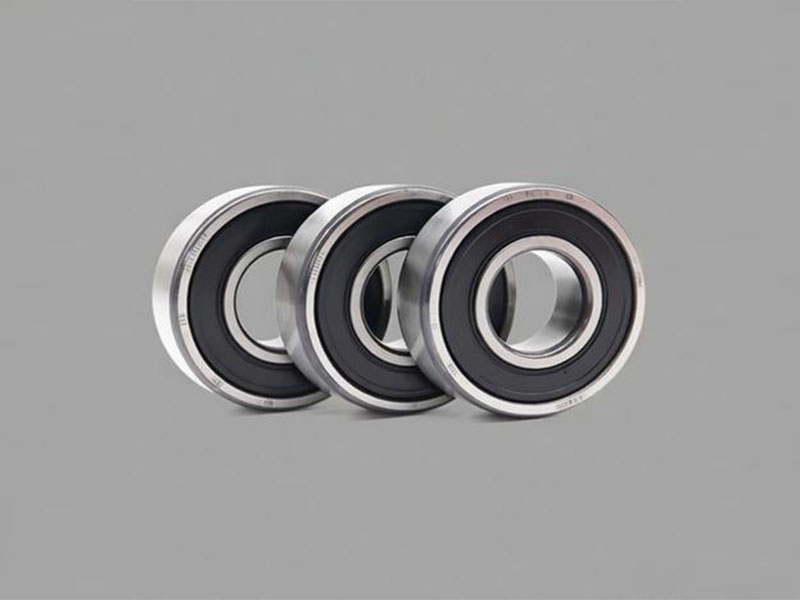
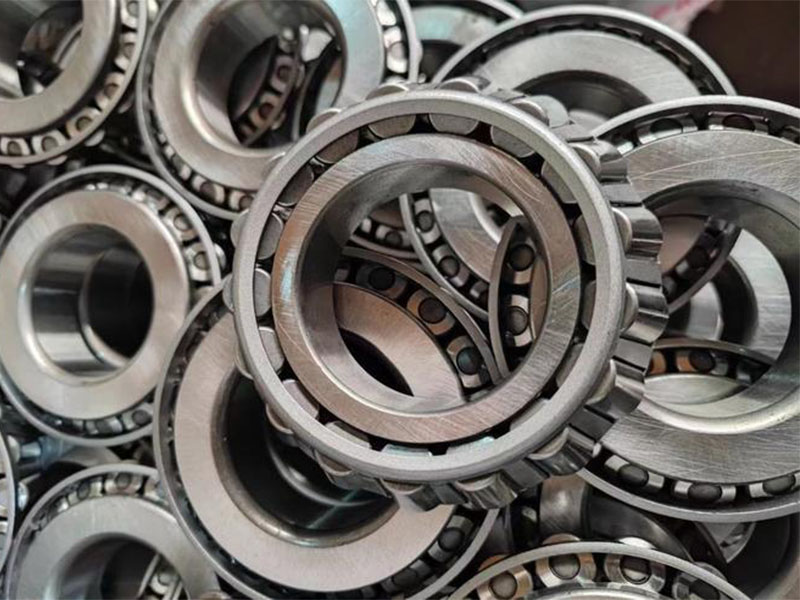
When machinery operates in extreme heat, standard bearings quickly fail—leading to unplanned downtime, costly repairs, and safety risks. Selecting the appropriate high temperature bearing type is not just a technical detail; it is a strategic decision that affects equipment reliability, maintenance cycles, and overall operational efficiency. With a wide array of options available—from ceramic and stainless steel bearings to specialised coated variants—understanding how to choose the right high temperature bearing types can be challenging.
DUHUI will walk you through the essential advantages, applications, types, and selection criteria, empowering you to make an informed choice that maximises performance under extreme thermal conditions.
Advantages of Using High Temperature Bearings
Investing in bearings engineered for elevated temperatures delivers tangible benefits across industries:
- Extreme‑condition durability – Specially selected materials and heat treatments resist softening, oxidation, and thermal fatigue, ensuring long service life even above 300 °C.
- Reduced maintenance requirements – High temperature bearings often incorporate advanced lubricants or self‑lubricating materials that minimise the need for frequent re‑greasing and inspection.
- Economic benefits – Although the initial cost may be higher, the extended lifespan and decreased downtime translate into lower total cost of ownership, making them a cost‑effective solution for continuous or high‑temperature processes.
Common Applications of High Temperature Bearings
High temperature bearings are indispensable in environments where conventional bearings would fail within hours. Typical applications include:
- Automotive industry – Turbochargers, exhaust gas recirculation systems, and wheel ends near braking systems.
- Food processing equipment – Oven conveyors, baking lines, and sterilisation units where heat and cleanliness are critical.
- Aerospace – Engine accessories, auxiliary power units, and flap mechanisms exposed to high thermal loads.
- Steel and metallurgy – Rolling mills, continuous casting machines, and furnace rollers.
- Chemical and glass manufacturing – Reactors, kilns, and glass forming machinery where aggressive media and high temperatures coexist.
Types of High Temperature Bearings
Understanding the different high temperature bearing types is the first step toward a correct selection. Each type offers unique characteristics suited to specific operating conditions.
- Full Ceramic Bearings – Made entirely from ceramic materials such as silicon nitride (Si₃N₄) or zirconia (ZrO₂). They withstand temperatures up to 800 °C, are corrosion‑resistant, electrically insulating, and require no lubricant in some designs. Ideal for extreme heat, vacuum, or chemically aggressive environments.
- Hybrid Ceramic Bearings – Combine steel rings (usually stainless or high‑speed steel) with ceramic rolling elements. They offer higher speed capability, lower friction, and extended lubricant life at temperatures up to 300 °C, while being more cost‑effective than full ceramic.
- Stainless Steel Bearings – Utilise AISI 440C or 316 stainless steel, often heat‑stabilised for service up to 350 °C. They provide good corrosion resistance and are suitable for food processing and moderately hot environments.
- Molybdenum Disulfide (MoS₂) Coated Bearings – A solid lubricant coating is applied to bearing components, enabling operation up to 450 °C without traditional oil or grease. The coating reduces friction and prevents galling in high‑temperature, vacuum, or dry running conditions.
- Alloy Steel High Temperature Bearings – Made from tool steels or high‑temperature alloys (e.g., M50, 440C HT) that retain hardness and dimensional stability up to 500 °C. Often used in aerospace and steel mill applications where heavy loads accompany high heat.
Key Factors for Selecting High Temperature Bearings
Choosing the right product goes beyond simply picking a bearing “rated for high temperature.” A systematic evaluation of the following factors will guide you to the optimal solution.
Temperature Range
The first and most obvious parameter is the continuous and peak operating temperature. Different materials and lubricants have distinct thermal limits:
- Below 150 °C – Standard bearings with high‑temperature greases may suffice.
- 150 °C to 300 °C – Stainless steel or hybrid ceramic bearings with special lubricants are required.
- Above 300 °C – Full ceramic, MoS₂‑coated, or alloy steel bearings with solid or dry lubrication become necessary.
Consider not only the maximum temperature but also thermal cycling, as repeated expansion and contraction can affect clearances and material integrity.
Material Selection
The bearing material determines its upper temperature limit, load capacity, and environmental resistance.
| Material | Max. Continuous Temp. | Key Properties |
| Stainless steel (440C) | 350 °C | Corrosion resistance, moderate load capacity |
| High‑speed steel (M50) | 500 °C | High hardness, excellent wear resistance |
| Silicon nitride (ceramic) | 800 °C | Low density, corrosion/oxidation resistant, electrically insulating |
| Zirconia (ceramic) | 1000 °C | High toughness, good thermal shock resistance |
| MoS₂ coated steel | 450 °C | Dry lubrication, low friction in vacuum or inert atmospheres |
Always verify that the material maintains adequate hardness and dimensional stability at the intended temperature.
Lubrication Considerations
Lubrication is often the most critical factor in high temperature bearing performance. Traditional oils and greases decompose or evaporate above 200 °C, so alternative strategies must be evaluated.
| Lubrication Type | Advantages | Temperature Range | Common Materials/Types | High Temperature Applications |
| Oil and Grease | Easy to apply, commonly used | Suitable for medium temperatures (up to ~120°C) | High‑temperature oils or special greases | Suitable for moderate temperatures, may fail at higher temperatures |
| Solid Lubricants | Won’t break down at extreme temperatures, provides long‑lasting lubrication | Suitable for high temperatures (up to 450°C or higher) | Molybdenum Disulfide (MoS₂), Graphite, Ceramic Coatings | Ideal for high temperatures, requires stable lubrication |
| Dry Lubrication (No Lubricant) | No external lubricants needed; self‑lubricating materials provide continuous lubrication | Suitable for high temperatures (up to 700°C) | PTFE (Teflon), PEEK, Graphite‑based self‑lubricating materials | Extreme temperatures where traditional lubricants can’t survive |
| Hybrid Lubrication | Combines the benefits of solid and liquid lubrication; adaptable to fluctuating temperatures | Medium to high temperatures | Combination of solid lubricants and oils/greases | Environments with fluctuating temperatures requiring both solid and liquid lubrication |
Load Capacity
High temperatures can reduce material strength and affect the lubricant’s ability to form a protective film. Consider:
- Static vs. dynamic loads – Determine whether the bearing experiences steady or fluctuating loads.
- Material strength at temperature – Verify that the chosen material retains sufficient hardness and yield strength.
- Effect on lubrication film – Elevated temperatures lower oil viscosity; if using oil, ensure the base oil can maintain a film under load. For solid lubricants, check that the coating can endure the contact pressure.
Environmental Conditions
Beyond heat, the surrounding environment heavily influences bearing life:
- Corrosive media – Chemicals, moisture, or salts may require ceramic or fully stainless steel bearings.
- Dust/particulate contamination – In cement or mining applications, effective seals or self‑cleaning features become essential.
- Vacuum or special atmospheres – Outgassing restrictions often mandate solid lubricants or dry‑running ceramics.
- Humidity and oxidation – Some materials (e.g., M50) need protective coatings in humid air at high temperature.
Conclusion: Choose the Right High Temperature Bearing Types for Your Needs
Selecting the correct high temperature bearing is a multi‑faceted process that must balance temperature, material, lubrication, load, and environmental factors. By understanding the strengths and limitations of each high temperature bearing type—from full ceramic and hybrid bearings to MoS₂‑coated and alloy steel variants—you can avoid premature failures, reduce maintenance, and improve equipment reliability.
At DUHUI Bearing, we combine decades of manufacturing experience with rigorous quality control to deliver bearings that perform under the most demanding thermal conditions. Our product range encompasses all the types discussed above, and our engineering team is ready to assist you in evaluating your specific application. Whether you need a standard solution or a custom‑engineered design, we help you make the right choice—ensuring your machinery runs smoothly, even when the heat is on.