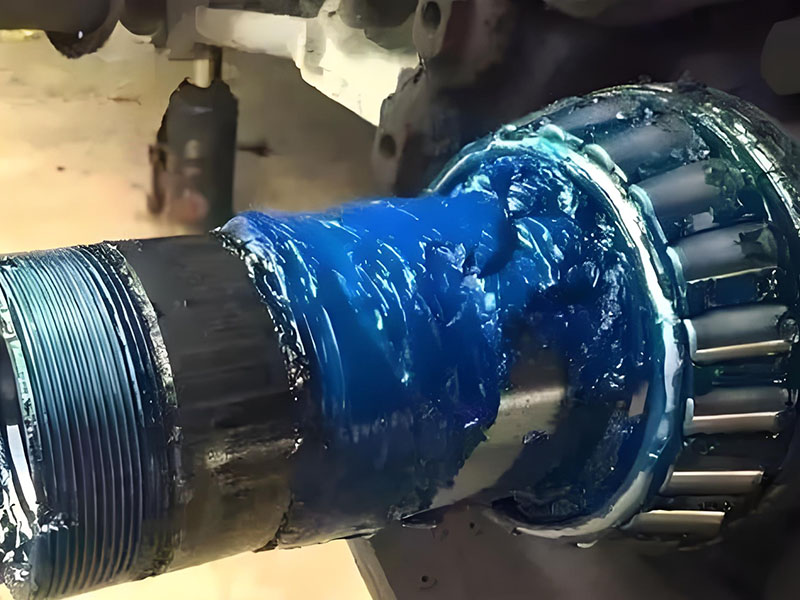
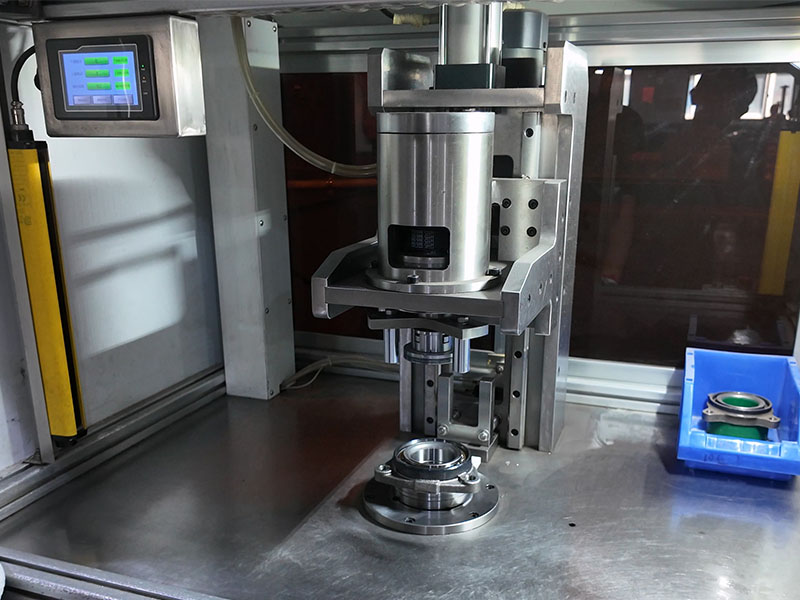
Selecting the correct bearing type directly affects the performance and service life of heavy-duty rotating equipment, from mining machinery to industrial gearboxes. Among rolling bearings, spherical roller bearings are widely used for their self-aligning capability and high load-carrying capacity. But when comparing single row vs double row spherical roller bearings, what are the key differences? And how do you determine which one is right for your application? This article provides a practical selection guide based on technical specifications and operating conditions.
What Are Spherical Roller Bearings?
Spherical roller bearings are rolling bearings characterized by spherical raceways on the outer ring and barrel-shaped rollers (cylindrical rollers with a slightly curved profile that resembles a barrel). This spherical design allows the bearing to self-align, accommodating angular misalignment between the shaft and housing that may result from installation errors or shaft deflection under load.
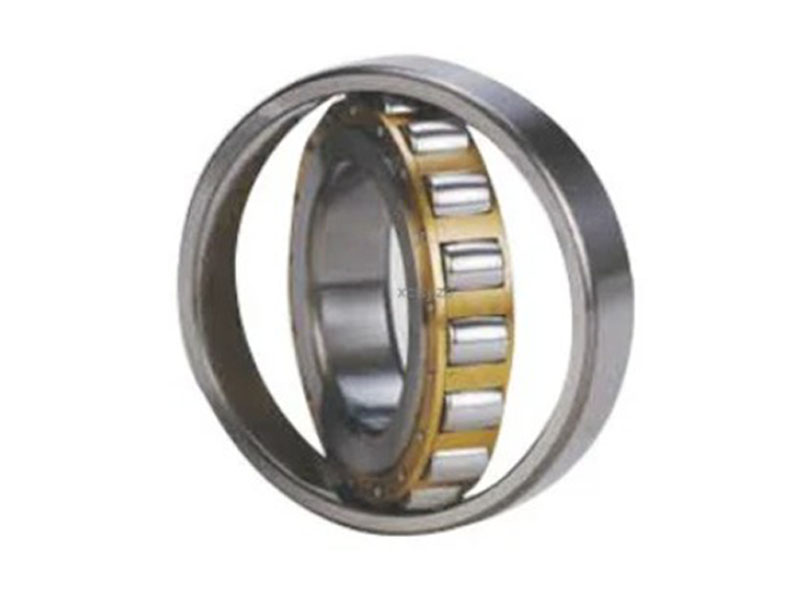
These bearings are designed to handle combined radial and axial loads. The rollers are guided by a double-lip inner ring rib, ensuring stable operation under varying load conditions. Thanks to their robustness and self-aligning properties, spherical roller bearings are commonly found in heavy industrial machinery, mining equipment, conveyor systems, paper mills, gearboxes, fans, and vibrating screens.
This article focuses on the two main configurations: single row and double row spherical roller bearings.
Single Row Spherical Roller Bearings
Definition and Construction
A single row spherical roller bearing contains one row of barrel-shaped rollers between the inner and outer rings. The outer ring features a spherical raceway that enables self-alignment, while the inner ring has a single raceway with two guiding ribs.
Advantages
- Compact structure suitable for high-speed rotation. Single row bearings have a narrower profile, making them ideal for equipment with tight axial space constraints. The reduced number of rolling elements generates less internal friction, allowing for higher rotational speeds.
- Excellent self-aligning capability. Like all spherical roller bearings, single row versions accommodate shaft-to-housing misalignment, typically up to 1 to 2.5 degrees depending on the specific design series.
- Lower friction and reduced energy consumption. Compared to double row bearings, single row bearings experience less rolling resistance, which translates into smoother operation and lower energy usage.
- Lower initial cost and easier maintenance. With fewer components, single row bearings are generally more affordable to purchase and simpler to inspect and lubricate.
When to Choose a Single Row Spherical Roller Bearing
- Moderate load applications. For equipment that does not operate under extreme radial or combined loads, single row spherical roller bearings provide sufficient load capacity at a lower cost.
- Space-limited equipment. Compact machinery such as fans, blowers, and light conveyor systems benefits from the narrow design of single row bearings. Their ability to incorporate seals without increasing overall width is particularly valuable.
- High-speed rotation requirements. Applications requiring higher rotational speeds—such as certain pumps, electric motors, and some gearbox positions—are better suited for single row configurations due to lower internal friction and heat generation.
- Cost-sensitive projects. When budgets are limited and load requirements are not extreme, single row bearings offer reliable performance without overspecification.
Double Row Spherical Roller Bearings
Definition and Construction
A double row spherical roller bearing contains two rows of barrel-shaped rollers arranged symmetrically within a single outer ring. The outer ring maintains a spherical raceway for self-alignment, while the inner ring has two separate raceways with a central guide ring. This configuration effectively doubles the load-carrying contact area compared to single row designs.
Advantages
- Higher radial load capacity. Double row spherical roller bearings can handle significantly higher radial loads than single row bearings. In typical spherical roller bearing designs, radial load capacity increases by approximately 40 to 60 percent compared to single row configurations. (Source: industry technical comparison data, e.g., Comdale Bearing technical literature, 2025)
- Bidirectional axial load capacity. One of the most significant advantages of double row bearings is their ability to withstand axial loads in both directions. In contrast, single row spherical roller bearings typically handle axial loads in only one direction, requiring paired bearings or additional components for bidirectional applications.
- Impact resistance and vibration damping. The dual-row design distributes forces more evenly across multiple rollers, making double row bearings highly resistant to shock loads and vibrations. This durability is essential in applications such as crushers, vibrating screens, and heavy processing equipment.
- Improved stability and extended service life. The wider support base of double row bearings provides superior operational stability, particularly under high loads. The enhanced load distribution reduces stress on individual components, contributing to longer bearing life.
- Moderate speed capability. Due to increased internal friction and heat generation from the additional rolling elements, double row bearings typically have lower maximum speed ratings than single row bearings. Speed derating may be required for high-speed applications.
When to Choose a Double Row Spherical Roller Bearing
- High radial loads or combined loads. For applications involving heavy radial forces or combined radial and axial loads—such as mining equipment, steel mill machinery, and large gearboxes—double row spherical roller bearings are the standard choice.
- Significant shaft deflection or misalignment. While both bearing types offer self-alignment, double row bearings are better suited for severe misalignment conditions, including long shaft runs where deflection is unavoidable.
- Vibration and shock loads. Crushers, vibrating screens, and similar equipment produce continuous vibration and impact forces that would rapidly degrade single row bearings. Double row configurations are specifically designed for these demanding conditions.
- Bidirectional axial load requirements. When an application generates axial forces in both directions along the shaft axis, double row spherical roller bearings provide the necessary bidirectional capacity that single row bearings cannot offer on their own.
Key Differences at a Glance
| Feature | Single Row Spherical Roller Bearing | Double Row Spherical Roller Bearing |
|---|---|---|
| Rolling element rows | One | Two |
| Radial load capacity | Moderate | High (40–60% higher) |
| Axial load direction | Unidirectional | Bidirectional |
| Maximum speed capability | Higher | Moderate |
| Space requirement (axial width) | Narrower | Wider |
| Misalignment tolerance | 1–2.5° | 1–2.5° (more stable under load) |
| Initial cost | Lower | Higher |
| Typical applications | Fans, gearboxes, moderate loads | Mining, crushers, heavy machinery |
Spherical Roller Bearing Selection Checklist
When choosing between single row and double row configurations, evaluate the following factors:
- Load analysis. Determine whether your application involves predominantly radial loads, axial loads, or a combination of both. Measure the expected load magnitude and consider any shock or impact loads that may occur during operation. Consult radial load rating tables from manufacturers.
- Speed requirements. Higher rotational speeds favor single row bearings due to lower internal friction. Double row bearings, while capable of moderate speeds, generate more heat and may require speed derating. Calculate the limiting speed based on lubricant type and operating temperature.
- Space constraints. Measure available axial mounting space. Single row bearings occupy less width, which can be critical in compact equipment designs.
- Misalignment tolerance. Assess expected shaft deflection and possible installation misalignment. Both bearing types accommodate misalignment, but double row bearings provide greater robustness under heavy loads.
- Direction of axial load. If axial loads act in both directions along the shaft, double row spherical roller bearings are the correct choice. For unidirectional axial loads, single row bearings may suffice.
- Operating temperature range. Verify that the selected bearing’s thermal limits match your equipment’s ambient and operational temperature conditions. Standard spherical roller bearings typically operate between -30°C and +150°C, with special designs available for higher or lower temperatures.
- Seal type and contamination risk. The operating environment influences seal selection. Open bearings allow higher speeds but require clean conditions. Rubber seals (contact or non-contact) protect against dust and moisture but may increase friction. In heavy contamination environments, double row bearings with improved seal designs often provide better long-term protection.
- Life expectancy and total cost. Evaluate total cost of ownership, not just initial purchase price. Double row bearings cost more upfront but may offer lower long-term costs in demanding applications due to extended service life and reduced downtime.
Installation and Maintenance Tips
Pre-installation inspection. Before installing any spherical roller bearing, inspect it for visible damage, including cracks, dents, rust, or corrosion. Check seals and raceways for integrity. A damaged bearing should never be installed.
Lubrication practices. Spherical roller bearings require proper lubrication to reduce friction, prevent wear, and extend service life. Grease lubrication is suitable for most applications, while oil circulation may be required for high-speed or high-temperature conditions. Select the lubricant type and replenishment interval based on operating conditions and manufacturer recommendations.
Alignment verification. Even with self-aligning bearings, verify shaft and housing alignment before final installation. Chronic misalignment that exceeds the bearing’s rated tolerance (typically 1 to 2.5 degrees depending on design) will reduce service life regardless of the bearing’s self-aligning capability. (See FAQ for further details.)
Regular monitoring. Implement routine condition monitoring including temperature checks, vibration analysis, and noise assessment. A sudden increase in operating temperature often indicates lubrication issues or internal damage. Also check seal integrity periodically to prevent contamination ingress.
Based on field feedback from equipment maintenance teams, the most common cause of premature failure in spherical roller bearings is not load miscalculation but contamination ingress through damaged seals. Regular seal inspection is as critical as lubrication schedules.
Frequently Asked Questions (FAQs)
Q1: Are spherical roller bearings available in both single row and double row designs?
A1: Yes. Double row spherical roller bearings are more common in heavy industrial applications. Single row spherical roller bearings are also manufactured, typically for moderate loads and higher speed requirements.
Q2: What is the maximum misalignment angle for spherical roller bearings?
A2: Most spherical roller bearings accommodate angular misalignment of 1 to 2.5 degrees, depending on the specific design series and manufacturer specifications. Consult technical data sheets for exact ratings.
Q3: Can single row spherical roller bearings handle axial loads?
A3: Yes, single row spherical roller bearings can handle moderate axial loads, but typically only in one direction. For axial loads in both directions, double row spherical roller bearings or paired single row bearings are required.
Q4: How to tell if a spherical roller bearing needs replacement?
A4: Common indicators include unusual noise (grinding or clicking) during operation, excessive vibration, increased operating temperature above normal range, visible seal damage, and contamination found in lubricant samples.
Q5: What is the difference between spherical roller bearings and ball bearings?
A5: Spherical roller bearings use barrel-shaped rollers, offering higher radial load capacity, better misalignment compensation, and lower speed limits. Ball bearings use spherical balls, providing lower friction, higher speed capability, but reduced load capacity and minimal misalignment tolerance.
Q6: How does misalignment compensation work in spherical roller bearings?
A6: The spherical outer ring raceway allows the inner ring with rollers to tilt relative to the housing, maintaining proper roller contact even when the shaft is not perfectly aligned with the housing bore. This feature reduces edge stress and prevents premature failure.
Q7: Does seal type affect the choice between single row and double row bearings?
A7: Yes. In dusty or wet environments, double row bearings often offer more effective seal configurations due to their wider housing and larger seal contact area. However, for clean, high-speed applications, single row bearings with non-contact seals are preferable to minimize friction.
Conclusion
Selecting between single row and double row spherical roller bearings requires a systematic evaluation of load magnitude, speed requirements, space constraints, misalignment conditions, axial load direction, operating temperature, and contamination risk. Single row spherical roller bearings offer compact design, lower friction, and cost-effectiveness for moderate loads and high-speed applications. Double row spherical roller bearings provide superior radial load capacity (40–60% higher), bidirectional axial support, impact resistance, and longer service life for demanding industrial conditions such as mining, crushing, and heavy material handling. By carefully assessing your application’s operating parameters and following proper installation and maintenance practices—including regular seal inspection—you can select the right spherical roller bearing to optimize equipment performance and durability.