
Basic Definition
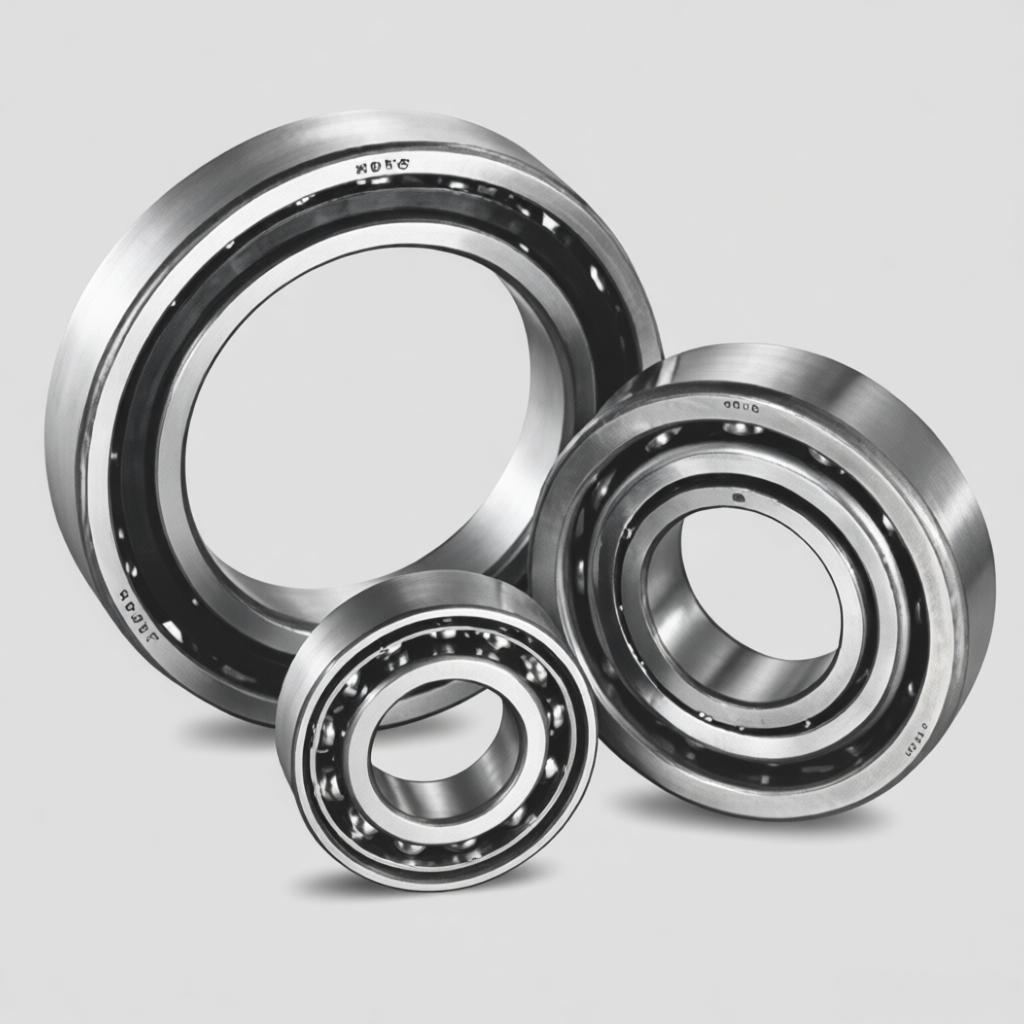
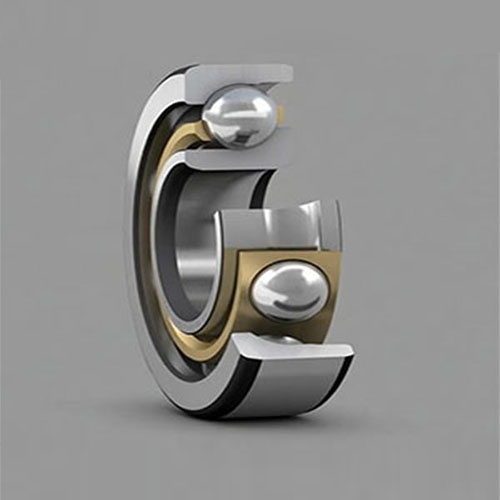
Angular contact ball bearings have raceways in the inner and outer rings offset relative to each other along the bearing axis. This creates a contact angle between the balls and raceways, enabling the bearing to support combined radial and axial loads simultaneously. The axial load capacity is directly determined by the contact angle: higher angles accommodate greater axial thrust.
Design Features
Angular contact ball bearings operate at high rotational speeds while maintaining dimensional stability under load. Lower contact angles (15°) prioritize speed capability; higher angles (25°–40°) maximize axial load capacity. These bearings are selected when applications require load support in multiple directions and high system rigidity. Typical uses include machine tool spindles, pumps, compressors, gearboxes, and electric motors.
Features and Benefits
Angular contact ball bearings from DUHUI are manufactured with controlled material properties and raceway geometry to ensure fatigue life, speed capability, and dimensional accuracy. The following features contribute to consistent performance under combined loads.
- High Quality Steel – Raceways and rolling elements use bearing-grade chrome steel (GCr15), heat-treated to HRC 60–66. This provides fatigue resistance under dynamic loading and minimizes rolling contact fatigue in high-cycle applications.
- Advanced Grease Technology – Bearings are pre-lubricated with grease formulated for -30°C to 120°C operation. The lubricant maintains film thickness under centrifugal forces, reducing friction torque and preventing metal-to-metal contact.
- High Grade Balls – Grade 10 (G10) precision balls as standard, with Grade 5 (G5) available. Ball sphericity and surface finish ensure uniform load distribution across the raceway.
- Superfinished Raceways – Raceway surfaces achieve Ra 0.05–0.08 μm via superfinishing. This lowers friction, reduces operating temperature, and extends lubricant service life.
- Contact Angle Selection – 15°, 25°, or 40° contact angles match load requirements. 15° (C suffix) for high-speed with light axial loads; 40° (B suffix) for heavy axial loads at lower speeds.
Bearing Types and Series
This section covers structural types and aftermarket series for single-row and double-row angular contact ball bearings.
- Bearing Types
- Single-row Series
- Double-row Series
Bearing Types
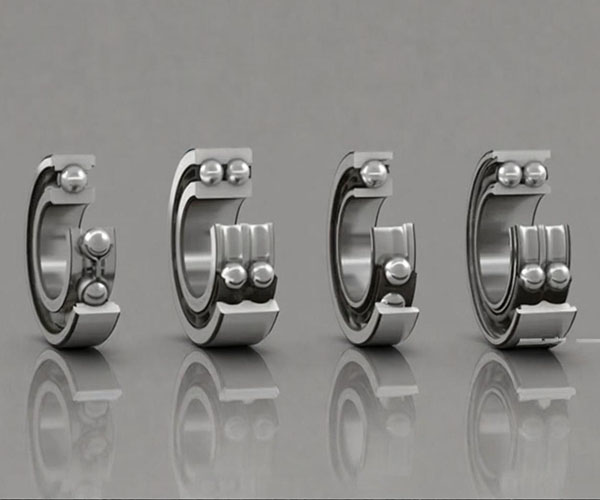
Angular contact ball bearings are classified by row count and raceway geometry. The selection among single-row, double-row, matched pairs, and four-point types depends on axial load direction, space constraints, and speed requirements.
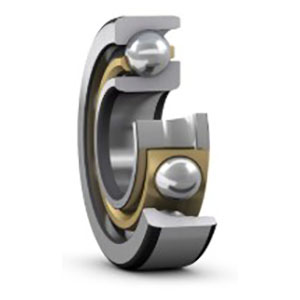
Accommodates radial loads combined with unidirectional axial loads. For bidirectional axial support, two bearings must be mounted in back‑to‑back (DB), face‑to‑face (DF), or tandem (DT) arrangements. Universal pairing versions are pre‑ground for defined preload or clearance.
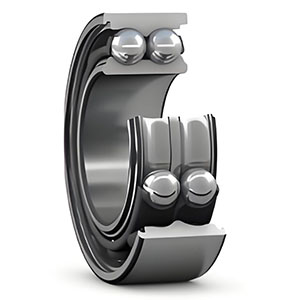
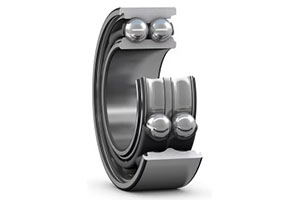
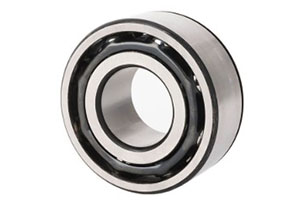
Two rows of balls within a single inner and outer ring. This design directly supports bidirectional axial loads without requiring a second bearing. It offers a more compact assembly compared to matched pairs, though maximum speed is typically lower.
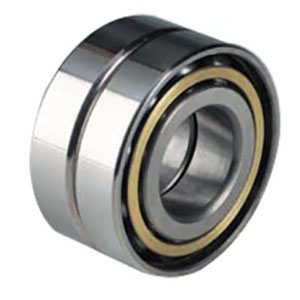
Supplied as pre‑selected sets of two or more single‑row bearings. The set is ground to uniform height and preload class (GA, GB, GC). DB arrangement provides highest moment stiffness; DF allows slight misalignment compensation; DT increases axial capacity in one direction.
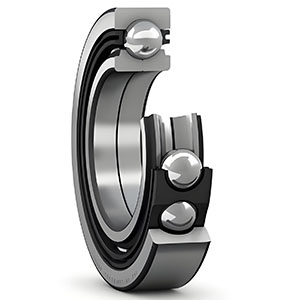
A single‑row bearing with a raceway that contacts each ball at four points. It supports bidirectional axial loads combined with radial loads, occupying less axial space than a double‑row bearing. Suitable for applications where axial load direction reverses frequently.
Single-row Series
Single row angular contact ball bearings support combined radial and unidirectional axial loads. The following series and models are categorized by contact angle (15°, 25°, 40°) and are available for high-speed, balanced, or heavy-thrust applications.
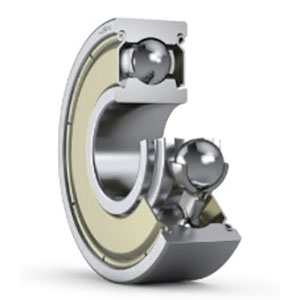
7000C series – 15° contact angle single row angular contact ball bearing. Designed for high-speed CNC spindles, turbochargers, and precision machine tools.
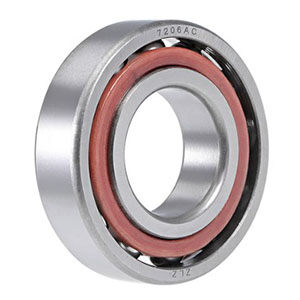
7000AC series – 25° contact angle single row angular contact ball bearing. Offers balanced speed and axial load capacity for industrial fans and general machinery.
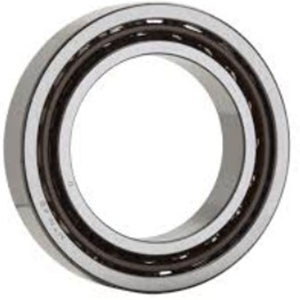
7200C series – 15° contact angle single row angular contact ball bearing. Ideal for high-speed machining centers and precision epicyclic gearboxes.
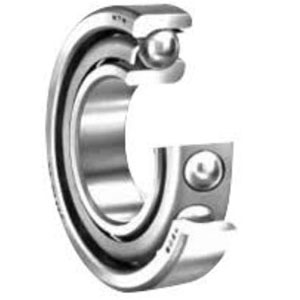
7200B series – 40° contact angle single row angular contact ball bearing. Heavy-duty design for rolling mill work rolls and vertical pump shafts.
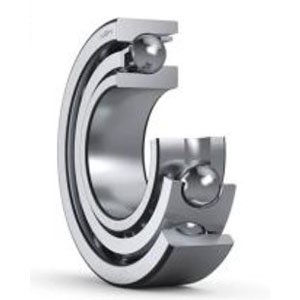
7300B series – 40° contact angle heavy series single row angular contact ball bearing. For crushers, large cooling towers, and steel mill equipment.
Double-row Series
Double row angular contact ball bearings accommodate bidirectional axial loads within a single unit. The following series include filling-slot and integrated raceway designs, offering compact solutions for overhung loads and space-limited assemblies.
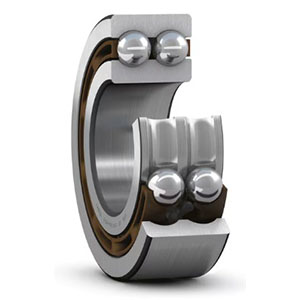
3200 series – Double row angular contact ball bearing with filling slots for maximum ball count. Handles radial plus bidirectional axial loads in a compact design.
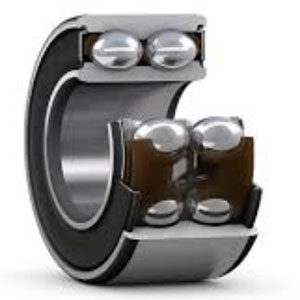
3300 series – Wide double row angular contact ball bearing. Higher load capacity than 3200 series, suitable for overhung loads and press fit mounting.
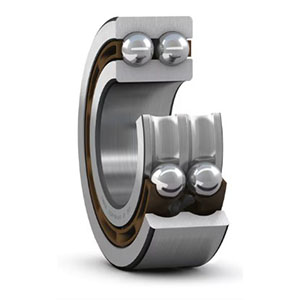
5200 series – Double row angular contact ball bearing with integrated raceways for smooth operation. Excellent rigidity for pump shafts and small gearboxes.
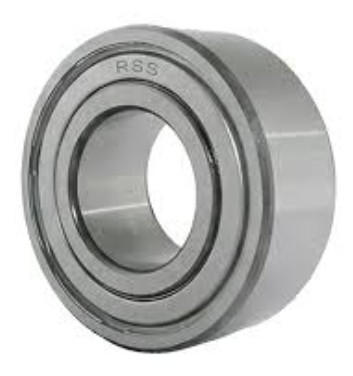
5300 series – Extra‑wide double row angular contact ball bearing for large overhung loads. Maximum capacity in a compact envelope for heavy industrial fans.
Applications
Angular contact ball bearings are used across industries where combined radial and axial loads occur at moderate to high speeds. Their contact angle design allows selection for speed-critical or load-critical conditions. The following application areas represent typical installations where angular contact geometries provide performance advantages over other bearing types.

Wheel hubs, gearboxes, and differentials requiring combined radial‑thrust load support under variable speeds and temperatures.
Tractor transmissions, harvesters, and soil preparation equipment operating in dusty, high‑shock conditions.
Pumps, compressors, conveyors, and general machinery requiring reliability under continuous operation.
Heavy‑duty truck wheel ends and differential assemblies demanding fatigue life in high‑load, low‑speed conditions.
Sealed, corrosion‑resistant configurations for automotive and industrial pump applications.
Low‑outgassing, passivated steel construction for cleanroom, semiconductor, and vacuum chamber environments.
Technical Comparison
Selecting between single‑row and double‑row configurations, or between angular contact and deep groove ball bearings, requires understanding differences in load handling, speed limits, and axial space. The following articles compare key performance parameters, tolerance classes, and typical application fits. Each includes dimensional reference tables and selection guidelines.
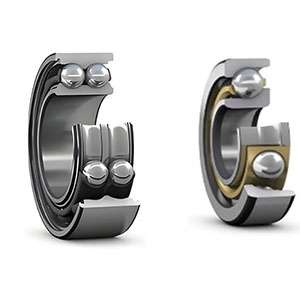
This article compares axial load support (unidirectional vs. bidirectional), speed limits, stiffness characteristics, and assembly footprint. Single‑row matched pairs provide higher speed and moment rigidity; double‑row designs save axial space and simplify mounting. Includes selection examples for spindles vs. pumps.
For more details, please read“Single-Row vs. Double-Row Angular Contact Ball Bearings ”
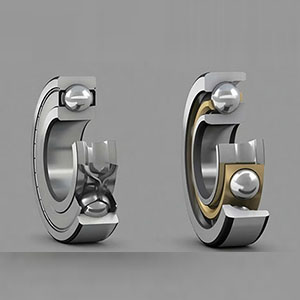
Structural and performance differences: contact angle existence, axial load capacity, speed capability, and tolerance precision. Angular contact bearings support higher thrust at speed but require preloading; deep groove ball bearings are more tolerant of misalignment and lower cost for pure radial loads. Application‑level guidance provided.
For more details, please read“Angular Contact vs. Deep Groove Ball Bearings”
Related Products
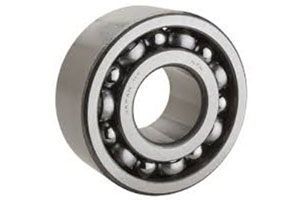
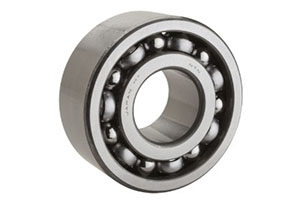
The following angular contact ball bearing models are regularly produced and maintained in stock for industrial and aftermarket applications. Dimensions and key specifications are provided for engineering reference.
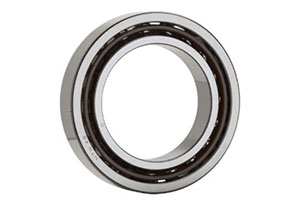
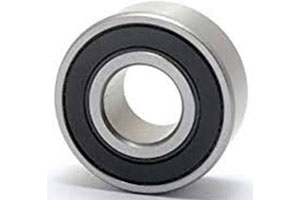
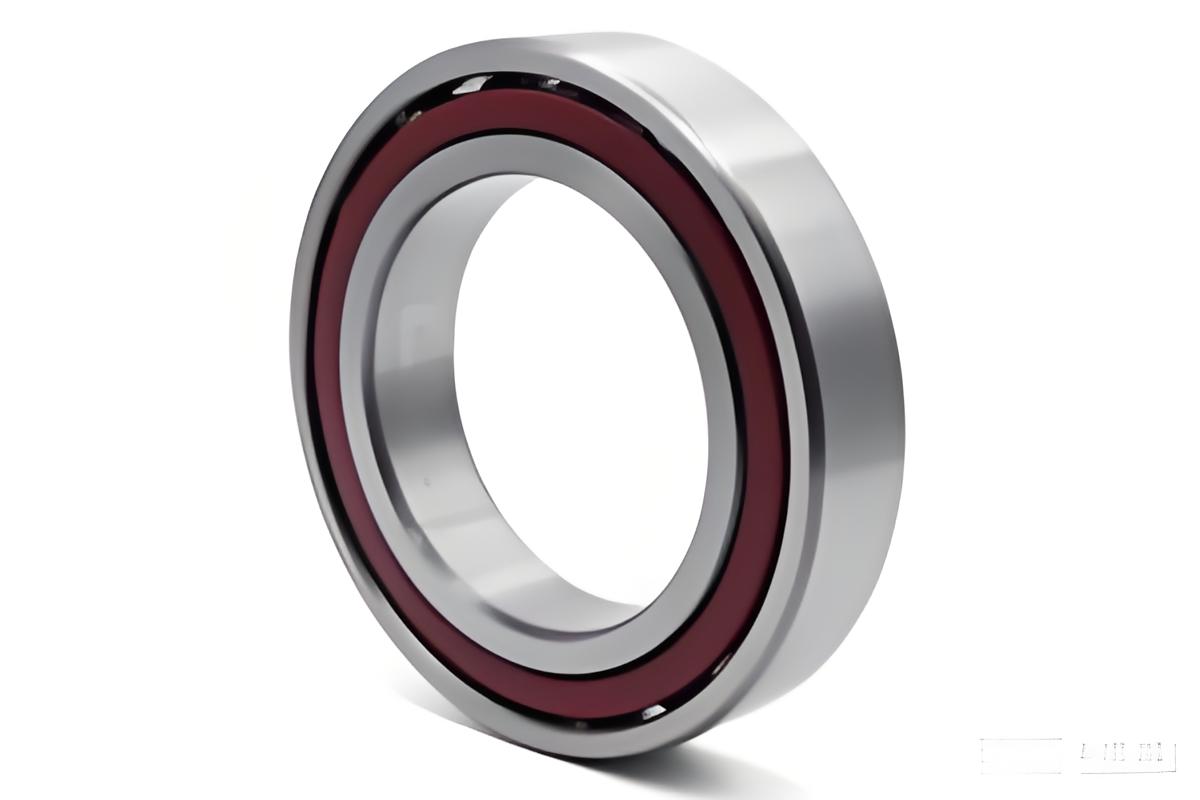
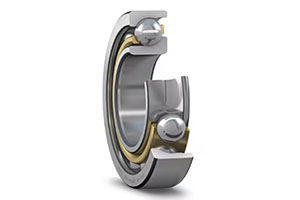
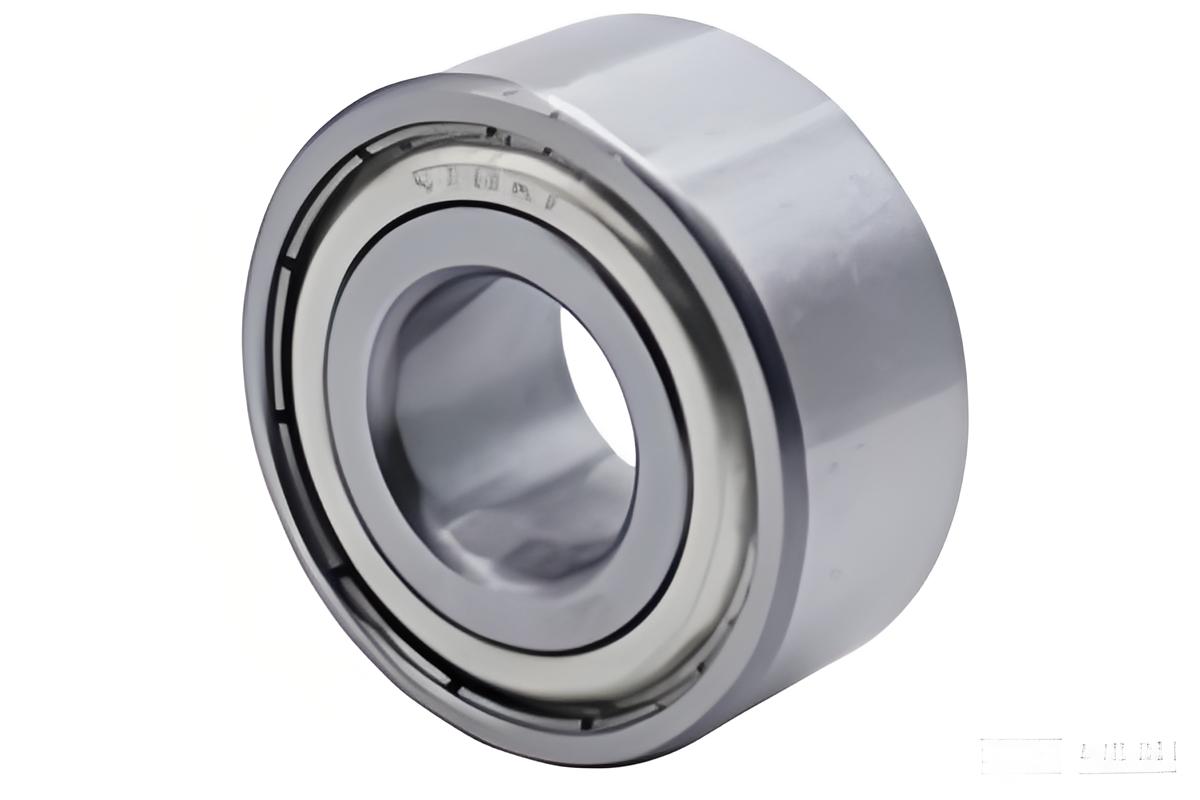
Angular Contact Ball Bearing Selection Choices
- Cage Material – Pressed steel (standard), machined brass (high temperature), polyamide (high-speed, light weight). Polyamide reduces centrifugal force on balls.
- Ball Material – Chrome steel GCr15 (standard). Hybrid ceramic balls (Si₃N₄) for high-speed, reduced heat generation.
- Contact Angle – 15° for high‑speed (>10,000 rpm) with moderate axial load; 25° for combined load; 40° for heavy axial, low‑speed.
- Preload – Select class (EL, L, M, H) based on stiffness and speed requirements.
- Sealed Bearings – 2RS (contact rubber) for contamination resistance; ZZ (metal shield) for low‑friction protection.
- Lubrication – Grease (pre‑filled, extended relubrication intervals) or oil (high‑speed spindles, continuous circulation).
Our Precision Class Standards
Angular contact ball bearings are produced to the following tolerance classes. Equivalences across ISO, DIN, and ABEC standards are provided for engineering reference.
| DUHUI Class | ISO | DIN | ABEC |
| P0 (Normal) | ISO 0 | P0 | ABEC 1 |
| P6 | ISO 6 | P6 | ABEC 3 |
| P5 | ISO 5 | P5 | ABEC 5 |
| P4 | ISO 4 | P4 | ABEC 7 |
| P4+ | ISO 4 (modified) | — | ABEC 7+ |
| P4S (Spindle) | — | — | ABEC 7++ |
| P2 | ISO 2 | P2 | ABEC 9 |
| Ultra Precision (UP+) | — | — | ABEC 9+ |
Helpful Tools & Resources
- Ball Bearing Guide – Key selection criteria for engineering professionals.
- Frequency Calculator – Determine shaft speed and bearing critical frequency.
- Radial Ball Bearings vs. Angular Contact Ball Bearings – Selection framework.
Angular contact bearings are preferred when the application involves combined radial and axial loads, particularly moderate to high unidirectional axial thrust. Deep groove ball bearings may be suitable for light axial loads, but angular contact bearings provide greater axial capacity and rigidity at higher speeds.
For more details, please read “Radial Ball bearings vs Angular Contact Ball Bearings”.
Single-row bearings accommodate unidirectional axial loads and must be used in sets for bidirectional support. Double-row bearings accommodate bidirectional axial loads directly within a single unit, offering a more compact assembly but generally lower speed capacity compared to back‑to‑back matched pairs.
For more details, please read “The difference between single-row and double-row angular contact bearings?“.
Grease lubrication serves most industrial applications. High-speed spindles (>15,000 rpm) require oil‑air or oil‑mist lubrication. Operating temperature and speed determine relubrication intervals.
For more details, please read “The Lubrication of Angular Contact Ball Bearings”.
Elevated operating temperatures reduce lubricant viscosity and can alter internal clearance due to differential thermal expansion between shaft and housing. Bearings with thermal compensation (C3–C4 radial clearance) are recommended for applications with wide temperature fluctuations.
For more details, please read “How does temperature affect angular contact ball bearing performance?”.