Have you ever heard a humming noise from your wheel that changes with speed, or felt a vibration in the steering wheel that wasn’t there before? These are often the first signs that a critical component—the wheel hub assembly—may be wearing out. Understanding what this part does, where it’s located, and how to spot failure can help you maintain vehicle safety and avoid costly repairs.
DUHUI will cover the core functions of the wheel hub assembly, its exact location within the chassis, the different types available, and practical maintenance advice.
The Core Functions: What Does a Wheel Hub Do?
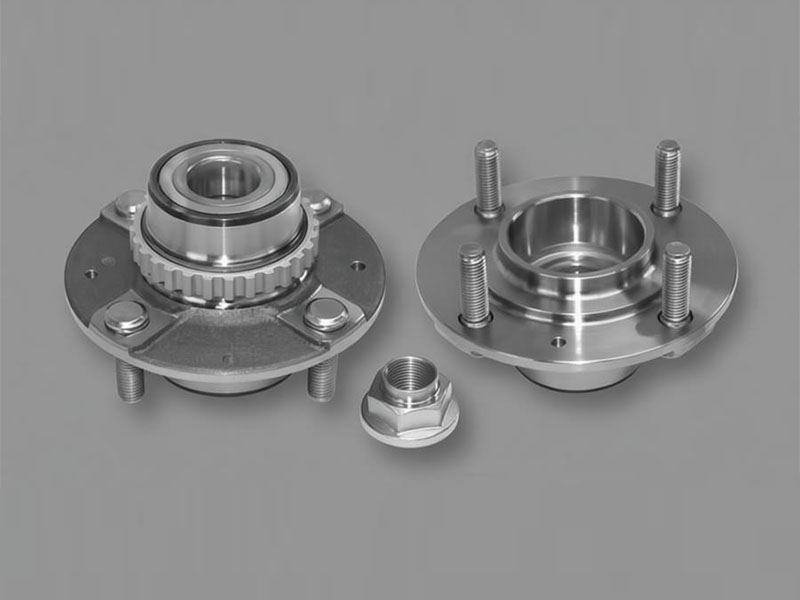
The wheel hub assembly is a vital component that connects the wheel to the vehicle. It performs several essential roles:
- Supporting the Vehicle’s Weight: It bears the full load of the vehicle, distributing weight evenly across each corner.
- Ensuring Smooth Rotation: High-precision bearings inside the hub allow the wheel to rotate freely with minimal friction.
- Transmitting Driving Power: On drive wheels, the hub assembly transfers torque from the axle shaft to the wheel, propelling the vehicle forward.
- Providing a Mounting Interface: It offers a stable, precisely machined surface for mounting the wheel (via lug bolts or studs) and the brake rotor, ensuring proper alignment.
Wheel Hub Assembly Location: Where Is It and What Does It Connect To?
The wheel hub assembly location is at the center of each wheel, mounted between the suspension components and the wheel itself. To be more specific:
Position: It is bolted to the steering knuckle (on front wheels) or the rear axle flange (on rear wheels), sitting inside the wheel’s center cavity.
Connection Points:
- Wheel & Tire: The wheel is secured to the hub assembly using lug bolts or studs.
- Axle / Half-Shaft: On drive wheels, the axle shaft inserts into the hub spline, transmitting rotational force.
- Brake Components: The brake rotor is mounted onto the hub flange, allowing the caliper to slow the wheel.
- Suspension: The hub assembly is rigidly attached to the steering knuckle or axle housing, forming a critical link in the suspension system.
Understanding the wheel hub assembly location is essential for both diagnostics and replacement, as its position determines how forces are transmitted and how wear manifests.
Wheel Bearing vs. Wheel Hub Assembly: Understanding the Difference
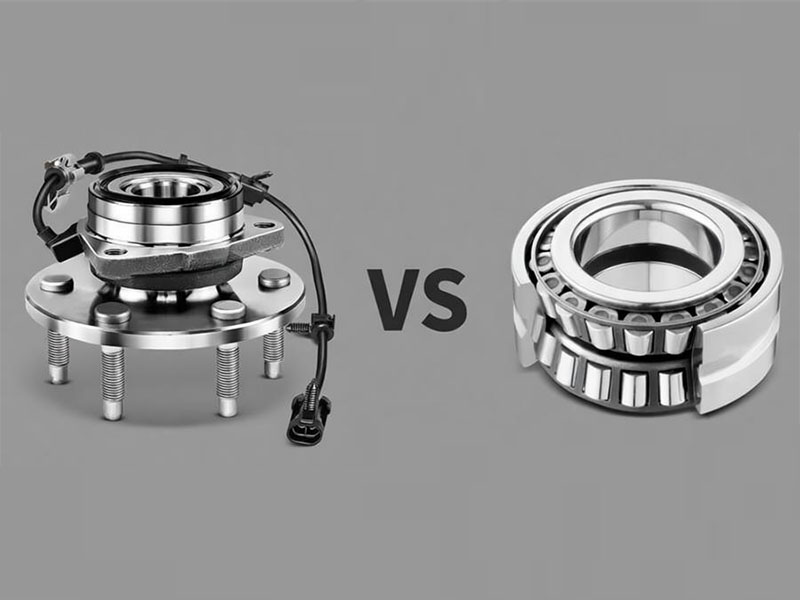
A common point of confusion is the difference between a wheel bearing and a wheel hub assembly.
- Wheel Bearing: A single component—typically steel balls or rollers housed within races—that enables friction-free rotation.
- Wheel Hub Assembly: A complete, pre-assembled unit that includes the hub, bearing, mounting flange, and often an ABS sensor ring.
The Integrated Assembly: A Modern Solution
Modern vehicles commonly use an integrated wheel hub assembly, which combines all these components into one sealed unit.
- Definition: A ready-to-install assembly that eliminates the need for pressing bearings in and out.
- Key Features: Simplified installation, reduced risk of installation errors, enhanced durability, and improved precision.
- Applications: Widely used in passenger cars, SUVs, and light trucks.
Exploring the Different Types of Wheel Hub Bearings
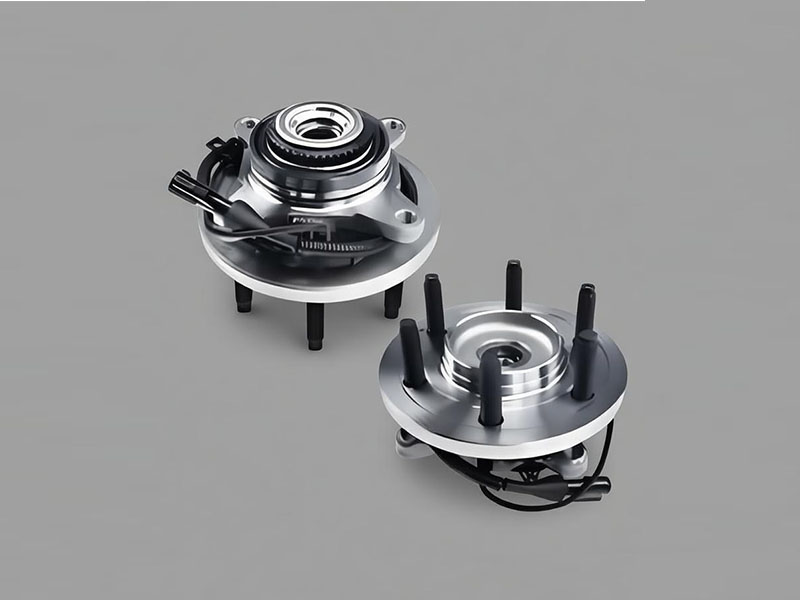
The internal bearing type plays a major role in performance and load capacity. As a manufacturer, DUHUI Bearing recognizes that selecting the correct type is critical for safety and longevity.
- Ball Bearings: These use spherical balls between inner and outer races. They are compact and commonly used in non-drive wheels, where loads are relatively moderate.
- Tapered Roller Bearings: Featuring conical rollers, these bearings provide a larger contact area and can handle higher radial and axial loads. They are often chosen for drive wheels and heavy-duty applications, such as SUVs, trucks, and performance vehicles.
Common Signs of Failure & Proactive Maintenance
Recognizing early signs of a failing hub assembly can prevent secondary damage and ensure safe operation.
Top Warning Signs
- Unusual Noises: Humming, growling, or rumbling that changes with vehicle speed. The sound may intensify when turning.
- Vibration or Wobble: Steering wheel vibration or a feeling of looseness when cornering.
- ABS Warning Light: Since many hub assemblies integrate the ABS sensor, a faulty assembly can trigger the ABS light.
- Wheel Play: Excessive movement when the wheel is shaken (detected during inspection).
- Uneven Tire Wear: Premature or uneven tire wear can result from excessive hub play.
How to Inspect
- Shake Test: Lift the vehicle safely, grasp the tire at 12 and 6 o’clock, and rock it. Any noticeable play suggests internal wear.
- Spin Test: Spin the wheel and listen. Grinding, roughness, or irregular resistance indicates bearing damage.
Replacement Advice
When replacement is needed, it is often recommended to replace hub assemblies in pairs (e.g., both front units) to maintain balanced handling. Choosing a high-quality integrated assembly ensures proper fit, reliable ABS function, and long service life.
Conclusion
The wheel hub assembly is a critical component that affects safety, handling, and ride comfort. Knowing its functions, its exact wheel hub assembly location, and how to identify signs of failure empowers you to make informed maintenance decisions.
At DUHUI Bearing, we specialize in manufacturing high-quality wheel hub assemblies and bearings. Our focus on precision engineering and rigorous quality control ensures reliable performance for modern vehicles. If you are looking for a trusted bearing partner, we invite you to contact us.