Introduction: Why is bearing lubrication so important?
In the world of rotating machinery, a bearing is only as good as the lubricant that protects it. Whether in an automotive wheel hub or high-speed industrial machinery, proper lubrication is the single most critical factor in ensuring bearing longevity and operational reliability. The right lubricant reduces friction, prevents premature failures, and maximizes your equipment’s uptime.
This comprehensive guide is designed for maintenance professionals, engineers, and procurement specialists. DUHUI will walk you through everything you need to know about bearing lubricants—from fundamental characteristics and types to selection criteria and application best practices. Our goal is to equip you with the knowledge to make informed decisions that protect your machinery and optimize your operations.
The Role of Lubrication: More Than Just Reducing Friction
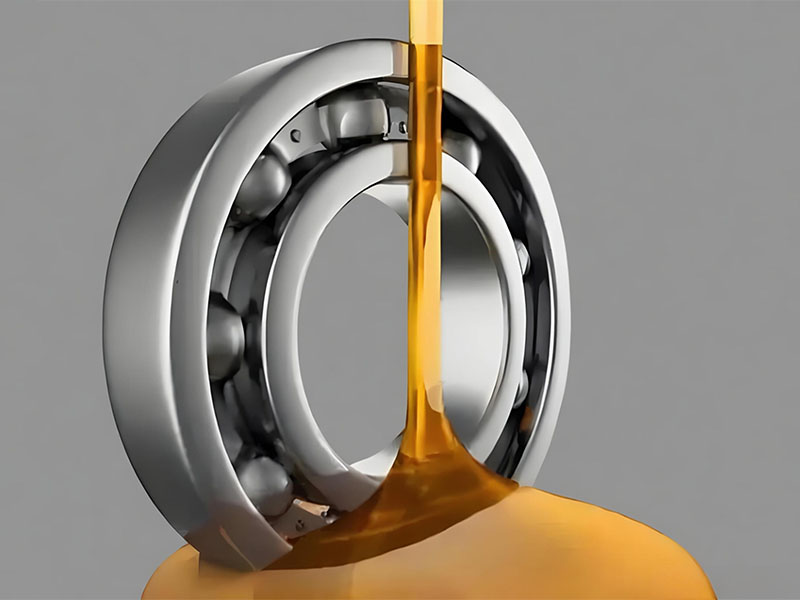
While reducing friction between rolling elements and raceways is its primary job, a high-quality lubricant performs several other vital functions:
- Wear Protection: It creates a physical barrier that separates moving parts, preventing metal-to-metal contact that leads to wear and tear.
- Heat Dissipation: Lubricants, particularly oils, carry away heat generated by friction, helping to maintain stable operating temperatures.
- Corrosion Prevention: It forms a protective layer on bearing surfaces, shielding them from moisture and corrosive agents that can cause pitting and rust.
- Contaminant Barrier: Grease, in particular, acts as a seal to block the ingress of harmful contaminants like dust, dirt, and water.
Choosing the correct lubricant is therefore not just a maintenance task; it’s a critical decision that directly impacts the reliability and lifespan of your equipment.
Key Characteristics of High-Performance Bearing Lubricants
Not all lubricants are created equal. The performance of a lubricant under specific conditions is determined by its inherent properties. When selecting a lubricant, look for these key characteristics:
- Stable Viscosity Across a Wide Temperature Range: Viscosity is the most important property. The lubricant must be thick enough to maintain a load-bearing film at high operating temperatures, yet fluid enough to flow and protect at start-up in cold conditions.
- High Film Strength to Carry Load: The lubricant must withstand significant pressure without being squeezed out from between the rolling elements. This is often enhanced by extreme pressure (EP) additives.
- Structural Stability for Long Life: It should resist physical breakdown (shearing) due to mechanical action and chemical breakdown (oxidation) over time, ensuring long service life and consistent performance.
- Non-Corrosive and Material Compatible: The lubricant must be chemically inert to bearing steels, seals, and cages. Incompatibility can lead to seal swelling, hardening, or corrosion of precision components.
- Effective Barrier Against Contaminants: Especially for greases, it must effectively seal out moisture and particulates while remaining in place without leaking out of the bearing housing.
Factors Influencing Lubricant Performance in Bearings
The effectiveness of a lubricant is heavily dependent on the operating conditions it faces. These factors are interconnected and must be considered as a whole:
Operating Speed (DN Value): High-speed applications generate more heat and require lubricants with lower viscosity and good mechanical stability to prevent “churning,” which wastes energy and generates heat.
Temperature Range: High temperatures accelerate oxidation and can cause the lubricant to thin out or evaporate. Low temperatures can cause it to become too stiff, leading to starved lubrication at startup.
Load Conditions: Heavy or shock loads demand lubricants with high oil film strength and EP additives to prevent metal-to-metal contact.
Environmental Contaminants: Exposure to water, dust, chemicals, or wash-down processes requires a lubricant with robust anti-corrosion properties, water resistance, and structural stability.
Vibration: Applications subject to vibration can cause fretting corrosion. Special lubricants with anti-wear additives are needed to protect the bearing surfaces in such conditions.
Exploring Different Types of Bearing Lubricants
The two main categories are oil and grease, with several specialty types for unique applications.
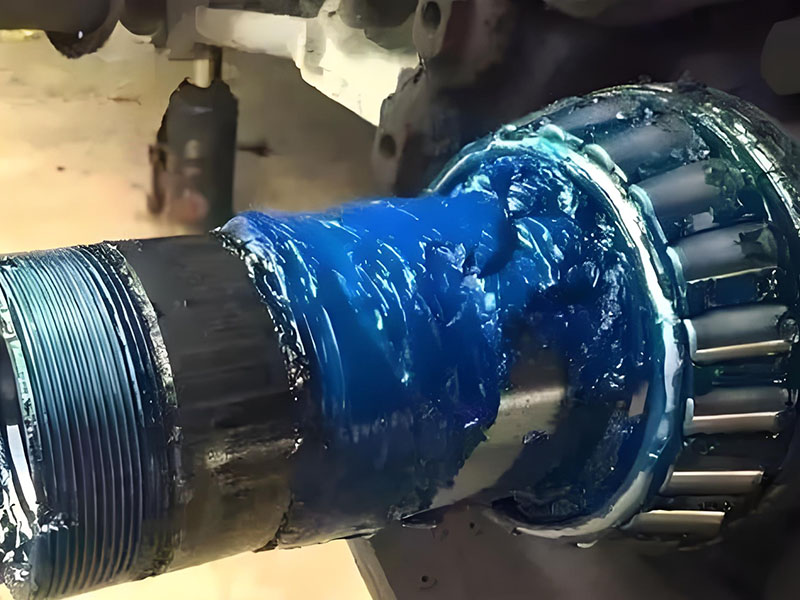
Grease: The most common choice for many applications, including automotive wheel bearings. It is essentially oil held in place by a thickener (like lithium or calcium soap). It offers simplicity, acts as a built-in seal against contaminants, and requires less frequent application.
Oil: Preferred for very high-speed or high-temperature operations where heat dissipation is critical. Oil can be circulated through a system to cool the bearing. Application methods include oil bath, circulation, and mist.
Solid & Dry Film Lubricants: Used in extreme conditions where conventional lubricants fail—such as vacuum environments, extremely high temperatures, or clean rooms where contamination is unacceptable. Common examples include Molybdenum Disulfide (Moly) and Graphite.
Specialty Lubricants:
- Silicone Lubricants: Offer a wide temperature range and are often used for rubber and plastic components due to their compatibility.
- Perfluorinated (PFPE) Lubricants: Chemically inert, offering exceptional resistance to aggressive chemicals and high temperatures.
- Food-Grade Lubricants: Certified for use in food processing environments where incidental contact with food may occur (e.g., H1 or H2 registered lubricants).
A Step-by-Step Guide to Selecting the Optimal Bearing Lubricant
Choosing the right lubricant can be simplified by following a systematic approach:
- Step 1: Identify Bearing Type and Specifications: Consult the bearing manufacturer’s catalog. It often provides initial recommendations. The type (ball, roller, spherical) influences load distribution and lubrication needs.
- Step 2: Define Operating Parameters: Clearly establish the speed (RPM), load (radial/axial), and the minimum and maximum operating temperatures.
- Step 3: Assess the Operational Environment: Is the bearing exposed to water, dust, chemicals, or extreme cleanliness requirements like food safety?
- Step 4: Determine the Lubrication Method: Is the bearing sealed-for-life, or will it be manually or automatically re-lubricated? This affects the lubricant’s required longevity and consistency (NLGI grade).
- Step 5: Match to a Lubricant Specification: With all data gathered, you can now select a lubricant type and its specific properties: base oil viscosity, NLGI grade (for grease), additive package (EP, anti-wear), and any special certifications (e.g., NSF for food grade).
Getting It Right: How Much and How Often?
Even the best lubricant will fail if applied incorrectly.
- Determining the Correct Quantity: Over-greasing is a common mistake. As a rule of thumb, a bearing housing should be filled to about 1/3 to 1/2 of its free space. High-speed bearings require even less to avoid churning. Sealed bearings come pre-packed with the precise amount from the factory.
- Establishing Relubrication Intervals: Frequency depends on bearing type, size, speed, and operating conditions. High temperatures and contaminant loads demand more frequent re-lubrication. Under-lubrication leads to wear, while over-lubrication causes high operating temperatures and can blow out seals.
Best Practices for Bearing Lubrication
Proper technique is crucial for effective lubrication:
- Before Lubrication: Clean, clean, clean! Wipe the grease fitting and the surrounding area thoroughly. Dirt pushed into the bearing during greasing is a leading cause of failure.
- During Lubrication: Use a clean, dedicated grease gun. Apply the grease slowly to give the old grease time to be pushed out and to avoid pressure build-up. Watch for purging; when fresh grease appears at the seal, stop.
- After Lubrication: Run the bearing for a short period. This helps distribute the new grease evenly. Monitor the temperature; a slight initial rise is normal, but a sharp increase indicates over-greasing.
Top 5 Common Lubrication Mistakes and How to Avoid Them
Learn from the errors that lead to costly bearing failures:
- Mixing Incompatible Greases: Different thickeners (e.g., lithium vs. polyurea) can react, turning the grease into a hard, non-lubricating mass. Always purge old grease completely before switching types.
- Applying the Wrong Lubricant Type: Using a general-purpose grease in a high-temperature or high-pressure application guarantees failure. Always match the lubricant to the specific operating conditions.
- Over-Lubrication: Believing “more is better” is a dangerous myth. It leads to increased friction, overheating, and seal failure.
- Under-Lubrication: Starving the bearing of lubricant leads to metal-to-metal contact, rapid wear, and eventual seizure.
- Ignoring Contamination During Application: Leaving the grease fitting dirty or using an open, contaminated grease container introduces abrasives directly into the bearing.
Conclusion
Effective bearing lubrication is a critical component of any successful maintenance strategy. By understanding the fundamentals—from the role and types of lubricants to the selection process and application best practices—you can dramatically extend the life of your machinery, reduce downtime, and improve overall productivity.