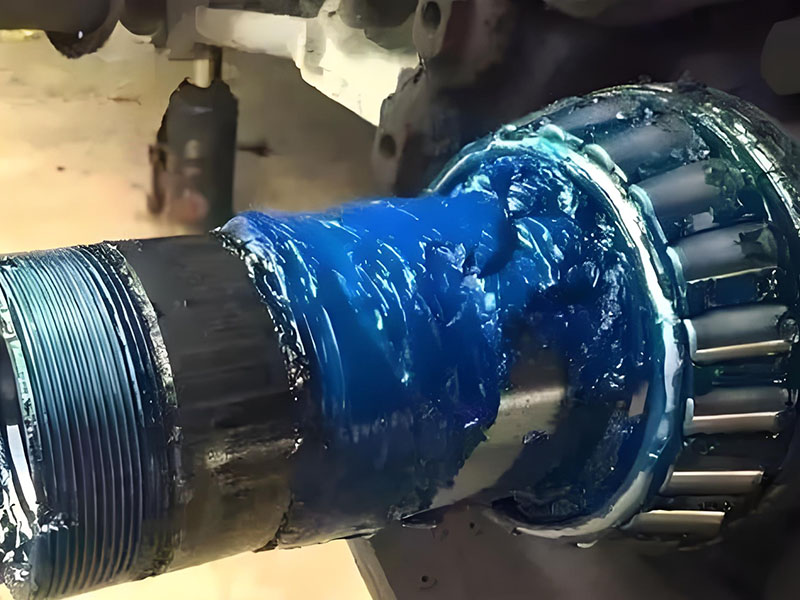
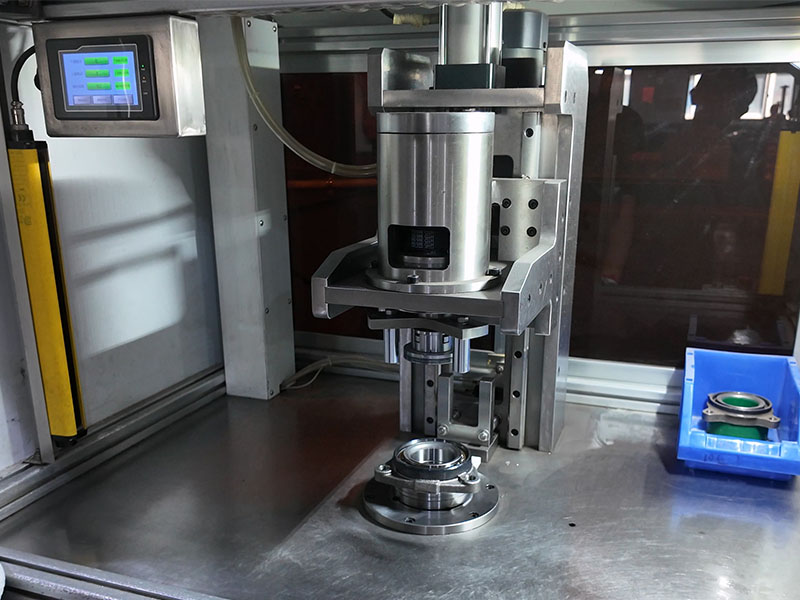
Quick answer: How do bearings work? A bearing supports a rotating shaft and reduces friction between moving parts. It consists of an inner ring (mounted on the shaft), outer ring (fixed in housing), rolling elements (balls or rollers), and a cage that spaces them evenly. The rolling elements transfer the load from inner to outer ring through rolling motion—balls make point contact for high speeds, rollers make line contact for heavier loads. Lubrication creates a protective film that prevents metal-to-metal contact.
At DUHUI Bearing, with 20 years of manufacturing expertise and 15 years in foreign trade, we understand that a machine is only as good as its components. For automotive engineers, procurement specialists, and mechanics, the humble bearing is the unsung hero of vehicle performance and reliability. But how do bearings work to ensure your wheels spin smoothly and your engine runs without failure?
This comprehensive guide delves into the mechanics of bearings, breaking down their components, principles, and the science that makes modern motion possible. Whether you are designing a new system or maintaining an existing fleet, understanding these fundamentals is the first step toward optimal performance and longevity.
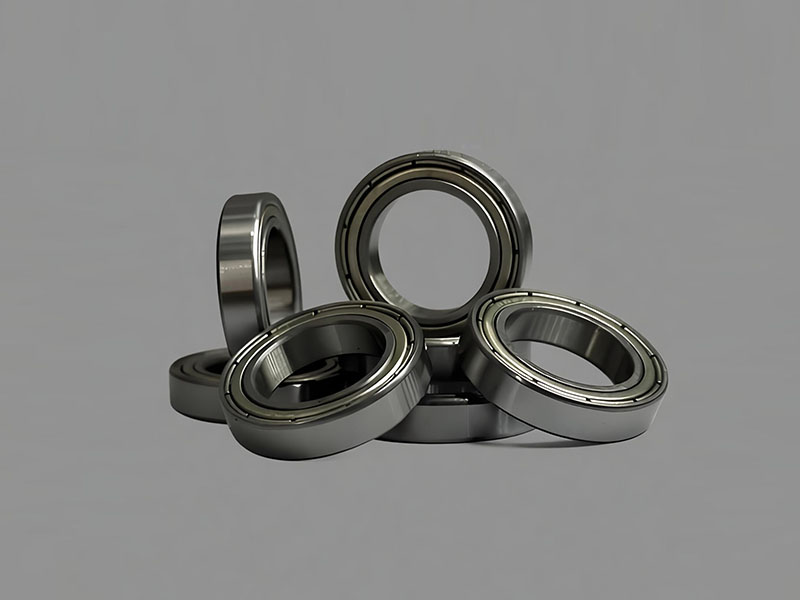
What is a Bearing and Its Function?
Definition
A bearing is a crucial machine element that constrains relative motion between moving parts to only the desired motion, while typically supporting a load . In essence, it is the connector that allows one part to rotate or move in a straight line relative to another, often supporting a rotating shaft against the stationary part of a machine .
Basic Functions
At its core, a bearing serves two fundamental purposes that are critical to machinery efficiency and lifespan:
- Reduce Friction: The primary role of a bearing is to minimize mechanical friction between surfaces. By reducing friction, bearings decrease wear and tear, lower energy consumption, and prevent overheating . Without bearings, the metal-to-metal contact in machines would cause rapid failure.
- Support Rotating Parts: Bearings provide support and stability to rotating components like shafts and wheels. They efficiently transfer loads—whether radial (perpendicular to the shaft), axial (parallel to the shaft), or a combination of both—from the rotating element to the stationary housing .
Main Applications
Bearings are ubiquitous in mechanical systems, with two primary areas of application:
- Industrial Field: In machine tools such as lathes, milling machines, and stamping presses, precision bearings ensure accuracy and rigidity under heavy loads .
- Automotive Industry: This is where DUHUI Bearing specializes. Bearings are found everywhere: within the engine, in the transmission system, and most critically, within the wheel hub assembly, where they must withstand both vehicle weight and cornering forces .
The Components and Structure of Bearing
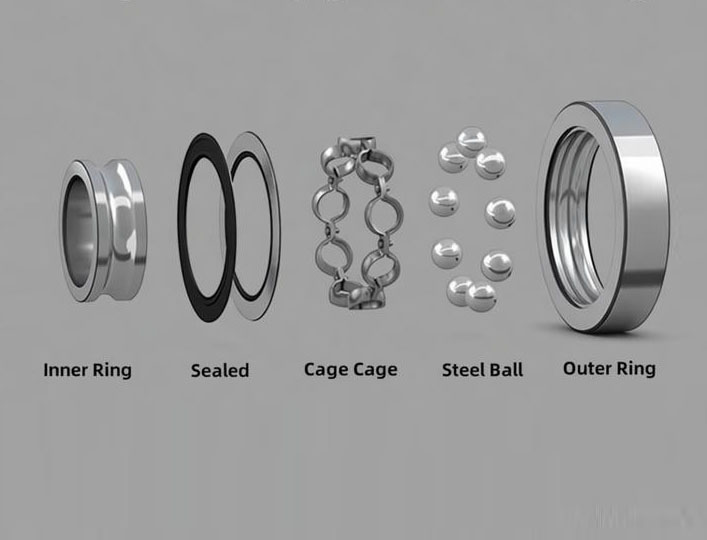
To truly understand how bearings work, one must first understand their anatomy. A standard rolling-element bearing consists of five key components:
- Inner Ring: This is the smaller of the two rings. It is typically mounted on the rotating shaft and features a precision-machined groove called a raceway on its outer surface .
- Outer Ring: The larger ring that is fixed into the housing. It also contains a raceway on its inner surface, matching the path of the rolling elements .
- Rolling Elements: These are the balls or rollers that roll between the inner and outer rings, separating them and reducing rotational friction .
- Cage (or Retainer): A separator that maintains even spacing between the rolling elements, preventing them from contacting each other and ensuring smooth, guided motion .
- Seals (or Shields): Protective covers fitted to the sides of the bearing to keep lubricating grease in and harmful contaminants like dirt, water, and dust out.
How Bearings Work: Load, Force, and Synergy
The operation of a bearing is a sophisticated interplay of physics and precision engineering.
Load Distribution
When a load is applied to a bearing, it is not carried by a single point. The bearing distributes this force across multiple rolling elements. In a statically indeterminate system, the load distribution is determined by the internal geometry of the bearing and the relative displacements of the rings .
Force Analysis of Rolling Elements
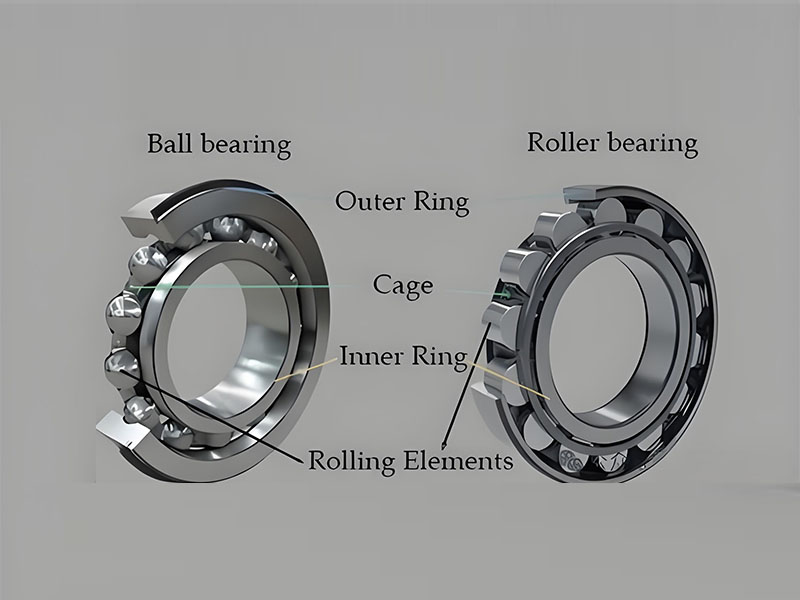
- Rollers: Cylindrical rollers make line contact with the raceways. This larger contact area allows them to handle higher radial loads than ball bearings of the same size .
- Balls: Balls make point contact with the raceways. This minimizes friction, allowing for very high-speed operation, though with a lower load capacity compared to rollers .
Component Integration for Seamless Rotation
The magic of a bearing lies in the synergy of its parts. As the inner ring rotates, it drags the rolling elements via friction. The cage ensures these elements enter and exit the load zone at a consistent pace, preventing skewing or jamming. The rolling elements then transfer the load from the inner ring to the outer ring through their rolling motion .
Synergy of the Parts
The ultimate performance of a bearing is a result of the convergence of its components:
- The Rings provide the precise paths.
- The Rolling Elements enable low-friction motion.
- The Cage ensures order and smooth operation.
- Lubrication creates a thin film that separates these metal parts, preventing wear and dissipating heat .
Bearing Ring vs. Bearing Race
In engineering discussions, the terms bearing ring and bearing race are often used, but understanding the distinction is key.
- Bearing Ring: This refers to the physical component itself—the inner ring and outer ring. These are the structural steel parts that form the body of the bearing .
- Bearing Race (or Raceway): This refers specifically to the path or groove on the rings where the rolling elements travel. It is the contact surface.
Note on Application: In a Deep Groove Ball Bearing, the race is a continuous groove on both rings. In a Tapered Roller Bearing, the raceways are tapered to support combined loads .
The Role of Rolling Elements
The choice of rolling element defines the bearing’s capability.
Balls
- Contact: Point contact.
- Advantage: Low friction, high-speed capability.
- Best For: Applications with moderate loads and high-speed requirements .
Rollers
- Contact: Line contact.
- Advantage: High load capacity, greater rigidity.
- Types: Cylindrical, Needle, Tapered, Spherical .
Selection Criteria for Rolling Elements
Choosing the right rolling element depends on the specific demands of the application:
- Load Type: For pure radial loads, cylindrical rollers are efficient. For combined radial and axial loads, tapered rollers or angular contact balls are required .
- Operating Speed: Ball bearings are generally preferred for very high speeds due to their lower friction and heat generation .
- Environmental Conditions: In harsh environments with vibration or misalignment, self-aligning spherical roller bearings are the optimal choice .
The Role and Types of Cages
The cage, also known as a retainer, is critical for high-performance bearings.
Role of the Cage:
- Maintains proper spacing between rolling elements.
- Prevents contact and friction between adjacent elements.
- Guides the rolling elements through the load zone and keeps them from falling out .
Types of Cages:
- Pressed-Steel (Stamped): High strength, lightweight, and cost-effective. Common in general automotive applications .
- Machined Brass: Offers high durability, corrosion resistance, and is suitable for heavy loads and high temperatures .
- Synthetic Resin (Polyamide): Lightweight and low-friction, ideal for high-speed applications where low noise and high lubricant compatibility are required .
The importance of Seals
While often overlooked, seals are the first line of defense for a bearing. In automotive wheel bearings, contact seals (rubber) provide the best protection by pressing firmly against the inner ring, keeping contaminants out and lubricant in. Non-contact shields (metal) are used in cleaner, high-speed environments where low torque is essential.
The Effect of Lubrication on Bearings
Lubrication is not just an addition; it is the lifeblood of a bearing.
- Durability: A proper lubricant film prevents metal-to-metal contact, which is the primary cause of fatigue and failure, drastically extending service life .
- Stability: By controlling friction, lubrication ensures stable operating temperatures and consistent mechanical performance over time.
- Friction and Wear Reduction: Whether using oil or grease, the lubricant creates a shear layer that minimizes friction, reducing wear on the raceways and rolling elements .
- Heat Dissipation & Rust Prevention: Lubricants, especially circulating oil, carry away heat generated by friction. They also form a protective layer on steel surfaces, shielding them from moisture and preventing corrosion .
Conclusion: Trust Your Motion to DUHUI Bearing
Understanding the intricate world of bearings reveals why quality and expertise matter. From the precise interaction of the inner and outer rings to the critical role of the cage and the life-sustaining power of lubrication, every element must perform flawlessly.
At DUHUI Bearing, our 20 years of manufacturing experience ensure that every component we produce meets the highest standards of precision and durability. Whether you need a robust tapered roller bearing for a heavy-duty truck or a high-speed deep groove ball bearing for a passenger car, our engineering knowledge guarantees a product you can trust.