Friction is the single greatest challenge in rotating machinery. While bearings are designed to minimize resistance, friction remains an unavoidable physical reality that directly impacts efficiency, temperature, and service life.
DUHUI will provide a technical overview of friction types, root causes, system-level consequences, and practical engineering solutions.
1. The Basic Types of Bearing Friction
Before diagnosing problems, it is essential to understand the different forms friction takes within a bearing assembly. Each type originates from different components and operating conditions.
- Rolling Friction: Occurs as rolling elements pass over the raceways. Even under ideal conditions, energy is lost through elastic hysteresis—the microscopic deformation of steel as it bears a load. This type is inherent to all rolling bearings but varies with geometry and load distribution.
- Sliding Friction: Contrary to the name “rolling bearing,” significant sliding occurs internally. This includes macro-sliding between the rolling elements and cage pockets, as well as micro-sliding in the elliptical contact zones due to elastic deformation.
- Seal Friction: Contact seals, while essential for contamination prevention, generate resistance as the sealing lip drags against the rotating ring. The design and material of the seal directly influence this friction component.
- Lubricant Churning: When bearings operate at high speeds or with excessive lubricant, the rolling elements must push through the oil or grease. This fluid resistance, or churning, becomes a dominant friction source in high-speed applications.
2. The Root Causes of Bearing Friction
Effective problem-solving requires distinguishing between friction introduced during manufacturing and friction induced by application conditions. Both categories contribute to overall resistance but require different corrective actions.
2.1 Manufacturing-Related Causes
The bearing itself can introduce friction through inherent geometric and material characteristics:
- Surface Roughness and Waviness: Microscopic peaks on raceways or rolling elements disrupt lubricant film formation, increasing localized friction.
- Geometric Errors: Raceway out-of-roundness or incorrect curvature alters contact patterns, concentrating stress and elevating sliding resistance.
- Material Inconsistencies: Inclusions or non-metallic impurities in bearing steel create sites for localized wear and increased friction.
- Heat Treatment Quality: Improper heat treatment results in insufficient surface hardness, allowing surface deformation under load.
2.2 Application-Related Causes
External factors often amplify friction beyond design specifications:
- Misalignment: Angular misalignment between shaft and housing prevents uniform load distribution, inducing sliding friction.
- Lubrication Deficiencies: Incorrect viscosity (too high increases churning; too low permits metal-to-metal contact), insufficient quantity, or degraded lubricant all elevate friction.
- Contamination: Abrasive particles entering the bearing cause three-body wear, directly increasing sliding friction and scoring surfaces.
- Overloading: Exceeding design load ratings increases contact deformation and rolling resistance.
- Thermal Effects: Temperature gradients alter internal clearances and lubricant viscosity, potentially increasing contact pressure.
3. Adverse Effects of Abnormal Bearing Friction
Elevated friction is not just an academic concern; it triggers a cascade of negative consequences that impact machinery performance and the bottom line.
Mechanical Performance Degradation: Increased friction reduces rotational accuracy, causes torque variations, and accelerates surface fatigue. This often manifests as increased vibration and noise long before visible damage occurs.
Thermal Runaway: Friction generates heat. This heat, in turn, accelerates lubricant oxidation, reduces its viscosity, and alters the bearing’s internal clearances. This can create a destructive feedback loop where heat generates more friction, which generates even more heat, potentially leading to catastrophic failure.
Shortened Service Life: Friction is a primary driver of bearing failure modes like fatigue spalling, adhesive wear, and scuffing. By increasing stress on the materials, it exponentially shortens the bearing’s L10 fatigue life.
Increased Economic Costs: The consequences are direct and indirect:
- Direct: Higher energy consumption to overcome resistance.
- Indirect: Unplanned downtime, lost production, costly emergency repairs, and premature bearing replacement.
4. How to Reduce Bearing Friction
Minimizing friction requires a systematic approach spanning bearing selection, installation, and ongoing maintenance. The following strategies represent current engineering best practices.
4.1Precision Manufacturing
Friction begins with geometry. Bearings manufactured to tight tolerance classes (such as ABEC 5 or higher) exhibit significantly lower rolling resistance due to improved raceway roundness and surface finish. Superfinishing processes create raceway surfaces that promote full fluid film lubrication, separating moving surfaces to minimize metal-to-metal contact.
4.2Material Selection and Processing
High-grade vacuum-degassed bearing steel reduces non-metallic inclusions that act as friction initiation sites. Advanced heat treatment processes ensure consistent hardness and dimensional stability. For specialized applications, ceramic rolling elements or low-friction coatings can further reduce sliding resistance.
4.3Lubrication Optimization
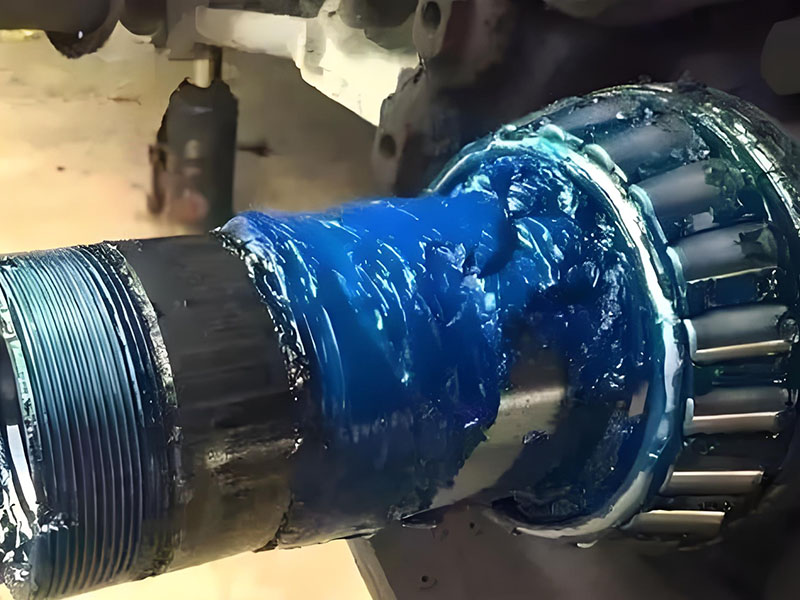
Proper lubrication is the most accessible and impactful friction control measure. Selecting the correct base oil viscosity for the operating speed and temperature ensures adequate film thickness. Determining the optimal lubricant quantity—sufficient for film formation but minimal to avoid churning—requires application-specific calculation. Establishing condition-based relubrication intervals maintains lubricant effectiveness over time.
4.4Appropriate Sealing
Selecting the correct seal type involves balancing protection against friction. Non-contact seals (shields) minimize friction but offer limited contamination protection. Contact seals provide superior exclusion but increase frictional torque. Advanced low-torque seal designs use optimized lip geometries to reduce resistance while maintaining protection.
4.5Installation and Maintenance
Proper mounting procedures prevent misalignment-induced friction. Correct preload application ensures optimal internal clearance under operating conditions. Regular condition monitoring—vibration analysis, temperature tracking, and lubricant analysis—enables early detection of friction increases before they escalate to failure.
Conclusion
Bearing friction is a complex but manageable phenomenon. By understanding its fundamental types, diagnosing root causes accurately, and implementing targeted engineering solutions, equipment reliability can be substantially improved. As a manufacturer focused on Bearing, DUHUI Bearing produces components designed to minimize friction through optimized geometry, material quality, and surface finishing.