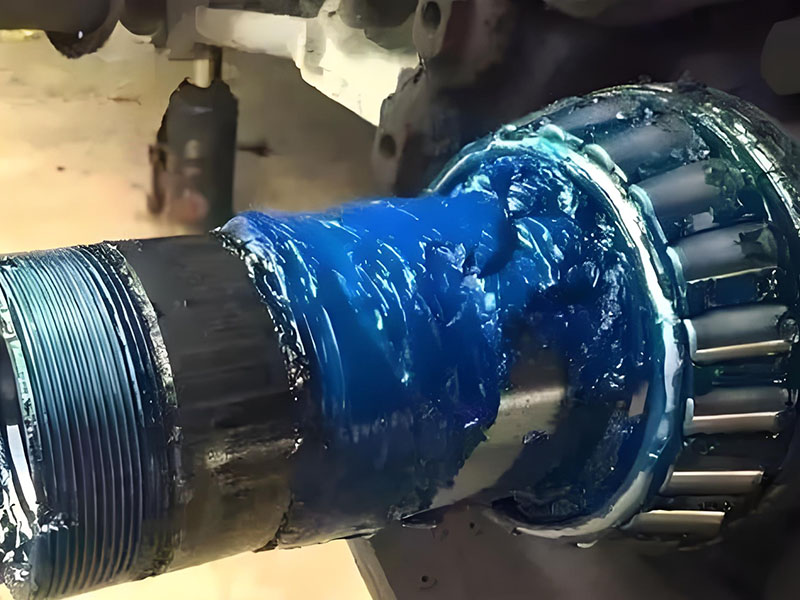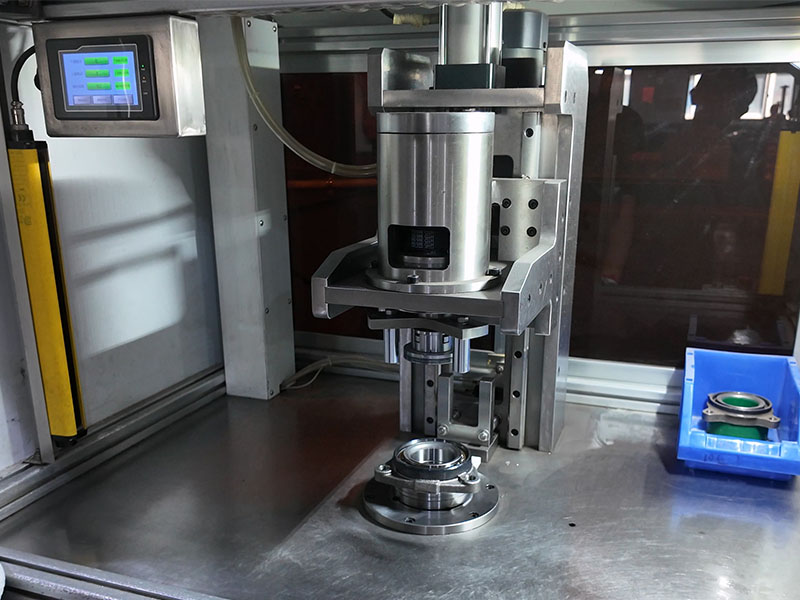
Among the vast family of bearings, the term “spherical bearing” often causes confusion because it refers to two distinct but related product categories: Spherical Plain Bearings and Spherical Roller Bearings.
Whether you are designing a heavy-duty suspension system or a high-speed gearbox, understanding the difference is crucial for machinery efficiency and longevity. As a professional manufacturer with 20 years of experience, DUHUI Bearing is here to provide a clear, authoritative guide to help you understand what spherical bearings are and how to choose the right one for your application.
1. Understanding Spherical Plain Bearings
1.1 What is a Spherical Bearing? (Definition & Design)
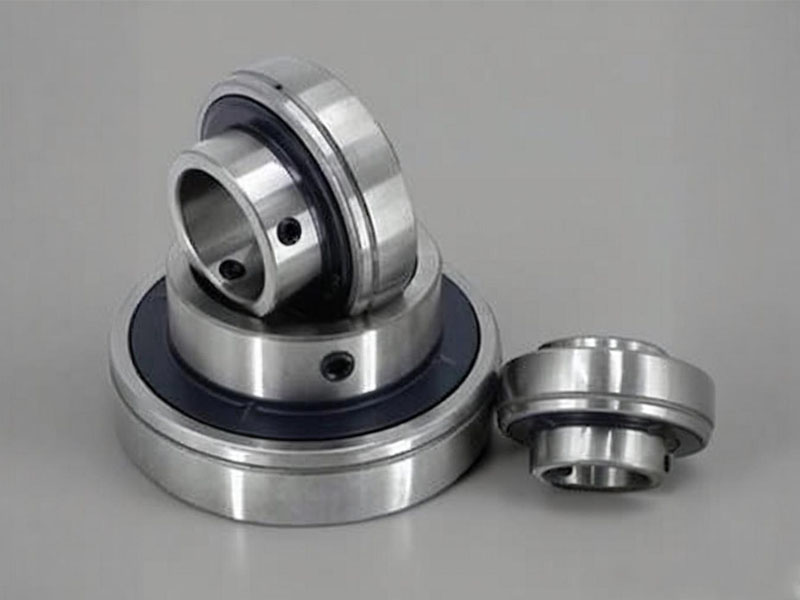
A spherical plain bearing, often referred to as a “spherical bearing” in its most basic form, is a bearing that permits angular rotation about a central point in two directions.
- Design & Components: It typically consists of an inner ring with a convex spherical outside surface and an outer ring with a correspondingly concave spherical inside surface.
- Key Feature: Unlike roller bearings, spherical plain bearings operate via sliding contact. This design makes them exceptionally adept at handling oscillating movements and heavy misalignment.
1.2 Main Types of Spherical Plain Bearings
Selecting the right type depends heavily on the operating environment and maintenance capabilities:
- Metal-on-Metal: These offer high load capacity and are durable but require regular lubrication to reduce friction and wear.
- Maintenance-Free (Composite): These feature a sliding contact surface lined with materials like PTFE (polytetrafluoroethylene) or other composites. They are self-lubricating, making them ideal for applications where relubrication is difficult.
- Sealed vs. Unsealed: Sealed versions come with integrated seals to protect the sliding surfaces from dust, water, and debris, significantly extending service life in harsh environments.
1.3 Common Applications
Due to their ability to handle heavy loads and misalignment, spherical plain bearings are found in:
- Automotive and Heavy Equipment: Suspension joints, steering linkages, and hydraulic cylinder pivots.
- Industrial Machinery: Connecting rods, pumps, and conveyor systems.
- Aerospace: Control linkages and landing gear mechanisms where reliability is critical.
2. Exploring Spherical Roller Bearings
2.1 What is a Spherical Roller Bearing?
A spherical roller bearing is a type of rolling-element bearing that allows for rotation with low friction, while also accommodating angular misalignment.
- Design: It features an inner ring with two rows of raceways inclined at an angle to the bearing axis, and an outer ring with a common spherical raceway. The rolling elements are barrel-shaped (asymmetrical) rollers.
- Key Feature: The spherical shape of the outer ring’s raceway allows the inner ring and roller assembly to tilt slightly, accommodating misalignment and shaft deflections.
2.2 Types: Open vs. Sealed Spherical Roller Bearings
- Open Bearings: Typically used in clean environments with a reliable lubrication system.
- Sealed Bearings: Pre-lubricated and fitted with contact or non-contact seals. They are “maintenance-free” in the sense that they keep lubrication in and contaminants out, ideal for dirty or wet conditions.
2.3 Key Advantages of Spherical Roller Bearings
Why do engineers choose spherical roller bearings?
- High Load Capacity: They are designed to withstand extremely heavy radial loads and significant axial loads in either direction.
- Angular Misalignment Tolerance: They can compensate for shaft deflection and mounting errors without increasing stress on the bearing.
- Speed Capability: Unlike plain bearings, the rolling elements allow for moderate to high-speed operation.
- Reduced Noise and Vibration: Precision manufacturing ensures smoother operation, which lowers the overall noise and vibration levels of the machinery.
2.4 Industry Applications
Spherical roller bearings are the workhorses of heavy industry:
- Mining & Construction: Vibrating screens, crushers, and excavators.
- Power Generation: Wind turbines and marine propulsion systems.
- Industrial Drives: Gearboxes, pumps, and large fans.
3. Spherical Plain Bearings vs. Spherical Roller Bearings: Key Differences
To help you visualize the choice, here is a comparison based on technical features:
| Feature | Spherical Bearings (Plain) | Spherical Roller Bearings |
| Design | Sliding contact surface (inner to outer ring). | Rolling elements (rollers) between rings. |
| Motion Type | Best for oscillating, tilting, and aligning movements. | Best for continuous high-speed rotation. |
| Load Capacity | Excellent for radial static and dynamic loads. | Superior for combined high radial and axial loads. |
| Misalignment | Excellent (can handle very high degrees). | Good (moderate misalignment capacity). |
| Speed | Low speed, suitable for swiveling. | Moderate to High speed. |
| Lubrication | Often requires grease fittings or is maintenance-free (with liner). | Requires oil or grease for roller-raceway contact. |
| Typical Use | Hydraulic cylinders, rod ends, suspension joints. | Gearboxes, wind turbines, heavy industrial motors. |
4. How to Choose the Right Spherical Bearing for Your Machinery
Choosing incorrectly can lead to premature failure and costly downtime. Ask yourself these questions:
- Speed: Does the part rotate continuously (use Roller) or just oscillate/pivot (use Plain)?
- Load: Is the load purely radial, or is there a heavy axial component? (Roller bearings handle combined loads better).
- Environment: Is it a dirty environment? If so, look for sealed options in either category to protect the internal components.
5. Why Choose DUHUI Bearing for Your Spherical Bearing Needs?
At DUHUI Bearing, we bridge the gap between manufacturing expertise and global standards.
- 20+ Years of Experience: We have been manufacturing high-quality bearings since 2003, mastering the intricacies of heat treatment, grinding, and assembly.
- 15+ Years in Export: We understand the specific requirements of international clients. From packaging to certification, we ensure your order meets global quality benchmarks.
- Comprehensive Customization: Whether you need a specific plain bearing size or a specialized sealed spherical roller bearing for heavy industry, our engineering team can provide OEM solutions tailored to your drawings.
Conclusion
Understanding the difference between a spherical plain bearing and a spherical roller bearing is the first step toward optimizing your machinery’s performance. Both are designed to handle misalignment and heavy loads, but they excel in different types of motion—oscillation versus rotation.
If you are looking for a reliable partner to supply durable, high-performance bearings for your next project, contact DUHUI Bearing today. Our team is ready to provide technical support and competitive solutions.