In the world of engine building and heavy machinery maintenance, the difference between a powerhouse that runs for decades and a catastrophic failure often comes down to a gap measured in thousandths of an inch: bearing clearance.
Whether you are a professional mechanic or a DIY enthusiast, mastering this concept is essential. In this guide, DUHUI will break down what bearing clearance is, why it matters for the “oil wedge,” and how to choose the right fit for your specific application.
1. What is Bearing Clearance?
Simply put, bearing clearance (also known as bearing crush or oil clearance) is the intentional gap between the inner surface of the bearing and the rotating journal of the crankshaft.
This space is not a design flaw; it is a vital feature that allows for the formation of a protective oil film. Bearings are typically manufactured in five distinct clearance grades to accommodate different operating conditions:
- Extra Tight
- Tight
- Standard (Most common for general use)
- Loose
- Extra Loose
2. The Science: Why Clearance Matters
To understand why we need different clearances, we must look at the physics inside the engine.
2.1 The Magic of the Oil Wedge
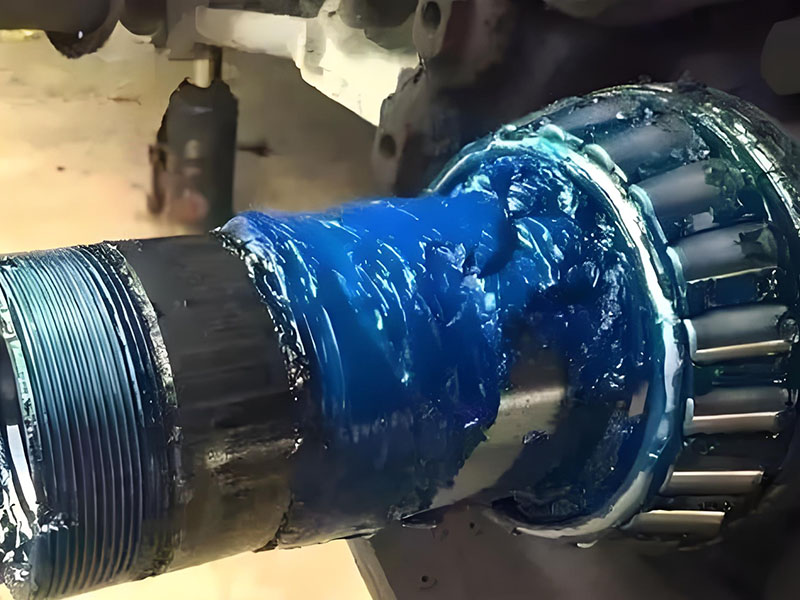
When the engine runs, the crankshaft does not sit perfectly centered in the bearing. It rides slightly off-center on a wedge of pressurized oil. This “oil wedge” is the heart of engine lubrication. It prevents metal-to-metal contact, absorbs shock loads, and cools the bearing surfaces. The size of the bearing clearance directly dictates the shape and strength of this oil wedge.
2.2 Challenges in Maintaining the Oil Wedge
Maintaining this wedge is difficult due to two main factors:
- Overheating: Excessive heat thins the oil. If the clearance is too tight, the thinning oil cannot stay in the gap, causing the metals to touch.
- Manufacturing Errors: Imperfections in machining or improper bearing seating can crush the oil wedge, leading to immediate failure.
2.3 The Balancing Act: Performance vs. Protection
The ideal clearance is a balancing act. You want a wedge thick enough to protect the engine (reducing wear) but not so thick that it leaks excessive oil, which lowers oil pressure and robs the engine of horsepower. An improper gap—whether too tight or too loose—compromises both performance and the engine’s lifespan.
3. Interpreting Tolerance: The Tight vs. Loose Debate
Experienced engine builders know that one size does not fit all. The choice depends on how you use the machine.
3.1 The Logic Behind the Numbers
Tighter Clearances: These reduce oil leakage, maintaining higher oil pressure at low RPMs. This is ideal for daily drivers and street engines. However, if the gap is too tight for the engine’s heat level, it can scuff the bearings and seize the rotating assembly.
Looser Clearances: These allow more oil to flow, which helps cool the bearings in high-stress environments. They reduce friction slightly, allowing the engine to rev freely. This is common in racing applications, but the trade-off is lower oil pressure at idle.
3.2 Clearance Comparison at a Glance
| Aspect | Looser Clearances | Tighter Clearances |
| Primary Advantage | Better cooling, reduced friction at high RPM | Stable oil pressure, better for daily driving |
| Friction | Reduced, leading to smoother operation | Increased due to closer contact |
| Oil Temperature | Tends to be lower due to increased oil flow | May be higher due to increased friction |
| Load Distribution | Can be uneven under extreme shock | More uniform, protecting bearing surfaces |
| Oil Pressure | Potentially reduced, especially at lower speeds | Typically stable and efficient |
| Disadvantage | Lower idle pressure, potential for noise | Risk of overheating and seizure |
4. Clearance and Oil Pressure: The Direct Link
There is a common myth that “higher oil pressure is always better.” In reality, flow is what lubricates, pressure is just a measure of resistance to that flow.
- The Interaction: If your clearance is too loose, oil escapes from the gap too easily. The pump cannot maintain high pressure because the oil is flowing out too fast.
- The Role of Oil Viscosity: Thicker oil (higher viscosity) can help fill a looser gap, maintaining pressure. Conversely, using thick oil in a tight-clearance engine can starve the bearings because the oil is too thick to squeeze into the gap quickly enough.
5. Practical Rules from 20 Years of Experience
At DUHUI, we believe in precision. Here are our golden rules for getting it right:
Always Follow the Manual: The manufacturer’s specified clearance is the baseline. It accounts for the materials and typical operating temperatures of that specific engine.
Match the Intended Use:
- Street/Stock: Stick to Standard clearance for quiet operation and long life.
- High-Mileage: A slight increase in clearance may compensate for worn components, but always measure first.
- Racing/Heavy Load: Consider a Loose clearance to ensure a high volume of oil cools the bearings.
Measure, Don’t Guess: Never assume the clearance is correct. Use a bore gauge and micrometer to verify. A clean, burr-free housing is just as important as the bearing itself.
Conclusion & Your Next Step
Understanding bearing clearance is the hallmark of a professional. It transforms engine building from guesswork into precision engineering.
At DUHUI Bearing, we don’t just manufacture bearings; we engineer trust. With 20 years of manufacturing and 15 years of export experience, every bearing we produce meets stringent ISO standards to ensure consistent tolerances that you can rely on.