Choosing the correct bearing is a critical decision that directly impacts the performance, efficiency, and lifespan of your machinery. Two of the most common categories are ball bearings and roller bearings. While they may look similar, their design differences lead to vastly different capabilities. DUHUI will walk you through the key distinctions, helping you make an informed and cost-effective decision for your specific application.
1. What Are Ball Bearings?
1.1 Definition and Working Principle
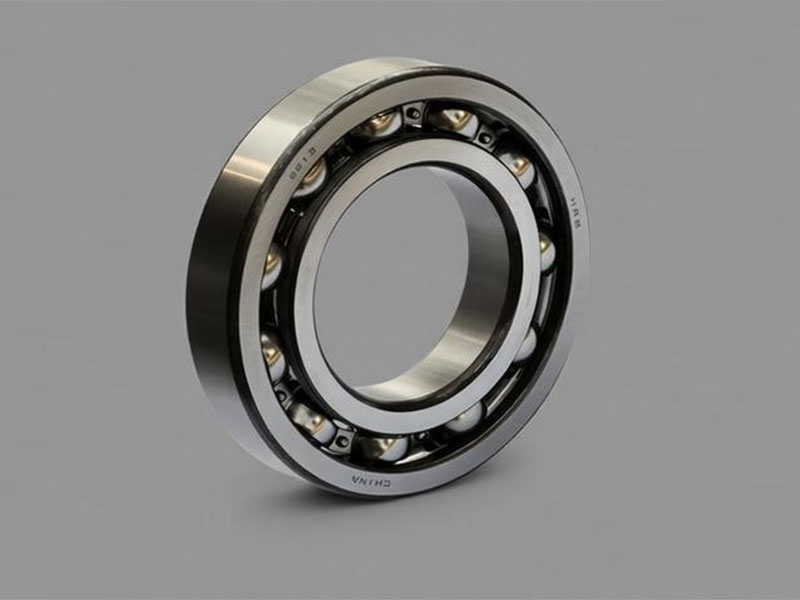
Ball bearings are a type of rolling-element bearing that uses spherical balls as the rolling elements. They are designed to reduce rotational friction and support both radial and axial loads. The principle is simple: balls roll between two smooth rings, allowing for smooth, low-friction motion.
1.2 Key Components
- Inner Ring: The smaller ring that mounts onto the rotating shaft.
- Outer Ring: The larger ring that fits into the housing.
- Balls: The spherical elements that carry the load and facilitate rolling motion.
- Cage: A separator that keeps the balls evenly spaced, preventing them from contacting each other and reducing friction.
1.3 Common Types
- Deep Groove Ball Bearings: The most versatile and widely used type, suitable for high speeds and moderate radial and axial loads.
- Angular Contact Ball Bearings: Designed to accommodate combined loads (radial and axial) and are often used in pairs.
- Self-Aligning Ball Bearings: Can tolerate minor misalignment between the shaft and housing.
- Thrust Ball Bearings: Specifically designed for high axial loads in one direction.
- Miniature & Flanged Ball Bearings: Used in compact applications like instruments and small motors.
- Thin Section Ball Bearings: Offer a space-saving solution where shaft diameter is large relative to the housing.
At DUHUI, we have extensive experience manufacturing a wide range of standard and custom ball bearings to meet diverse industrial needs.
2. What Are Roller Bearings?
2.1 Definition and Working Principle
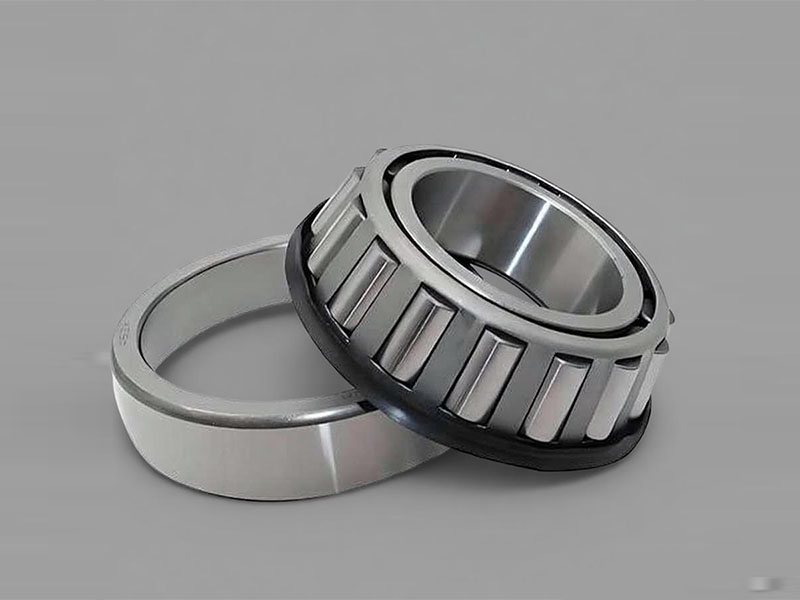
Roller bearings also reduce friction and support loads, but they use cylindrical, tapered, or spherical rollers instead of balls. This design replaces point contact (in ball bearings) with line contact, significantly increasing the bearing’s load-carrying capacity.
2.2 Key Components
Similar to ball bearings, they consist of an inner ring, outer ring, cage, and the rolling elements—in this case, rollers of various shapes.
2.3 Common Types
- Cylindrical Roller Bearings: Offer high radial load capacity and are suitable for high speeds.
- Tapered Roller Bearings: Can support high combined radial and axial loads. Commonly found in vehicle hubs.
- Spherical Roller Bearings: Designed for very heavy radial and axial loads and can automatically compensate for significant shaft misalignment.
- Thrust Spherical Roller Bearings: Specifically for very high axial loads and shock loads in heavy machinery.
- Needle Rollers Bearings: Use long, thin rollers to provide high load capacity in a very compact radial space.
- Crossed Roller Bearings: Can handle loads from all directions with high rigidity, ideal for robotics and precision indexing tables.
Our decades of experience, particularly in heavy-duty applications, have made DUHUI a trusted partner for high-quality roller bearings.
3. Ball Bearings vs Roller Bearings: Core Differences
The fundamental difference lies in the contact type: ball bearings have point contact, while roller bearings have line contact.
| Feature | Ball Bearings (Point Contact) | Roller Bearings (Line Contact) |
| Load | Best for light to moderate loads. Excellent for high-speed, low-friction applications. | Superior for heavy radial and/or axial loads. Can withstand shock loads. |
| Friction & Speed | Lower friction, which allows for very high-speed operation and less heat generation. | Higher friction, which typically limits maximum speed but provides greater stability under load. |
| Misalignment | Certain types (e.g., self-aligning) can handle misalignment. Standard types are sensitive. | Spherical roller bearings are excellent for misalignment. Other types are generally less tolerant. |
| Cost | Generally more cost-effective for standard applications due to simpler manufacturing. | Often more expensive due to complex design and materials, but essential for heavy-duty tasks. |
4. Advantages and Disadvantages
4.1 Ball Bearings
Pros:
- Low Friction: Ideal for applications requiring high speed and low energy consumption.
- Reduced Heat: Less friction means less heat buildup and wear.
- Compact Design: Suitable for applications with limited space.
- Versatile: Can handle both radial and axial loads in many designs.
Cons:
- Limited Load Capacity: The point contact can lead to deformation under excessive heavy loads.
- Fragility: Balls can be more susceptible to damage from impact or heavy loads.
4.2 Roller Bearings
Pros:
- High Load Capacity: The line contact area distributes stress efficiently, allowing them to carry immense loads.
- Robustness: Better able to withstand shock and vibration.
- Design Variety: Specialized types (tapered, spherical) exist for almost any heavy-load scenario.
Cons:
- Higher Friction: Generates more heat, which may require advanced lubrication and cooling.
- Larger & Heavier: Generally require more space and add weight to the assembly.
- Speed Limitations: Not suitable for the highest speed applications.
5. Typical Applications
5.1 Where Ball Bearings Excel
- Electric Motors and Generators: Their low friction is perfect for high-speed rotation.
- Automotive Components: Alternators, water pumps, and gearboxes rely on them.
- Power Tools and Household Appliances: Where compact size and moderate loads are common.
- High-Speed Machinery: Such as spindles in machine tools and assembly lines.
- Aerospace Components: In instruments and control systems where precision and low weight are critical.
5.2 Where Roller Bearings Dominate
- Heavy Industrial Machinery: Cranes, excavators, mining equipment, and rolling mills.
- Construction and Agriculture: Vehicles and equipment that face heavy loads and harsh conditions.
- Wind Turbines: Spherical roller bearings are commonly used in the main shaft to handle heavy, fluctuating loads.
- Gearboxes and Industrial Conveyors: Where high radial loads are present.
- Railroad Axles: Tapered or cylindrical roller bearings support the massive weight of trains.
6. How to Choose: A Practical Guide for Engineers and Buyers
To make the right choice, follow this step-by-step guide:
- Step 1: Analyze Your Load. Is it light or heavy? Is it purely radial (perpendicular to the shaft), purely axial (along the shaft), or a combination? For heavy combined loads, a tapered roller bearing is often the answer. For light, purely radial loads, a deep groove ball bearing might suffice.
- Step 2: Determine Speed Requirements. Does your application require extremely high RPMs? If so, a ball bearing is likely your only option. For moderate speeds with heavy loads, a roller bearing is the better choice.
- Step 3: Consider Operating Conditions. Is there potential for shaft misalignment? Look at self-aligning ball or spherical roller bearings. Is the environment dirty or prone to vibration? Roller bearings offer more robustness.
- Step 4: Evaluate Space Constraints. If radial space is extremely tight, a needle roller bearing is a great solution. If axial space is limited, a thin-section ball bearing might be ideal.
- Step 5: Balance Performance and Cost. While roller bearings may have a higher upfront cost, they are the only reliable choice for heavy-load applications. Choosing a ball bearing to save money in such a scenario would lead to premature failure and higher long-term costs.
7. Conclusion and Expert Recommendation
In summary, the choice between ball and roller bearings is a fundamental engineering decision driven by your application’s specific demands. Ball bearings are the champions of speed and low friction, while roller bearings are the workhorses built to withstand heavy loads and harsh conditions.
With two decades of manufacturing expertise, DUHUI Bearing is more than just a supplier; we are your engineering partner. Our experienced team is ready to assist you in analyzing your requirements and recommending the most reliable and cost-effective bearing solution.