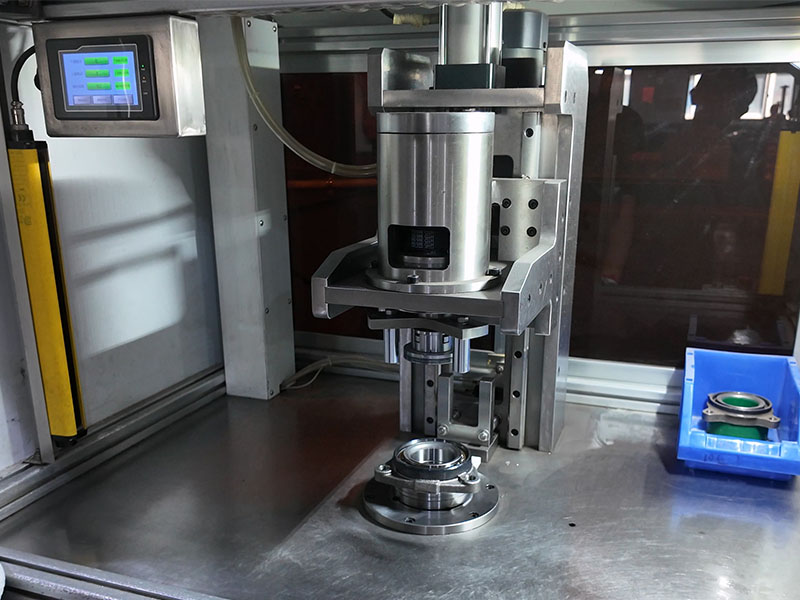
The wheel hub bearing is an important part in a vehicle. The function of the wheel hub bearing is to reduce the friction resistance and to ensure the normal drive of the vehicle. When the wheel hub bearing is defective, this can result in noise and heating of the bearing. It is most pronounced in the front wheels and can easily result in dangerous circumstances such as loss of steering control. This is why the wheel hub bearings should be serviced on a regular basis.
Inspection of wheel hub bearings
(1) When checking the tightness of the wheel hub bearing, first jack up the axle of the wheel on the end of the car being inspected. Use tools like jack stands and wheel chocks to securely support the vehicle.
(2) Rotate the wheel to be inspected several times by hand to observe whether the rotation is smooth and whether the sound is right.
If the rotation is not smooth and the sound is not right, it means the braking parts are damaged. If there is no unusual noise during rotation, but the rotation is uneven, sometimes tight and sometimes loose, it indicates a problem with the bearing assembly.
If you notice any of the above abnormal phenomena, you should disassemble the wheel hub for inspection.
For small cars, when inspecting the wheel hub bearing, grip the top and bottom of the tire with both hands and rock the tire back and forth repeatedly. If normal, there should be no feeling of looseness or obstruction. If there is an obvious feeling of looseness when rocking, the hub should be disassembled for inspection.
(3) Brake inspection. Usually, when inspecting the wheel hub bearing, the wheel braking device is also checked. If there are oil traces on the inner side of the tire, it is likely caused by leakage from the brake wheel cylinder or brake fluid pipe. The cause should be promptly identified and eliminated.
Maintenance of wheel hub bearings
Before disassembling the hub, preparations for hub maintenance should be made. Park the vehicle securely and jack up the axle to ensure safety during maintenance.
(1) Remove the decorative cap and dust cover from the hub spindle end.
(2) Remove the tire nuts and the tire. Be careful not to damage the threads of the tire bolts. For disc brakes, remove the brake caliper, then use pliers to remove the lock ring or lock pin.
(3) Use special tools to remove the hub.
(4) Scrape off the old grease from the bearing, spindle journal, and inside the hub cavity. Clean the wheel hub bearing and spindle journal with cleaner and wipe dry with a cloth. Finally, wipe the inside of the hub cavity clean with a cloth.
(5) Inspect the wheel hub bearing and bearing race. If cracks, fatigue spalling, or loose bearing rollers are found, replace the bearing. If pitting is found on the bearing race, replace the bearing as well.
(6) Check the fit between the bearing inner diameter and the spindle journal. The clearance should not exceed 0.10mm. When measuring the spindle journal, measure at two locations: top and bottom (vertical to the ground), as these are the areas of maximum wear. If the clearance exceeds the specified service limit, replace the bearing to restore the normal fit clearance. Do not attempt to reduce the clearance by creating burrs or pits on the spindle journal.
(7) After all parts meet the requirements, apply grease to the inner bearing and place it into the hub.
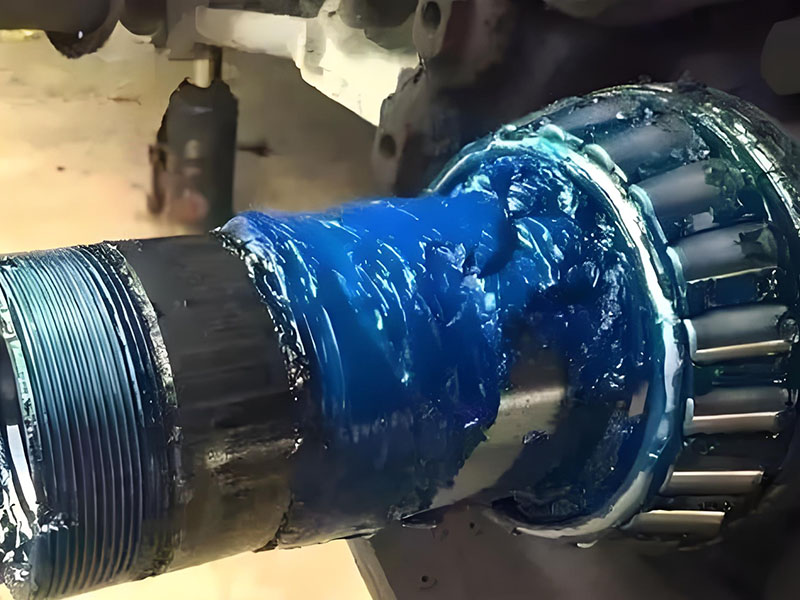
(8) When applying grease to the bearing inner cavity, note that grease should be forced into the bearing until it emerges from the other side. Apply a thin layer of grease inside the hub cavity and on the spindle end cover to serve as an anti-rust measure. Note: Do not apply too much grease inside the hub cavity, as this can affect heat dissipation and braking.
(9) Install the hub and outer bearing back onto the spindle journal. Hand-tighten the spindle adjusting nut, then use a spindle wrench to tighten the adjusting nut to the specified torque. After tightening the nut, rotate the hub left and right several times to check the bearing installation. On the other hand, this rotation helps the bearing seat correctly with the race. At this point, the bearing tightness should be appropriate, allowing the wheel to rotate freely without perceptible axial play.
(10) Finally, install components such as the lock plate, fixing nut, tire, dust cover, and decorative cap in sequence.
(11) After adjusting the wheel hub bearing, drive for a certain distance (about 10 km), then stop and check. Feel the temperature of the hub by hand. If it is hot, it is caused by the bearing being adjusted too tightly. Readjust and appropriately loosen the bearing tightness.
Wheel Hub Bearing Inspection & Maintenance FAQs
What are the most obvious indications of a bad wheel hub bearing?
The key symptoms are:
A humming, rumbling, or growling sound, which intensifies with speed or changes when turning.
Excessive wheel vibration or movement when lifted and shaken.
Abnormal wear of the tires.
The warning light of the ABS should be illuminated if the bearing contains an integrated ABS sensor.
Can I continue driving with a noisy wheel bearing?
There is strong discouragement. A bearing that is on the verge of failure can become overheated, seize, or break apart, and this can result in the locking or detachment of the wheel, resulting in loss of control of the vehicle.
Are wheel bearings always replaced in pairs?
If there is a breakdown of one bearing due to aging or wear, then the other side will have the same level of stress. The performance will be similar and it will be safer to substitute in pair.
How long is the wheel hub bearing lifespan?
The wheel hub bearing lifespan depends on the road conditions and your car type and the type of bearing. Normally, these may last between 85,000 and 150,000 miles. The bearings of good manufacturers such as DUHUI Bearing, which has been producing for 20 years, are built to last longer.
Will a defective wheel bearing influence braking?
Yes, it is especially so with disc brake systems. When the bearings are quite loose, the brake disc will wobble, causing the brake pedal to pulsate and reduced the effectiveness of braking.
What are the differences between sealed (non-serviceable) and serviceable wheel hub bearings?
It is often the case that contemporary cars have already assembled and enclosed wheel hub bearing units (hub assemblies). These are fully lubricated and replaced as a single unit. In older vehicles, the bearings are serviceable, and the rollers/races may be washed, re-greased, and adjusted. This is specified in the manual of your vehicle.
How to determine the tightness of wheel bearing nut?
To determine how tight the wheel bearing nut should be, make sure to tighten the nut according to the torque settings specified by the vehicle manufacturer. When you tighten the nut too much, the bearing will become too hot and experience an early failure. The nut when loose creates excessive movement in the nut. To achieve the smallest first force without movement in the shaft, the last step is normally to tune.
Can I replace by myself?
If you are a skilled DIYer, have the appropriate equipment (such as a torque wrench, bearing puller and press) and safety equipment, you can do it. However, most people opt for professional service due to the crucial safety role and exact installation needs.
What are the criteria of a good replacement wheel hub bearing?
The bearing should possess the Original Equipment (OE) standards. The substance should be stainless steel of high quality and properly manufactured. They should seal properly in order to block dirt and seal grease. The brand should be a trusted one. Bear in mind that DUHUI Bearing has a precision of over 20 years in production precision and more than 15 years of worldwide exports.