Selecting the correct bearing for your machinery is a critical decision that impacts performance, reliability, and operational costs. At the heart of this decision lies a fundamental concept: understanding the loads your bearing will face. Confusing a static load with a dynamic load is a common pitfall that can lead to premature failure and costly downtime.
We‘ve guided countless clients through this precise selection process. This guide is designed to demystify static and dynamic loads, explain their importance, and equip you with the knowledge to choose the right bearing for your specific application.
1. Understanding Bearing Loads: The Fundamentals
1.1 What is Static Load?
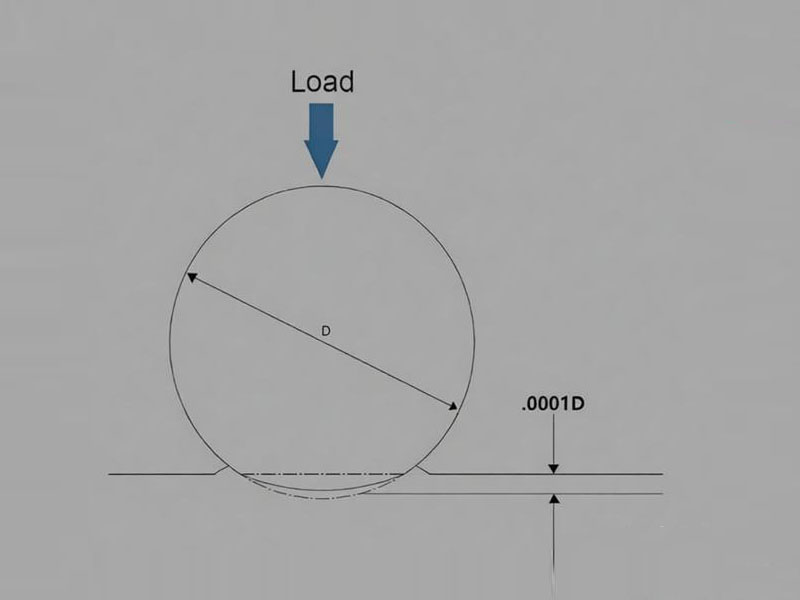
A static load is a force applied to a bearing when it is not rotating, or when it rotates very slowly (oscillating motion). The key concern here is not fatigue over time, but permanent deformation.
The Static Load Rating (C0) , defined by ISO standards, represents the maximum load a stationary bearing can endure without causing permanent deformation to the rolling elements or raceways that would impair its smooth operation. Think of it as the bearing’s “one-time strength.”
- Example: Imagine pressing a 608 metric ball bearing into a housing. The force required for a tight fit is a static load.
- Typical Applications: Structural supports, clamping mechanisms, fixturing in machine tools, and the non-rotating joints of construction equipment.
1.2 What is Dynamic Load?
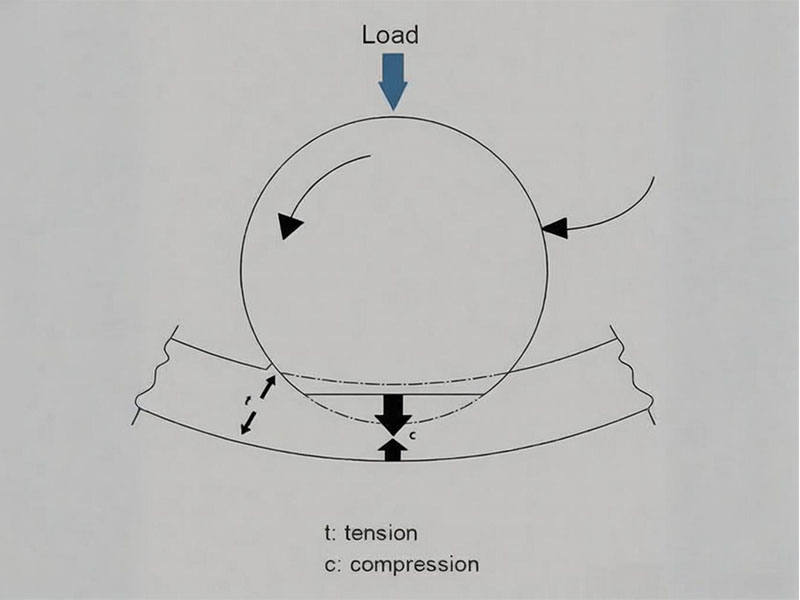
A dynamic load is a force applied to a bearing while it is rotating. This is the most common condition for bearings in machinery. The repeated stress cycles eventually lead to material fatigue.
The Dynamic Load Rating (C) is the constant, stationary load a group of ostensibly identical bearings can theoretically endure for a rating life of one million revolutions. It is a measure of the bearing’s fatigue resistance over time.
Typical Applications: Automotive wheel hubs, electric motor rotors, gearbox shafts, conveyor rollers, and industrial pumps.
2. Why Load Ratings Matter: The Impact on Bearing Life and Performance
Misjudging the load type and magnitude is a primary cause of bearing failure. Choosing a bearing with insufficient dynamic load capacity (C) will lead to premature fatigue, spalling (flaking of material), and increased vibration. Conversely, selecting a bearing with an unnecessarily high static load capacity (C0) can add cost, weight, and bulk to your design without providing any tangible benefit. A precise understanding of your application’s loads is the first step toward ensuring optimal reliability and efficiency.
3. Key Differences: Static Load Rating (C0) vs. Dynamic Load Rating (C)
While both ratings are about strength, they address different failure modes.
- Static Load Rating (C0) is about preventing permanent deformation. It’s based on the maximum contact stress at the rolling element-raceway contact point. Exceeding C0 can create “brinelling” (indentations) that cause noise and vibration later.
- Dynamic Load Rating (C) is about resisting material fatigue. It’s the basis for calculating the bearing’s L10 life—the number of revolutions or hours that 90% of a bearing group will complete or exceed before the first signs of fatigue.
3.1 Measuring Static vs. Dynamic Capacity
- Static Capacity is determined by the material’s yield strength and the geometry of the contact surfaces.
- Dynamic Capacity is more complex. It is rooted in the Lundberg-Palmgren life theory, which established the relationship between stress cycles and the probability of fatigue failure. Today, while the theory provides the foundation, engineers rely on sophisticated calculation tools to apply it accurately. At DUHUI Bearing, our experienced engineers utilize advanced software to perform precise life calculations for our clients, ensuring their chosen bearing matches the application’s exact demands.
3.2 Why is Static Rating (C0) Often Higher Than Dynamic Rating (C)?
This is a common point of confusion. The reason is simple physics: it takes a much larger force to damage a material in a single event (static) than it does to cause it to fail from repeated stress cycles over millions of events (dynamic). Think of bending a paperclip: you can bend it once without issue, but bending it back and forth many times will cause it to break.
4. Critical Factors Influencing Bearing Load Capacity
The published load ratings (C and C0) are theoretical values based on ideal conditions. In the real world, several factors will influence a bearing’s effective load capacity.
1.Material Quality and Heat Treatment: High-quality, clean bearing steel and optimized heat treatment processes are fundamental. They provide the core strength and microstructure needed to resist both deformation and fatigue. DUHUI Bearing is committed to sourcing premium materials to ensure our products deliver their rated performance.
2.Lubrication: A proper lubricant film separates the rolling elements from the raceways, significantly enhancing dynamic load capacity. Poor or incorrect lubrication is a leading cause of premature failure.
3.Operating Conditions: High temperatures can soften bearing materials, reducing hardness and load capacity. Contamination from dust or water acts as an abrasive, rapidly wearing down surfaces.
4. Raceway Protection and Sealing: Effective seals are the first line of defense. They keep lubrication in and contaminants out, preserving the integrity of the raceways and ensuring the bearing achieves its calculated fatigue life.
5.Installation and Alignment Accuracy: Misalignment, even by a fraction of a degree, concentrates load on a smaller area, creating edge stresses that far exceed the material’s capacity and drastically shorten bearing life.
6.Bearing Type and Load Direction: Bearings are designed to handle different load directions.
- Deep Groove Ball Bearings are ideal for radial loads and moderate axial loads.
- Angular Contact Ball Bearings are designed to handle combined radial and high axial loads.
- Tapered Roller Bearings excel at supporting heavy combined loads, making them the standard for automotive hubs.
5. A Practical Guide to Selecting Bearings Based on Loads
Here is a simple process to guide your selection:
1.Characterize the Load: Is your bearing primarily stationary (static) or rotating (dynamic)? This tells you which rating (C0 or C) is your primary concern.
2.Determine Load Magnitude and Direction:
- Calculate the forces: What is the weight supported? Are there external forces like belt tension or gear meshing?
- Identify the direction: Is the load purely radial (perpendicular to the shaft), purely axial (parallel to the shaft), or a combination of both?
3.Match Bearing Type to Load: Use the ratio of axial to radial load to narrow down your options (e.g., deep groove ball, angular contact, or roller bearing).
4.Apply Safety Factors: For applications with shock loads or uncertain operating conditions, it’s wise to select a bearing with a rated capacity exceeding your calculated loads.
5.Consult with Experts: Load calculation and bearing selection can be complex. With 15 years of experience serving global clients, the engineers at DUHUI Bearing understand the diverse demands of various industries. We can help you validate your calculations and select the optimal, most cost-effective bearing for your specific machinery.
6. Conclusion
Understanding the distinction between static and dynamic loads is more than an academic exercise; it is the cornerstone of reliable machine design. By correctly interpreting the static load rating (C0) and dynamic load rating (C), and by considering the real-world factors that influence them, you can make informed decisions that enhance performance and reduce downtime.When you need a partner who understands the load, contact DUHUI Bearing.
Frequently Asked Questions (FAQs)
What is the difference between static and dynamic load in a bearing?
A static load acts on a non-rotating bearing, and its rating (C0) indicates resistance to permanent deformation. A dynamic load acts on a rotating bearing, and its rating (C) indicates resistance to material fatigue over its operational life.
Why is the static load rating (C0) often higher than the dynamic load rating (C)?
It takes a greater force to cause immediate, permanent damage in a single event (static) than it does to cause failure from millions of repeated stress cycles (dynamic). The static rating reflects this higher one-time strength.
How do I calculate the static and dynamic load capacities for my application?
You do not calculate the bearing’s ratings (C and C0); these are provided by the manufacturer (e.g., in the DUHUI Bearing catalog). Your job is to calculate the applied loads in your application and ensure they are less than the bearing’s rated capacities, applying appropriate safety factors. For complex applications, engineering calculation tools are recommended.
How do static and dynamic loads affect bearing service life?
Exceeding the static load rating (C0) can instantly damage the bearing, leading to immediate failure or noisy operation. Exceeding the effective dynamic load capacity will dramatically shorten the bearing’s calculated fatigue life (L10), leading to premature spalling and failure.
What happens if I exceed a bearing’s static load capacity?
Exceeding the static load rating (C0) can cause permanent indentations in the raceways, known as brinelling. This results in noisy operation, increased vibration, and ultimately, premature bearing failure once rotation begins.