Selecting the right bearing for an industrial application is often more complex than it appears. With dozens of bearing types, materials, and performance specifications to consider, many engineers and procurement professionals find themselves asking: What bearing type best suits my operating conditions? How do I balance load capacity, speed, and environmental factors? This guide provides a comprehensive overview of industrial bearings—covering types, selection criteria, materials, and maintenance practices—to help you make informed, application-driven decisions.
What Are Industrial Bearings and Why Do They Matter
Industrial bearings are mechanical components designed to enable rotational or linear motion while reducing friction and supporting applied loads. They are fundamental to the operation of equipment across virtually every industry—automotive, aerospace, manufacturing, mining, power generation, food processing, and renewable energy systems, among others.
Bearings serve three primary functions in industrial machinery:
- Motion Control – Bearings constrain relative motion between moving parts to desired directions, ensuring predictable and stable operation.
- Reduced Friction – By incorporating rolling elements or low-friction surfaces, bearings minimize resistance between moving components, improving energy efficiency and reducing heat generation.
- Support Heavy Loads – Bearings transmit and distribute loads from rotating or moving shafts to stationary structures, preventing deformation and premature wear.
Types of Industrial Bearings
The selection of an appropriate bearing type begins with understanding the fundamental classification of rolling-element bearings, which can be broadly divided into ball and roller bearings.
Ball Bearings
Ball bearings use spherical rolling elements to create point contact between the balls and raceways. This design results in exceptionally low friction, making ball bearings well-suited for high-speed applications.
- Advantages: Low coefficient of friction enables high rotational speeds; relatively simple and compact design; capable of handling both radial and axial loads.
- Suitable Applications: Electric motors and pumps; precision machinery and machine tools; conveyor systems; household appliances and automotive components.
Roller Bearings
Roller bearings employ cylindrical, tapered, or spherical rolling elements that create line contact with raceways. This line contact distributes loads over a larger area than point contact, providing significantly higher load-carrying capacity.
Key subtypes include:
- Cylindrical Roller Bearings – Designed for high radial load capacity and moderate axial loads, commonly used in gearboxes and industrial transmissions.
- Tapered Roller Bearings – Feature tapered rollers and raceways capable of supporting combined radial and axial loads in one direction, widely used in automotive wheel hubs and heavy machinery.
- Spherical Roller Bearings – Self-aligning design accommodates shaft misalignment while handling heavy radial loads and moderate axial loads, suitable for crushers, vibrating screens, and wind turbines.
- Advantages: High load-carrying capacity for heavy-duty applications; robust design suitable for demanding operating conditions.
- Suitable Applications: Heavy machinery and mining equipment; automotive transmissions and axle systems; paper mills and rolling mills.
Linear Bearings
Linear bearings are designed for applications requiring smooth, precise linear motion along a straight path, rather than rotational movement.
- Advantages: Smooth and precise linear motion; low maintenance requirements; compact and lightweight construction.
- Suitable Applications: CNC machining centers; 3D printers and automated assembly lines; packaging and material handling systems.
Thrust Bearings
Thrust bearings are specifically engineered to support axial loads—loads applied parallel to the shaft axis. They are available in both ball and roller configurations.
- Advantages: Extremely low friction and smooth axial operation; high axial load capacity (roller thrust types); suitable for vertical shaft arrangements.
- Suitable Applications: Vertical shafts and screw conveyors; elevator systems; heavy-duty presses and marine propulsion systems.
How to Select the Right Industrial Bearing
Selecting the appropriate bearing requires a systematic, multi-objective decision process that considers application requirements including load characteristics, rotational speed, operating temperature, lubrication, environmental conditions, and spatial constraints. The following factors should be evaluated:
Load Capacity
Determine whether the primary loads are radial (perpendicular to the shaft axis), axial (parallel to the shaft axis), or a combination of both. For combined loads, tapered roller bearings or angular contact ball bearings are typically suitable. Both static load (C₀) and dynamic load (C) ratings must be considered. The static load rating governs deformation risk during startup, shutdown, or shock loading conditions, while the dynamic load rating determines fatigue life under continuous rotation.
Speed Rating
Operating speed directly affects bearing life, heat generation, and lubrication requirements. Higher speeds increase friction and heat, potentially degrading lubricant and accelerating wear. Ball bearings generally support higher speeds than roller bearings of comparable size. For high-speed applications, bearing design, material selection, and lubrication become critical. Precise manufacturing techniques and low-friction materials help minimize heat generation and maintain operational stability.
Environmental Factors
Operating conditions such as temperature extremes, moisture, dust, chemical exposure, and contamination significantly influence bearing selection. Sealed or shielded bearings provide protection against contaminants, while stainless steel, ceramic, or polymer materials offer corrosion resistance in harsh environments.
- High-temperature environments (>150°C) require specialized heat-treated steel, ceramic, or high-performance polymer bearings with suitable lubricants.
- Corrosive environments demand stainless steel or ceramic bearings to prevent oxidation and premature failure.
- Contaminated environments (dust, debris, washdown) require effective sealing solutions to prevent abrasive damage.
Lubrication Requirements
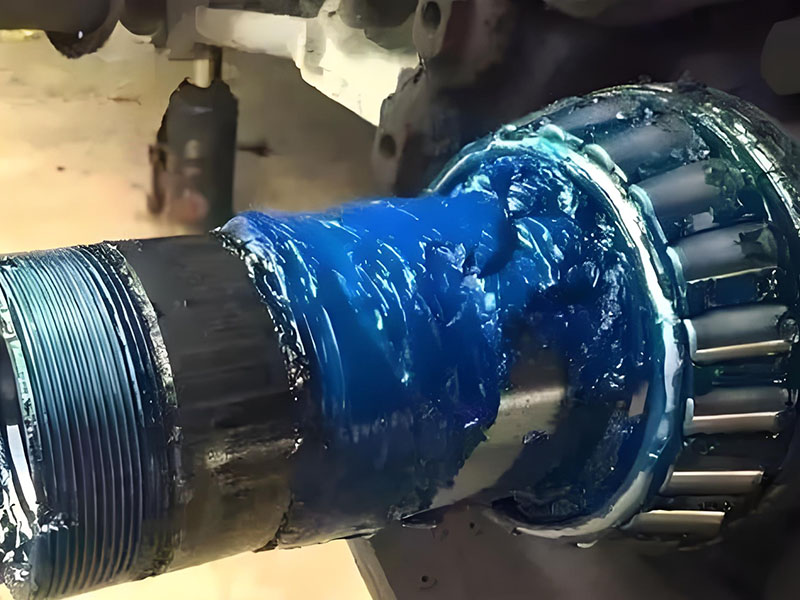
Lubrication is essential for reducing friction, dissipating heat, protecting against corrosion, and preventing contamination ingress. The three primary lubricant types are grease, oil, and solid/dry film lubricants. Grease is the preferred choice for most general-duty applications due to its ease of application and retention. Oil circulation systems are used for high-speed or high-temperature operations requiring continuous lubricant replenishment. The selection of lubricant type, viscosity, and relubrication intervals must align with bearing size, speed, operating temperature, and load conditions.
Mounting and Fitting Considerations
Proper mounting and fitting are essential to achieving design performance and service life. Generally, a light interference fit is recommended between the bearing and the rotating ring (shaft or housing), while a slight clearance is recommended for the stationary ring. Incorrect fit selection can result in excessive stress concentration, ring cracking, or circumferential slippage leading to rapid wear.
Understanding Bearing Performance Ratings
Professional bearing selection requires understanding standardized performance metrics.
- Basic Dynamic Load Rating (C) – The constant radial load that 90% of an identical bearing group can endure for 1 million revolutions before fatigue appears.
- Basic Static Load Rating (C₀) – The load that causes permanent deformation of rolling elements and raceways at rest.
- L10 Basic Rating Life – The calculated fatigue life with 90% statistical reliability under specified operating conditions.
For ball bearings: L10 = (C / P)³ (millions of revolutions)
For roller bearings: L10 = (C / P)^(10/3) (millions of revolutions)
These formulas assume clean lubrication, proper alignment, and normal operating conditions. P represents the equivalent dynamic load.
These ratings assume proper mounting, alignment, lubrication, and contamination control. Real-world operating conditions may require adjustment factors for temperature, contamination, and required reliability levels. ISO 281:2007 provides the standardized basis for L10 life calculation.
Materials Used in Industrial Bearings
The choice of bearing material directly impacts performance, longevity, and cost. The table below summarizes the most commonly used materials.
Material TypeKey PropertiesCommon ApplicationsSteel Bearings (Chrome steel SAE52100)High hardness, wear resistance, fatigue strength, affordable; susceptible to corrosionGeneral industrial machinery, gearboxes, electric motorsStainless Steel Bearings (440C, 316)Excellent corrosion resistance, slightly lower hardness than chrome steelMedical equipment, food processing, marine, laboratory instrumentsCeramic Bearings (Silicon nitride, zirconia)Substantially lighter, harder, and stiffer; corrosion resistant; electrically insulating; higher cost, lower load capacityHigh-speed electric motors, aerospace components, laboratory equipmentPlastic (Polymer) Bearings (PEEK, PTFE, acetal)Chemical resistance, lightweight, lubrication-free operation; lower load and speed limitsFood processing, chemical industry, medical technology, FDA-compliant environments
Lubrication and Maintenance Best Practices
Proper lubrication is arguably the most critical factor in bearing longevity. It is estimated that approximately 80% of all bearing failures are caused by inadequate or improper lubrication.
Common Lubrication Mistakes:
- Over-lubrication – Excess grease increases friction and heat, leading to seal damage and bearing failure. Signs include grease leakage, elevated operating temperature, and unusual noise.
- Under-lubrication – Insufficient lubricant causes metal-to-metal contact, resulting in wear, overheating, and premature failure. Indicators include high operating temperature, unusual vibration, and premature wear.
- Wrong lubricant selection – Incompatible thickeners or incorrect viscosity cannot withstand operating speeds, loads, or temperatures.
Best Practices:
- Follow OEM specifications for lubricant type, quantity, and relubrication intervals.
- For general guidance, fill bearing free space to approximately 30–50% with grease.
- Use condition monitoring techniques such as vibration analysis, temperature monitoring, and lubricant analysis to detect emerging issues before they escalate into costly failures.
Conclusion
Industrial bearings are essential components that enable motion, reduce friction, and support loads across virtually every mechanical system. Selecting the right bearing requires careful evaluation of load requirements, speed, environmental conditions, lubrication needs, and material properties. Understanding performance ratings such as L10 life and dynamic load ratings provides the technical foundation for reliable specification.
Proper mounting fits and internal clearance, as outlined in the selection section, directly influence bearing life. By applying the selection criteria and maintenance practices discussed in this guide, engineers and procurement professionals can improve equipment reliability, reduce unplanned downtime, and extend service life across a wide range of industrial applications.
Frequently Asked Questions
Q1: What is the difference between a bushing and a bearing?
A bushing (or plain bearing) is a simpler component that relies on sliding contact between surfaces and typically operates at lower speeds and lighter loads. A rolling-element bearing uses balls or rollers to reduce friction and can handle higher speeds and heavier loads. Bushings are generally quieter and more cost-effective for low-speed applications, while rolling-element bearings offer superior performance and endurance at higher speeds.
Q2: How do I know when a bearing needs to be replaced?
Common indicators of bearing failure include unusual noise (grinding, squealing, or rumbling), excessive vibration, elevated operating temperature, reduced rotational smoothness, and visible damage such as discoloration, pitting, or spalling on bearing surfaces. Regular vibration analysis and temperature monitoring can detect developing issues before catastrophic failure occurs.
Q3: What is bearing preload and why is it important?
Preload is a constant axial load applied to a bearing to eliminate internal clearance. Proper preload improves rigidity, reduces noise and vibration, and enhances rotational accuracy. It is essential in precision applications such as machine tool spindles and high-speed rotating equipment. However, excessive preload increases friction, heat generation, and wear.
Q4: Can bearings be repaired or only replaced?
Most industrial rolling-element bearings are not designed for field repair of damaged raceways or rolling elements. Replacement is typically the most cost-effective and reliable solution. However, some large or specialty bearings may be refurbished by qualified service centers. In all cases, proper storage and handling of replacement bearings—including adherence to shelf life limits for lubricated bearings—is essential.
Q5: What is the typical lifespan of an industrial bearing?
Bearing life varies significantly based on application, load, speed, lubrication, and environmental conditions. The L10 rating defines the operating time (in revolutions or hours) that 90% of identical bearings are expected to achieve under specified conditions before fatigue failure. With proper selection, installation, lubrication, and maintenance, many industrial bearings operate reliably for several years. Proper lubrication alone can extend bearing life up to six times compared to improperly lubricated bearings.