When specifying bearings for rotating machinery, engineers frequently face a fundamental choice: single row or double row ball bearings. Selecting the wrong type can lead to premature fatigue failure, unexpected downtime, and increased maintenance costs. So how do you determine which configuration is right for your application?
This article compares single row and double row ball bearings across key technical parameters—including radial load capacity, axial load handling, speed capability, rigidity, and application suitability. By the end of this guide, you will have a clear selection framework to make an informed specification decision for your equipment.
Throughout this article, the focus is on single row ball bearing and double row ball bearing designs within the deep groove and angular contact product families—two of the most widely used bearing types in industrial and automotive applications.
How Single Row and Double Row Ball Bearings Differ at the Structural Level
Understanding the structural differences is essential before evaluating performance trade-offs.
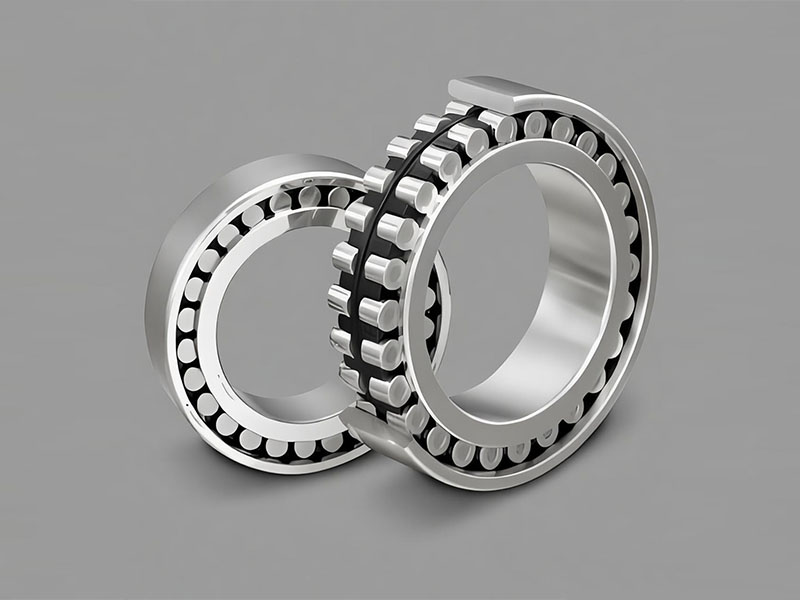
Single row ball bearings consist of one row of rolling elements between the inner and outer rings. The deep groove raceway design allows the bearing to accommodate radial loads as well as moderate axial loads in both directions. As noted by Schaeffler technical documentation, single row bearings are particularly suitable for applications requiring high and very high speeds, low friction operation, and economical bearing arrangements.
The single row deep groove ball bearing is available in multiple variants: open, shielded (ZZ), sealed (2RS), and with snap ring grooves for axial location. This versatility contributes to its status as the most widely used rolling bearing type in general machinery.
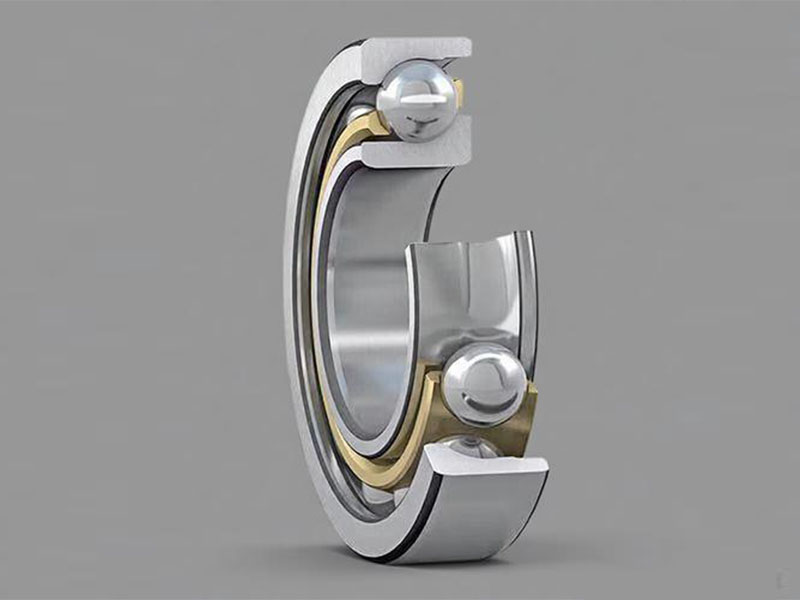
Double row ball bearings integrate two rows of rolling elements within a single bearing unit. This configuration significantly increases load-carrying capacity compared to a single row bearing of comparable bore size, but comes with trade-offs in speed capability and misalignment sensitivity. According to industry technical literature, double row bearings can be considered when the load carrying capacity of single row bearings is no longer sufficient, and when axial loads in both directions or tilting moments must be supported in addition to radial loads.
Two common double row configurations exist: double row deep groove ball bearings (series 42, 43) and double row angular contact ball bearings (series 32, 33). The angular contact variant offers higher axial load capacity and stiffness due to the defined contact angle between the raceways and balls.
Technical Comparison: Load Capacity, Speed, and Rigidity
The table below summarizes the key performance differences between single row and double row ball bearings across critical selection criteria.
| Parameter | Single Row Ball Bearing | Double Row Ball Bearing |
|---|---|---|
| Radial load capacity | Standard baseline | 40–50% higher than comparable single row |
| Axial load direction | Both directions (moderate) | Both directions (higher capacity) |
| Moment load / overturning moment resistance | Limited | Excellent—significantly better than single row |
| Limiting speed | Higher (less internal mass, lower friction) | Lower (more rolling elements generate more heat) |
| Rigidity | Moderate | Higher (dual-row support) |
| Space efficiency | Standard width | Higher load capacity per unit width |
| Misalignment tolerance | Moderate | Low—requires precise alignment |
| Relative cost | Lower | Higher |
Radial load capacity. Double row bearings incorporate more rolling elements, distributing radial forces across a larger contact surface. This typically yields a 40% to 50% increase in radial load rating compared to a single row bearing of the same bore size. The trade-off is increased internal friction and heat generation.
Axial and moment load handling. For pure axial loads, single row deep groove ball bearings perform adequately under light to moderate thrust. However, when applications involve significant axial loads in both directions or overturning moments—such as wheel hub assemblies and gearbox applications with unbalanced loading—double row angular contact ball bearings offer decisive advantages due to their wider effective load center and symmetrical ball arrangement.
Speed capability. Single row bearings typically have higher limiting speeds because they contain fewer rolling elements and generate less frictional heat. For continuous high-speed rotation (e.g., electric motors, pumps, compressors), a single row design is often the correct choice. Double row bearings are better suited for moderate-speed applications where load capacity is the primary constraint.
Rigidity. Double row configurations provide superior system stiffness due to the dual-row support. This improved rigidity reduces shaft deflection under load and maintains rotational precision, which is critical for applications such as machine tool spindles and precision rotary mechanisms.
When to Specify Single Row Ball Bearings
Single row ball bearings are the default choice for a wide range of general machinery applications. Specify single row designs when:
- High rotational speeds are required. The lower friction and reduced heat generation of single row bearings enable continuous operation at speeds that would cause overheating in double row equivalents.
- Loads are predominantly radial, with only light to moderate axial components. Single row deep groove ball bearings excel in these conditions.
- Energy efficiency and low running temperature are priorities. Lower internal friction translates directly to reduced power consumption and longer grease life.
- Cost is an important consideration. Single row bearings are more economical both in initial purchase and replacement.
Typical single row ball bearing applications:
- Electric motors (frame sizes small to medium)
- Industrial pumps and centrifugal compressors
- Household appliances (washing machines, fans, vacuum cleaners)
- Agricultural machinery (where speeds are moderate to high)
- General industrial gearboxes
When to Specify Double Row Ball Bearings
Double row ball bearings are specialist components for applications where load capacity trumps speed. Specify double row designs when:
- Single row load capacity is insufficient for the required operating life. If a single row bearing would be undersized per L10 life calculations, a double row bearing of the same envelope diameter may solve the problem.
- Space is axially constrained but radial load demands are high. Double row bearings deliver higher capacity within the same or similar width compared to using two separate single row bearings.
- Overturning moments or bidirectional axial loads are present. Double row angular contact ball bearings are engineered specifically for these conditions.
- System rigidity must be maximized within a compact package. The dual-row structure provides stiffness that would otherwise require paired bearing arrangements.
Typical double row ball bearing applications:
- Automotive wheel hub assemblies (where moment loads and bidirectional forces are routine)
- Conveyor systems and material handling equipment
- Industrial gearboxes with heavy shock loading
- Steering mechanisms and agricultural machinery requiring compact high-capacity support
- Machine tool spindles requiring high stiffness under combined loading
Selection Decision Framework
When choosing between single row and double row ball bearings for a new application or replacement specification, evaluate the following factors sequentially:
Step 1: Characterize the load.
Is the primary load radial, axial, or combined? Measure peak loads under operating conditions, including startup, steady state, and emergency stop scenarios. Calculate the required basic dynamic load rating using standard bearing life equations (ISO 281).
Step 2: Determine speed requirements.
Calculate the DN factor (bore diameter in mm × rotational speed in RPM). Compare to lubricant limiting speeds for both bearing types. Single row bearings typically permit values 20–40% higher than double row equivalents for the same bore size.
Step 3: Assess space constraints.
The shaft diameter is usually fixed by overall system design. Compare the available axial width to the width requirements of single row versus double row bearings.
Step 4: Evaluate rigidity and alignment needs.
Does the application require precise shaft positioning under load? Double row bearings offer higher stiffness. Can alignment be held to tight tolerances? If misalignment is unavoidable, single row bearings with proper internal clearance are more forgiving.
Step 5: Consider lifecycle costs.
Double row bearings have higher initial purchase prices but may extend replacement intervals in heavy-duty applications. Calculate total cost of ownership including maintenance access downtime.
Frequently Asked Questions About Single Row and Double Row Ball Bearings
Q1: Which bearing type has a higher speed rating—single row or double row?
A1: Single row ball bearings generally have higher limiting speeds. With fewer rolling elements, they generate less frictional heat at high RPM, making them the preferred choice for continuous high-speed rotation.
Q2: Do double row bearings handle more radial load than single row bearings?
A2: Yes. Double row ball bearings typically offer 40–50% higher radial load capacity compared to a single row bearing of the same bore size, due to the increased number of load-carrying rolling elements.
Q3: Can a single row bearing handle axial loads in both directions?
A3: Single row deep groove ball bearings can accommodate moderate axial loads in both directions. For applications requiring high axial capacity in both directions, double row angular contact ball bearings or paired single row angular contact bearings are more appropriate.
Q4: What is the main advantage of double row bearings for torque or moment loads?
A4: Double row bearings have superior overturning moment resistance. The wider spacing between the two ball rows creates a longer effective moment arm, allowing the bearing to resist tilting forces much better than a single row configuration.
Q5: Can I replace a single row bearing with a double row bearing without changing shaft or housing dimensions?
A5: Not usually. Double row bearings typically have greater width (axial dimension) than single row bearings of the same bore and outside diameter. Housing modifications or shaft redesigns are often required.
Q6: Do double row bearings require more precise installation than single row bearings?
A6: Yes. Double row bearings are significantly more sensitive to misalignment and improper fits. Uneven load distribution between the two rows can lead to premature failure if mounting tolerances are not tightly controlled.
Q7: How does internal clearance selection differ between single row and double row designs?
A7: Internal clearance selection is more critical for double row bearings. Interference fits on both shaft and housing can induce unintended preload if clearance is insufficient, causing temperature rise and reduced bearing life.
Q8: Are sealed variants available for both single row and double row bearings?
A8: Both types are available with shielded (ZZ) and sealed (2RS) configurations. However, double row bearings‘ higher operating temperatures may affect seal material longevity—verify temperature ratings with the manufacturer.
Conclusion
Single row and double row ball bearings serve distinct purposes in industrial and automotive applications. Single row bearings deliver high speed capability, low friction, and cost efficiency for general rotating machinery. Double row bearings provide enhanced load capacity, superior moment load resistance, and improved rigidity within compact axial envelopes when application demands exceed what a single row can deliver.
Neither type is universally superior. The correct choice depends entirely on your specific operating parameters, including load magnitude and direction, speed requirements, space constraints, alignment precision, and lifecycle cost targets.
For engineers currently evaluating bearing specifications or experiencing application issues, DUHUI‘s technical team can review your operating conditions and recommend an appropriate configuration. Contact us to discuss your project requirements.