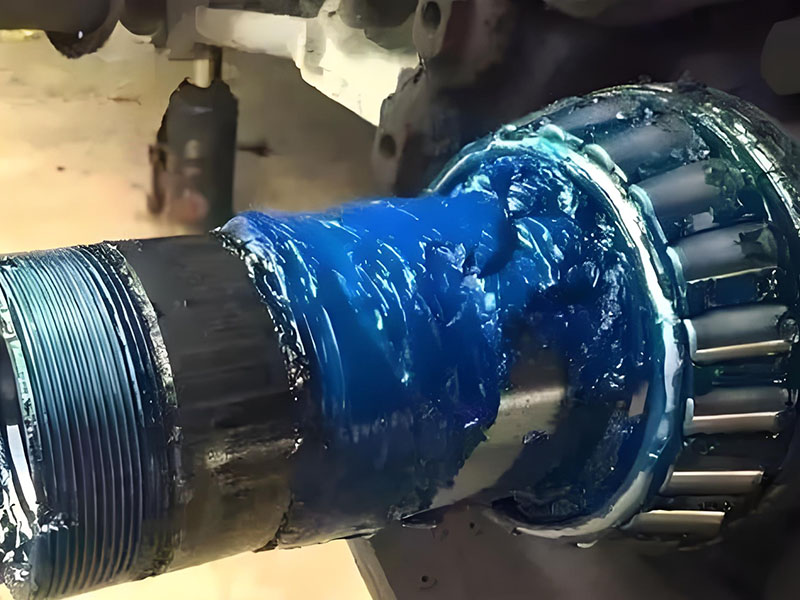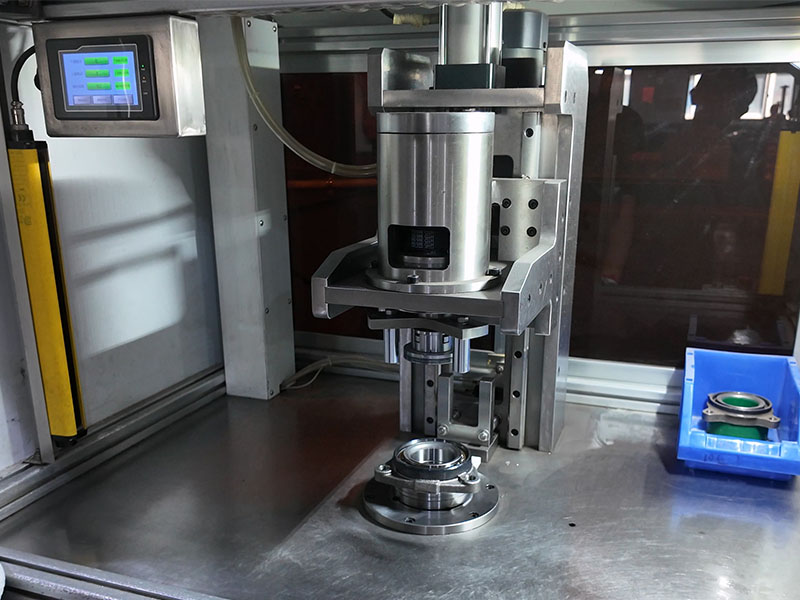
Mounted bearings are pre-assembled combinations of a rolling element bearing and a housing. They are designed to simplify installation, provide reliable support for rotating shafts, and protect the bearing from contaminants. From conveyor systems to agricultural equipment, mounted bearings are indispensable in countless industries.
In this guide, DUHUI will explore the different types of mounted bearings, their applications, how to prevent premature failure, and key selection criteria — helping you make informed decisions for your machinery.
Main Types of Mounted Bearings
Mounted bearings come in various configurations to suit different mounting arrangements, load directions, and environmental conditions. The most common types include:
Pillow Block Bearings (Plummer Blocks)
Pillow block bearings, also known as plummer blocks, feature a housing with a base that allows easy mounting on flat surfaces. They support shafts parallel to the mounting surface and are widely used in conveyors, fans, and industrial machinery.
Flanged Bearings
Flanged bearings have a housing with a flange that enables mounting perpendicular to the shaft axis. They are ideal for applications where space is limited or where the bearing must be mounted on a vertical surface, such as in gearboxes or small conveyors.
Bearing Inserts
Bearing inserts are the actual bearing elements (usually deep groove ball bearings) that are locked into a housing. They often feature self-aligning capabilities and can be secured with set screws, eccentric locking collars, or tapered adapters.
Mounted Ball Bearings
This term generally refers to ball bearing inserts pre-assembled in a housing. They are the most common type of mounted bearing, offering low friction and high speed capability.
Mounted Sleeve Bearings (Plain Bearings)
Sleeve bearings use a sliding contact surface instead of rolling elements. They are often used in low-speed, high-load applications or where quiet operation is required, such as in food processing or textile machinery.
Mounted Linear Bearings
Designed for linear motion systems, these bearings support and guide shafts moving in a straight line. They are found in automation equipment, packaging machines, and medical devices.
Other Specialized Types
- Take-Up Bearings: Used to adjust belt tension in conveyors.
- Cartridge Units: Cylindrical housings for mounting through a bore.
- Composite Housings: Lightweight, corrosion-resistant options for harsh environments.
Wide Applications of Mounted Bearings
The versatility of mounted bearings makes them suitable for virtually every industry. Here are some key application areas:
Industrial Manufacturing Equipment
From conveyor rollers to machine tools, mounted bearings provide reliable shaft support in assembly lines, packaging machines, and material handling systems.
Agricultural Machinery
Tractors, harvesters, balers, and irrigation systems rely on mounted bearings to withstand dirt, moisture, and heavy loads in field conditions.
Construction and Mining Equipment
Crushers, screens, conveyors, and excavators use heavy-duty mounted bearings that can handle shock loads and abrasive environments.
Food and Beverage Processing
Hygienic mounted bearings with stainless steel housings and special seals are essential in food mixers, bottling lines, and meat processing equipment to prevent contamination.
Conveyor Systems
Mounted bearings are the backbone of belt conveyors, roller conveyors, and bucket elevators, ensuring smooth material transport in warehouses, ports, and factories.
Medical Equipment
Precision linear bearings and small mounted units are used in MRI machines, surgical robots, and patient lifts, where quiet operation and cleanliness are critical.
Fans, Blowers, and HVAC Systems
Pillow block and flange bearings support fan shafts in ventilation systems, air handlers, and industrial blowers, often requiring high-speed capability and low noise.
Marine and Offshore Applications
Corrosion-resistant mounted bearings (e.g., with zinc plating or composite housings) are used in ship deck equipment, offshore platforms, and dock machinery.
Other Industries
Textile machinery, printing presses, woodworking equipment, and renewable energy systems (like wind turbines) also depend on mounted bearings.
Preventing Premature Bearing Failure
Even high-quality bearings can fail early if not properly selected, installed, or maintained. Understanding common failure modes and prevention techniques is crucial for maximizing equipment uptime.
Common Failure Modes
- Wear and Abrasion: Caused by contamination ingress (dust, dirt, moisture).
- Corrosion: Result of exposure to chemicals or humidity.
- Overheating: Due to inadequate lubrication or excessive load/speed.
- Fatigue: Normal end-of-life from cyclic stress, but can be accelerated by misalignment.
- Brinelling: Indentations on raceways from shock loads or improper mounting.
Proper Installation Techniques
- Ensure the shaft is clean and free of burrs.
- Use the correct locking method (set screw, eccentric collar, or adapter sleeve) and tighten to manufacturer specifications.
- Avoid hammering directly on the bearing; use a mounting sleeve or press.
- Check shaft alignment and housing squareness before final tightening.
Regular Maintenance Practices
- Establish a lubrication schedule based on operating conditions (type of grease, relubrication intervals).
- Monitor vibration and temperature to detect early signs of trouble.
- Inspect seals for damage and replace if necessary.
- Keep the surrounding area clean to reduce contamination risk.
Environmental Considerations
- Select bearings with appropriate seals (e.g., contact seals for dusty environments, shields for high-speed applications).
- For wet or corrosive environments, choose stainless steel housings or protective coatings.
- In extreme temperatures, use special lubricants and materials (e.g., high-temperature grease, heat-stabilized polymers).
Alignment and Fastening
- Misalignment causes uneven load distribution and premature fatigue. Use self-aligning bearings if misalignment is expected.
- Ensure the base is flat and rigid to prevent housing distortion.
- Regularly check bolt torque to avoid loosening from vibration.
Selection Criteria for Mounted Bearings
Choosing the right mounted bearing for your application requires careful evaluation of several factors. Here are the key criteria to consider:
Load and Speed Requirements
- Determine the type of load (radial, axial, or combined) and magnitude.
- Consider shock loads and dynamic equivalents.
- Match the bearing’s speed rating to your operating RPM.
Shaft Diameter and Tolerance
- Measure the shaft diameter accurately and select the appropriate bore size.
- Account for shaft tolerances and surface finish to ensure proper fit.
Operating Environment
- Temperature range: Choose materials and lubricants that withstand extreme heat or cold.
- Contamination level: Select seal types (e.g., triple-lip seals, labyrinth seals) based on dust, water, or chemical exposure.
- Corrosion risk: Opt for stainless steel, zinc-plated, or composite housings.
Bearing and Housing Material
- Housings: Cast iron (standard), ductile iron (heavy loads), stainless steel (corrosion resistance), or polymer (lightweight, non-corrosive).
- Bearing inserts: Chrome steel (standard), stainless steel (corrosion), or ceramic hybrid (high-speed, insulation).
Seal Type and Protection
- Contact seals: Best for preventing contamination but may increase friction.
- Non-contact seals (shields): Suitable for high-speed, clean environments.
- Special seals: Taconite seals for extreme dirt, or Viton seals for chemical resistance.
Installation and Maintenance Convenience
- Consider ease of mounting: Pillow blocks with two-bolt or four-bolt bases, flanged units with different bolt patterns.
- Look for features like relubrication ports, alignment marks, or interchangeable inserts.
- Evaluate the availability of spare parts and replacement units.
Conclusion
Mounted bearings are essential components that simplify shaft support, protect bearings from environmental hazards, and reduce installation time. By understanding the different types, their applications, and how to prevent failures, you can significantly improve the reliability and longevity of your machinery. When selecting mounted bearings, always consider load, speed, environment, and maintenance needs to ensure optimal performance.
For professional guidance and high-quality mounted bearings, contact DUHUI Bearing today. Our experts will help you find the perfect solution.