In the world of precision bearings, the rolling elements—the balls themselves—are the heart of the operation. The material you choose directly impacts speed, lifespan, load capacity, and overall system efficiency. For decades, steel has been the undisputed standard. However, advanced engineering ceramics, specifically Silicon Nitride (Si₃N₄), have emerged as a high-performance alternative for the most demanding applications.
At DUHUI Bearing, with 20 years of manufacturing expertise, we engineer both types of bearings. This guide provides an objective, technical comparison between steel and silicon nitride balls. Our goal is to help you, the engineer or procurement specialist, select the optimal material based on your specific application requirements, balancing performance against total cost of ownership.
1. Material Composition and Manufacturing
The fundamental difference between these two materials begins with their composition and how they are made.
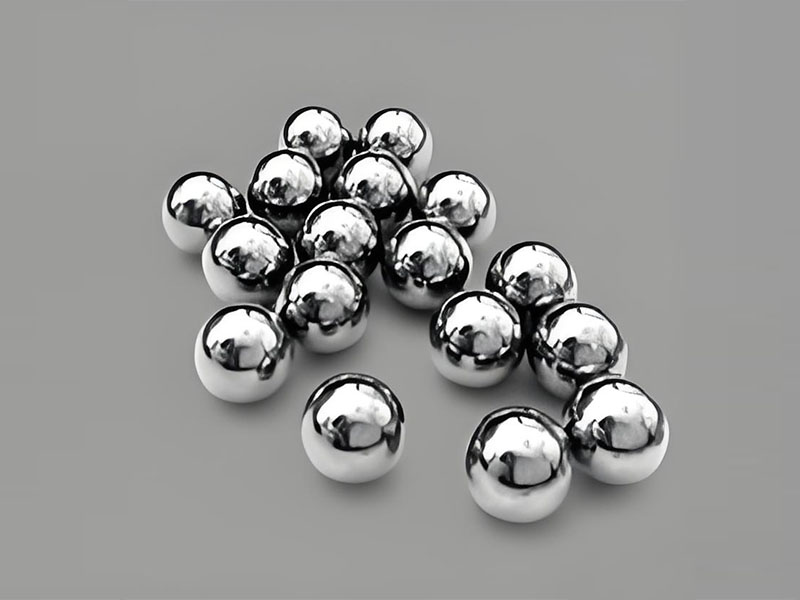
Steel Balls: The Traditional Standard
Most precision steel balls are made from chrome steel (such as GCr15 or AISI 52100) or stainless steel (like AISI 440C). The manufacturing process is a well-refined, multi-step procedure: wire is cold-headed into a rough ball, the flashing (flash line) is removed, and the balls undergo soft grinding. They are then heat-treated to achieve their final hardness before going through precise hard grinding and lapping processes to achieve the final grade (e.g, G10, G25).
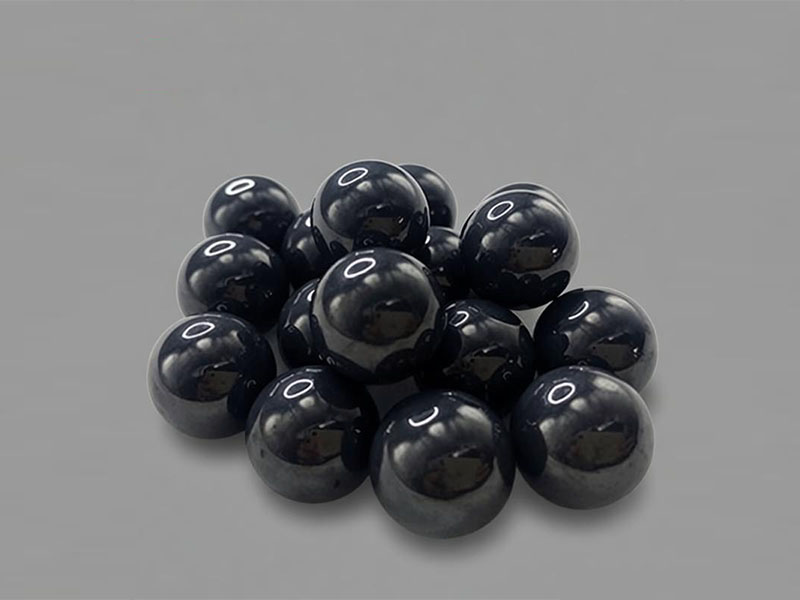
Silicon Nitride Balls: The Engineered Ceramic
Silicon Nitride (Si₃N₄) is not a metal; it is a high-performance ceramic synthesized from non-metallic materials. Its manufacturing process is significantly more complex. It starts with high-purity silicon nitride powder, which is mixed with sintering aids. The material is then formed through methods like uniaxial pressing or Cold Isostatic Pressing (CIP). The “green” part is then sintered at extremely high temperatures (over 1,800°C) in a controlled atmosphere, a process that causes the material to densify and achieve its incredible hardness. Because the material is so hard, the final grinding and lapping to achieve bearing-grade precision is a difficult and time-consuming process, contributing to its higher cost.
2. Mechanical Properties: A Direct Comparison
When selecting a bearing ball, the mechanical properties dictate the performance envelope. The table below summarizes the key differences, which we will explore in detail.
| Property | Steel Balls | Silicon Nitride Balls |
| Hardness (HV) | 700 – 800 HV | 1,400 – 1,600 HV |
| Strength & Durability | High toughness, but susceptible to adhesive wear | Exceptional fatigue life, withstands higher crushing loads |
| Density (g/cm³) | 7.8 (Heavy) | 3.2 (60% lighter) |
| Modulus of Elasticity (GPa) | ~210 | ~310 |
| Friction Coefficient | Higher (requires more lubrication) | Lower (inherently lubricious surface) |
| Surface Finish | Excellent (down to <0.01 µm Ra) | Excellent (down to <0.01 µm Ra) |
- Hardness: Silicon nitride balls are roughly twice as hard as steel. This translates directly to superior resistance to dents, abrasion, and wear, allowing the bearing to maintain its precision for a longer period in contaminated environments.
- Density & Dynamic Performance: Being 60% lighter is a game-changer for high-speed applications. Lower mass means significantly reduced centrifugal force on the outer race during high-speed rotation. This also allows for lower skidding and smearing, enabling higher accelerations and speeds.
- Friction: The surface of a silicon nitride ball has a lower coefficient of friction against steel races compared to a steel-on-steel interface. This generates less heat and can reduce the reliance on complex lubrication systems in some scenarios.
3. Performance in Extreme Environments
While mechanical properties are important, performance under duress is where the materials diverge most significantly.
High-Temperature Performance
Standard steel bearings begin to experience tempering and a loss of hardness above 150°C-200°C. While specialized high-temperature steels exist, they are costly. Silicon nitride, however, is a high-temperature champion. It retains its mechanical strength and hardness well beyond 800°C. This makes it the ideal choice for applications like turbines, high-speed spindles that generate intense heat, and near-engine components.
Corrosion and Chemical Resistance
Steel, even stainless grades, remains vulnerable to many acids, process chemicals, coolants, and salt water. This can lead to pitting, rust, and premature bearing failure. Silicon nitride is chemically inert. It will not rust and resists attack from most acids and alkalis, making it perfect for chemical processing, semiconductor wet etching equipment, and marine environments.
Electrical and Magnetic Properties
Steel is an electrical conductor and is magnetic. This can be a major drawback. In electric motors and generators, currents can arc through the bearing, causing “electrical discharge machining” (EDM) damage that pits the raceways. As an electrical insulator, silicon nitride prevents this arcing. Its non-magnetic property is also critical for sensitive medical equipment like MRI machines.
4. Industry Applications: Choosing the Right Tool for the Job
With a clear understanding of their properties, we can map these materials to their ideal applications.
Steel Balls: The Reliable Workhorse
For the vast majority of industrial applications, steel offers the perfect balance of performance and value.
- Automotive Components: As a leading manufacturer of wheel hub bearings, we rely on high-grade steel for its toughness and ability to handle combined radial and axial loads in daily driving conditions.
- Heavy Machinery: In construction and mining equipment, the toughness of steel is paramount to withstand shock loads.
- General Industrial Bearings: For electric motors, pumps, and conveyors, steel is the standard, cost-effective solution.
Silicon Nitride Balls: The High-Performance Specialist
Silicon nitride is specified when the application pushes steel to its limits.
- Aerospace & Defense: Used in flight control actuators and auxiliary power units where reliability, light weight, and high-temperature operation are non-negotiable.
- Medical Devices: Its non-magnetic and corrosion-resistant properties make it ideal for surgical tools and equipment in MRI environments.
- Semiconductor Manufacturing: The chemical inertness prevents contamination during wafer processing.
- High-Speed Machining: Machine tool spindles use hybrid ceramic bearings (steel races, ceramic balls) to achieve the extreme rotational speeds required for precision milling and grinding.
- Space Exploration: In the vacuum of space, where traditional lubricants can evaporate, the low-friction properties of silicon nitride are a critical advantage.
5. Cost Analysis: Initial Price vs. Total Cost of Ownership
It is an undeniable fact that silicon nitride balls have a higher initial purchase price than steel balls. The complex powder processing and diamond grinding required for manufacturing are expensive.
However, a smarter purchasing decision looks at the Total Cost of Ownership (TCO)
In a standard application, steel balls provide exceptional value. Their low cost and reliable performance make them the economical choice.
In a demanding application, the higher initial cost of silicon nitride is often recouped many times over. Longer lifespan, reduced machine downtime for bearing replacement, lower power consumption due to reduced friction, and the elimination of failure modes (like corrosion or arcing) deliver significant long-term savings. The “value” of silicon nitride is realized in its superior performance and longevity.
Conclusion: Making the Right Choice for Your Bearings
The choice between steel and silicon nitride balls is not about which is “better,” but which is better for your specific application.
- Choose High-Quality Steel Balls for general-purpose applications where cost-effectiveness, toughness, and proven reliability are the primary drivers.
- Choose Silicon Nitride (Ceramic) Balls when your application demands high speeds, extreme temperatures, resistance to corrosion or electricity, and the lowest possible total cost of ownership over the machine’s lifecycle.
For over two decades, DUHUI Bearing has been manufacturing high-precision bearings using both materials. We understand the nuances of each. Whether you need a durable steel solution for an automotive hub or a high-performance hybrid ceramic bearing for a specialized machine, our engineering team is here to provide expert guidance.