Wheel bearings are constantly at work, supporting the entire weight of your vehicle while allowing your wheels to spin with minimal friction. Given their critical role, understanding wheel bearing and bearing failures is essential for any driver or technician. DUHUI will explore what wheel bearings are, the different types available, and most importantly, the common reasons they fail and how to recognize the warning signs before a minor issue becomes a major safety hazard.
1.What are Wheel Bearings?
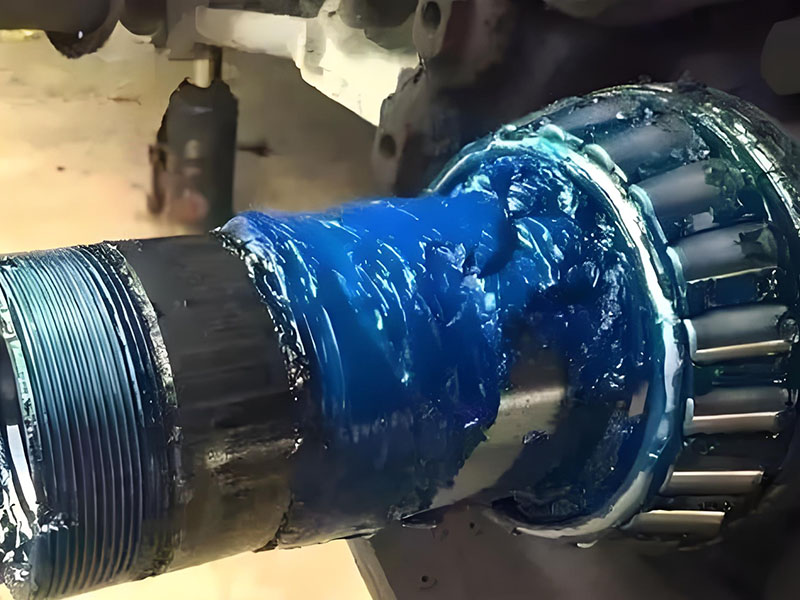
A wheel bearing is a crucial set of steel balls (ball bearings) or tapered rollers (tapered roller bearings) held together by a metal ring, known as a cage or separator. These components are sandwiched between two precision-machined rings called races: the inner race and the outer race. This entire assembly is then fitted tightly inside the wheel hub, which is the hollow metal component that your wheel bolts onto.
The primary function of a wheel bearing is twofold. First, it must reduce friction as the wheel spins on the axle shaft, ensuring smooth and efficient rotation. Second, it must manage the immense forces placed upon it, including the radial load (the vehicle’s weight) and the axial or thrust load (the sideways force generated when cornering) . In essence, it provides a low-friction, load-bearing interface between the stationary vehicle and the rotating wheel.
2.Common Types of Wheel Bearings
While all wheel bearings serve the same fundamental purpose, their design varies based on the specific demands of the vehicle. The most common types you will encounter include:
- Ball Bearings: These use spherical balls that roll between the inner and outer races. They are effective at handling both radial and axial (thrust) loads and are commonly found in many modern passenger vehicles, particularly in front-wheel-drive applications where they are often used in pairs or as double-row assemblies to handle loads from all directions .
- Tapered Roller Bearings: As the name suggests, these bearings use conical rollers arranged between tapered inner and outer races. This design is exceptionally good at supporting heavy combined loads—both radial and high axial forces. Because of their robustness, they are frequently used on the front wheels of rear-wheel-drive trucks and SUVs, typically in pairs facing opposite directions to manage thrust from both turning directions .
- Straight Roller Bearings: These bearings feature cylindrical rollers. Their design provides a larger contact area, making them ideal for supporting very heavy radial loads. However, they are not designed to handle significant axial (thrust) loads. As a result, they are most commonly found on the rear axles of rear-wheel-drive vehicles where the primary load is the weight of the vehicle .
3.Wheel Bearing vs. Traditional Bearings vs. Wheel Hub Bearings
It’s easy to confuse wheel bearings with other types of bearings, but key distinctions exist. Unlike engine bearings, which are constantly lubricated by a pressurized oil system, modern wheel bearings are typically sealed for life and packed with high-viscosity grease at the factory. This means they cannot be re-lubricated during regular maintenance and must be replaced when they fail .
Furthermore, the terms “wheel bearing” and “wheel hub bearing” are often used interchangeably, but there is a technical difference. A traditional “wheel bearing” refers to the individual bearing components (races, rollers, cage) that are packed with grease and installed into a separate hub. In contrast, a “wheel hub bearing” (or wheel hub assembly) is a modern, unitized component. It integrates the bearing, hub, wheel flange, and often the Anti-lock Braking System (ABS) speed sensor and tone ring into a single, pre-assembled, and pre-set cartridge. This design simplifies installation and reduces maintenance, making it the standard on most modern vehicles .
4.Common Causes of Wheel Bearing Failure
Understanding why wheel bearing and bearing failures occur is the first step in prevention. While these components are built to last, several factors can drastically shorten their lifespan.
- Lubrication Failure & Contamination: This is the number one cause of failure, accounting for up to 80% of cases . The most common culprit is a failed bearing seal. When the seal breaks, it allows lubricating grease to escape and permits water, dirt, road salt, and other contaminants to enter. This contaminated grease loses its lubricating properties, leading to increased friction, heat, and rapid wear of the internal surfaces .
- Impact Damage (Brinelling): Striking a pothole, curb, or debris on the road transmits a tremendous shock through the wheel assembly. This force can be concentrated on the small contact areas of the bearing rollers or balls, causing permanent dents in the races. This specific type of damage is known as “Brinelling.” These dents create rough spots that generate vibration and noise as the bearing rotates, eventually leading to complete failure .
- Improper Installation: Correct installation is critical for bearing health. Using an impact wrench to tighten the axle nut, instead of a calibrated torque wrench, can instantly damage the bearing internally. Incorrect torque—either too loose or too tight—also creates improper pre-load, leading to premature wear, overheating, and failure. Pressing a bearing into place by applying force to the wrong race can also transmit damaging shock loads through the rolling elements .
- Overloading: Every vehicle has a maximum load capacity. Consistently exceeding this weight puts excessive stress on the wheel bearings. This forces them to operate beyond their design limits, accelerating wear and leading to early failure .
- Misalignment: If a spindle is bent due to an accident or if a bearing is installed in an out-of-round housing, it will cause misalignment. This prevents the rolling elements from contacting the races properly, leading to uneven load distribution, localized stress, and excessive heat .
5.How to Diagnose a Failing Wheel Bearing
Recognizing the symptoms of a failing bearing can save you from a dangerous breakdown and costly repairs. Here are the most common warning signs:
- Unusual Noises: The most prevalent symptom is a cyclic grinding, growling, humming, or roaring noise that changes with vehicle speed. A classic test is to listen while turning: if the noise gets louder when turning in one direction and softer when turning the other, it often points to a bad bearing on the side under the most load during the turn .
- Steering Wheel Vibration: You may feel vibrations through the steering wheel that intensify with speed. In severe cases, you might also notice a looseness or “play” in the steering, making the car feel vague or less responsive .
- Uneven Tire Wear: A worn wheel bearing can cause excessive “play” in the wheel assembly, leading to scrubbing and cupping of the tire tread. While other suspension issues can cause this, it’s a sign that a thorough inspection is needed .
- Wheel Play and ABS Light: With the vehicle safely lifted, grab the tire at the 6 and 12 o’clock positions and attempt to rock it. Any noticeable clunking or movement indicates excessive play in the bearing . Additionally, because the wheel speed sensor is located near the bearing, a loose or damaged bearing can disrupt its signal, causing the ABS warning light to illuminate on your dashboard .
Conclusion
Your vehicle’s wheel bearings are fundamental to its safe operation. Ignoring the early signs of wear, such as a subtle growl or slight vibration, can quickly escalate into a catastrophic failure, potentially leading to a loss of control. By understanding the common causes of wheel bearing and bearing failures and knowing how to diagnose them, you can take proactive steps to ensure your safety on the road.
When replacement becomes necessary, the quality of the parts you choose is paramount. A precision-engineered bearing is an investment in your vehicle’s reliability and longevity. DUHUI is committed to producing high-quality wheel bearings and a wide range of other bearing solutions that meet the rigorous standards of precision, durability, and performance required by today’s automotive industry.