If you’ve ever found yourself staring at a disassembled trailer wheel, wondering whether to order a bearing kit or a complete hub assembly, you’re not alone. Determining the correct trailer hub bearing size is one of the most common—and critical—challenges in trailer maintenance. Buying the wrong part wastes time, while installing an incorrect or worn-out bearing can lead to catastrophic wheel failure on the road. DUHUI will provide a systematic approach to help you accurately identify your trailer’s hub bearing size, whether you need to replace just the bearings or the entire hub assembly.
Proper Disassembly and Initial Assessment
Before you begin, ensure you are working in a safe environment. Park the trailer on a level surface, engage the parking brake, and use wheel chocks to prevent any movement. Safely lift the trailer using a jack and secure it with jack stands—never rely on a jack alone.
Once the trailer is secure, remove the wheel cover or dust cap. Using a hammer and a flat-head screwdriver or a pair of pliers, gently pry off the dust cap. The first step to identifying your bearing size is removing grime. Use a rag and a degreaser to clean the exposed spindle nut and the area around it. This initial cleaning will prevent dirt from entering the hub assembly and make it easier to read any stamped numbers later.
Method 1: Decoding the Bearing Part Number
This is the most reliable method for determining your bearing size. It requires removing the hub to access the bearings themselves.
Locating and Extracting the Bearing
Remove the cotter pin and the spindle nut. Carefully pull the hub and drum assembly straight off the spindle. As you do so, the outer bearing will likely fall out—catch it and set it aside. Next, use a seal puller or a flat-head screwdriver to carefully remove the grease seal from the back of the hub. Once the seal is removed, you can push or tap out the inner bearing.
Reading the Manufacturer’s Part Number
Now, you have two bearings: the outer and the inner. On the side of each bearing cone (the inner race), you will find a manufacturer’s part number stamped. This is the key to your puzzle.
Common trailer bearing numbers include:
- L68149 / L68111: A standard size typically used on smaller trailers with a 1-inch spindle.
- LM12749 / LM12711: Commonly found on 1,500 to 3,500 lbs axles with a 1-1/16-inch spindle.
- 25580 / 25520: A heavier-duty option for larger trailers, often used with a 1-3/4-inch spindle.
- 14125A / 14276: Commonly found on 1-1/4-inch spindles.
These numbers correspond directly to the inner and outer bearing sizes. By recording these numbers, you have successfully identified the precise bearing dimensions.
Method 2: Manual Measurement for Verification
If the bearing numbers are worn off or unreadable, or if you want to double-check your findings, manual measurement is your next step.
Measuring the Seal and Other Key Parameters
The grease seal is just as important as the bearing itself. Using a digital caliper, measure three things:
- Inner Diameter (ID): This must match the spindle diameter where the seal sits.
- Outer Diameter (OD): This must match the bore of the hub.
- Thickness: This ensures proper fitment within the hub cavity.
For the bearings, if you cannot read the numbers, you can measure the inner diameter (the hole size) and the outer diameter of the bearing cup (the race that is pressed into the hub). However, matching these to a size chart is complex, making the part number method far superior.
Verifying the Bolt Pattern (Optional)
While the bolt pattern (e.g., 5 on 4.5 inches) does not determine the bearing size, it is an essential piece of data if you decide to purchase a complete hub assembly. Knowing your bolt pattern ensures the new hub will fit your trailer’s wheels.
Synthesizing Information: Locking in the Correct Hub Bearing Kit
Now that you have your data—bearing numbers, spindle diameter, and seal dimensions—you can confidently source the correct part.
Cross-Referencing Your Data
Most auto parts stores and online suppliers categorize bearing kits by either the part numbers you’ve collected or the spindle diameter. For instance, a search for “trailer bearing kit for 1-1/16-inch spindle” will typically return the LM12749/LM12711 combination.
Considering the Complete Hub Assembly
From a manufacturing perspective, we often recommend users consider replacing the entire hub assembly if the budget allows. A pre-assembled hub comes with the bearings, races, seals, and lug bolts already installed and properly pre-set. This eliminates the need for you to press in new bearing races or worry about choosing the wrong individual component. It is a time-saving solution that reduces the margin for error, especially for older trailers where components may have worn unevenly.
Critical Installation Tips: Preload and Final Checks
Once you have your new bearings or hub assembly, proper installation is crucial for safety and longevity.
Cleaning, Inspection, and Lubrication
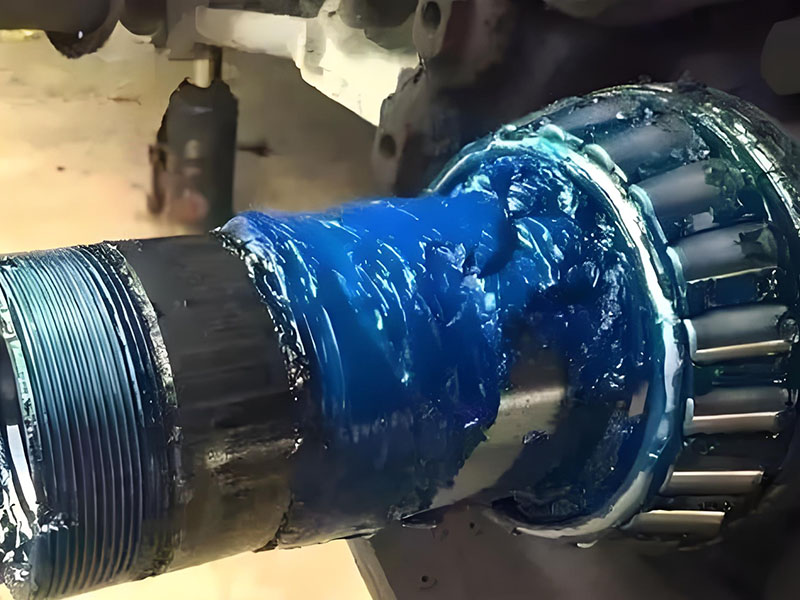
If you are repacking bearings, ensure the hub cavity and spindle are spotless. Use a high-quality, high-temperature wheel bearing grease. Work the grease thoroughly into the bearing rollers until it oozes out from the top. For a complete hub assembly, simply ensure the hub slides smoothly onto the spindle.
Mastering the Bearing Preload
Setting the correct preload is the most critical step. After installing the hub and tightening the spindle nut by hand until it is snug, you must back it off.
The Standard Method: Tighten the nut to about 20-25 ft-lbs while rotating the wheel to seat the bearings. Then, loosen the nut until it is hand-tight. Finally, tighten it finger-tight, then back it off 1/4 to 1/2 turn until the washer can be moved slightly with a screwdriver. The goal is to have a slight amount of end-play (0.001 to 0.005 inches), not zero. An over-tightened bearing will overheat and fail immediately.
Conclusion
Determining the correct trailer hub bearing size doesn’t have to be a guessing game. By taking the time to either decode the numbers on your existing bearings or carefully measure your spindle and seal, you can identify the precise components you need with confidence.
If you are unsure about your measurements, or if you are looking for a reliable, OEM-quality hub assembly that takes the guesswork out of installation, do not hesitate to contact us.