With over 20 years of manufacturing experience and 15 years in global trade, DUHUI Bearing has witnessed firsthand the critical role that seemingly small components play in massive machinery. While we are renowned as a premier manufacturer of automotive wheel hub bearings, our expertise in power transmission extends to the components that work alongside them—particularly sprockets.
If you are a maintenance manager, a procurement specialist, or a mechanical enthusiast, understanding sprockets is essential for maximizing the efficiency and lifespan of your equipment. This guide provides a comprehensive, technical look at sprockets, designed to help you make the best choice for your application.
What is a Sprocket and How Does It Work?
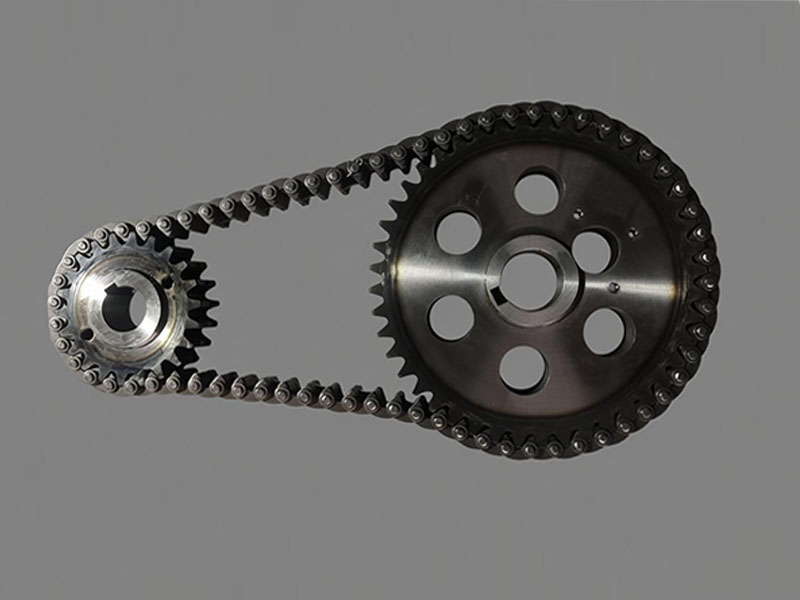
A sprocket is a profiled wheel with teeth that meshes with a chain, track, or other perforated or indented material. Its primary function is to transmit rotary motion between two shafts where gears are unsuitable, or to impart linear motion to a track or belt.
Working Principle: Precision in Motion
The magic of a sprocket lies in its meshing. Unlike friction-based pulleys, sprockets provide positive drive—meaning there is no slippage. The teeth of the sprocket engage with the bushings or rollers of a chain, pulling it along to transmit mechanical power.
Pitch Alignment
The most critical factor for smooth operation is pitch alignment. This refers to the chain pitch (the distance between the centers of two consecutive pins) matching the sprocket’s pitch (the chordal distance between corresponding points on adjacent teeth). Mismatched pitch leads to accelerated wear, vibration, and ultimately, system failure.
Sprocket vs. Gear: What’s the Difference?
This is a common point of confusion. At DUHUI, we differentiate them based on their application in a drive system. Here are the key distinctions:
| Feature | Sprocket | Gear |
| Engages With | A flexible chain (roller chain, silent chain). | Another gear (meshes directly tooth-to-tooth). |
| Working Principle | Positive drive via a chain and sprocket system. | Direct drive via meshing teeth on gears. |
| Shaft Distance | Ideal for transmitting power over longer distances. | Best for short, precise center distances. |
| Primary Function | Power transmission between shafts that are not necessarily close together. | Speed/torque adjustment and directional change. |
| Synchronization | Excellent for synchronizing moving parts (e.g., conveyor belts). | Perfect for precise timing and speed ratios. |
| Lubrication | Generally requires less stringent lubrication than open gears. | Often requires enclosed gearboxes with oil baths. |
| Main Application | Bicycles, motorcycles, industrial conveyors. | Automotive transmissions, differentials, clockwork. |
Core Components and Terminology
To select the right sprocket from a supplier like DUHUI, you must understand its geometry:
- Tooth Profile & Tooth Count (Number of Teeth): The shape of the tooth is standardized (by ANSI or ISO) to ensure proper chain engagement. The number of teeth directly affects the speed ratio and the smoothness of the drive.
- Pitch (P): As mentioned, this is the distance between chain pin centers. It must match exactly between the chain and sprocket.
- Pitch Diameter (P.D.): The diameter of the circle that passes through the centers of the chain pins as the sprocket rotates. This is used in speed ratio calculations.
- Outside Diameter (O.D.): The maximum diameter of the sprocket. Useful for checking physical clearance in your assembly.
Root Diameter: The diameter at the bottom of the tooth gaps.
Key Dimensional Formulas for Selection
For field engineers, quick calculations are vital. Here are two essential formulas:
Pitch Diameter (P.D.) Calculation:
- Formula: P.D. = P / sin(180° / N)
- Where P = Chain Pitch, and N = Number of Teeth.
- Why it matters: This is the foundation for calculating speed ratios and center distances.
Outside Diameter (O.D.) – Quick Estimate:
- For a quick physical check, you can estimate:
- Formula: Max O.D. = P × (0.6 + cot(180° / N))
- A simpler rule of thumb is that the O.D. is slightly larger than the P.D., but never use this estimate for final machining.
Types of Sprockets
The variety of sprockets can be overwhelming. At DUHUI, we categorize them based on function and design to streamline your selection.
Quick Reference Guide
- ANSI Hub Design: Standardized in inches.
- Strand Count: Single, double, triple to match chain width.
- Mounting Style: Plain bore, finished bore, or taper lock.
- Specialized: Idlers, split sprockets for easy installation.
By Number of Strands (Rows)
- Single, Double, and Triple Strand: Designed for corresponding single, double, or triple-strand roller chains.
- Load Distribution: Multi-strand sprockets distribute the load across multiple chains, significantly increasing power transmission capacity.
- Design Rule: Alignment is even more critical in multi-strand applications to prevent uneven load distribution and premature wear.
By Hub Design (ANSI Standards)
- Type A (Plate): A flat plate with no hub extension on either side. Simple and lightweight.
- Type B (Hub on One Side): Features a hub protruding from one side for added strength and setscrew mounting.
- Type C (Hub on Both Sides): The strongest standard type, with hubs extending from both sides of the plate for maximum bore capacity and stability.
- Type D (Detachable): A split hub design where the flange is detachable, allowing for easy replacement without removing the hub from the shaft.
By Mounting Configuration
- Bore Sprockets: Supplied with a pilot bore, allowing the customer to machine the final bore size, keyway, and setscrew holes to their exact shaft size.
- Finished Bore Sprockets: Pre-machined to standard shaft sizes, ready to install.
- Taper-Lock (or QD) Sprockets: Feature a tapered bushing system that provides a tight, concentric fit on the shaft and is easy to install and remove. This is the preferred choice for heavy-duty industrial applications.
Specialized Types
- Idler Sprockets: Used to take up slack in a long chain drive, often running on bearings.
- Hunting Tooth Sprockets: Designed with a specific number of teeth to ensure every tooth meshes with every chain roller over time, distributing wear evenly.
- Split Sprockets: Made in two halves for easy installation in confined spaces where sliding a sprocket onto the shaft end is impossible.
Sprocket Materials
The material dictates the sprocket’s strength, wear resistance, and cost. The choice depends on the operating environment.
- Carbon Steel: The industry standard. Excellent strength and wear resistance. Often induction-hardened on the tooth faces for extended life. Ideal for general industrial use.
- Stainless Steel: Superior corrosion resistance. Often used in food processing, pharmaceutical, or marine environments where washdowns are frequent.
- Cast Iron: Good wear resistance and lower cost, but more brittle than steel. Suitable for lower-speed, lower-impact applications.
- Aluminum: Lightweight, corrosion-resistant, but low strength. Primarily used in high-speed, low-load applications like racing motorcycles or bicycles.
- Plastic/Nylon: Lightweight, quiet operation, runs without lubrication. However, it has low load capacity and can be affected by heat. Ideal for light-duty, clean-room, or food contact surfaces.
Applications Across Industries
At DUHUI, we supply components for a vast range of sectors. Here’s where you’ll find sprockets:
Transportation
- Bicycles & Motorcycles: The classic sprocket-and-chain drive, providing an efficient, lightweight method of transferring pedal or engine power to the rear wheel.
- Automotive Timing Systems: While many modern cars use timing belts, heavy-duty and high-performance engines often rely on timing sprockets and chains for ultimate durability and synchronization of the camshaft and crankshaft.
Heavy Machinery & Industrial Use
- Conveyor Systems: The backbone of manufacturing, mining, and logistics. Sprockets drive the conveyor belts that move products and materials.
- Tracked Vehicles: From bulldozers to military tanks, drive sprockets engage directly with the track links to propel the vehicle over rough terrain.
How to Choose the Right Sprocket
Selecting the correct sprocket is a systematic process. Here’s how DUHUI’s engineering team approaches a customer inquiry:
Key Selection Criteria
1.Chain Standard & Size: First, identify your chain.
- ANSI (American National Standards Institute) Roller Chain: The dominant standard in North America. Sizes are denoted by a number like “60” or “80.” (e.g., #60 chain has a pitch of 3/4″).
- Metric Roller Chain (ISO Standard): Common in Europe and Asia. Sizes are denoted by a letter and number, like “06B” or “10A” (pitch is in mm).
2.Number of Teeth: Determine the required speed ratio between the driver and driven shafts.
3.Number of Strands: Match the sprocket width to your chain (single, double, or triple).
4.Bore Size & Mounting: Specify your exact shaft diameter and preferred mounting style (finished bore vs. taper-lock).
5.Material: Select based on your environmental and load requirements.
Sprocket Maintenance Tips
Even the highest quality sprocket from DUHUI needs proper care to last.
- Lubrication: Use the correct type and amount of lubricant. Insufficient lubrication is the #1 cause of sprocket and chain failure.
- Alignment: Misalignment causes edge wear on the sprocket teeth and chain side plates. Regularly check with a laser alignment tool.
- Tension: Maintain proper chain tension. Too loose causes slapping and jumping; too tight increases load and wear on bearings and sprockets.
FAQs
How do measurement procedures differ between simplex and multi-strand sprockets?
A: Measuring the tooth profile and pitch is identical. The critical difference is measuring the overall width and tooth location. For multi-strand sprockets, you must measure the distance across the teeth (or the root width) to ensure the chain seats correctly, and also verify the offset between the rows of teeth to prevent chain binding. A micrometer or caliper is used for precise width measurement, while alignment fixtures are used to check tooth offset.
How does pressure angle affect sprocket measurement and selection?
A: The pressure angle influences how the chain roller contacts the sprocket tooth. A standard pressure angle (often 30° for ANSI roller chain sprockets) ensures even load distribution and rolling contact. If you use a sprocket with an incorrect pressure angle, the chain roller will slide against the tooth instead of rolling, drastically increasing wear. This is why it is critical to use a sprocket manufactured to the exact standard (ANSI/ISO) that matches your chain. At DUHUI, all our sprockets are precision-cut to meet these strict industry standards, guaranteeing proper meshing and extended system life.
How to determine if a sprocket is worn and requires replacement?
Common indicators of sprocket wear include:
- Sharpened or asymmetrical teeth: Teeth that have become pointed or hooked rather than having a symmetrical profile.
- Tooth surface wear: Visible steps, grooves, or scoring on the tooth contact surfaces.
- Poor chain-sprocket meshing: The chain does not seat properly on the sprocket, or there is noticeable slack or binding during rotation.
- Excessive axial runout: The sprocket wobbles laterally when rotated, indicating uneven wear or deformation.
Why is it often recommended to replace the sprocket at the same time as the chain?
A chain and sprocket wear together as a system during operation. Installing a new chain on a worn sprocket—or vice versa—will result in mismatched wear patterns. This can cause accelerated wear on the new component, poor meshing, and increased noise, ultimately reducing the service life of both parts.
What is the impact of changing the number of teeth on a motorcycle sprocket?
Changing the tooth count alters the final drive ratio, which affects vehicle performance.
- Increasing front sprocket teeth or decreasing rear sprocket teeth results in a higher (taller) gear ratio. This reduces engine RPM at a given speed, lowers acceleration, but increases theoretical top speed.
- Decreasing front sprocket teeth or increasing rear sprocket teeth results in a lower (shorter) gear ratio. This increases acceleration and torque output but reduces top speed and may increase engine RPM during cruising.
How does sprocket size affect speed and acceleration?
Sprocket size directly influences the torque and speed output of a system.
- A larger rear sprocket or smaller front sprocket increases mechanical advantage, providing higher acceleration but reducing the maximum achievable speed.
- A smaller rear sprocket or larger front sprocket decreases mechanical advantage, improving potential top speed while reducing initial acceleration.
What sprocket configuration is best for acceleration?
To maximize acceleration, the optimal configuration is a smaller front sprocket or a larger rear sprocket. This combination increases the gear ratio, delivering more torque to the driven wheel or component, resulting in faster initial movement and increased pulling power at lower speeds.
What materials are commonly used for manufacturing sprockets?
Sprockets are typically manufactured from high-strength materials to withstand wear and fatigue.
- Steel (e.g., C45, 4140, or case-hardened alloys): Provides high durability, impact resistance, and is standard for most industrial and automotive applications.
- Cast iron: Used for large, slow-speed industrial sprockets where wear resistance is required but impact loads are low.
- Aluminum alloys: Commonly used in performance applications, such as motorcycles, to reduce rotational mass and overall weight, though they have a lower service life compared to steel.
What are the key considerations when installing a sprocket?
Proper installation is critical for performance and longevity. Key factors include:
- Proper alignment: The sprocket and chain must be perfectly aligned to prevent uneven wear and axial loads.
- Correct torque: Fasteners must be tightened to the manufacturer’s specified torque to avoid loosening or distortion during operation.
- Runout tolerance: The sprocket should be checked for axial and radial runout to ensure smooth operation and prevent vibration.
How does sprocket tooth profile affect chain performance?
The tooth profile is engineered to ensure smooth engagement and optimal load distribution with the chain rollers. An incorrect or worn profile can cause:
- Impact loads: Harsh engagement that increases stress on both the chain and sprocket.
- Noise and vibration: Poor meshing leads to increased operational noise.
- Premature wear: Excessive friction and localized stress accelerate material degradation.
Can a sprocket be repaired, or is replacement always necessary?
Replacement is the standard recommendation for worn sprockets. While minor surface corrosion can sometimes be cleaned, wear on the tooth profile (such as hooking, pitting, or asymmetrical wear) is irreversible. Repairing a worn sprocket through welding or re-machining typically compromises the material’s heat treatment and dimensional accuracy, leading to rapid failure.
What are the differences between a sprocket and a gear?
While both are used for power transmission, they operate on different principles.
- Sprocket: Engages with a chain or belt to transmit torque over longer distances. It does not directly mesh with another sprocket.
- Gear: Meshes directly with another gear to transmit torque. Gears operate without a chain and are used for precise speed and torque changes in close-coupled applications.