A crusher bearing is a specialized component used in rock crushing equipment such as jaw crushers, cone crushers, gyratory crushers, and impact crushers. These bearings must withstand extreme operating conditions: high impact loads, constant vibration, abrasive dust, and frequent temperature fluctuations. Choosing the wrong bearing can lead to premature failure, unplanned downtime, and increased maintenance costs. How do you select the right bearing for your specific crusher type and application? DUHUI will explain the common bearing types, compatibility, sizing, pricing, and practical selection criteria.
1. Definition and Characteristics of Crusher Bearing
Crusher bearings are rolling-element bearings designed to support the rotating shafts and eccentric assemblies in crushing machinery. Unlike general industrial bearings, they must tolerate shaft misalignment from frame deflection, heavy radial loads from crushing forces, and often significant axial loads. Common designs include spherical roller bearings, tapered roller bearings, cylindrical roller bearings, and in lighter-duty applications, deep groove ball bearings or spherical ball bearings. Their internal clearances, cage materials, and sealing arrangements are typically modified for shock loads and contamination.
2. Common Types of Bearings Used in Crushers
Different crusher designs impose different load patterns and speed requirements:
- Jaw crushers – High radial loads, moderate axial loads, severe misalignment from frame flex.
- Cone crushers – Combined radial and axial loads, higher speeds, need precise axial positioning.
- Gyratory crushers – Very high axial loads (thrust) plus radial loads, large diameters.
- Impact and hammer crushers – High radial loads, high rotational speeds, rigid mounting required.
3. Bearing Compatibility with Different Crusher Types
The table below summarizes which bearing types work best for each crusher category.
| Bearing Type | Applicable Crusher Types | Description |
| Spherical Roller Bearings | Jaw crusher, cone crusher, gyratory crusher | Compensate for shaft misalignment and installation errors; handle high radial and some axial loads; strong impact resistance. |
| Tapered Roller Bearings | Cone crusher | Handle both radial and axial loads; suitable for high-speed heavy-duty use; offer good axial positioning. |
| Cylindrical Roller Bearings | Impact crusher, hammer crusher | High radial load capacity; suitable for high-speed rotation; not self-aligning; suited for rigid mounting conditions. |
| Spherical Ball Bearings | Hammer crusher, small equipment | Absorb vibration; accommodate misalignment; suitable for low-speed medium-load applications. |
| Deep Groove Ball Bearings | Small auxiliary equipment, motors | Simple structure; moderate load capacity; used in crusher motors, fans, and light-duty auxiliary drives. |
| Thrust Bearings | Some large gyratory crushers | Designed for heavy axial loads; often used together with radial bearings to enhance total load capacity. |
For most primary and secondary crushers, spherical roller bearings offer the best combination of misalignment tolerance and load capacity. Cone crushers often use tapered roller bearings in the main shaft to manage combined loads precisely.
4. How to Choose the Right Crusher Bearing?
Selecting a crusher bearing involves evaluating five key factors:
Load direction and magnitude
- High radial + moderate axial → spherical roller bearings
- High radial + high axial → tapered roller bearings (cone crushers)
- Pure axial (thrust) → thrust roller bearings
Rotational speed
Impact and hammer crushers run at higher speeds (600–1200 rpm). Cylindrical roller bearings or precision-grade spherical roller bearings are preferred.
Misalignment tolerance
Jaw and gyratory crusher frames can deflect under load. Spherical roller bearings with self-aligning capability are essential.
Sealing and contamination protection
Crusher environments generate fine dust. Bearings with contact seals (e.g., RS type) or labyrinth seals plus external sealing systems (V-rings, felt strips) extend service life significantly.
Lubrication method
Lubrication is common for simplicity. Oil circulation is used for large, high-speed crushers to remove heat and contaminants. Always follow OEM viscosity recommendations (typically ISO VG 220–460 for grease, ISO VG 150–320 for oil).
5. Common Crusher Bearing Sizes and Recommended Models
Crusher bearing dimensions depend on the crusher type, capacity, and manufacturer design. Bore diameters generally range from 100 mm to 600 mm, outer diameters from 150 mm to 1200 mm, and widths from 50 mm to 300 mm.
Below are typical models for reference (dimensions in mm):
- Primary jaw crushers – 23172 (bore 360, OD 600, width 192) or 23276 (bore 380, OD 680, width 240)
- Cone crushers and vibrating screens – 22328 (bore 140, OD 300, width 102) or 22244 (bore 220, OD 400, width 108)
- Gyratory and large impact crushers – 24156 (bore 280, OD 460, width 180) or 24160 (bore 300, OD 500, width 200)
Always verify the required internal clearance (C3 or C4) for crusher applications. Normal clearance (CN) is rarely sufficient.
6. Crusher Bearing Price Range
Prices vary by size, precision class, and brand origin. The following ranges are typical for standard industrial-grade bearings (2025 market data):
- Standard spherical roller bearing (e.g., 23130) – $80 to $120
- Heavy-duty spherical roller bearing (e.g., 23276) – $250 to $450
- OEM imported brands (Timken, SKF, FAG) – typically 30%–50% higher than equivalent quality domestic brands
For large gyratory or custom-engineered bearings, prices can exceed $1,000. Volume discounts and long-term supply agreements may lower unit costs.
7. How to Extend the Service Life of Crusher Bearings?
Proper selection is only the first step. Follow these practices to maximize bearing life:
- Correct selection – Always match bearing type, size, and internal clearance to the crusher’s load and speed profile. Undersized bearings fail rapidly.
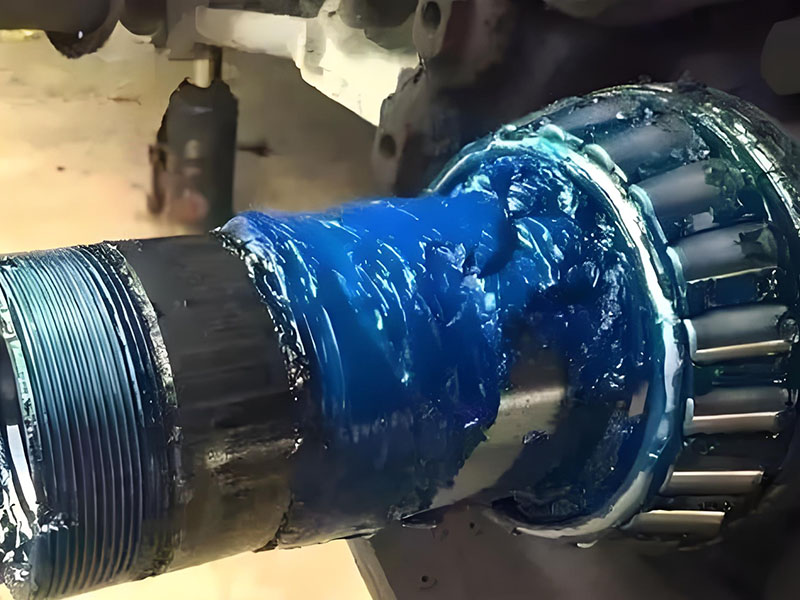
- Regular lubrication – Relubricate at intervals specified by the crusher OEM (typically every 200–500 operating hours for grease). Use clean, compatible grease; mix different thickener types only after full cleaning.
- Sealing protection – Inspect seals weekly. Replace damaged seals immediately. Add auxiliary sealing (labyrinth rings, dust shields) in high-dust environments.
- Temperature monitoring – Install thermocouples or infrared sensors on bearing housings. A sudden rise above 90°C (194°F) indicates lubrication failure or overload.
- Alignment and mounting – Check shaft alignment and housing bore roundness during installation. Use induction heaters for mounting (never hammer directly on bearing rings).
- Avoid overloading – Feed crushers at rated capacity. Overloading creates excessive radial and axial forces that exceed bearing dynamic load ratings.
Conclusion
A crusher bearing is a mission-critical component that must resist high impact loads, vibration, misalignment, and contamination. Selecting the right type – spherical roller for general heavy-duty use, tapered roller for cone crushers, cylindrical roller for high-speed impactors – directly affects uptime and maintenance costs. Always consider load direction, speed, alignment tolerance, sealing, and lubrication when making a choice. Refer to the size ranges and model examples above as a starting point, but verify exact specifications with your crusher manual. Finally, extend bearing service life through disciplined lubrication, sealing inspection, temperature monitoring, and proper mounting. By following these guidelines, you can reduce unplanned stoppages and achieve lower total cost of ownership.