In the world of modern machinery, precision is not just a goal; it is a fundamental requirement. From the surgical robots performing delicate operations to the spindles carving out engine components, the difference between success and failure often comes down to microns. At the heart of this precision movement lies a critical, yet often overlooked, component: the precision bearing.
But what exactly are precision bearings, and how do they differ from the standard bearings found in a skateboard wheel or a washing machine? DUHUI will explore the defining characteristics, intricate designs, material science, and diverse applications of these engineering marvels.
1. What Makes a Bearing “Precision”?
A bearing is classified as “precision” not by a single feature, but by a combination of stringent manufacturing tolerances and performance characteristics. Unlike standard bearings, which are designed for general-purpose use, precision bearings are built for applications where accuracy, speed, and reliability are paramount. Here are the key characteristics that set them apart:
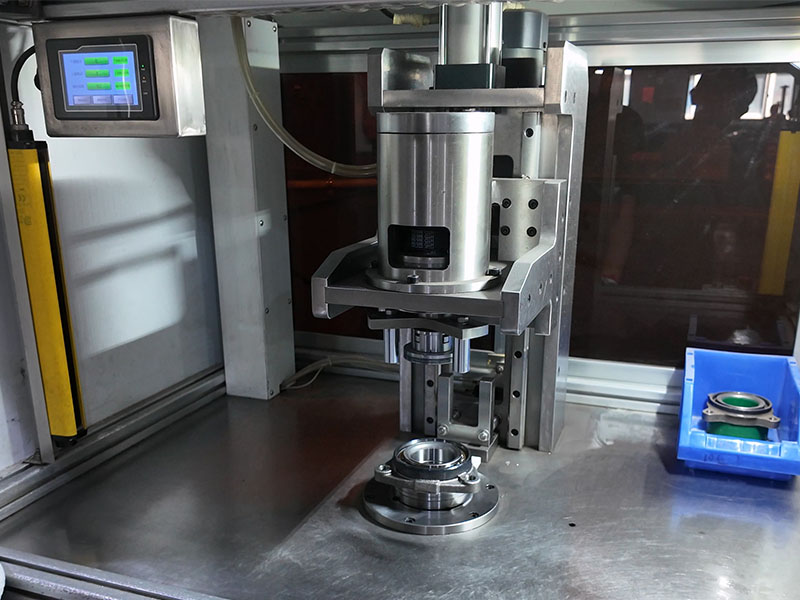
- High Dimensional Accuracy: This is the most fundamental trait. Precision bearings are manufactured to extremely tight tolerances, meaning the deviation in the size and shape of components like the inner ring, outer ring, and rolling elements is measured in microns (µm), not millimeters. This ensures a perfect fit and consistent performance.
- Consistency in Rotation: High accuracy translates to smooth, consistent rotation with minimal vibration and noise. This is critical for applications like machine tool spindles, where any vibration will be transferred directly to the workpiece, degrading the surface finish.
- High-Speed Capability: The precise geometry and superior surface finishes of these bearings minimize internal friction. This allows them to operate at significantly higher speeds without generating excessive heat, which can lead to premature failure.
- Enhanced Rigidity and Durability: Precision bearings are designed to minimize deflection under load. This high level of stiffness is essential for maintaining accuracy in applications with variable forces. Combined with high-grade materials, this also contributes to a longer, more reliable operational lifespan.
2. Design and Materials of Precision Bearings
The performance of a precision bearing is a direct result of its sophisticated design and the advanced materials from which it is made.
2.1 Core Structure
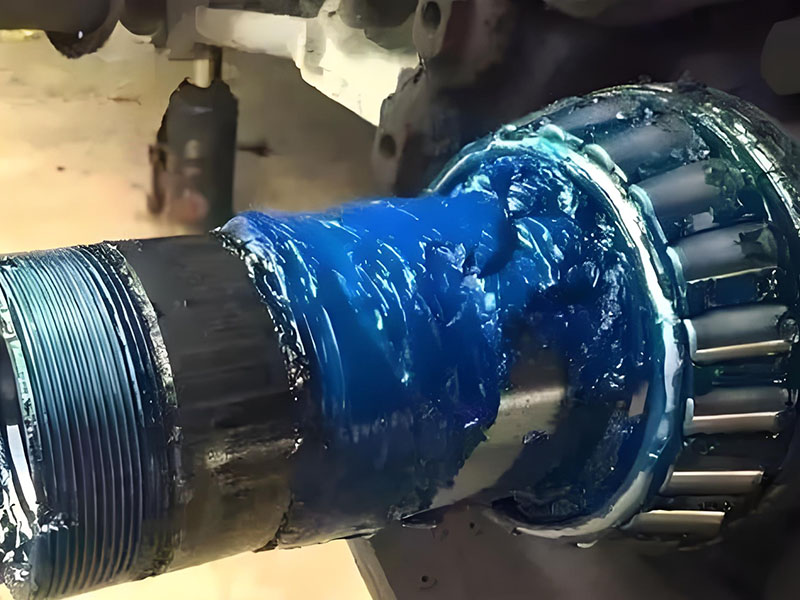
Like all bearings, precision bearings consist of four primary parts: the inner ring, the outer ring, the rolling elements (balls or rollers), and the cage (or retainer) which keeps the rolling elements evenly spaced. However, in a precision bearing, the geometry of these components is optimized, and the surfaces are finished to an exceptional degree of smoothness to meet exacting standards.
2.2 Materials Used
The choice of material is a critical decision in bearing design, dictated by the specific demands of the application. The three most common materials are:
- High-Carbon Chromium Steel (e.g., 52100): This is the most common material for precision bearings. It offers an excellent balance of hardness, wear resistance, and load capacity, making it suitable for a wide range of industrial applications.
- Stainless Steel (e.g., AISI 440C): When corrosion resistance is a priority, stainless steel is the material of choice. It is commonly used in food processing, medical devices, and marine environments.
- Ceramic (e.g., Silicon Nitride – Si₃N₄): Ceramic bearings, often hybrid (ceramic balls with steel rings) or full ceramic, are used in the most demanding high-speed, high-temperature, or electrically sensitive applications.
2.3 Material Comparison: Stainless Steel vs. Ceramic
To better understand the trade-offs, here is a comparison of these two high-performance materials:
| Feature | Stainless Steel Bearings | Ceramic Bearings (Hybrid/Full) |
| Weight | Heavier | Significantly lighter (approx. 40% less density) |
| Corrosion Resistance | Good, but can rust without proper maintenance and in harsh environments. | Excellent; inherently resistant to corrosion and chemicals. |
| Temperature Resistance | Moderate; performance degrades at very high temperatures. | High; can withstand much higher temperatures without expansion or loss of hardness. |
| Friction | Higher friction, which increases with speed. | Lower friction, leading to cooler operation and higher speed capability. |
| Durability | Durable but susceptible to wear from contamination and fatigue over time. | Highly durable and resistant to wear; often has a longer service life. |
| Electrical Insulation | Conductive; can allow arcing to pass through the bearing, causing damage. | Non-conductive; provides excellent electrical insulation, protecting motors and generators from stray currents. |
| Lubrication Needs | Standard lubrication. | Can often run with less lubrication due to lower friction. |
| Magnetic | Magnetic. | Non-magnetic. |
| Cost | Generally lower cost. | Typically higher cost due to advanced materials and processing. |
| Applications | General industrial use, automotive components, machine tools. | High-speed spindles, aerospace, motorsport, vacuum and cleanroom environments. |
3. Common Types of Precision Bearings
Precision bearings come in various configurations to handle different types of loads and motions:
- Deep Groove Ball Bearings: The most versatile type, suitable for handling both radial and axial loads. In precision grades, they are used in high-speed applications like small electric motors and gearboxes.
- Angular Contact Ball Bearings: Designed to accommodate combined loads (radial and axial simultaneously). They are commonly used in pairs (back-to-back, face-to-face, or tandem) in machine tool spindles and pumps where high stiffness and accuracy are required.
- Cylindrical Roller Bearings: These offer high radial load capacity and are suitable for very high speeds. They are often used in machine tool spindles and heavy-duty gearboxes.
- Thrust Bearings: Designed specifically to handle axial loads. Precision thrust bearings are found in applications like automotive transmissions and aerospace actuation systems.
- Miniature Bearings: These are small precision bearings (typically with an outer diameter of less than 9mm) used in applications with extreme space constraints, such as dental drills, miniature motors, and medical devices.
4. Key Applications Across Industries
The unique properties of precision bearings make them indispensable across a spectrum of high-tech industries:
- Aerospace: From flight control actuators and navigation systems to jet engine accessories, bearings in this sector must withstand extreme temperatures, high speeds, and variable loads with absolute reliability.
- Medical Equipment: The quiet operation, high speed, and precision of bearings are vital in medical devices like CT scanners (for smooth rotation), surgical drills, dental handpieces, and surgical robots.
- Semiconductor Manufacturing: In wafer handling robots and stepper motors, bearings must operate in a vacuum or cleanroom environment. Ceramic bearings are often used here for their cleanliness, non-magnetic properties, and resistance to process chemicals.
- Automotive & Motorsport: Beyond standard wheel hubs, precision bearings are found in high-performance racing gearboxes, turbochargers, and electric vehicle drive motors, where reduced friction translates directly to more power and efficiency.
- Machine Tool Spindles: This is perhaps the most demanding application. The spindle is the heart of a CNC machine, and its bearings must provide extreme rigidity, accuracy, and high-speed capability to achieve the desired surface finish and part tolerances.
5. Performance Advantages of Precision Bearings
Investing in a precision bearing, rather than a standard one, yields several key performance advantages:
- Reduced Friction & Heat Generation: Tighter tolerances and superior surface finishes mean less internal friction, leading to cooler operation and higher energy efficiency.
- Higher Load Capacity in Compact Design: Precision manufacturing allows for optimized internal geometry, enabling bearings to handle significant loads without increasing in size.
- Improved Rotational Accuracy: This is the core benefit. Runout (the amount a shaft deviates from its true axis) is minimized, ensuring the accuracy of the entire system.
- Extended Equipment Lifespan: By reducing stress, vibration, and heat, precision bearings contribute directly to a longer, more reliable service life for the machinery they are a part of.
- Greater System Stiffness: The precise fit and robust design minimize deflection under load, which is critical for maintaining accuracy in machining and other high-force applications.
6. How to Choose the Right Precision Bearing
Selecting the correct bearing is a critical engineering decision. A mismatch can lead to poor performance, frequent downtime, and premature failure. Here is a guide to help you make the right choice.
6.1 Key Selection Factors
- Load Type & Magnitude: Is the load radial, axial, or a combination? How heavy is it?
- Operating Speed: What is the required rotational speed (RPM)?
- Temperature & Environment: Will the bearing be exposed to high heat, corrosive chemicals, or a vacuum?
- Lubrication & Contamination: What type of lubricant will be used? Is the environment clean or dusty?
6.2 Step-by-Step Selection Guide
- Define Application Requirements: Start by outlining the exact performance needs of your machinery.
- Identify Load Direction: Determine if the primary force is radial, thrust, or a combination. This will point you toward a bearing type (e.g., radial for deep groove, combination for angular contact).
- Evaluate Operating Environment: The presence of moisture, chemicals, or extreme temperatures will heavily influence your material choice.
- Match Material to Conditions: Use the comparison table in Section 2.3 to select the right material (steel, stainless, or ceramic) for your environment.
- Consider Precision Class: Use the ABEC/ISO rating system to specify the required level of accuracy.
- Verify Industry Standards: Ensure the chosen bearing meets any specific industry certifications (e.g., FDA for food, ISO for medical).
- Consult an Expert: When in doubt, speak to a bearing manufacturer. Their engineering experience is invaluable.
6.3 ABEC and ISO Rating Comparison
The ABEC (Annular Bearing Engineers’ Committee) and ISO (International Organization for Standardization) systems provide a standardized way to define a bearing’s precision level. A higher number indicates tighter tolerances and higher precision.
| Rating System | Rating | Precision Level | Typical Applications |
| ABEC | 1 | Low | General applications, non-critical use |
| 3 | Medium | Light-duty machinery, some electric motors | |
| 5 | High | Moderate-speed applications, servo motors, pumps | |
| 7 | Very High | High-speed machinery, machine tool spindles | |
| 9 | Ultra High | Aerospace, robotics, and ultra-precision tools | |
| ISO | P0 | Low | General applications (equivalent to ABEC 1) |
| P6 | Medium | Light-duty machinery (equivalent to ABEC 3) | |
| P5 | High | Moderate-speed applications (equivalent to ABEC 5) | |
| P4 | Very High | High-speed machinery (equivalent to ABEC 7) | |
| P2 | Ultra High | Aerospace, robotics, and precision tools (equivalent to ABEC 9) |
6.4 Why Customization Matters
While standard off-the-shelf bearings are suitable for many applications, some unique challenges require a customized solution. Tailoring a bearing’s dimensions, material, cage design, or lubrication to your specific needs can unlock significant performance gains. Partnering with an experienced manufacturer like DUHUI allows you to move beyond standard catalogs and develop a bearing that is perfectly integrated with your system.
7. Real-World Application Examples
- Aerospace – Flight Control Actuators: In a modern aircraft, flight control surfaces are moved by powerful actuators. These actuators require bearings that are not only precise but also extremely reliable and capable of operating in a wide temperature range. Specialized angular contact bearings made from high-nitrogen steel are often used here to handle the complex loads while resisting corrosion.
- Medical – MRI Machines: The environment inside an MRI machine presents a unique challenge: a powerful magnetic field. Standard steel bearings are unusable. Non-magnetic, full ceramic bearings are the solution. They allow the patient table to move smoothly and precisely in and out of the scanner without interfering with the imaging process.
- Semiconductor – Wafer Handling Robots: In a wafer fab, cleanliness is paramount. A wafer handling robot must move silicon wafers with extreme precision without generating any particles. Cleanroom-lubricated, hybrid ceramic bearings are ideal here. The ceramic balls are lighter and generate less friction and wear, while the specialized lubricant prevents outgassing or particle generation, ensuring the purity of the manufacturing environment.
Conclusion
Precision bearings are the unsung heroes of the high-tech world, enabling the accuracy, speed, and reliability that modern industry demands. From the materials they are made of to the micron-level tolerances they hold, every aspect of their design is a testament to engineering excellence. Correctly selecting the right type, material, and precision class is not just a procurement task; it is a critical step in ensuring the performance and longevity of your valuable equipment.