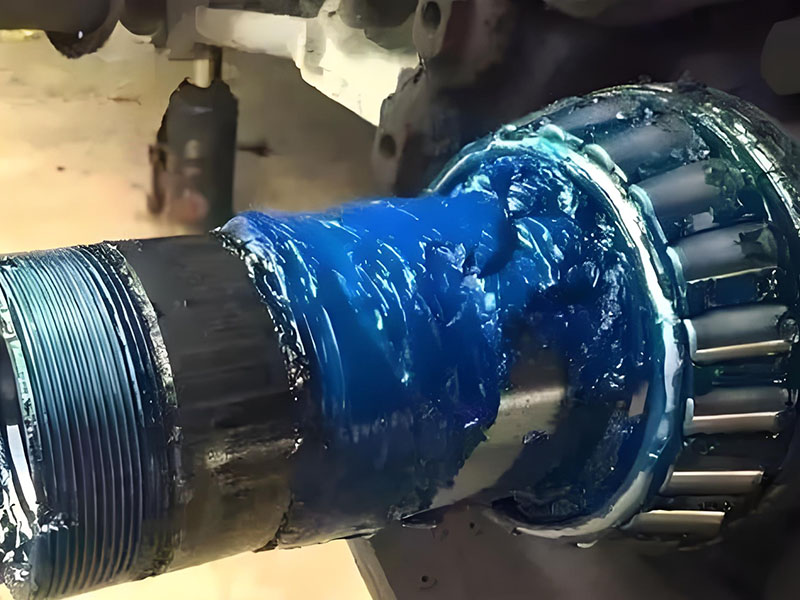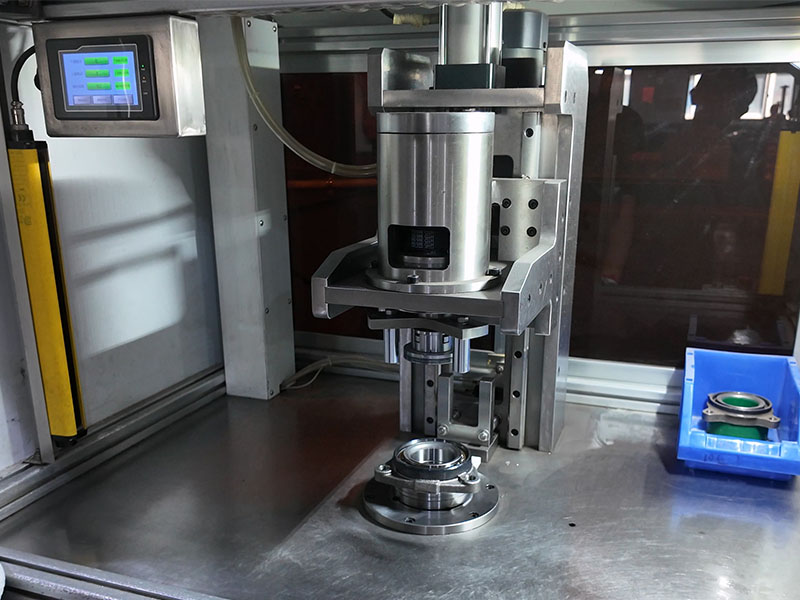
Conveyor roller bearings are mechanical components that support the rotating shafts of conveyor rollers, reducing friction and enabling smooth movement of belts or loads. In material handling systems, these bearings directly affect operational efficiency, noise levels, and maintenance intervals. A common question from maintenance engineers and system designers is: how do these bearings differ from ordinary bearings, and which type suits a given application? DUHUI will provide a technical overview of conveyor roller bearings, their working principle, materials, types, replacement procedures, and selection criteria.
Definition: What Is a Conveyor Roller Bearing?
A conveyor roller bearing is a standardized anti-friction element mounted inside the ends of a conveyor roller tube. It supports the shaft (axle) and allows the roller to rotate with minimal resistance. Unlike general-purpose bearings, conveyor roller bearings are often designed with specific sealing arrangements to resist dust, moisture, and debris common in industrial environments. They may be pre-lubricated and sealed for life or designed for relubrication.
How Do Conveyor Roller Bearings Work?
The basic operating principle of a conveyor roller bearing involves rolling elements (balls or rollers) positioned between an inner ring and an outer ring. The inner ring mounts onto the stationary shaft, while the outer ring fits inside the roller tube. When the conveyor belt moves, friction drives the roller rotation. The rolling elements inside the bearing reduce sliding friction to rolling friction, which lowers energy consumption and prevents premature wear. Proper alignment and lubrication are critical for the bearing to handle radial loads (from belt tension and product weight) and, in some designs, limited axial loads.
Common Materials: Steel vs. Plastic vs. Others
Conveyor roller bearings are manufactured from various materials, each offering distinct advantages.
- Steel bearings (chrome steel or carbon steel) – High load capacity, durability, and resistance to deformation. Chrome steel (GCr15) is standard for most heavy-duty applications. However, steel bearings are susceptible to corrosion unless plated or sealed.
- Plastic bearings (acetal, nylon, or PBT) – Lightweight, corrosion-resistant, and operate quietly. They are suitable for light loads, wet environments (e.g., food processing), or applications where electrical insulation is required. Plastic bearings generally have lower speed and load limits compared to steel.
- Other materials – Stainless steel bearings (for washdown or corrosive environments) and hybrid bearings (ceramic balls with steel rings) are also available for specialized conditions.
Selection between steel and plastic depends on load, environment, and budget. For example, a mining conveyor would use steel bearings, while a packaging line in a humid area might prefer plastic.
Main Types of Conveyor Roller Bearings
Deep Groove Ball Bearings
The most common type for light to medium-duty conveyors. They accommodate radial loads and limited axial loads in both directions. Deep groove ball bearings offer low friction, high speed capability, and are available with various seals (ZZ, 2RS).
Cylindrical Roller Bearings
Designed for higher radial load capacity than ball bearings of the same size. The line contact between rollers and raceways distributes stress over a larger area. These bearings are used in heavy-duty belt conveyors and live roller systems. However, they generally tolerate little to no axial load.
Tapered Roller Bearings
Tapered roller bearings can handle combined loads (high radial and high axial) simultaneously. They are common in conveyor systems that experience thrust forces, such as inclined belt conveyors or spiral conveyors. They require precise adjustment and proper lubrication.
Sleeve (Plain) Bearings
Also known as bushings, sleeve bearings have no rolling elements. They rely on a sliding surface (often with a PTFE or graphite lining) for low-friction rotation. Sleeve bearings are inexpensive, quiet, and tolerant of contamination. However, they have higher starting friction and lower speed limits, making them suitable for slow-moving or intermittent conveyors.
Needle Roller Bearings
Needle roller bearings use long, thin cylindrical rollers. They provide high radial load capacity in a compact cross-section. These are used when roller diameter is limited (e.g., small-gravity conveyors or telescopic belt conveyors).
How to Replace Conveyor Roller Bearings
Routine replacement of worn bearings prevents unplanned downtime. The general process follows these steps:
- Step 1: Check if replacement is needed – Signs include unusual noise (grinding or squealing), increased rolling resistance, visible play between the roller and shaft, or irregular belt tracking.
- Step 2: Lock out and depressurize the conveyor system – Safety first. Disconnect power and ensure the belt cannot move.
- Step 3: Remove the old bearings – Extract the roller from the conveyor frame. Use a bearing puller or press to remove the damaged bearing from the roller tube or shaft. Avoid damaging the tube bore.
- Step 4: Clean the roller – Remove all debris, old grease, and rust from the housing bore and shaft. Use a non-abrasive solvent and lint-free cloth.
- Step 5: Install the new bearings – Apply a thin layer of grease (if not pre-lubricated) to the bearing outer ring. Press the bearing into the roller tube using a suitable arbor press or a soft mallet with a fitting tool. Ensure the bearing seats squarely and fully.
- Step 6: Test the system – Reinstall the roller. Run the conveyor at low speed and listen for abnormal sounds. Check for free rotation and proper belt alignment.
Note: For sealed-for-life bearings, do not attempt to add grease. For relubricatable bearings, follow the manufacturer’s grease interval and quantity recommendations.
Typical Applications
Conveyor roller bearings are essential components in:
- Material handling conveyors (belt, roller, gravity, and chain conveyors) in warehouses, distribution centers, and airports.
- Industrial equipment – Assembly lines, packaging machinery, and sorting systems.
- Bulk material handling – Mining, quarrying, and agricultural conveyors that transport grain, coal, or aggregates.
- Automotive manufacturing – Painted body conveyors and powertrain assembly lines.
- Food and beverage processing – Stainless steel or plastic bearings for washdown environments.
Although the name emphasizes conveyors, similar bearing designs also appear in agricultural machinery and automated guided vehicles (AGVs).
How to Choose the Right Conveyor Roller Bearing
Selecting the optimal conveyor roller bearing requires evaluation of several technical factors:
- Load capacity – Calculate the maximum radial load (from product weight plus belt tension) and any axial load. Compare with the bearing’s dynamic load rating (C) and static load rating (C0).
- Speed – Operating speed (RPM) determines whether you need ball bearings (higher speed) or roller bearings (lower speed but higher load). Grease type and cage material also matter at high speeds.
- Operating conditions – Temperature (e.g., cold storage or hot kilns), moisture, dust, and chemical exposure guide material and seal selection. For example, double-lip rubber seals (2RS) are better against water than metal shields (ZZ).
- Mounting and space constraints – Roller tube inner diameter and shaft diameter must match bearing dimensions. Compact designs may require needle roller bearings.
- Maintenance strategy – Sealed-for-life bearings reduce maintenance but have a finite life. Relubricatable bearings allow longer service intervals in dirty environments.
- Cost and availability – Standard metric sizes (e.g., 6202, 6204, 6304) are economical. Non-standard or specialty bearings increase lead time and cost.
It is advisable to consult bearing manufacturers or use engineering calculation tools (e.g., SKF, NSK, or DUHUI Bearing catalogs) to verify dynamic equivalent load and adjusted life rating (L10h).
Conclusion
Conveyor roller bearings are small yet critical components that directly influence the reliability and efficiency of conveying systems. Understanding their working principle, material differences (steel vs. plastic), and the characteristics of ball, roller, tapered, and sleeve bearings allows maintenance teams and engineers to make informed decisions. Proper replacement procedures and careful selection based on load, speed, and environment extend bearing life and reduce total cost of ownership. For applications requiring robust performance, consulting technical specifications from experienced manufacturers—such as DUHUI Bearing—ensures compatibility and durability. By applying the guidelines above, you can optimize your conveyor system’s uptime and avoid common bearing-related failures.
Frequently Asked Questions (FAQs)
Q1: How often should conveyor roller bearings be lubricated or replaced?
Lubrication intervals depend on bearing type, operating conditions, and whether the bearing is “sealed-for-life.” For sealed (2RS or ZZ) conveyor roller bearings, no regreasing is required under normal conditions; they are lubricated at the factory and designed to last until the bearing reaches its fatigue life (typically 20,000–40,000 operating hours). For open or re-lubricatable bearings in dusty or wet environments, grease should be added every 3–6 months or according to the manufacturer’s schedule. Replacement is not time-based but condition-based. Replace a bearing when it shows measurable radial play (>0.05 mm for small sizes), roughness during rotation, or audible grinding. In continuous 24/7 conveyor operations, roller bearings often need replacement every 12–24 months, while intermittent light-duty systems may last 5+ years.
Q2: What causes conveyor roller bearings to fail prematurely?
Premature failure—defined as service life shorter than 80% of the calculated L10 life—typically results from four main causes:
- Contamination (responsible for over 50% of failures): Dust, water, or debris entering through damaged seals leads to abrasive wear or corrosion.
- Improper mounting: Pressing on the outer ring instead of the inner ring, or misalignment during installation, creates Brinelling (indentations on raceways).
- Overloading: Operating beyond the bearing’s dynamic load rating (C) increases contact stress, causing fatigue spalling within weeks or months.
- Inadequate lubrication: Using wrong grease viscosity (e.g., too thick for low temperatures) or allowing grease to dry out raises friction and heat.
Other factors include shaft bending, incorrect internal clearance (C3 vs. CN), and electrical current passage in motorized pulleys.
Q3: Can I use a deep groove ball bearing instead of a cylindrical roller bearing in a heavy-duty conveyor?
Not without performance trade-offs. Deep groove ball bearings and cylindrical roller bearings serve different load profiles. A ball bearing handles radial loads well but its point contact limits radial capacity. For a heavy-duty conveyor with a radial load of 5 kN or more, a cylindrical roller bearing of the same bore size (e.g., NU series) can support 2–3 times higher radial load than a ball bearing (e.g., 6200 series). However, ball bearings accommodate some axial load (up to ~30% of radial capacity), whereas cylindrical roller bearings accept negligible axial load. If your application has both high radial and high axial loads (e.g., inclined belt conveyor), a tapered roller bearing is the correct replacement, not a ball bearing. Substituting a ball bearing for a roller bearing without recalculating life will result in rapid fatigue failure.
Q4: What is the difference between ZZ and 2RS seals on conveyor roller bearings, and which should I choose?
ZZ bearings have metal shields (usually steel) on both sides, while 2RS bearings have contact rubber seals. The table below summarizes the key differences:
| Feature | ZZ (Metal Shields) | 2RS (Rubber Seals) |
|---|---|---|
| Speed capability | Higher (no friction drag) | 15–20% lower than ZZ |
| Sealing effectiveness | Excludes large particles (>0.1 mm) | Tight seal against water, dust, light washdown |
| Temperature range | -30°C to +120°C | -20°C to +100°C |
| Recommended environment | Clean, dry, indoor (e.g., packaging lines) | Dusty, humid, outdoor (mines, grain handling) |
For most industrial conveyor environments, 2RS is preferred to extend bearing life. Choose ZZ only for high-speed (>5,000 RPM), dry, and clean conditions.
Q5: How do I determine the correct size or series of conveyor roller bearing for an existing roller?
Conveyor roller bearings are standardized by bore diameter (inner ring size) and outer diameter. To identify a replacement bearing:
- Measure the shaft diameter (where the inner ring mounts) – this is the bore size in mm. Common conveyor sizes: 12 mm, 15 mm, 17 mm, 20 mm, 25 mm.
- Measure the roller tube inner diameter (where the outer ring fits). The bearing’s outer diameter must match this with an interference fit (typically +0.01 to +0.03 mm tolerance).
- Measure the bearing width. For metric bearings, width follows ISO standards: e.g., a 6204 bearing has 20 mm bore, 47 mm OD, 14 mm width.
- Check the bearing code printed on the old bearing’s shield (e.g., “6204-2RS”). If the code is illegible, use a caliper to measure bore, OD, and width, then cross-reference with a bearing dimension table. Most conveyor rollers use 62xx, 63xx, or 60xx series deep groove ball bearings.
When in doubt, consult a bearing manufacturer’s online catalog or contact a supplier with the three dimensions.
Q6: Are plastic conveyor roller bearings suitable for high-temperature applications?
No, standard plastic bearings (acetal, PBT, nylon) have a maximum continuous operating temperature of +80°C to +110°C depending on the polymer. Above +120°C, plastic cages or rings soften, creep, and lose load capacity. For high-temperature conveyor environments—such as oven conveyors, foundries, or kiln feeders—use steel bearings (chrome steel, good to +150°C with proper grease) or stainless steel bearings with high-temperature grease (silicone or PFPE-based) capable of +200°C. For extreme heat above +250°C, consider special materials like silicon nitride (ceramic) bearings or graphite-lubricated sleeve bearings. Never use plastic bearings near heat sources exceeding +100°C unless the manufacturer explicitly states a high-temperature grade (e.g., PEEK, which can reach +250°C but costs significantly more).
Q7: Why does my conveyor roller spin unevenly or wobble even after installing new bearings?
Uneven rotation or wobble after new bearing installation usually points to three root causes, not the bearings themselves:
- Bent shaft – The shaft on which the bearing inner ring mounts may have a runout exceeding 0.05 mm. Use a dial indicator to check. Replace or straighten the shaft.
- Out-of-round roller tube – The tube housing the bearing’s outer ring may be deformed (e.g., from previous hammering). Ovality over 0.03 mm prevents the bearing from seating concentrically.
- Improper installation – Pressing the bearing in at an angle can distort the outer ring. Ensure a straight press fit using a sleeve that contacts only the ring being mounted.
Also verify that both bearings on the same roller are aligned coaxially. If the roller tube has welded ends, internal weld splatter can block the bearing seat. Clean the tube bore thoroughly before installation.