Headset bearings are precision components installed inside a bicycle’s head tube, connecting the fork steerer tube to the frame. They allow the handlebars and front wheel to rotate smoothly while supporting the rider’s weight and steering loads. Without properly functioning headset bearings, steering becomes stiff, imprecise, or unsafe. DUHUI will explain what headset bearings are, their common types, sizes, functions, and differences between brands and bicycle categories. It also provides practical replacement and maintenance guidance.
1. What Are Headset Bearings?
A headset bearing is a bearing assembly designed to fit between the bicycle frame’s head tube and the fork steerer tube. It enables rotational movement while resisting axial and radial forces generated during riding. Headset bearings are typically angular contact ball bearings or deep groove ball bearings, depending on the headset design.
Modern bicycles use either loose ball bearings (retained in a cage) or sealed cartridge bearings. The choice affects steering feel, durability, and maintenance frequency.
2. Types of Headset Bearings
Sealed Cartridge Bearings
Sealed cartridge bearings are pre-assembled, factory-lubricated units with rubber seals on both sides. They offer low friction, good contamination resistance, and easy replacement. Most mid-range and high-end bicycles use sealed cartridge bearings.
Loose Ball Bearings (Retained)
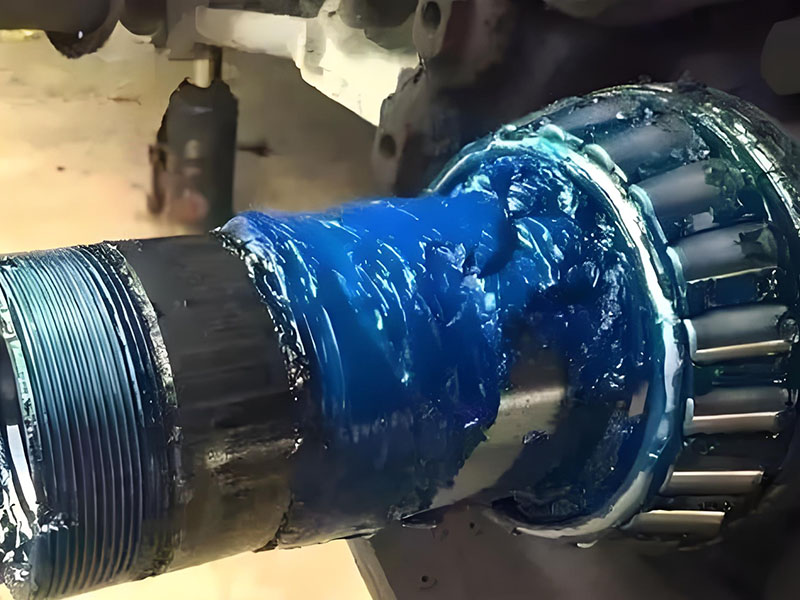
Loose ball bearings (also called caged bearings) consist of steel balls held by a retainer ring. They require periodic cleaning and regreasing. While less expensive, they are more sensitive to water and dirt ingress. Commonly found on older or entry-level bicycles.
Integrated Bearings
Integrated bearings are installed directly into the head tube’s machined bearing seats without separate cups. The frame itself acts as the outer race. This design saves weight but requires precise manufacturing tolerances.
Press-Fit Bearings
Press-fit bearings are pressed into a headset cup or directly into the frame. ZeroStack and internal headsets typically use press-fit bearings. They provide a clean external appearance and are common on road and cyclocross bikes.
Angular Contact Bearings (Note)
Many sealed cartridge headset bearings are angular contact bearings, meaning they are designed to handle combined radial and axial loads. The contact angle (commonly 36° or 45°) determines load capacity and steering characteristics. SHIS (Standardized Headset Identification System) uses these angles for size coding.
Needle bearings are not used in bicycle headset applications due to their inability to handle axial loads effectively.
3. Common Headset Bearing Size Reference Table
The following table lists frequently used headset bearing dimensions with internal and external chamfer angles. These sizes are based on SHIS and common OEM standards. Alternative part numbers are provided for cross-reference.
| Item No. | ID (mm) | OD (mm) | Depth (mm) | Int. Chamfer | Ext. Chamfer | Alternative Part Nos. |
| K936H6.5 | 27.15 | 38.0 | 6.5 | 36° | 45° | MH-P09K |
| K945H6.3 | 27.15 | 38.0 | 6.3 | 45° | 45° | MH-P09H6.3 |
| K3039H6.5 | 30.15 | 39.0 | 6.5 | 45° | 45° | MH-P04 |
| K345H7 | 30.15 | 41.0 | 7.0 | 45° | 45° | MH-P03, TK410 |
| K845H8 | 30.50 | 41.8 | 8.0 | 45° | 45° | MH-P08H8, TH870E, MR121 |
| K4052H7 | 40.00 | 52.0 | 7.0 | 45° | 45° | MH-P16, MR128, TH-070E |
| K518KH8 | 40.00 | 51.8 | 8.0 | 36° | 45° | MH-P28K, MR127, ACB518K |
Always verify dimensions and chamfer angles before ordering. Using a bearing with incorrect angles (e.g., 36° vs 45°) will result in poor fit and rapid wear.
4. Functions of Headset Bearings
Steering Precision and Control
Headset bearings maintain a consistent rotational axis for the fork. Any play or binding directly translates to vague steering or wheel flop, especially at low speeds.
Impact Absorption
The bearing interface absorbs small vibrations from the road or trail. Quality bearings with smooth raceways reduce fatigue on the rider’s arms and shoulders.
Load Distribution
Headset bearings must support vertical loads (rider weight) and horizontal loads (cornering, braking) simultaneously. Angular contact designs are specifically engineered for this combined loading.
Contribution to Bicycle Stability
A well-adjusted headset bearing preload eliminates fork wobble under braking or descending. Loose bearings cause instability, while over-tightened bearings lead to notchiness and premature wear.
5. Headset Bearings: Shimano vs. Generic OEM Bearings
Shimano produces headset bearings primarily for their own headset systems (e.g., H-II, H-III series). Generic OEM bearings are manufactured by specialized bearing factories, often to the same dimensional and material standards. The table below compares typical characteristics.
| Feature | Shimano Bearings | Generic/OEM Bearings |
| Material standard | Chrome steel (SUJ2) | Chrome steel or equivalent |
| Sealing | Contact seals, moderate dust resistance | Options: contact or labyrinth seals |
| Cost | Higher | More competitive |
| Size availability | Limited to Shimano headset models | Wide range, including SHIS sizes |
| Customization | Not available | Custom chamfer angles, coatings, or laser marking possible |
| Lead time | Dependent on distributor stock | Direct from factory, shorter lead times |
For most replacement applications, generic OEM bearings from a reputable manufacturer meet or exceed original performance when selected with correct dimensions and seal type.
6. MTB vs. Road Bike Headset Bearings
Mountain bikes and road bikes impose different demands on headset bearings due to riding environment and load patterns.
| Feature | MTB Headset Bearings | Road Bike Headset Bearings |
| Load | Higher, due to impacts and rough terrain | Lower, but more consistent cyclic loading |
| Preferred type | Sealed cartridge (often 45° contact angle) | Cartridge or loose ball (36° or 45°) |
| Sealing requirement | Enhanced dust/water protection (e.g., dual lip seals) | Lighter sealing for reduced friction |
| Typical lifespan | Shorter (1–3 years depending on conditions) | Longer (3–5 years with regular maintenance) |
| Common sizes | 41.8×30.5×8 (45/45), 41×30.2×7 (36/45) | 41×30.2×7, 38×27.15×6.5 (various angles) |
MTB riders should prioritize bearing sealing and impact resistance. Road cyclists may opt for lower-friction bearings, even if that means reduced sealing.
7. Headset Bearing Replacement and Maintenance
7.1 How to Replace Headset Bearings
- Remove the stem cap, stem, and any headset spacers.
- Slide the fork out of the head tube.
- Remove old bearings and clean the head tube bearing seats or cups.
- Apply a thin layer of grease to the new bearing outer surfaces.
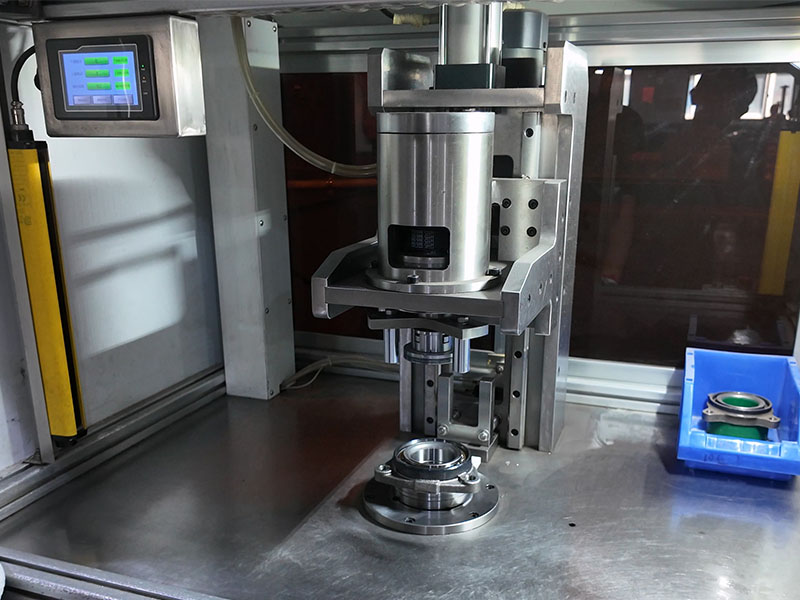
- Press the new bearing into place (use a bearing press or a soft-faced mallet with a drift).
- Reinstall the fork, headset spacers, and stem.
- Adjust preload (see FAQ section for method).
Replacement tips:
- Always refer to SHIS or the headset manufacturer’s chart to match size, angle, and type.
- Stock common sizes like 41.8×30.5×8 (45°/45°) and 41.0×30.2×7 (36°/45°) for quick service.
- For wet or dusty markets, order sealed versions with higher ingress protection (e.g., LLU or 2RS seals).
- When replacing bearings, also inspect the compression ring, top cap, and stem bolts for wear.
7.2 Maintenance of Headset Bearings
Cleaning:
For loose ball bearings, disassemble, degrease, and remove old grease. For sealed cartridge bearings, wipe the outer surfaces clean; do not attempt to open the seals unless replacing.
- Loose ball bearings: repack with quality bearing grease (lithium or calcium sulfonate based).
- Sealed cartridge bearings: factory-lubricated for life. If dry or rough, replace the bearing.
Inspection for wear and damage:
- Spin the bearing with your finger – it should feel smooth without grit or notchiness.
- Check for rust, pitting, or flattened balls (loose ball type).
- For installed bearings, check for side play by rocking the fork fore-aft.
8. Frequently Asked Questions
8.1 How do I know what headset bearings I need?
Measure key dimensions (ID, OD, depth, and chamfer angles), check bearing codes printed on the seal, refer to the bike’s manual or headset manufacturer specs, identify your steering system (threaded vs threadless, integrated vs external), or consult a professional.
8.2 What is the difference between ISO and JIS headsets?
ISO headsets (common on European and North American bikes) have a fork crown race diameter of 26.4 mm. JIS headsets (typically older Japanese frames and keirin bicycles) use a 27.0 mm crown race diameter. Most modern bicycles follow SHIS, which supersedes ISO/JIS.
8.3 How to determine if the headset bearing needs replacement?
Signs include stiff or jerky steering, grinding or clicking noises, noticeable play when rocking the fork with the front brake applied, visible rust or water ingress, or more than two years of hard use.
8.4 How to properly install a headset bearing?
Clean the head tube and fork crown. Press in the bearing evenly (use a press or socket of matching diameter). Apply grease to the bearing surfaces. Install the fork and adjust preload. Check rotational smoothness before tightening the stem bolts.
8.5 How should the preload of the headset bearing be adjusted?
Tighten the top cap screw until play is just eliminated (rock the bike with front brake on). The handlebars should swing freely to each side without binding. Tighten the stem pinch bolts to the specified torque. Recheck for play after tightening.
8.6 What is the maintenance cycle for a headset bearing?
- Sealed cartridge bearings: inspect every 2 years or 10,000 km; replace if rough or loose.
- Loose ball / caged bearings: disassemble, clean, and regrease annually (or every 5,000 km).
- All types: inspect more frequently if riding in wet, muddy, or dusty conditions (e.g., every 6 months for MTB).
8.7 When replacing the headset bearings, which parts also need to be replaced?
Upper and lower bearings (as a set), the compression ring (often deformed after removal), top cap and expansion plug (if damaged), stem washers, and the fork’s crown race (if worn or incompatible with new bearing angle).
Conclusion
Understanding headset bearings is essential for bicycle maintenance, repair, and performance optimization. Key factors include bearing type (sealed cartridge vs. loose ball), dimensional accuracy (ID, OD, depth, chamfer angles), and application-specific requirements (MTB vs. road, Shimano vs. generic OEM). Regular inspection, correct preload adjustment, and timely replacement prevent steering issues and extend component life.