In the world of rotating machinery, bearings ensure smooth and efficient operation. However, their performance and lifespan are not guaranteed; they are heavily dependent on understanding and managing the forces they encounter. Among these forces, axial load—also known as thrust load—is one of the most critical factors to consider.
This comprehensive guide is designed to help engineers, maintenance professionals, and procurement specialists understand what bearing axial load is, what affects it, and how to manage it effectively to ensure maximum reliability and performance.
What is Bearing Axial Load?
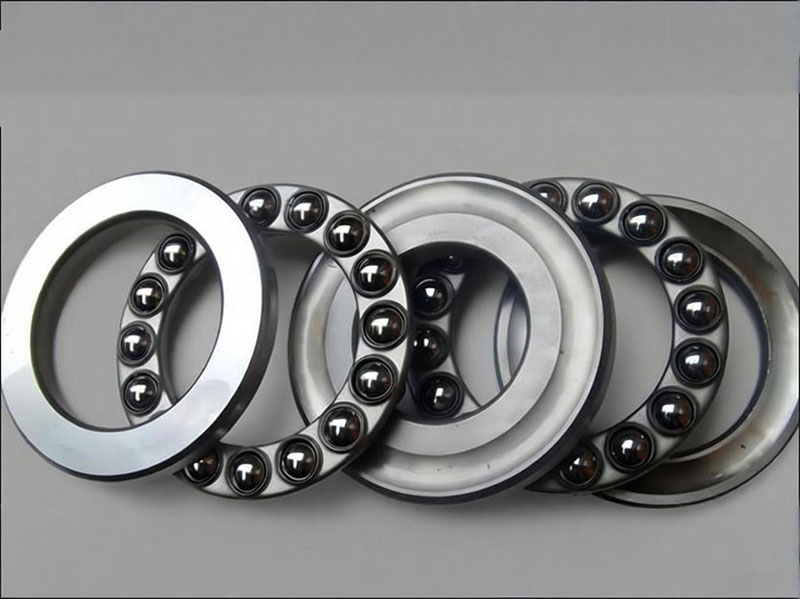
Simply put, bearing axial load refers to a force applied to a bearing parallel to the axis of the shaft (the rotational centerline). Imagine a spinning top: if you try to push it sideways, that’s a radial load. If you press down on it along its spinning axis, that’s an axial load.
- Axial Load vs. Radial Load: While radial loads (like the weight of a shaft or belt tension) act perpendicular to the shaft, axial loads act in parallel. Many applications, such as helical gears or machine tool spindles, experience a combination of both.
- Direction of Load: Axial loads can be unidirectional (acting in one direction only) or bidirectional (reversing direction, like in a car wheel when turning).
Key Factors Influencing Bearing Axial Load Capacity
The amount of axial load a bearing can handle isn’t a fixed number. It depends on a complex interplay of external application factors and the bearing’s internal design. Understanding these is the first step toward building authority in your selections.
External Factors (Application-Related)
These are the forces imposed on the bearing by the machine it’s in.
- Applied Forces: The primary source of thrust. For example, helical gears generate inherent axial forces, while fans or turbines may experience thrust from fluid flow.
- Operating Conditions: High speeds and rapid acceleration can create dynamic forces that alter the effective axial load.
- Vibration & Shock Loads: Sudden, peak forces from impacts or system vibrations can significantly exceed steady-state loads, leading to premature failure if not accounted for.
- Misalignment: Shaft deflection or housing inaccuracies can induce unwanted axial forces within the bearing.
Internal Factors (Bearing Design & Properties)
This is where manufacturing expertise truly matters. The bearing’s own characteristics define its capacity to withstand external axial forces.
Design & Geometry:
- Contact Angle: This is the most critical factor. Bearings with a larger contact angle (like angular contact ball bearings) are specifically designed to handle higher axial loads.
- Rolling Element Type: Ball bearings manage light to moderate axial loads, while roller bearings (especially tapered roller bearings) excel in heavy thrust applications.
Material Properties: The quality of the steel, its purity, and the heat treatment process determine the hardness and fatigue resistance of the raceways and rolling elements, directly impacting the bearing’s ability to endure axial stress.
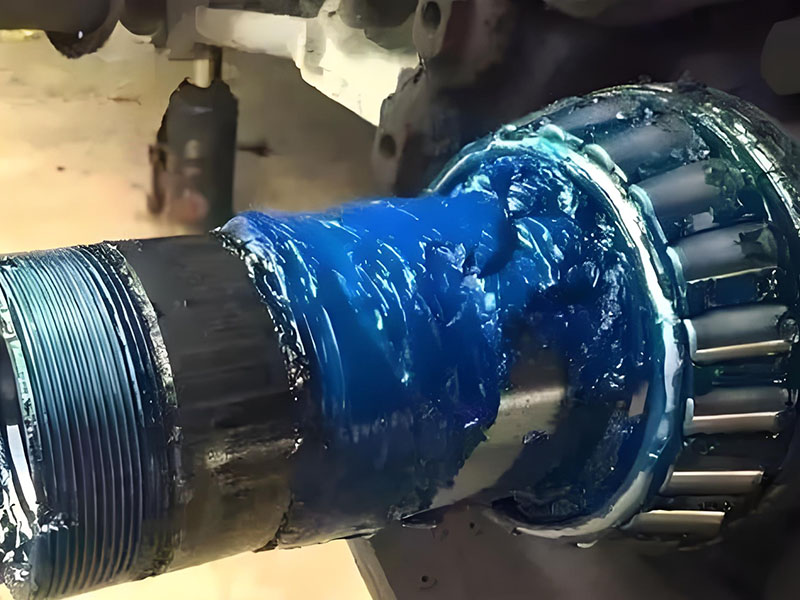
Lubrication: A proper lubricant film helps distribute the load evenly across the contact surfaces, preventing metal-to-metal contact and reducing wear.
Load Ratings: Every bearing has defined Basic Dynamic Axial Load Ratings (Ca) and Static Axial Load Ratings (C0a) . These are calculated values provided by the manufacturer (like DUHUI) that represent the load a bearing can theoretically endure for a specific lifespan.
How to Calculate and Determine Axial Load
Accurate calculation is essential for proper bearing selection. While complex applications require detailed analysis, the fundamental principles are straightforward.
A Step-by-Step Guide:
1.Identify All Acting Forces: Begin by creating a free-body diagram of your shaft assembly. Identify all sources of thrust, such as gear forces, propeller thrust, or inertial forces during acceleration.
2.Analyze Load Distribution: If your application uses paired bearings (common with angular contact or tapered roller bearings), the axial load is not simply shared. It is distributed based on the bearing’s internal geometry and the mounting arrangement.
3.Apply the Equilibrium Principle: Use the fundamental physics principle of equilibrium (∑F = 0). The sum of all axial forces in one direction must equal the sum of all forces in the opposite direction. This helps solve for the unknown axial force on a specific bearing.
4.Calculate Equivalent Dynamic Load (P): For bearings under combined radial and axial loads, you must calculate an equivalent dynamic load. This is a hypothetical constant radial load that would have the same effect on bearing life as the combined loads. The general formula is P = XFr + YFa, where:
- Fr = Radial Load
- Fa = Axial Load
- X and Y are radial and axial load factors, specific to each bearing type, found in the manufacturer’s catalog. Always consult technical data for accurate X and Y values.
Best Practices for Managing and Controlling Axial Load
Effective management is where knowledge meets action. Following these best practices will build trust in your decision-making.
Correct Bearing Selection – The Foundation of Success
Choosing the right bearing type for the load is paramount.
- For light to moderate axial loads: Consider Deep Groove Ball Bearings.
- For high-speed, moderate thrust applications: Angular Contact Ball Bearings are ideal.
- For heavy axial loads and shock loads: Tapered Roller Bearings or Cylindrical Roller Bearings with thrust flanges are the superior choice.
- Match the Load Rating: Always select a bearing whose dynamic and static load ratings (Ca, C0a) comfortably exceed your calculated maximum loads, including any safety factors.
Precision Installation and Adjustment
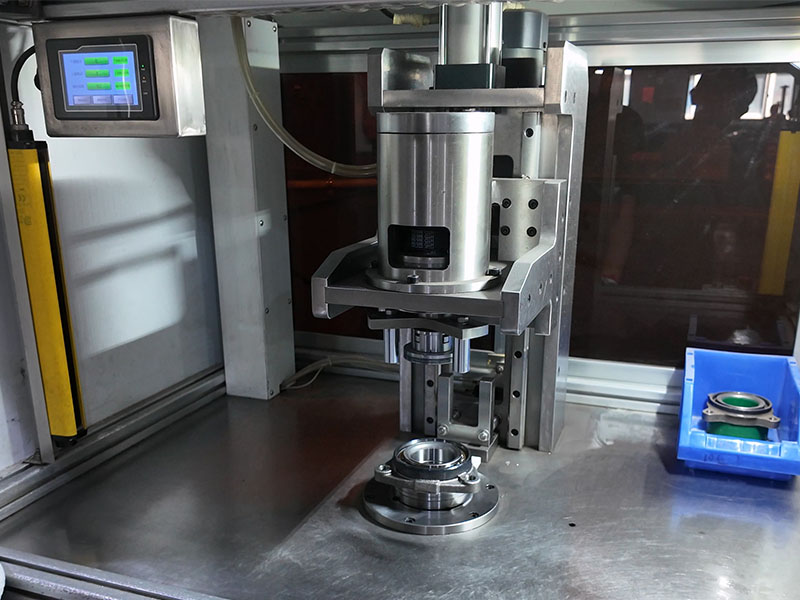
- Proper Mounting: Incorrect installation can induce misalignment and additional stress.
- Preloading: This technique involves creating a permanent axial load within the bearing system to remove internal clearance. It increases rigidity, which is crucial for applications like machine tool spindles, and ensures proper load sharing.
Proactive Monitoring and Maintenance
- Regular Monitoring: Use vibration analysis and temperature monitoring. A sudden increase in temperature or a change in vibration signature can signal an axial load problem.
- Maintain Lubrication: Adhere to recommended relubrication intervals and use the correct type and amount of grease or oil to ensure a healthy lubricating film.
Consequences of Improper Axial Load Management
Failing to manage axial load correctly can lead to catastrophic failure.
- Consequences of Overloading: Excessive axial load leads to high contact stresses. This results in fatigue spalling (flaking of the metal), overheating, and ultimately, premature bearing failure. It is a primary cause of unscheduled downtime.
- Consequences of Insufficient Load/Control: In high-speed applications, too light an axial load can cause the rolling elements to skid instead of roll. This leads to smearing and damage. In precision machinery, uncontrolled axial movement compromises accuracy and can lead to system instability.
Conclusion
Understanding and managing bearing axial load is not just a technical exercise; it is a critical business practice that ensures equipment reliability, reduces downtime, and lowers maintenance costs. From initial design and calculation to correct selection and installation, every step matters.
With two decades of hands-on manufacturing experience and 15 years of serving the global market, DUHUI Bearing possesses the expertise to support your projects. We don’t just manufacture bearings; we engineer reliability. Our team can provide professional technical support to help you select the optimal bearing for your specific axial load requirements.