Thrust ball bearings are designed to support axial loads in rotating machinery, such as automotive steering systems, gearboxes, and industrial pumps. However, improper installation is a leading cause of premature bearing failure, resulting in increased downtime and replacement costs. DUHUI will provide a systematic, engineering-based approach to installing thrust ball bearings correctly. It covers step-by-step procedures, fitting principles, common errors, and critical precautions to help you achieve reliable performance and service life.
Preparations Before Installation
Before handling the bearing, ensure the work area and components are clean. Contamination by dust or metal chips can lead to brinelling or abrasive wear. Perform the following checks:
- Inspect the shaft and bearing housing for burrs, nicks, or dimensional deviations.
- Verify the thrust ball bearing model matches the design specifications.
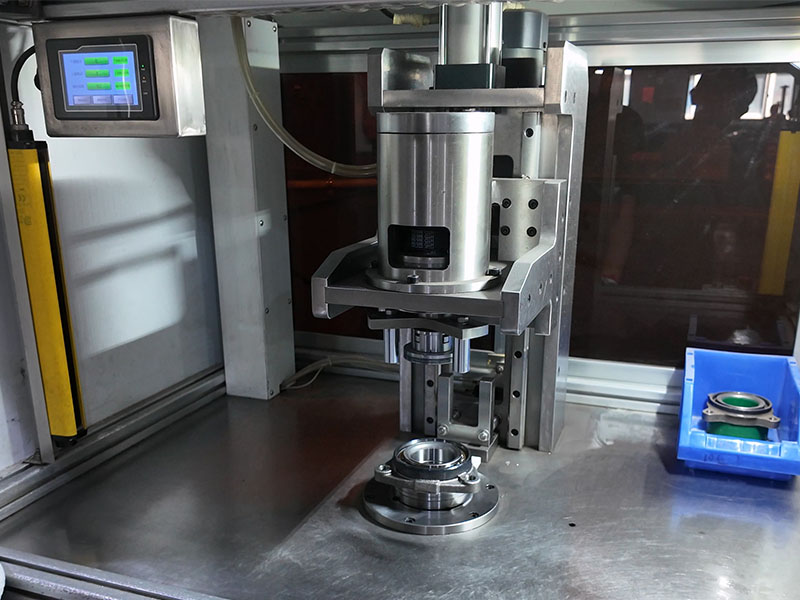
- Prepare proper tools: an arbor press (not a hammer), bearing fitting tools, and clean, lint-free cloths.
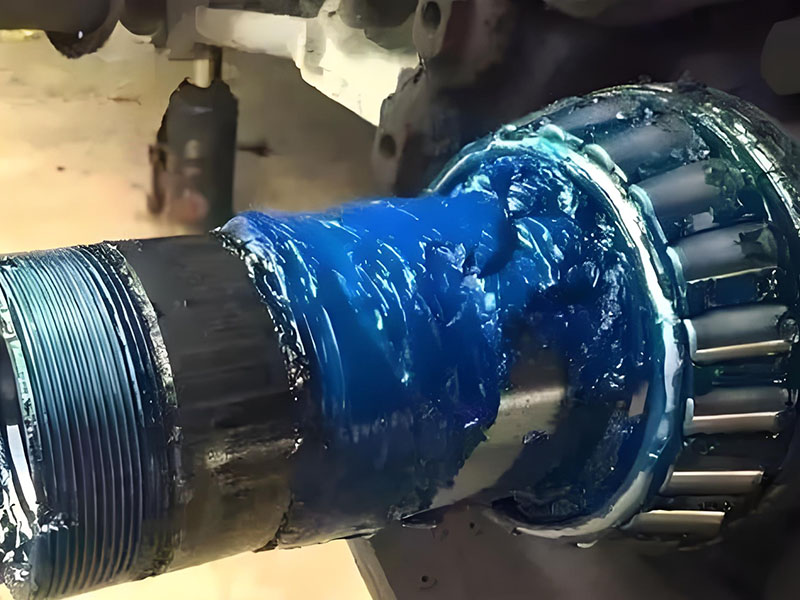
- If the bearing is grease-lubricated, apply the recommended grease evenly between the washer raceways.
Step-by-Step Installation Procedure
Follow these steps to install a thrust ball bearing correctly. Note that thrust ball bearings consist of three separable components: the shaft washer (inner ring), the cage with steel balls, and the housing washer (outer ring).
Step 1 – Identify the housing washer and shaft washer
The shaft washer has a smaller inner diameter and typically a ground bore to fit snugly onto the shaft. The housing washer has a larger inner diameter and fits loosely in the housing bore. Some manufacturers mark the shaft washer with an “S” or a chamfered inner edge.
Step 2 – Position the housing washer against the stationary part
Place the housing washer against the stationary component of the assembly (e.g., the gearbox housing). The washer’s raceway should face upward, ready to receive the steel balls.
Step 3 – Install the cage with steel ball assembly
Gently place the cage-and-ball assembly onto the housing washer raceway. Ensure the balls sit properly in the raceway groove. Do not force or tilt the assembly.
Step 4 – Install the shaft washer
Position the shaft washer on top of the ball assembly, with its raceway facing downward to contact the balls. The shaft washer should be aligned concentrically with the shaft. If the fit is an interference fit (typical for the shaft), press the shaft washer onto the shaft using an arbor press or a fitting tool. Never strike the bearing directly with a hammer; apply force only to the ring that is being press-fitted.
Step 5 – Apply initial axial preload (if required by design)
Some applications require a light axial preload to eliminate clearance and ensure smooth operation. Refer to your equipment manual for the specified preload value.
Key Fitting Principles for Thrust Ball Bearings
Two fundamental fitting rules govern thrust ball bearing installation:
- Interference fit between the shaft and the shaft washer – The inner ring (shaft washer) rotates with the shaft. An interference fit (tight fit) prevents relative motion, which would otherwise cause fretting corrosion and shaft wear.
- Clearance fit between the housing bore and the housing washer – The outer ring (housing washer) remains stationary. A clearance fit (loose fit) allows the housing washer to self-align slightly and accommodates thermal expansion or minor misalignments without inducing axial stress.
Violating these principles – for example, using a clearance fit on the shaft – will lead to spinning of the shaft washer on the shaft, rapid wear, and bearing seizure.
Common Installation Mistakes to Avoid
- Mistake 1: Reversing the housing washer and shaft washer
Installing the shaft washer in the housing and the housing washer on the shaft will prevent proper ball contact, causing excessive friction and overheating. - Mistake 2: Using impact tools (hammer, chisel) to force the bearing
Direct impact on the cage or balls can dent raceways or crack the cage. Always press on the ring that is being mounted. - Mistake 3: Applying radial loads to thrust ball bearings
Thrust ball bearings are not designed for radial forces. If your application involves combined radial-axial loads, select an angular contact ball bearing or a tapered roller bearing. - Mistake 4: Ignoring axial preload or over-preloading
Insufficient preload may allow the balls to skid; excessive preload generates heat and increases wear. Follow the equipment specification.
Critical Precautions During Installation
- Confirm the stationary part orientation – The housing washer must always be in contact with the stationary component. If both shaft and housing rotate, a thrust ball bearing is likely the wrong choice.
- Ensure axial alignment – The shaft and bearing seat must be perpendicular to the bearing axis. Angular misalignment causes edge loading on the balls.
- Lubricate correctly – For grease lubrication, fill 30–40% of the free space inside the bearing housing. For oil lubrication, ensure a continuous oil supply to the raceways.
- Check after installation – Rotate the shaft manually. It should turn smoothly without grinding or binding. Any roughness indicates misalignment or contamination.
Frequently Asked Questions (FAQs)
Q1: How can I tell which washer is the shaft washer and which is the housing washer?
Measure the inner diameters. The shaft washer has a smaller ID (closer to the shaft diameter). Also, the shaft washer often has a chamfered or ground bore, while the housing washer’s bore is larger and less finished.
Q2: Can a thrust ball bearing support radial loads?
No. Thrust ball bearings are designed exclusively for pure axial loads. Any radial load will cause rapid failure.
Q3: What lubricant should I use for a thrust ball bearing?
Use a lithium-based grease with good anti-wear properties (e.g., NLGI grade 2) for general industrial applications. For high-speed or high-temperature conditions, consult the bearing manufacturer or use oil lubrication.
Q4: What is the maximum allowable misalignment for a thrust ball bearing?
Thrust ball bearings are very sensitive to misalignment. The permissible angular misalignment is typically less than 0.05 radian (approximately 3 degrees). For larger misalignments, consider spherical thrust bearings.
Q5: Why does my newly installed thrust ball bearing run hot?
Possible causes: washers reversed, excessive preload, insufficient lubrication, or radial load presence. Disassemble and inspect.
Conclusion
Proper installation of thrust ball bearings directly impacts equipment uptime and maintenance costs. By following the step-by-step procedure – correctly identifying the shaft and housing washers, applying the interference fit on the shaft and clearance fit in the housing, avoiding common mistakes like impact fitting or radial loading, and observing lubrication and alignment precautions – you can achieve maximum bearing life. Always refer to the original equipment manufacturer’s specifications and, when in doubt, consult with your bearing supplier. For more technical resources or custom bearing solutions, visit DUHUI Bearing’s official website.