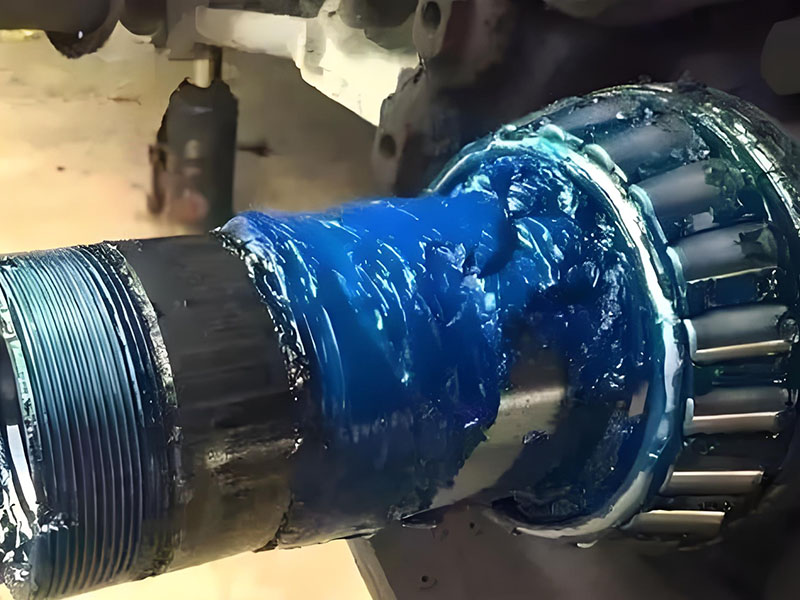
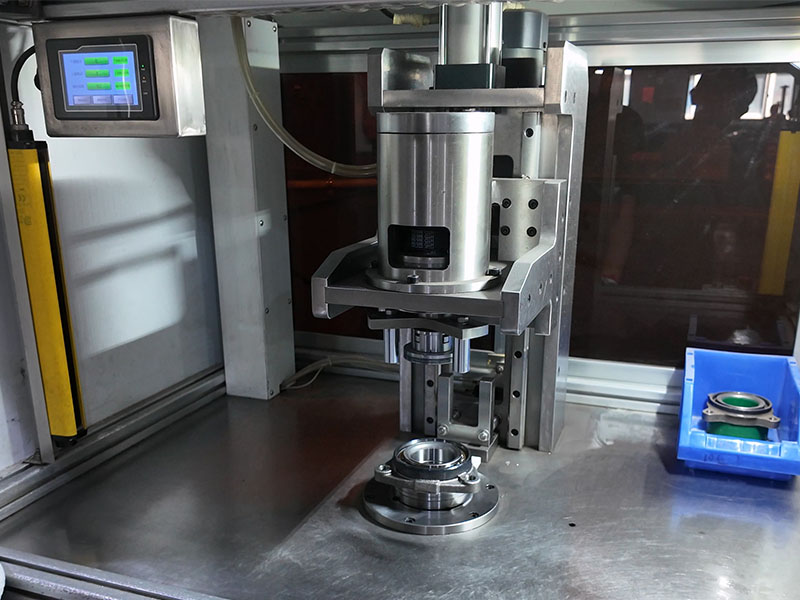
Replacing a wheel hub assembly is a routine maintenance task, yet it’s one where seemingly minor oversights can lead to premature failure, safety risks, and repeat repairs. Have you ever experienced a persistent “humming” noise from a new bearing or had the ABS light mysteriously illuminate right after a replacement? These issues often trace back to simple errors made during installation. DUHUI will explore the three most critical mistakes commonly made by both professional shops and DIYers.
More importantly, we’ll provide expert solutions to ensure your repair is done right the first time, maximizing the lifespan of your new components and keeping your vehicle safe on the road.
1. Failing to Torque the Axle Nuts to the Manufacturer’s Specs
One of the most overlooked steps in the entire process is properly torquing the axle nut. Many mechanics rely on an impact wrench set to a generic “tight” setting, completely bypassing the vehicle manufacturer’s specific torque requirements.
The Consequences
The axle nut doesn’t just hold the wheel on; it preloads the wheel hub bearing. Incorrect torque has two devastating outcomes:
- Under-torquing: When the nut is too loose, the bearing isn’t properly clamped. This creates axial play, allowing the wheel to wobble. This movement rapidly accelerates wear, leading to the dreaded “humming” noise and, in extreme cases, can cause the wheel to separate from the vehicle.
- Over-torquing: Conversely, excessive force crushes the bearing’s internal components. It can distort the raceways and damage the cage that holds the rolling elements. This creates excessive internal preload, causing the bearing to run hot, fatigue prematurely, and potentially seize.
How to Avoid It
Always use a calibrated torque wrench and consult the vehicle’s service manual for the exact specification. Before installation, ensure the axle shaft and the mounting surface of the hub assembly are perfectly clean. A grain of sand or a burr can throw off the torque reading. Then, follow the recommended procedure, which often involves a two-step process (e.g., torque to a lower value, then to the final spec). Precision here is non-negotiable for a safe and lasting repair.
2. Using a Cheap Replacement Wheel Hub Assembly With an Undersized Bearing
The temptation to save money by choosing the lowest-priced option is strong, but it’s a gamble that rarely pays off. These “economy” parts often mimic the look of a quality unit but hide serious flaws inside.
The Consequences
Choosing an inferior part introduces several critical risks:
- Reduced Load Capacity: The most dangerous compromise is the use of an undersized bearing inside the assembly. A smaller bearing has a significantly lower load-carrying capacity, leading to dramatically shortened service life—sometimes failing within a few thousand miles.
- Safety and Electronic Failures: Dimensional inaccuracies or tolerance stack-up can cause a mismatch between the ABS (Anti-lock Braking System) sensor and its tone ring. This results in an ABS warning light, a disabled safety system, or erratic system behavior. An improper fit also introduces a structural vulnerability that compromises the wheel’s attachment to the vehicle.
How to Avoid It
When purchasing a replacement, prioritize quality and precision. Look for manufacturers like DUHUI Bearing that adhere to rigorous quality management systems such as IATF 16949. This ensures the entire assembly, from the bearing itself to the flange and ABS sensor interface, is manufactured to Original Equipment (OE) standards.
Before installation, always verify that the part number matches your vehicle’s VIN. Compare the new assembly to the old one, checking that the bolt pattern, flange height, and ABS sensor connector are identical. Investing in a premium wheel hub assembly is an investment in safety and longevity.
3. Not Testing the Wheel Hubs After Replacement
After the new assembly is installed and the wheel is back on, the job is often considered complete. However, skipping a post-replacement test can leave hidden problems undetected.
The Consequences
A static inspection—looking at the car while it’s on the lift—can’t reveal all issues. Some problems only surface under real-world driving conditions:
- Missed Dynamic Issues: Improperly seated ABS sensor wires, minor installation errors, or unexpected vibrations often go unnoticed until the vehicle is in motion.
- Compromised Safety Systems: A loose ABS cable might not trigger an immediate dashboard warning, but a bump in the road could disconnect it, disabling the ABS or traction control system when you need it most.
How to Avoid It
A thorough road test is the final, crucial step in the repair process. It should include:
- Start-up Test: Drive slowly in a straight line to feel for any pulling or vibration and listen for any rubbing or grinding sounds.
- Steering Test: Turn the steering wheel fully to the left and right during slow driving. This checks for noises or binding at maximum steering angles, a common time for issues to manifest.
- Highway and Brake Test: On a safe road, accelerate to highway speeds (e.g., 80 km/h or 50 mph) to feel for any harmonic vibrations. Then, perform a medium-force brake application to ensure the vehicle stops straight and steady, and double-check that no warning lights, such as ABS or TPMS, have illuminated on the dashboard.
Conclusion
Replacing a wheel hub assembly involves far more than simply swapping out an old part for a new one. From the critical step of achieving the correct axle nut torque, to selecting a high-quality, precision-engineered assembly, and finally, validating the work with a dynamic road test—each phase is essential to a successful repair. If you have any questions about selecting or installing the right wheel hub assembly, please don’t hesitate to contact us.