Engineers and procurement specialists often face a critical choice: Tapered Roller Bearings (TRBs) versus Spherical Roller Bearings (SRBs) . While both are designed to handle heavy loads, their engineering philosophies and ideal applications differ significantly.
DUHUI will provide a technical yet practical comparison to help you make an informed decision, based on DUHUI’s extensive experience in bearing manufacturing.
1. Understanding Tapered Roller Bearings
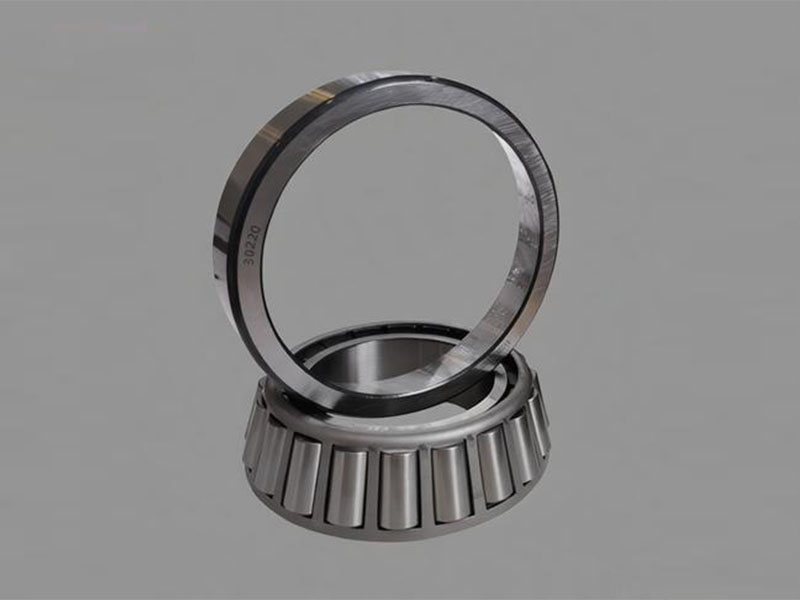
Tapered roller bearings are designed to handle combined loads—meaning they can accommodate both radial (perpendicular to the shaft) and axial (parallel to the shaft) forces simultaneously. Their design features conical inner and outer ring raceways with tapered rollers positioned between them. The apex of the roller’s cone meets at a common point on the bearing axis, allowing for true rolling motion.
1.1 Key Features
- High Load Capacity: The line contact between the rollers and raceways provides a high load-carrying capacity relative to their size.
- Operational Precision: They are manufactured for high stiffness and accuracy, making them ideal for precise rotating applications.
- Handles Radial and Axial Loads: They excel in applications where thrust loads are significant.
- Adjustable Internal Clearance: TRBs are typically mounted in pairs (opposed) and can be “set” or adjusted to achieve the desired internal clearance or preload during installation, which is crucial for optimizing system rigidity.
1.2 Common Applications
- Automotive Industry: This is our specialty at DUHUI. They are the standard for car and truck wheel hubs, where they must handle the weight of the vehicle (radial) and the forces of cornering (axial).
- Industrial Gearboxes: Where shafts require precise positioning under heavy loads.
- Agricultural Equipment: In tractors and harvesters that face varying loads and dirty conditions.
- Railway Equipment: In axleboxes for trains, handling the heavy weight and directional forces.
- Aerospace & Defense: In landing gear assemblies and helicopter rotors where precision and reliability are non-negotiable.
1.3 Specific Limitations
- Speed Limitations: While capable of moderate speeds, they are generally not the first choice for ultra-high-speed applications compared to ball bearings or specialized cylindrical bearings.
- Misalignment Sensitivity: TRBs are not tolerant of shaft misalignment. If the shaft bends or the housing is not perfectly aligned, it can lead to edge loading and premature failure.
- Installation Complexity: Because they require careful adjustment of clearance during installation, assembly is more complex than with pre-set, non-adjustable bearing types.
2. Understanding Spherical Roller Bearings
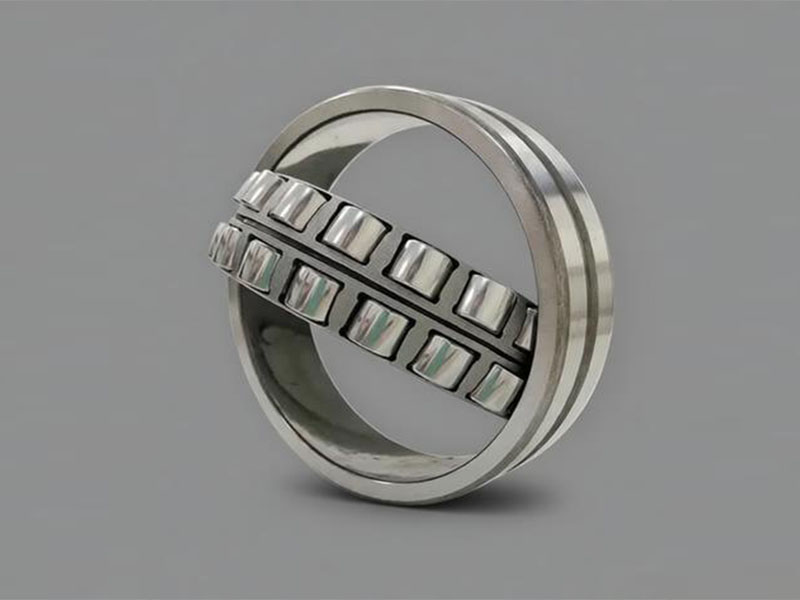
Spherical roller bearings are engineered for rugged durability. They have two rows of rollers that run on a common spherically shaped raceway on the outer ring. This unique design allows the inner ring and rollers to pivot slightly, accommodating misalignment.
2.1 Main Advantages
- Self-Aligning Capability: This is the defining feature. SRBs can compensate for significant shaft deflection, mounting errors, or housing inaccuracies without increasing stress on the bearing.
- Exceptional Load Capacity: They are designed for extremely heavy radial loads and can also handle moderate axial loads in either direction.
- Robust Design: Their construction makes them highly resistant to shock loads and vibration common in heavy industries.
2.2 Typical Use Cases
- Heavy-Duy Machinery: The backbone of industries like mining and construction.
- Wind Turbines: Used in main shafts and gearboxes to handle fluctuating loads and alignment changes caused by wind forces on the tower.
- Mining & Construction Equipment: In vibrating screens, crushers, and conveyor systems where dust, vibration, and heavy shocks are the norm.
- Pulp and Paper Mills: In drying rolls and calenders where long shafts and high temperatures can cause expansion and misalignment.
- Marine & Offshore Applications: In propeller shafts and deck equipment.
- Steel Processing: In continuous casters and rolling mills that operate under
2.3 Limitations and Constraints
- Speed Limitations: Generally, SRBs have a lower speed rating than similarly sized TRBs or cylindrical bearings due to the internal sliding friction of the rollers against the guide flanges.
- Complexity and Cost: Their complex design makes them more expensive to manufacture than simpler bearing types.
- Size and Weight: They often require more radial space compared to other bearing types of similar load capacity.
3. Comparing Tapered vs. Spherical Roller Bearings
When placed side-by-side, the choice becomes a matter of matching the bearing’s strength to the application’s specific demands.
3.1 Load Handling & Distribution
- Tapered: Excels in applications with combined loads (high radial + high axial). They are often used in pairs to manage thrust in both directions. They are the champion of the “pure” combined load scenario.
- Spherical: The champion of pure radial load and misalignment. While they handle axial loads, their capacity is secondary to their radial strength. They are the best choice when the primary challenge is a massive, crushing radial load.
3.2 Precision vs. Self-Alignment
- Tapered: Offer superior precision and rigidity. If your application requires tight shaft positioning, minimal deflection, and adjustable preload (like a machine tool spindle or a pinion shaft in a differential), TRBs are the superior choice.
- Spherical: Sacrifice a degree of precision for forgiveness. If your shaft is long, prone to bending, or your mounting surfaces are imperfect, the self-aligning feature of SRBs prevents premature failure, making them more reliable in real-world “dirty” environments.
3.3 Recommended Applications
- Tapered Roller Bearings: Best suited for automotive wheel hubs, gearboxes, steering mechanisms, and machine tool spindles. These applications demand precision and the ability to handle significant thrust loads.
- Spherical Roller Bearings: Ideal for heavy machinery, mining equipment (crushers, conveyors), wind turbines, and large industrial fans. These applications are characterized by heavy radial loads, vibration, and potential misalignment.
3.4 Maintenance Requirements
- Tapered: Require periodic inspection and potential adjustment of internal clearance to maintain optimal performance as components wear.
- Spherical: Are “fit and forget” regarding clearance adjustment. Maintenance focuses on ensuring proper lubrication and monitoring operating temperatures to prevent overheating.
4. Choosing the Right Bearing for Your Application
At DUHUI Bearing, our 20 years of experience have taught us that the right choice comes down to three critical questions.
Key Factors to Consider:
- Load Type and Magnitude: Is the primary force pure radial weight (choose SRB) or a combination of weight and strong side-thrust (choose TRB)?
- Speed and Precision Requirements: Does your application require high-speed rotation and tight tolerances (choose TRB) or slower, powerful rotation in a forgiving environment (choose SRB)?
- Misalignment Tolerance: Is your shaft perfectly rigid and your housing precisely machined (TRB is fine), or is there risk of deflection or mounting error (SRB is mandatory)?
Practical Examples:
- Heavy Industrial Application (e.g., a mining conveyor): You anticipate heavy radial loads, shock loading from falling ore, and potential frame deflection. The clear choice is a Spherical Roller Bearing for its self-alignment and robustness.
- High-Precision, Heavy Combined Load (e.g., Automotive Transmission): You need to manage gear teeth separation forces (radial) and helical gear thrust (axial) with absolute precision. The correct choice is a Tapered Roller Bearing pair, set to the proper preload.
5.Frequently Asked Questions
Q: Which bearing is better for high-speed applications?
A: Generally, tapered roller bearings have a better speed capability than spherical roller bearings. The internal geometry of an SRB generates more heat at high speeds. However, for the highest speeds, other bearing types like angular contact ball bearings are often preferred.
Q: Can spherical roller bearings handle axial loads?
A: Yes, they can handle moderate axial loads in both directions. However, their design is optimized primarily for extremely high radial loads. If axial loads are the primary concern, a tapered roller bearing or a thrust bearing is more suitable.
Q: Are spherical roller bearings more expensive than tapered roller bearings?
A: For a given size and load rating, yes, SRBs are typically more expensive. Their complex manufacturing process and multi-row design contribute to a higher cost. TRBs are more cost-effective for applications that do not require self-alignment.
Q: Which bearing lasts longer?
A: There is no universal answer. Lifespan depends entirely on the application. In a perfectly aligned, high-speed gearbox, a TRB will likely outlast an SRB. In a vibrating screen with shaft deflection, an SRB will far outlast a TRB, which would fail quickly from edge loading. Choosing the right bearing for the environment is what ensures longevity.
Q: When should I use a spherical roller bearing instead of a tapered roller bearing?
A: You should switch to a spherical roller bearing when you cannot guarantee precise shaft and housing alignment, or when your primary load is exceptionally heavy radial load accompanied by shock and vibration. If your shaft is prone to bending, SRBs are not just an option; they are a necessity.
At DUHUI Bearing, we combine two decades of manufacturing expertise with a deep understanding of global application requirements. Whether you need precision tapered roller bearings for automotive hubs or rugged spherical roller bearings for industrial machinery, our team is ready to provide the technical support and quality products you need.